
MWD

Search documents
Drilling Tools International (DTI) - 2025 Q4 - Earnings Call Presentation
2026-03-06 15:00
NASDAQ: DTI Industry, Market Data and Partnerships: In this presentation, DTI relies on and refers to certain information and statistics regarding the markets and industries in which DTI competes. Such information and statistics are based on management's estimates and/or obtained from third-party sources, including reports by market research firms and company filings. While DTI believes such third-party information is reliable, there can be no assurance as to the accuracy or completeness of the indicated in ...

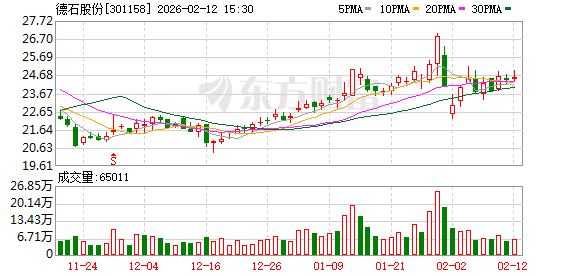
德石股份:除螺杆钻具外公司还有井口装置、MWD、压裂软管等产品
Zheng Quan Ri Bao· 2026-02-12 12:14
Core Viewpoint - 德石股份 is expanding its product offerings beyond screw drill tools, introducing new products such as wellhead devices, MWD, and fracturing hoses, with a focus on a new high-performance acid fracturing hose that has significant advantages over traditional steel pipe assemblies [2] Product Development - The company has developed a new ultra-wear-resistant high-pressure acid fracturing hose that features high pressure resistance, corrosion resistance, wear resistance, and a long service life [2] - This new product is designed to replace traditional steel pipe assemblies and is already widely used in overseas markets such as North America [2] Market Potential - In the domestic market, the new product is currently in a small-scale trial phase within oilfields, but it is expected to gain traction in the coming years due to the successful application examples from overseas [2] - The company anticipates that this product will become a new growth point for its performance in the future [2]


The Slow Demise of Russian Oil Production
Yahoo Finance· 2025-09-30 00:00
Core Insights - U.S. and EU sanctions have significantly impacted Russian oil production capabilities, limiting access to necessary technology and equipment [1][5][11] - The U.S. shale production has been a major contributor to global oil supply growth, adding approximately 8 million barrels of oil per day (BOPD) since 2010 [1] - Russian oil production is facing a decline due to aging infrastructure and the inability to utilize Western technology for shale extraction [2][11] Group 1: Production Dynamics - U.S. crude oil production has increased from about 5.4 million BOPD to 13.5 million BOPD, demonstrating the effectiveness of U.S. producers in optimizing production at lower oil prices [1] - The decline in Russian oil production is exacerbated by sanctions and the aging of legacy production hubs, particularly in Western Siberia and the Volga-Urals region [2][11] - Analysts predict that Russian oil production could drop over 20% by 2030, potentially falling to about 8 million BOPD [11] Group 2: Technological Limitations - Sanctions have hindered Russia's access to advanced drilling technologies and software essential for efficient shale production [5][6][10] - The lack of trained field crews due to the ongoing war in Ukraine further complicates Russia's ability to maintain or expand oil production [7][11] - High-pressure pumping equipment and modern directional drilling tools are critical for shale production, but Russia lacks these resources [8][10] Group 3: Market Implications - Both OPEC and Russia have historically aimed for Brent crude prices in the $80 range to balance their budgets, but recent production increases have driven prices down to the mid-$60s [3][4] - The decline in Russian oil supply could create challenges for global energy needs, especially as demand is projected to rise significantly by 2030 [12]