Mario Tennis Fever

Search documents
Nintendo shares sink 10% as gaming giant faces memory shortage concerns
CNBC· 2026-02-04 03:03
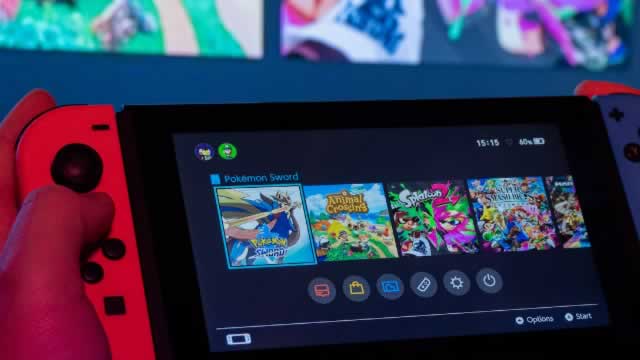
Core Viewpoint - Nintendo is experiencing significant challenges due to a memory chip shortage, which has led to a decline in its stock price despite a strong performance in profit and revenue growth. Group 1: Financial Performance - Nintendo's profit increased by 24% year on year, driven by strong sales of the Nintendo Switch, which is now the company's best-selling console since its release in 2017 [2] - Revenue rose by 86%, indicating robust demand for its products despite the ongoing supply chain issues [2] Group 2: Market Challenges - The company is facing headwinds from an unprecedented shortage of memory chips, a critical component for its consoles, resulting in rising prices [2] - Investors are concerned about the potential impact of high memory costs on Nintendo's profit margins, although the company maintains that these costs have not yet significantly affected its financial results for the current year [3] Group 3: Product Launches and Future Outlook - Nintendo plans to release major titles for the Switch 2, including "Mario Tennis Fever" in February and "Pokémon Pokopia" in March, which are expected to drive sales [4] - The company is also set to release "The Super Mario Galaxy Movie" in April, following the success of the first Super Mario movie in 2023, which boosted console sales [4] - Analysts suggest that 2026 will be a critical year for the Switch 2 as Nintendo aims to expand its appeal to a broader market [5]


Nintendo stands by profit forecast as Switch 2 sales face durability test
Invezz· 2026-02-03 07:33
Core Viewpoint - Nintendo has reaffirmed its annual operating profit forecast of 370 billion yen (approximately $2.4 billion), indicating confidence in the current console cycle despite concerns about the sustainability of early demand for the Switch 2 [1] Switch 2 Momentum in Focus - The Switch 2, which succeeded the original Switch, has seen robust early sales, but investors are questioning whether this demand can be maintained post-launch [1] - The pricing strategy shows a significant difference, with the Switch 2 priced at $449.99 in the U.S. compared to 49,980 yen (about $320) in Japan, reflecting inflation and higher operating costs [1] - Nintendo's positioning of the Switch 2 as a mass-market device limits its ability to increase prices significantly without risking demand [1] Trade Tensions and Supply Risks - Nintendo's hardware business is affected by external factors, including supply chain disruptions due to U.S. trade policies and rising memory chip prices driven by AI investments [1] - The company is better positioned than many competitors to absorb these cost pressures in the short term [1] Pricing Discipline and Margins - Concerns exist regarding the potential decrease in profitability for the Switch 2 as input costs rise, but Nintendo's long-standing policy of not selling hardware at a loss is seen as a stabilizing factor [1] - The higher U.S. price helps protect margins, but further cost increases may be difficult to pass on without affecting demand [1] Games Pipeline Under Watch - The strength of Nintendo's software pipeline is critical, with concerns about the lack of immediate high-profile releases from major franchises like The Legend of Zelda [1] - The upcoming release of Mario Tennis Fever is expected to support engagement and sales, but the pace of major title rollouts will be closely monitored as it impacts long-term console demand [1]