Muir Glen

Search documents
General Mills to sell Brazil business for $153M as it sharpens focus
Yahoo Finance· 2026-03-18 10:00
This story was originally published on Food Dive. To receive daily news and insights, subscribe to our free daily Food Dive newsletter. Dive Brief: General Mills plans to sell its business in Brazil to food and beverage owner 3corações for roughly $153 million ($800 million Brazilian Real) as the snack and cereal maker aims to boost its margins and sharpen its international focus. The Brazil business contributed approximately $350 million to General Mills’ fiscal 2025 net sales, which totaled $19.5 billi ...

General Mills offloads Brazil assets to Grupo 3corações
Yahoo Finance· 2026-03-17 16:39
Group 1 - General Mills has sold its Brazilian business to Grupo 3corações, including two production facilities and brands like Yoki and Kitano [1][2] - The deal is valued at R800 million ($48 million) and is expected to close by the end of the 2026 calendar year, pending regulatory approval [2] - The assets generated approximately $350 million in revenue for General Mills in the last year, contributing to the company's total revenue of $19.49 billion [2] Group 2 - Grupo 3corações aims to expand its food offerings with the acquisition of Yoki and Kitano, enhancing its presence in the Brazilian market [4] - General Mills is reshaping its portfolio to focus on long-term profitable growth as part of its Accelerate strategy launched in 2021 [4][5] - The transaction is expected to improve General Mills' operating profit margin and align its international segment with priority global platforms [5] Group 3 - General Mills has recently adjusted its outlook for organic sales growth, forecasting a decline of 1.5% to 2% for the year [6] - The company previously estimated organic sales could range from a decline of 1% to an increase of 1% [6]
Big Food gets leaner with divestitures and breakups as consumers turn away from packaged snacks
CNBC· 2026-01-31 13:00
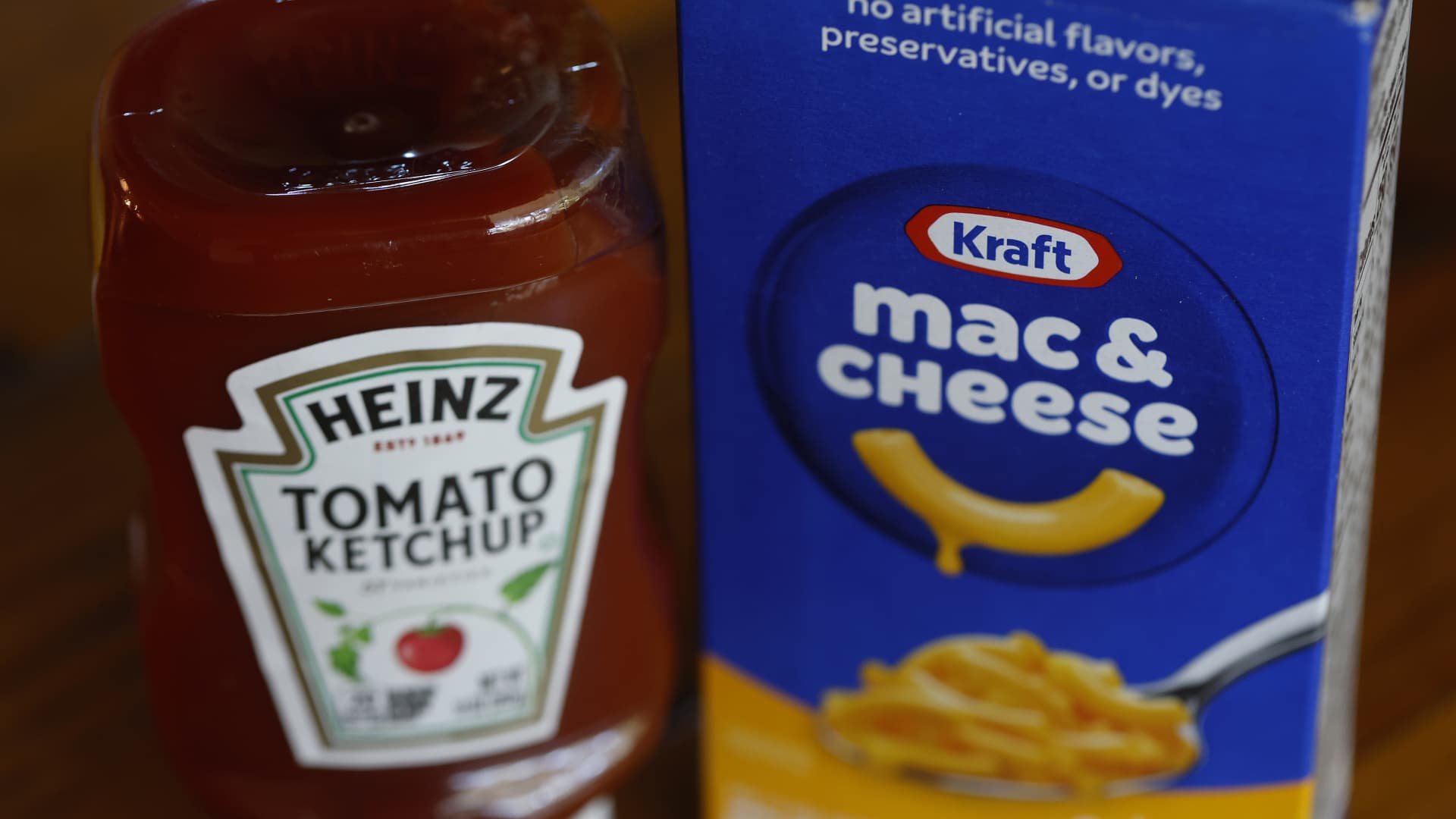
Core Viewpoint - Kraft Heinz is planning to split into two separately traded companies, reversing its 2015 merger, amid a broader trend in the food industry where companies are divesting underperforming brands due to changing consumer preferences and regulatory pressures [1][2][18]. Industry Trends - The consumer products industry is experiencing a significant shift, with nearly half of M&A activity in 2024 coming from divestitures, as companies like Unilever and Keurig Dr Pepper also pursue similar strategies [3][2]. - The trend of breaking up is not limited to consumer packaged goods; industrial companies and legacy media firms are also undergoing similar transformations [4]. Market Dynamics - There is increasing pressure on packaged food and beverage companies due to lower demand and shrinking sales volumes, prompting them to divest underperforming brands to regain investor confidence [5][11]. - Consumers are shifting their purchasing habits towards fresh produce and protein, leading to declining sales for traditional grocery items [7]. Regulatory Environment - Regulatory scrutiny on processed foods is intensifying, influenced by health initiatives and the rise of medications that reduce appetite for sugary and salty snacks [8]. Competitive Landscape - Major consumer packaged goods companies are losing market share to upstart brands and private-label products, with only about 35% of their portfolios in high-growth categories compared to over half for private-label brands [9][10]. Financial Performance - Kraft Heinz has seen a 73% decline in its stock price since its merger, attributed to aggressive cost-cutting measures that neglected brand investment [19]. - The merger of Keurig Green Mountain and Dr Pepper Snapple Group in 2018 is cited as an example of a poorly conceived deal, leading to a significant rise in shares but still underperforming compared to the S&P 500 [15][14]. Strategic Moves - Kraft Heinz has appointed Steve Cahillane, former CEO of Kellogg, to lead the new entity focused on high-growth brands post-split [23]. - The divestiture trend is expected to continue, with companies like General Mills and Nestle also announcing sales of non-core brands to concentrate on their main offerings [25]. Acquisition Landscape - Smaller acquisitions are becoming more common, with deals under $2 billion representing a growing share of consumer products transactions, as larger deals face regulatory hurdles [26][27].