NVLink interconnects

Search documents
Morgan Stanley changes its Nvidia position for the rest of 2026
Yahoo Finance· 2026-03-04 22:33
Core Viewpoint - Morgan Stanley has reinstated Nvidia as its top semiconductor pick, replacing Micron Technology, following significant gains in memory stocks [1] Company Performance - Nvidia's stock closed at $177.19 and rose approximately 3% to $182.94 after the announcement, despite being down about 3% year-to-date in 2026 [2] - The firm maintains an Overweight rating with a price target of $260, indicating a potential upside of about 47% from the recent close [3] - Nvidia reported record quarterly revenue of $68.1 billion, a 73% year-over-year increase, surpassing Wall Street's expectation of $66.2 billion [7] - For fiscal 2026, Nvidia achieved $215.9 billion in revenue, up 65% from the previous year, with net income exceeding $120 billion and free cash flow at $97 billion [8] Market Dynamics - Moore attributes Nvidia's stock stagnation to investor concerns about the peak of its growth cycle in 2026 and competition from custom chips [4] - Hyperscalers are projected to spend over $660 billion on AI infrastructure in 2026, nearly double the $443 billion spent in 2025 [12] - Nvidia holds approximately 85% of AI processor revenue, with competitors like AMD below 5% and custom ASICs just above 10% [12] Future Outlook - Nvidia's Q1 guidance suggests expected revenue of around $78 billion, exceeding analysts' expectations of $72.6 billion, with no data center revenue from China included in this outlook [9] - The upcoming GTC conference is anticipated to address market share concerns and provide insights into the Vera Rubin platform roadmap, which is expected to enhance performance significantly [10][11] - Moore believes that Nvidia's stock typically experiences sharp increases once visibility into its earnings trajectory improves, similar to patterns observed in previous years [13] Competitive Landscape - While Nvidia is projected to maintain 70% to 75% of the AI accelerator market through 2030, custom ASIC shipments are growing faster than GPUs [14] - Moore acknowledges potential market share loss for Nvidia in 2026 but emphasizes that it remains the preferred choice in most deployments [15] - The structural advantage of Nvidia's ecosystem, including its CUDA software platform and NVLink interconnects, creates significant switching costs for competitors [16] Investment Implications - Morgan Stanley's upgrade reflects a belief that the market has been overly pessimistic about Nvidia's durability at a critical time, with significant spending on AI infrastructure and upcoming product launches [17] - The stock has been building a base while the business strengthens, with confirmed Vera Rubin systems from major clients like Microsoft and Google [18]

Prediction: This Monster Growth Stock Will Soar to $10 Trillion by 2030
The Motley Fool· 2026-01-22 05:00
Core Viewpoint - Nvidia's stock has increased tenfold over the past three years, transitioning from a niche gaming company to a central player in the AI industry, with its GPUs now essential for generative AI development [1][2]. Group 1: Market Position and Growth - Nvidia's market capitalization has surged from $345 billion to nearly $4.5 trillion, driven by the generative AI boom [2]. - The company is evolving from a GPU designer to a comprehensive platform that includes chips, software, and networking gear, establishing partnerships with major firms like Anthropic, Intel, and Palantir [2][4]. - Nvidia's GPUs are being widely adopted by hyperscalers, enhancing the company's market lock-in as these companies develop next-generation AI models [5]. Group 2: Strategic Partnerships and Innovations - Nvidia's $20 billion licensing deal with Groq aims to enhance its inference capabilities, allowing for more efficient operations within its existing infrastructure [6]. - Collaborations with Intel focus on custom CPU designs that integrate Nvidia's technology, enabling the sale of full-stack server solutions without requiring architecture changes [7]. - Partnerships with companies like Palantir and Nokia are expanding Nvidia's role in enterprise workflows and physical AI applications, positioning the company for sustained revenue growth [8][9]. Group 3: Future Valuation and Earnings Potential - Analysts project Nvidia's earnings per share (EPS) growth to slow down between 2026 and 2027, but the long-term outlook remains optimistic, with potential EPS of around $17 by 2030 [10][12]. - Applying a forward price-to-earnings (P/E) multiple of 24 to the projected EPS suggests a share price of approximately $400, indicating a 117% upside from the current price [12]. - Nvidia is positioned to reach a market cap of nearly $10 trillion by 2030, driven by its transition to a diversified platform player and ongoing market opportunities [13][14].

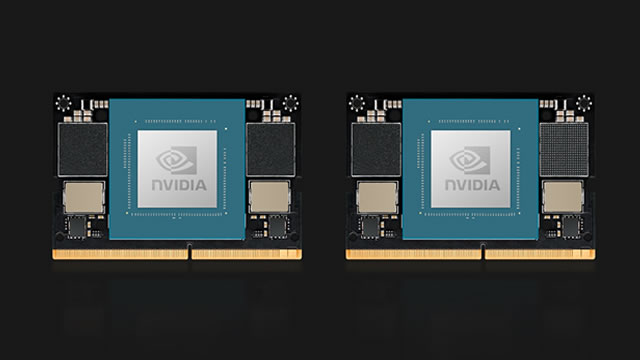
Broadcom Vs Nvidia: Which Stock Could Rally?
Forbes· 2025-10-30 14:00
Core Insights - Despite Broadcom's recent 13% stock increase, Nvidia is considered a more attractive investment option due to superior revenue growth, profitability, and lower valuation [1][3]. Company Comparison - Nvidia's vertically integrated platform, featuring Blackwell GPUs, NVLink interconnects, and CUDA software, is essential for AI data centers requiring extensive parallel processing power, while Broadcom's custom silicon and AI networking solutions cater to specific client needs through long-term contracts, suggesting a potentially lower long-term growth model [3][5]. - Nvidia's quarterly revenue growth was 55.6%, significantly higher than Broadcom's 22.0%. Over the last 12 months, Nvidia's revenue growth reached 71.6%, compared to Broadcom's 28.0% [6]. Profitability Metrics - Nvidia outperforms Broadcom in profitability, reporting a Last 12 Months (LTM) margin of 58.1% and a three-year average margin of 51.0%, indicating stronger financial health [6].