Nvidia H100 chip

Search documents
中美存储芯片竞赛的五个关键问题-Asia Semiconductors_ Five questions on the US-China memory chip race
2025-12-16 03:26
Summary of Key Points from the Conference Call on the Memory Chip Industry Industry Overview - The report focuses on the **memory chip industry**, particularly in the context of the **US-China technology competition** and its implications for **AI applications** and **semiconductor supply chains** [1][2][3][4][5][6][9]. Core Insights and Arguments 1. **Importance of Memory Chips for AI**: - High-bandwidth memory (HBM) chips are essential for AI due to their capacity to handle large data volumes quickly. Major players include **Samsung**, **SK Hynix**, and **Micron** [2][12][14]. 2. **US Export Restrictions**: - The US imposed a ban on HBM exports to China in December 2024, reflecting a shift in strategy from focusing on advanced GPUs to recognizing the strategic importance of memory chips [3][17][22]. 3. **China's Adaptation to Restrictions**: - Chinese chipmakers are increasing imports of legacy memory chips and modifying US chips to comply with restrictions. However, they face challenges in developing HBM products due to reliance on foreign chipmaking equipment [4][5][34]. 4. **Obstacles for China's HBM Development**: - A significant barrier is China's dependence on foreign suppliers for advanced chipmaking equipment, particularly lithography machines. Domestic manufacturers are improving but still lag behind global leaders [5][57][58]. 5. **Impact of US-China Tensions on Asian Memory Chipmakers**: - South Korea remains the leading memory chip producer, while ASEAN countries are attracting investments and expanding capacity. Japan, although not dominant, is a key supplier of chipmaking equipment [6][9][64][74]. 6. **Memory Chip Supply Squeeze**: - The ongoing US-China tensions are expected to exacerbate a memory chip supply squeeze, affecting electronics producers who may struggle to secure supplies for the upcoming year [7][88]. Additional Important Insights 1. **Shift in Semiconductor Strategy**: - The US semiconductor strategy has evolved from a "small yard, high fence" approach under the Biden administration to a "larger yard, lower fence" under the Trump administration, allowing for more negotiation space [19][22]. 2. **China's Memory Chip Imports**: - Despite restrictions, China's memory chip imports have surged, with nearly half sourced from South Korea. This indicates the continued demand for legacy chips among Chinese tech firms [34][39]. 3. **Long-term Self-reliance Goals**: - China aims for greater self-reliance in semiconductor production, with companies like Huawei playing a pivotal role in developing domestic capabilities [40][43]. 4. **Geopolitical Risks and Market Dynamics**: - The geopolitical landscape is shifting, with US restrictions potentially backfiring by inadvertently boosting some Chinese tech firms as they gain market share without US competition [27][45]. 5. **Investment Trends in ASEAN**: - Countries like Singapore and Malaysia are becoming critical hubs for semiconductor production, with significant investments from global firms like Micron, which is expanding its facilities in these regions [66][69]. 6. **Price Increases for Electronics**: - The supply squeeze is leading to rising prices for memory chips, which could result in higher costs for end consumers of electronic devices [87][88]. This summary encapsulates the critical aspects of the memory chip industry as discussed in the conference call, highlighting the interplay between geopolitical tensions, technological advancements, and market dynamics.



Nvidia AI chips worth $1B smuggled into China after Trump imposed US export controls: report
New York Post· 2025-07-24 17:03
Core Insights - At least $1 billion worth of Nvidia computer chips were smuggled into China following the imposition of export controls by the Trump administration [1] - The B200 chip, favored by major US tech firms for AI applications, is banned for sale to China due to performance threshold regulations [1][5] - Chinese suppliers continued to sell Nvidia chips, including the B200, to data center operators supporting local tech firms despite the export restrictions [2][6] Group 1 - A Chinese data center operator indicated that export controls have not effectively prevented advanced Nvidia products from entering China, instead creating inefficiencies and profits for middlemen [3] - The Trump administration had previously banned Nvidia from selling the less powerful H20 chips, which were designed to comply with earlier export controls [3] - Nvidia's CEO revealed that Trump reversed the ban on H20 chip sales to China, leading to speculation about Chinese companies circumventing export controls [4][7] Group 2 - Evidence reviewed by the Financial Times indicated that Chinese distributors in Guangdong, Zhejiang, and Anhui provinces sold restricted Nvidia chips, including the B200, H100, and H200 [6] - There is no evidence that Nvidia was involved in or aware of the illicit sales to Chinese entities, as the company maintains compliance with US laws [6] - Nvidia stated that assembling data centers from smuggled products is technically and economically unfeasible, emphasizing the need for authorized products and support [8]

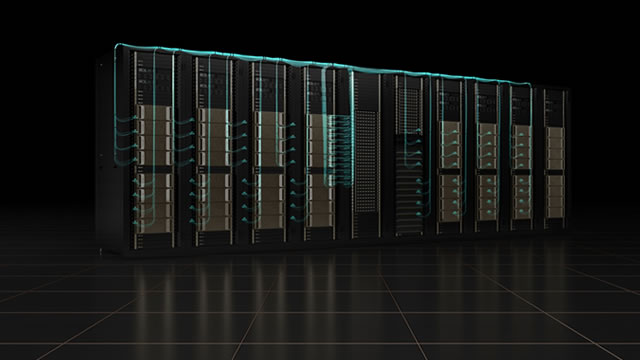
Nvidia: Selloff Overdone, Huawei 910D Can't Compete
Seeking Alpha· 2025-05-04 17:12
Core Insights - Nvidia is facing increased competition from Huawei, which is testing its 910D AI chip that is anticipated to outperform Nvidia's H100 chip [1] Company Analysis - Nvidia's H100 chip is currently a leading product in the AI chip market, but the emergence of Huawei's 910D chip poses a significant challenge [1] Industry Implications - The competition in the AI chip sector is intensifying, with Huawei's advancements potentially reshaping market dynamics and impacting Nvidia's market share [1]