Pharmaceutical Product

Search documents
Trump’s Market Mayhem: A Daily Dose of Economic Whiplash
Stock Market News· 2025-11-28 06:00
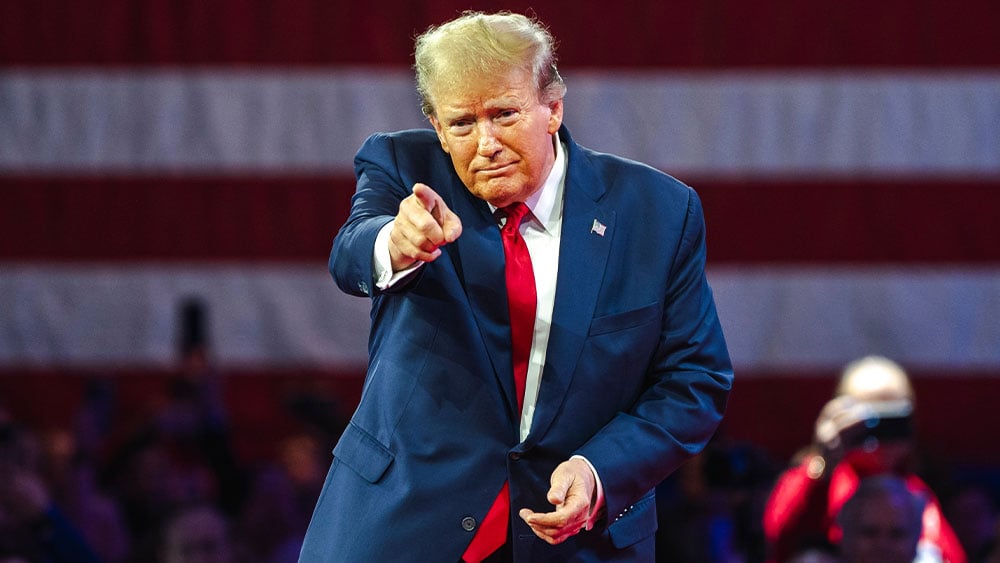
Market Reactions to Trump's Policies - The stock market remains highly reactive to Donald Trump's policy announcements, often leading to unpredictable fluctuations in various sectors [1][2] - Trump's threats of tariffs have significant impacts, as seen with John Deere, which faced a potential 200% tariff, causing its shares to drop initially but later recover [3] - The pharmaceutical sector reacted positively to Trump's 100% tariff announcement on imported drugs, as U.S. companies with domestic manufacturing were exempt, leading to a rise in their stock prices [4] Sector-Specific Impacts - The entertainment industry faced declines following Trump's announcement of a 100% tariff on foreign films, with major companies like Netflix and Disney seeing their shares drop significantly [5][6] - Healthcare stocks experienced volatility due to Trump's mixed signals regarding the Affordable Care Act, with shares of companies like Molina Healthcare and Centene rising sharply after reports of a potential extension of subsidies [7][8] Geopolitical and Trade Developments - Trump's foreign policy announcements, such as the operation against drug trafficking in Venezuela and tariffs on South African exports, have created uncertainty in global markets, although immediate impacts on oil prices were not evident [9][10] - A potential trade deal with Taiwan aimed at boosting the U.S. semiconductor industry could benefit companies like TSMC, NVIDIA, and Intel, although specific market reactions were not yet reported [11] Communication Channels and Market Sentiment - Trump's use of Truth Social to communicate policy changes and whimsical thoughts has become a significant factor in market sentiment, with some announcements being largely ignored by investors [12] - The overall market environment under Trump's influence is characterized by a blend of economic analysis and the need to interpret often contradictory policy statements, leading to a state of ongoing uncertainty [13]


Pharmaceutical Tariffs In Headlines Again As Trump Threatens 100% Levy
Investors· 2025-09-26 16:59
Core Viewpoint - The Trump administration's announcement of a potential 100% tariff on pharmaceutical products not manufactured in the U.S. has significant implications for the pharmaceutical industry, creating uncertainty and prompting companies to increase domestic manufacturing investments [1][2]. Group 1: Tariff Announcement and Market Reaction - President Trump threatened a 100% tariff on branded or patented pharmaceutical products starting October 1 unless companies establish manufacturing plants in the U.S. [1] - Following the announcement, pharmaceutical stocks remained stable, with the SPDR S&P Pharmaceutical ETF (XPH) rising by 1.6% and the VanEck Pharmaceutical ETF (PPH) increasing by 0.6% [3]. - Analysts suggest that larger biopharmaceutical companies may not be significantly affected due to ongoing U.S. facility construction, but smaller companies could face exposure [2]. Group 2: Company Responses and Investments - Pharmaceutical companies have announced over $350 million in U.S. manufacturing investments, with Amgen committing to expand its U.S. manufacturing by $650 million following the tariff threat [4]. - Amgen's CEO emphasized the importance of increasing capacity to deliver innovative medicines and creating high-quality jobs in biotechnology [5]. - Companies like Argenx, AbbVie, and Novartis highlighted their U.S. manufacturing capabilities during recent earnings calls, indicating a strong domestic presence [6]. Group 3: Broader Implications and Investigations - The tariff threat may serve as a negotiating tactic related to the ongoing Section 232 investigation into the impact of imports on national security [7]. - A separate Section 232 investigation into medical devices was announced, causing a nearly 2% decline in the medical-products industry group [8]. - Analysts predict that the medical device investigation may lead to additional tariffs, similar to the pharmaceutical tariffs, but the timing remains uncertain [9][10].