Pocket 3系列

Search documents
大疆降价风暴背后,藏着一场生死攻防战
虎嗅APP· 2025-10-10 09:44
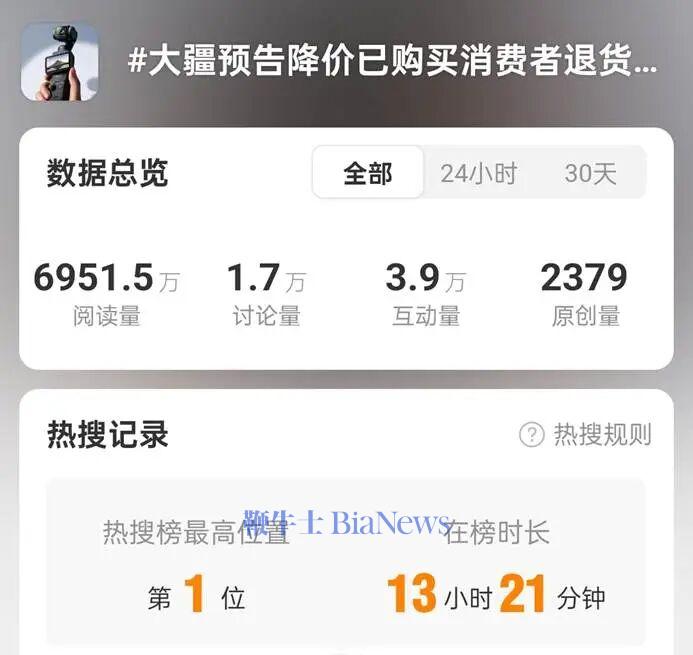
Core Viewpoint - DJI's recent price cuts on its products, including the Pocket 3 series, are seen as a necessary move in response to competitive pressures in the consumer imaging device market, rather than a simple promotional strategy [6][24][38]. Group 1: Price Cut Events - DJI launched a promotional campaign in October 2025, offering discounts of up to 900 yuan on various products, including the Pocket 3 series and action cameras [4][16]. - Consumers expressed frustration over the timing of the price cuts, with some reporting that they had just purchased products at higher prices only to see significant reductions shortly after [10][14]. - The price cuts have led to a surge in consumer complaints and discussions on social media, with many feeling misled by the company's pricing strategy [14][22]. Group 2: Market Competition - DJI's market share in the global consumer imaging device sector has declined from 19.1% in 2023 to 13.2% in 2024, while competitors like Insta360 have increased their share from 28.4% to 35.6% during the same period [25][27]. - The entry of smartphone manufacturers into the imaging device market poses a significant threat to DJI, as these companies leverage their existing technology and supply chains to offer competitive products [33][34]. - DJI's price cuts are part of a broader strategy to maintain its market position against both traditional competitors and new entrants from the smartphone industry [38][39]. Group 3: Strategic Implications - The price reductions are not merely for clearing inventory but are aimed at establishing a "price moat" to deter new competitors from entering the market with higher-priced products [36][38]. - DJI's approach reflects a tactical decision to trade short-term profits for market share and customer loyalty in anticipation of future competition [38][39]. - The company is also preparing for the launch of the next-generation Pocket 4, which is expected in early 2026, making the current price cuts a strategic move to boost user adoption of the older model [35][38].


大疆降价风暴背后 藏着一场生死攻防战
Feng Huang Wang· 2025-10-10 04:42
Core Viewpoint - DJI's recent price drop on multiple products, including the Pocket 3 series, has sparked significant consumer backlash and discussions about pricing policies, indicating a strategic response to competitive pressures in the consumer imaging market [2][12][21]. Group 1: Consumer Reactions - Consumers expressed frustration over the abrupt price drop shortly after purchase, with some feeling deceived by the lack of price protection for activated products [4][5][11]. - Social media has seen a surge of complaints from consumers who feel they have been unfairly treated, coining terms like "big loser" to describe their experiences [9][11]. - The price drop has led to confusion regarding return policies, with significant discrepancies between online and offline purchasing channels [11]. Group 2: Pricing Strategy - The price reduction is part of a broader promotional strategy leading up to the "Double 11" shopping festival, with discounts reaching up to 900 yuan on various products [10][21]. - DJI's decision to lower prices is not merely a promotional tactic but a strategic move to counteract declining market share, which fell from 19.1% in 2023 to 13.2% in 2024 [13][21]. - The company aims to create a "price moat" to deter new entrants, particularly smartphone manufacturers entering the imaging device market [20][21]. Group 3: Competitive Landscape - The consumer imaging market is becoming increasingly competitive, with DJI facing pressure from both professional competitors and smartphone giants like OPPO and vivo [16][21]. - DJI's recent product launches, such as the Osmo360, are direct responses to competitive threats, with aggressive pricing strategies to capture market share [15][21]. - The upcoming release of the Pocket 4 in early 2026 necessitates a price drop for the Pocket 3 to clear inventory and maintain customer loyalty [18][21]. Group 4: Market Implications - The significant price cuts signal a shift in the consumer imaging market dynamics, indicating a potential long-term battle for market share among established brands and new entrants [22]. - DJI's approach reflects a calculated risk to maintain relevance and competitiveness in a rapidly evolving market landscape [21][22].
大疆降价风暴背后,藏着一场生死攻防战
Feng Huang Wang Cai Jing· 2025-10-10 03:44
Core Viewpoint - DJI's recent price drop on multiple products, including the Pocket 3 series, has sparked significant consumer backlash and raised questions about pricing strategies in a competitive market [1][3][22]. Group 1: Price Drop Impact - The price reduction of up to 900 yuan on products like the Pocket 3 series has led to consumer frustration, particularly for those who purchased items shortly before the announcement [1][15]. - Consumers reported being misled about price stability, with some receiving conflicting information regarding price protection policies from different sales channels [7][10][20]. - The promotional event, labeled as a "pre-sale" for Double 11, has been criticized for its lack of clear communication and consistency across online and offline channels [22][23]. Group 2: Competitive Landscape - DJI's market share in the global smart imaging device sector has declined from 19.1% in 2023 to 13.2% in 2024, while competitors like Innosilicon have increased their share from 28.4% to 35.6% during the same period [25][26]. - The entry of smartphone manufacturers into the imaging device market poses a significant threat to DJI, as these companies leverage their existing technology and supply chains to offer competitive products [29][30]. - DJI's aggressive pricing strategy is seen as a defensive move to maintain market share against both traditional competitors and new entrants from the smartphone industry [30][34]. Group 3: Strategic Pricing Decisions - The price cuts are part of a broader strategy to clear inventory ahead of the anticipated launch of the new Pocket 4 model in early 2026, which is a common practice in the industry [31][32]. - DJI aims to create a "price moat" to deter new entrants from pricing their products competitively, thereby slowing their market penetration [33][34]. - The decision to implement significant price reductions reflects a calculated risk to trade short-term profits for long-term market positioning and customer retention [34].