Precision Strike Missile (PrSM)

Search documents
Lockheed Martin Answers the Nation's Call and Quadruples Precision Strike Missile Production
Prnewswire· 2026-03-25 11:10
Core Viewpoint - Lockheed Martin and the Department of War have established a framework agreement to significantly increase the production of Precision Strike Missiles (PrSM), aiming to enhance military capabilities and ensure American superiority against adversaries [1][3]. Group 1: Production and Investment - The new agreement will quadruple the production capacity of PrSM, building on a previous $4.94 billion contract awarded by the U.S. Army [1][2]. - Lockheed Martin has invested over $7 billion since President Trump's first term to expand capacity for priority systems, including approximately $2 billion specifically for accelerating munitions production [8]. - The company has more than 115,000 square feet of dedicated operations space in the U.S. for PrSM, with over 400 employees currently supporting the program [11]. Group 2: Strategic Importance - This initiative supports the national imperative to create a more lethal and resilient fighting force, backed by a stronger industrial base [3][4]. - The agreement allows for the negotiation of a multi-year contract of up to seven years, contingent upon future congressional authorization [3]. Group 3: Technological Advancements - PrSM is designed to succeed the legacy Army Tactical Missile System (ATACMS), offering extended range, improved lethality, and platform versatility [6]. - The system's operational debut occurred during Operation Epic Fury, confirming its deep-strike capability [5]. Group 4: Job Creation and Economic Impact - The expansion of PrSM production is expected to create high-paying, skilled jobs, contributing to long-term peace through strength [4]. - Lockheed Martin continues to expand its workforce to meet growing demand, creating tens of thousands of high-quality American jobs across various sectors [11].



Here's the Iran-war playbook for investors as the conflict drags on
Business Insider· 2026-03-12 16:20
Core Insights - The ongoing conflict in Iran has led to a sell-off in the markets, with oil prices rising to $100 a barrel and the S&P 500 down nearly 3% for the year, indicating a challenging market environment for investors [1][2]. Investment Strategies - **Avoid Rushing into 'War Stocks'**: Investors are advised against quickly investing in sectors like defense, energy, and aerospace, as these areas may already be priced in, leading to potential losses [4][5]. - **Caution with Defensive Investments**: Defensive sectors such as industrials and consumer staples are currently seen as expensive, and investing at or near all-time highs may not be prudent [6][7]. - **Consider Beaten-Down Tech Stocks**: The technology sector appears relatively insulated from oil price shocks and inflation, making it a potential area for investment, especially as it is trading at a discount [9][10][11]. - **Maintain Cash Reserves**: For short-term investors, holding cash may be a safer strategy amid potential inflation and economic uncertainty, rather than increasing exposure to riskier assets [12][13]. - **Be Wary of Volatility-Linked ETFs**: While these ETFs can hedge against market volatility, they are inherently risky and may not be suitable for average retail investors [14][15][16].

Lockheed Martin snags $5 billion US Army missile contract
Fox Business· 2025-04-01 17:46
Core Insights - Lockheed Martin has been awarded a contract worth nearly $5 billion by the U.S. Army for the production of next-generation long-range precision strike missiles [1] - The Precision Strike Missiles (PrSM) are seen as successors to the Army Tactical missile (ATACM) and are compatible with existing military platforms [2][5] - The contract is structured as an indefinite delivery, indefinite quantity contract, providing flexibility in terms of quantity and delivery schedule [5] Group 1 - The PrSM has a range exceeding 499 kilometers (310 miles) and features an open architecture for incremental improvements [5] - Lockheed Martin is focused on advancing production to ensure timely delivery of this critical capability to support the Army's vision [3] - The contract follows Lockheed's loss of the Air Force's next generation air dominance fighter jet contract, valued at over $20 billion, which was awarded to Boeing [8] Group 2 - The U.S. Marine Corps and the Australian Army have expressed intentions to acquire the PrSM, indicating broader market potential [8] - The contract reinforces Lockheed Martin's commitment to providing advanced military capabilities in a competitive defense landscape [3][5]
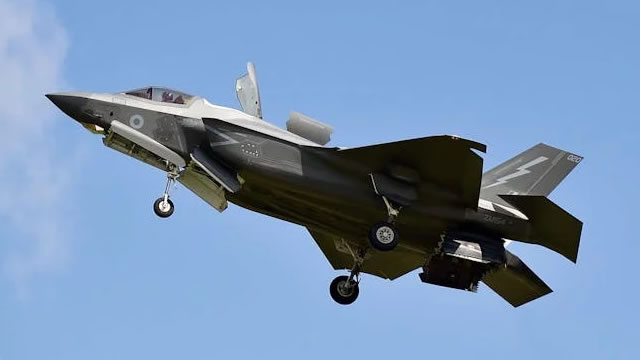
Lockheed Clinches a $4.9B Contract for Precision Strike Missile
ZACKS· 2025-04-01 13:55
Core Viewpoint - Lockheed Martin Corp. has secured a significant contract valued at $4.94 billion for the production of the Precision Strike Missile (PrSM) Increment One, expected to be completed by March 30, 2030 [1]. Group 1: Lockheed Martin's Precision Strike Missile - The PrSM is a long-range missile designed for the U.S. Army, capable of neutralizing targets beyond 499 kilometers, enhancing the capabilities for attacking and destroying targets [2]. - The demand for the PrSM is likely boosted by its notable features, as evidenced by the recent contract win [3]. Group 2: Growth Prospects for Lockheed Martin - The rise in military conflicts and national security focus has led to increased investments in missile defense systems, with a forecasted compound annual growth rate of 5% for the global missiles and missile defense systems market from 2025 to 2030 [4]. - Lockheed Martin's Missile and Fire Control unit is a recognized developer of high-performance missiles, operating in over 50 countries, with major programs including the Patriot Advanced Capability-3 and Terminal High Altitude Area Defense [5]. Group 3: Prospects of Lockheed Martin's Peers - Northrop Grumman Corporation offers high-speed, long-range strike weapons and has a long-term earnings growth rate of 4.2%, with a projected 3% year-over-year sales growth for 2025 [6][7]. - RTX Corporation is known for its missile defense systems and has a long-term earnings growth rate of 9.7%, with a projected 4.4% year-over-year sales growth for 2025 [8]. - Boeing has a long-term earnings growth rate of 17.4%, with a significant projected year-over-year sales growth of 25.7% for 2025 [9]. Group 4: Stock Performance - Lockheed Martin's shares have decreased by 1.2% over the past month, contrasting with the industry's growth of 0.8% [10].