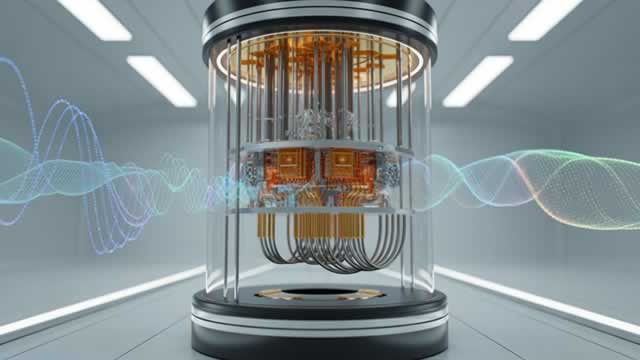
Quantum Echoes Algorithm

Search documents
Google Plans Next Steps in Quantum After Breakthrough
Youtube· 2025-10-24 18:50
I think actually the best place to start is the basics of quantum computing versus accelerated or supercomputing. Because if you explain why that 13,000 X performance is notable in simple terms, it gives some measure of why it's a piece of news this week. Absolutely.Today's computers, classical computers, they use bits, right. Zeros and ones. They use that to calculate.It's useful for a number of different problems across the world. However, quantum computing is different. It uses a combination of zeros and ...



Google hails breakthrough as quantum computer surpasses ability of supercomputers
The Guardian· 2025-10-22 15:00
Core Insights - Google has achieved a significant milestone in quantum computing by developing an algorithm that outperforms conventional computers in specific tasks, particularly in computing molecular structures, which could lead to advancements in medicine and materials science [1][2][3] Group 1: Algorithm Breakthrough - The new algorithm allows a quantum computer to operate 13,000 times faster than classical computers, marking a notable advancement in quantum computation [3] - This achievement is described as the first verifiable algorithm run by a quantum computer that exceeds the capabilities of supercomputers, indicating progress towards practical applications of quantum technology [2] Group 2: Expert Opinions - Experts acknowledge that while Google's achievement is impressive, it addresses a narrow scientific problem and may not have immediate real-world implications [4][7] - The concept of "quantum advantage" has been demonstrated, meaning tasks performed by quantum computers cannot be replicated by classical computers [5] Group 3: Future Prospects - Fully fault-tolerant quantum computers, which are essential for realizing broader scientific applications, are still years away, requiring advancements in qubit technology [6][8] - Google anticipates that real-world applications of quantum computers could emerge within five years, despite the current limitations [8][11] Group 4: Quantum Computing Fundamentals - Quantum computers utilize qubits, which can exist in multiple states simultaneously, allowing for complex computations that classical computers cannot perform [12][13] - The volatility of qubits necessitates highly controlled environments to prevent disruption, posing challenges for scalability [13] Group 5: Implications for Cybersecurity - The advancements in quantum computing have raised concerns among cybersecurity experts regarding the potential to break high-level encryption, prompting discussions on the need for quantum-proof cryptography [14]