Regular Sake

Search documents
日本清酒产业调研简报(市场发展机遇与挑战)
Sou Hu Cai Jing· 2026-01-05 00:26
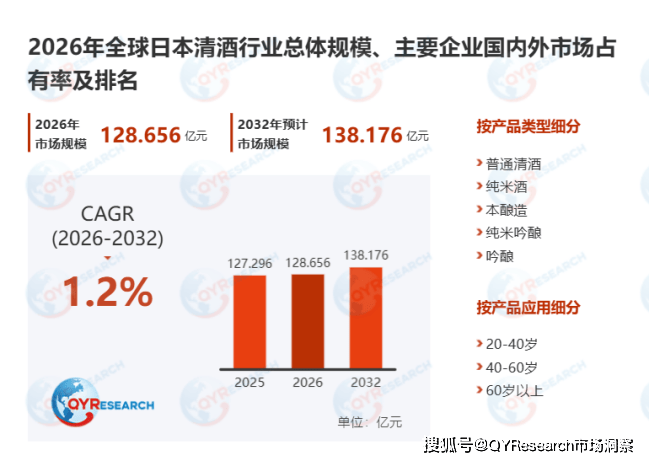
Market Overview - The global market for Japanese sake is projected to reach $2.01 billion by 2031, with a compound annual growth rate (CAGR) of 1.2% over the coming years [1]. Key Producers - Major producers of Japanese sake globally include Takara, Dassai, Gekkeikan, Kiku-Masamune, Kubota, Nihonsakari, Juyondai, Hakkaisan, Ozeki, and Kokuryu. The top five manufacturers are expected to hold approximately 23.0% of the market share in 2024 [5]. Product Segmentation - Regular sake is the leading product segment, accounting for about 37.4% of the market share [8]. Application Segmentation - The primary consumer demographic for Japanese sake is individuals aged 20-40 years, representing around 64.0% of the demand [11]. Key Drivers - The surge in global demand and the trend towards premiumization are transforming sake from a niche beverage into a high-end global spirit, with exports reaching new highs [12]. - Strategic innovation and product diversification are being pursued by breweries to attract new consumers, including the introduction of sparkling sake, low-alcohol sake, and sake cocktails, as well as flavors appealing to Western tastes [12]. - The "Cool Japan" strategy and the tourism boom prior to the pandemic have introduced sake culture to millions of tourists, fostering a loyal international following [12]. Major Challenges - Japan faces a significant demographic challenge with a declining population and shrinking core consumer base, leading to a sustained decrease in domestic sake sales [13]. - Sake is experiencing intense competition from other alcoholic beverages such as shochu, beer, whiskey, and wine, which are often marketed more aggressively [13]. - The traditional multi-tier distribution system in Japan is inefficient and opaque, posing high entry barriers for emerging or small-scale producers [13].