Starlink satellite network

Search documents
X @Tesla Owners Silicon Valley
Tesla Owners Silicon Valley· 2026-04-11 18:16
Elon Musk explains how Starlink works“So there are laser links between the satellites. So it forms sort of a laser mesh, so that if, let’s say if cables are damaged or cut, like fiber cables, the satellites can communicate between each other and provide connectivity. For example, when the Red Sea cables were cut… the Starlink satellite network continued to function.” ...
Former Venture Capitalist’s Video Presentation Shows A Supporting Player in Starlink’s Orbit is Beginning to Draw Attention
Globenewswire· 2026-02-16 01:00
Core Insights - Starlink is transitioning from a development-stage project to an active communications network, providing connectivity across various sectors such as aviation, maritime, remote communities, and emergency response [3][4][5] - The operational ecosystem supporting Starlink is becoming more visible, with a network of suppliers, service providers, and technical partners emerging as the platform matures [6][7][12] Expansion and Impact - Starlink's deployment reduces reliance on traditional ground-based infrastructure, allowing connectivity to reach areas that were previously difficult or costly to serve [4][5] - The system's influence is becoming evident not just through its satellites but also through the ways in which people are able to connect [5] Ecosystem Development - The video presentation emphasizes the importance of recognizing the organizations that support Starlink's operations, which often remain unnoticed during the early stages of technology deployment [6][9] - As Starlink matures, the roles of these supporting organizations are becoming clearer, paralleling earlier infrastructure shifts in broadband and mobile networks [10][11] Understanding the Infrastructure - Viewing Starlink solely as a satellite technology overlooks the broader network of participants that contribute to its capabilities [12] - The presentation aims to provide insights into how connectivity systems evolve from isolated innovations into integrated global infrastructure [14]
Altucher Flagged a 2026 Starlink IPO Early — Now Usage Is Surging and the Timeline Is Coming Into Focus
Globenewswire· 2025-12-20 16:29
Core Insights - James Altucher predicts that Elon Musk's Starlink is being positioned for a historic public offering in 2026, framing it as a foundational infrastructure play that could lead to the "single biggest IPO in history" [2][4]. Company Overview - Starlink has transitioned from experimental technology to a functioning global network, which is operational at scale, making it a serious candidate for public-market discussions [3]. - The satellite constellation of Starlink is rapidly expanding, providing internet access independent of traditional ground-based infrastructure [4]. Current Developments - Recent data indicates that Starlink traffic has doubled, reflecting accelerated usage across residential, commercial, and institutional sectors [6]. - Speculation around SpaceX's potential valuation reaching into the trillion-dollar range is increasing, further fueling discussions about a future public listing [6]. Growth Trajectory - Starlink is now operating on measurable growth and real-world demand, fundamentally changing how internet access can be delivered and scaled [7]. - The operational maturity, user growth, and broader market environment for large-scale technology offerings are key factors that make 2026 a significant timeframe for Starlink's future [8]. Market Context - Altucher emphasizes that significant wealth creation events often occur before a company goes public, comparing Starlink's trajectory to earlier internet inflection points [9]. - Starlink is described as part of a "radical new internet," suggesting that such transformative shifts tend to reach a tipping point quietly before becoming widely recognized [9].
STMicro has shipped 5 billion chips for Starlink in past decade; that could double by 2027
Reuters· 2025-12-15 07:16
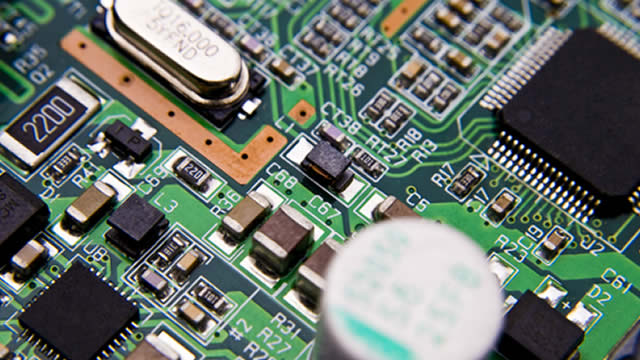
Core Insights - STMicroelectronics has shipped over 5 billion radio-frequency antenna chips to SpaceX for the Starlink satellite network [1] - The partnership is expected to deliver additional chips in the next two years [1] Company Summary - STMicroelectronics is a key supplier for SpaceX, providing essential components for the Starlink project [1] - The scale of chip shipments indicates a significant demand for radio-frequency technology in satellite communications [1] Industry Summary - The collaboration highlights the growing importance of satellite networks and the role of advanced semiconductor technology in enabling global connectivity [1] - The satellite communication sector is likely to see increased investment and innovation as companies like SpaceX expand their services [1]


SpaceX, Palantir, Anduril Power The Golden Dome Defense Push
Forbes· 2025-05-31 21:35
Core Insights - A new arms race is emerging in artificial intelligence, autonomous systems, and space-based defense, with the U.S. developing a next-generation missile shield called the "Golden Dome" [1][4] - The Golden Dome initiative is backed by a coalition of public and private companies, including SpaceX, Anduril Industries, and Palantir Technologies, highlighting a shift in defense innovation outside traditional public markets [1][14] - The initiative is expected to command over $175 billion in long-term defense spending, emphasizing rapid procurement and modernization [4] Group 1: Golden Dome Initiative - The Golden Dome is designed for mobility, scale, and rapid response, utilizing hundreds of low-Earth orbit satellites and AI systems for real-time threat neutralization [3] - The initiative represents a significant shift from legacy missile defense systems, which relied on ground-based radars and static platforms [3] Group 2: Key Companies Involved - Anduril Industries, founded by Palmer Luckey, is a major player in defense tech, utilizing its Lattice OS platform for real-time sensor data integration [5] - Palantir Technologies has become critical in providing AI models for defense initiatives, with its platforms embedded across various military and intelligence agencies [9] - SpaceX is positioned to deliver the orbital backbone of the Golden Dome, transforming from a private aerospace firm to a core U.S. defense asset [11][12] Group 3: Market Dynamics - Retail investors have historically been excluded from private companies driving defense innovation, but new investment vehicles like the XOVR ETF are emerging to bridge this gap [2][15] - The convergence of public and private firms in defense reflects a broader shift in U.S. industrial policy, with innovation now running through a hybrid pipeline of startups and growth-stage firms [14]