Streaming service

Search documents
Netflix sees more prospects for live events in South Korea
Reuters· 2026-03-20 02:32
Core Insights - Netflix is exploring more opportunities for live events in South Korea, indicating a strategic shift towards enhancing its content offerings in the region [1] Group 1: Company Strategy - The company is preparing to livestream a highly anticipated BTS comeback concert in Seoul, showcasing its commitment to leveraging popular cultural events to attract viewers [1]


RTL Group expects streaming unit to turn profit in 2026
Reuters· 2026-03-12 07:17
Core Viewpoint - RTL Group anticipates its streaming business will achieve profitability by 2026, following a period of aggressive expansion that has led to losses [1] Financial Performance - The company projects an operating profit for its streaming business between 25 million euros ($28.87 million) and 50 million euros in 2026, with expectations of nearly breaking even in Q4 2025 [1] - RTL Group expects a total full-year profit of approximately 725 million euros, despite facing economic challenges in Germany and other European markets [1] - The adjusted operating profit for 2025 was reported at 661 million euros, reflecting an 8% year-on-year decline, yet surpassing the consensus estimate of 652 million euros [1] Market Position - RTL Group is set to complete the acquisition of Sky Deutschland this year, positioning itself as the third-largest player in Germany's streaming market, ahead of Disney but behind Netflix and Amazon Prime Video [1] Strategic Outlook - The CEO of RTL Group expressed confidence in reaching streaming targets despite ongoing economic weakness in Germany, emphasizing the company's commitment to expanding its streaming business [1] - A proposed dividend of 5.50 euros per share is attributed to the successful sale of RTL Nederland in July [1]


2 Reasons to Buy Netflix Stock After Its Failed Blockbuster Acquisition
The Motley Fool· 2026-03-07 20:07
Core Viewpoint - Netflix has decided to walk away from its attempted acquisition of Warner Bros., which was deemed too expensive compared to a competing offer from Paramount Skydance [1][2]. Group 1: Public Perception - The proposed acquisition raised significant antitrust concerns, with lawmakers and media industry insiders expressing strong objections [4]. - By backing out of the deal, Netflix avoids potential regulatory battles and maintains a positive public perception, which is crucial for its brand [5]. Group 2: Financial Implications - The total equity value of the proposed acquisition was $72 billion, which would have significantly increased Netflix's debt burden [7]. - Instead, Netflix received a $2.8 billion termination fee, accounting for approximately 23% of the company's projected fourth-quarter sales [8]. - The company can now focus on its content-creation strategy with greater financial flexibility, as the streaming industry still presents substantial growth opportunities [9].
Netflix Drops Out of Bidding War for Warner Bros.
Youtube· 2026-03-06 16:07
Core Viewpoint - The company has decided against pursuing a significant acquisition, specifically the $80 billion deal for Warner Brothers Discovery, signaling confidence in its organic growth strategy rather than mergers and acquisitions in a competitive streaming market [4][5]. Financial Performance - The company is projecting double-digit revenue growth, estimating a revenue increase of 12% to 14% for the year, alongside an operating margin expansion of nearly 1000 basis points, which is a 10% increase over the past two years [5]. - The company is also generating strong free cash flow, indicating that all financial levers and growth drivers are in place [5]. Strategic Focus - The absence of the acquisition distraction allows the company to concentrate on its organic growth narrative, which is seen as a positive move by investors [4][5]. - The company plans to invest $20 billion in films and shows this year, marking a significant increase in content spending by approximately 10% compared to previous years [11][12]. Competitive Landscape - The company is diversifying its content offerings, with substantial investments in live sports and international content to enhance engagement and maintain its competitive edge [12]. - The termination fees of $2.8 billion from the abandoned Warner deal provide additional financial flexibility for the company [12].

From a Mailed DVD To A Contested $82.7 Billion Deal: Netflix Co-Founder Marc Randolph On Why You Just Have To Start - Netflix (NASDAQ:NFLX)
Benzinga· 2026-02-25 19:59
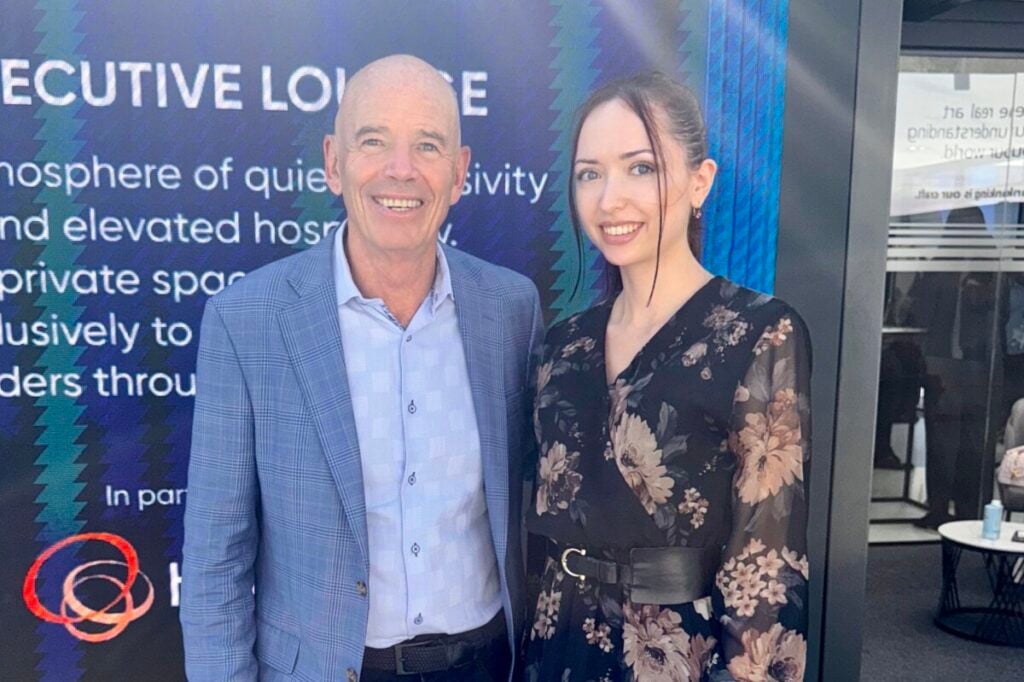
Credit: Marc Randolph(co-Founder and first CEO of Netflix) with Anna Tutova(Founder AI Crypto Minds).The serial entrepreneur and first CEO of Netflix reflects on the streamer’s seismic Warner Bros. Discovery acquisition, the founder’s mindset and why AI is the ultimate startup weapon.Warner Bros. Discovery’s board said Tuesday that Paramount Skydance’s revised $31-per-share offer could reasonably be expected to lead to a superior proposal, marking the first time the company has formally acknowledged the riv ...
Warner Bros. Discovery may upend Netflix deal after getting revised bid from David Ellison's Paramount
New York Post· 2026-02-24 23:54
Core Viewpoint - Warner Bros. Discovery (WBD) is reconsidering a revised offer from Paramount Skydance, which has increased its bid from $78 billion to $80.6 billion, primarily due to concerns over the regulatory environment surrounding its nearly finalized deal with Netflix [1][4][10]. Group 1: Offer Details - Paramount Skydance has raised its bid to $31 per share, which includes adjustments to the previously rejected proposal [7]. - The WBD board has acknowledged that the revised proposal from Paramount Skydance could potentially lead to a superior offer compared to Netflix's [6][8]. Group 2: Regulatory Concerns - Investors are increasingly worried that the Netflix deal may not pass regulatory scrutiny in the U.S. and Europe, particularly under antitrust laws [2][4]. - The White House antitrust regulators are examining whether Netflix is becoming a monopoly, which could lead to prolonged investigations and litigation [4][10]. - Netflix is actively engaging with regulators to address antitrust concerns and mitigate potential issues related to its business model [11][13]. Group 3: Market Reactions - The bidding war has led to a significant increase in WBD's stock price, rising from $12 to nearly $30 as investors speculate on the final deal price [10]. - Notable investors, including Mario Gabelli, are favoring the Paramount deal due to its regulatory clarity and immediate financial benefits [6].

Justice Department Casts Wide Net on Netflix's Business Practices in Merger Probe
WSJ· 2026-02-06 19:30
Group 1 - The Department is investigating bids for Warner and is questioning whether the streaming service has engaged in conduct that could lead to monopoly status [1]
Has Netflix Stock Fallen Far Enough to Be Attractive?
Yahoo Finance· 2026-01-21 19:31
Core Viewpoint - Netflix shares have experienced a significant decline of over 29% in the past three months, with even a strong fourth-quarter earnings report failing to reverse this trend [1] Financial Performance - Despite a stronger-than-expected fourth-quarter earnings report, Netflix shares continued to decline in pre-market trading [1] - The company reported total debt of approximately $14.5 billion at the end of 2025, which raises concerns about financial flexibility in a competitive streaming environment [6] Management Outlook - Netflix's management has indicated that expense growth will accelerate modestly this year compared to last year, which has unsettled investors focused on near-term profitability [2] - The company plans to increase investments in content, product development, and commerce capabilities to support sustained revenue growth [2] Strategic Developments - Netflix's amended agreement for the acquisition of Warner Bros. Discovery has been restructured as an all-cash transaction, which could enhance its content library and competitive position [4] - The acquisition requires Warner Bros. Discovery to spin off its Global Networks division into a separate publicly traded company, complicating the transaction timeline [4] Regulatory Environment - Regulatory scrutiny poses a potential hurdle for the acquisition, with concerns about consolidation and market dominance in the media and streaming industries [5] - Approval delays are a risk, and there is a possibility that the transaction could fail to materialize due to competitive dynamics, as Paramount has shown interest in Warner Bros. Discovery [5]

Netflix: From Consensus Long To Repricing Phase
Benzinga· 2026-01-05 12:09
Core Insights - Netflix has transitioned from being a consensus favorite to a stock undergoing reassessment, with the change in positioning being more significant than the absolute price decline [1] Performance Overview - Netflix has underperformed the broader market, trading over 30% below its peak due to a weaker-than-expected October earnings report, scrutiny around execution, uncertainty regarding a potential Warner Bros. transaction, and a valuation with limited margin for error [2] Fundamental Analysis - Core fundamentals remain intact, with solid revenue growth, stable global engagement, and maintained relevance as a platform; however, investor confidence in near-term execution and capital allocation has been repriced [3][4] M&A and Strategic Concerns - The potential Warner Bros. transaction has introduced discomfort among investors, focusing on timing and balance-sheet risk rather than long-term strategic logic [5] - Netflix's capital-intensive model raises concerns about adding leverage and complexity, especially when markets favor financial clarity [6] Strategic Direction - Despite stock weakness, Netflix maintains an offensive strategic posture with an extensive 2026 content slate, focusing on engagement density rather than just subscriber growth [7][8] Competitive Positioning - Netflix's pure-play content operation contrasts with platform-oriented peers like Roku and diversified ecosystems like Amazon and Disney, amplifying both upside potential and investor scrutiny [9] Market Dynamics - The recent sell-off has been orderly, indicating systematic de-risking rather than capitulation, with selling pressure moderating at multiple price levels [10][11] Future Outlook - Netflix does not currently appear inexpensive and lacks an obvious near-term catalyst; however, it is no longer crowded or supported by unquestioned optimism, altering the risk-reward framework for institutional investors [12] - Future phases will depend on clarity in capital allocation, consistent execution, and evidence of engagement translating into durable monetization [13]
Netflix refinances part of $59 billion loan with cheaper, long-term debt as it seeks to acquire Warner Bros
MINT· 2025-12-22 12:51
Group 1: Netflix's Financial Maneuvers - Netflix has refinanced a portion of its $59 billion bridge loan with cheaper, long-term debt, enhancing its financial position for the acquisition of Warner Bros. Discovery Inc [1] - The refinancing includes a $5 billion revolving credit line and two $10 billion delayed-draw term loans, leaving $34 billion available for syndication [1] - Netflix is expected to access capital markets to further reduce its bridge loan and extend debt maturities, having previously relied on the junk-bond market [8] Group 2: Warner Bros. Acquisition Context - In December, Netflix valued Warner Bros.' studio and streaming assets at $82.7 billion, leading to a competitive bidding situation with Paramount Skydance Corp. initiating a hostile takeover bid [2] - Warner Bros. has urged its shareholders to reject Paramount's bid, labeling it as "inferior and inadequate," and expressing concerns over the associated debt commitments of $54 billion [3] Group 3: Regulatory and Political Challenges - Despite having the backing of Warner Bros. board, Netflix faces regulatory and political hurdles, with concerns raised by Democratic Senator Elizabeth Warren regarding potential anti-monopoly issues [4] Group 4: Bridge Loans Explained - Bridge loans are short-term financing solutions used to address immediate funding needs, typically replaced by more stable debt arrangements [5] - These loans allow banks to build relationships with companies, which can lead to more lucrative mandates in the future [6]