
Toyota 4Runner

Search documents
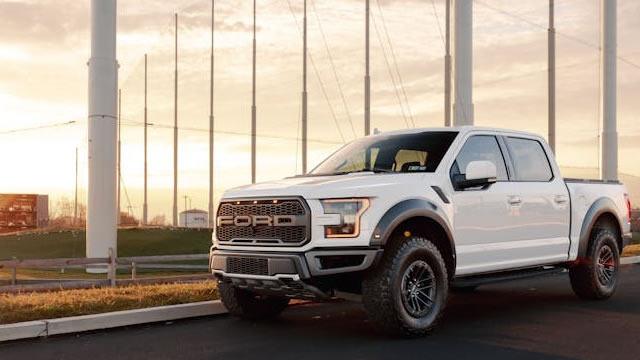
Ford said it expects Trump's tariffs to set it back $2 billion and hand Japanese automakers a 'meaningful' edge
Business Insider· 2025-07-31 04:44
Core Insights - Ford's CEO, Jim Farley, stated that the Trump administration's tariff policy will impose a $2 billion cost on the automaker, which is an increase from the previously projected $1.5 billion [1][10] - Farley anticipates a shift in the automotive industry towards a regional business model due to tariffs, the rise of electric vehicles, and new carbon regulations [2] - The reduction of tariffs on Japan from 25% to 15% will provide Japanese automakers with a significant cost advantage over Ford [3] Group 1: Tariff Impact - The total tariff burden on Ford is now estimated at $2 billion, which is a net figure [1] - The company is facing competitive pricing challenges, with examples showing that a Kentucky-built Ford Escape could be $5,000 more expensive than a Japanese-made Toyota Rav4, and a Michigan-made Ford Bronco could be undercut by $10,000 by a Toyota 4Runner [8] - Farley indicated that the current tariff situation is a "windfall for South Korean and Japanese companies" [10] Group 2: Strategic Shifts - Farley expressed that automakers will likely adopt a regional approach, with Europe, North America, and Asia operating as distinct markets [2] - The company is working with the Trump administration to reduce tariff expenses to enhance competitiveness [9] - Ford's strategy is not to compete in commodity segments, focusing instead on other areas [9] Group 3: Market Reaction - Following the announcement, Ford's shares fell by nearly 1.6% in after-hours trading, although they are up 9.8% year to date [11]


Toyota Motor North America Reports March, First Quarter 2025 U.S. Sales Results
Prnewswire· 2025-04-01 15:35
Core Insights - Toyota Motor North America (TMNA) reported a significant increase in sales for March 2025, with total sales reaching 231,335 vehicles, up 7.7% year-over-year on a volume basis and 11.8% on a daily selling rate (DSR) basis [1][2][10] - Electrified vehicle sales for March 2025 totaled 112,608, marking a 44.1% increase in volume and representing 48.7% of total sales volume [1][2][10] - The first quarter of 2025 saw TMNA sell 570,269 vehicles, a 0.9% increase in volume and a 3.6% increase on a DSR basis compared to the previous year [2][10] Sales Performance - The Toyota division sold 196,240 vehicles in March, up 6.6% on a volume basis, while the Lexus division achieved sales of 35,095 vehicles, up 14.1% [3][4][10] - For the first quarter, the Toyota division reported sales of 487,226 vehicles, a slight increase of 0.1%, while the Lexus division recorded its best-ever first quarter with 83,043 vehicles sold, up 5.8% [3][4][10] Electrified Vehicle Highlights - TMNA offers 32 electrified vehicle options, the most among any automaker, contributing to a growing sales mix of electrified vehicles [5][6] - First quarter sales of electrified vehicles totaled 288,796, up 39.6% in volume and representing 50.6% of total sales volume [2][14] - Notable increases in specific models include the bZ4X, which saw a 195.7% increase in first quarter sales, and the Tacoma, which increased by 177.5% [6][12] Market Strategy - The company attributes steady sales to improved inventory levels and the introduction of new models, such as the Toyota 4Runner and Lexus LX hybrid [5] - TMNA maintains the lowest incentives among full-line manufacturers, which may contribute to its competitive positioning in the market [6]


What is the actual cash value of my car? Here’s what to know.
Yahoo Finance· 2024-07-29 20:42
Core Insights - The article discusses how actual cash value (ACV) is determined for vehicles in the context of insurance claims, emphasizing the difference between ACV and replacement cost value (RCV) [1][9][17] Group 1: Actual Cash Value (ACV) Explained - ACV is the market value of a vehicle after accounting for depreciation, which is the decrease in value over time [9][10] - Insurance companies typically reimburse based on ACV minus any deductible, which can lead to financial shortfalls for car owners if the vehicle is financed [4][5] Group 2: Total Loss and Insurance Coverage - A vehicle may be deemed a total loss if repair costs exceed a certain percentage of its value, often set by state laws, with some states using a threshold of 75% [2] - Comprehensive and collision insurance claims provide reimbursement based on ACV, which may not cover the full loan amount if the vehicle is financed [5][17] Group 3: Maximizing Vehicle Value - To maximize ACV, owners should minimize depreciation through regular maintenance, keeping mileage low, and maintaining the vehicle's condition [11][13] - Owners can negotiate ACV with insurers by providing evidence of comparable vehicle values and may hire independent appraisers for support [14][15] Group 4: Additional Insurance Options - Gap insurance can cover the difference between ACV and the outstanding loan amount, which is particularly useful for financed vehicles [6] - New car replacement coverage is available from some insurers, but it often comes with strict eligibility criteria [7]
What is car depreciation, and how do you calculate it?
Yahoo Finance· 2024-01-19 22:32
Core Insights - Car depreciation is the loss of a vehicle's value over time, primarily due to aging and wear and tear, which begins the moment a car is driven off the dealership lot [1][2] - Certain makes and models depreciate at different rates, with some vehicles losing nearly 30% of their value in the first two years and then about 8% to 12% per year thereafter [3][4] Group 1: Factors Affecting Car Depreciation - The depreciation rate is influenced by several factors including make and model, mileage, vehicle age, maintenance and repairs, accident history, and market demands [10] - Popular brands like Toyota and Honda tend to retain their value better due to their reputation for reliability and low maintenance [10] Group 2: Financial Implications of Depreciation - Vehicle depreciation impacts auto insurance needs, as insurers base payouts on the actual cash value (ACV) of the vehicle at the time of loss, which is affected by depreciation [6] - Gap insurance may be necessary for car owners who owe more on their vehicle than its depreciated value, especially if they made a small down payment or have a long loan term [7][8] Group 3: Strategies to Minimize Depreciation - Choosing a vehicle with low depreciation rates, buying used cars, maintaining the vehicle properly, and limiting mileage can help minimize depreciation [25][26][27][28] - Avoiding aftermarket modifications and frequent trade-ins can also help retain a vehicle's value over time [32][33] Group 4: Depreciation in Leasing vs. Buying - When leasing, the bulk of monthly payments goes toward depreciation, and the residual value at the end of the lease is crucial for determining costs [21][23] - Buying a vehicle typically involves higher monthly payments but allows for building equity, especially if the vehicle depreciates slowly [21][22]