
Transit

Search documents
Lamar Advertising (LAMR) Q4 Net Income Hits $154.7M as Revenue Rises to $595.9M
Yahoo Finance· 2026-03-10 00:14
Financial Performance - For Q4 2025, Lamar Advertising reported net revenues of $595.9 million, a 2.8% increase year-over-year, and net income of $154.7 million, recovering from a net loss in Q4 2024 [1] - The full-year 2025 results showed net revenues climbing 2.7% to $2.27 billion, with net income increasing by 63.4% to $593.1 million, aided by a $68.6 million gain from the sale of an equity interest in Vistar Media [2] Operational Highlights - Adjusted EBITDA for Q4 2025 rose by 3.7% to $288.9 million, attributed to strong sales momentum in both local and national markets [1] - As of year-end 2025, the company maintained total liquidity of $807.0 million, including $64.8 million in cash and significant availability under credit facilities [4] Future Outlook - Management expressed optimism for 2026, projecting diluted net income per share between $5.72 and $5.83, indicating confidence in continued sales strength [4]

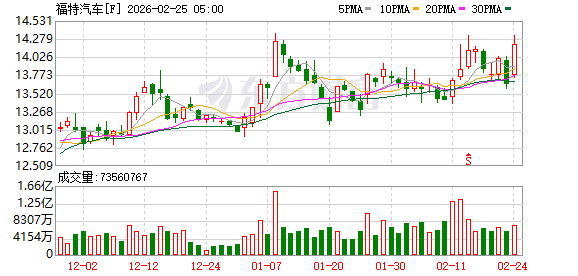
福特在美召回超45万辆汽车,业绩承压下或谋求与中国车企合作
Mei Ri Jing Ji Xin Wen· 2026-02-25 13:05
Core Insights - Ford Motor Company is recalling over 450,000 vehicles in the U.S. due to various safety issues, highlighting challenges in product quality control [2] - The company reported a significant net loss of approximately $8.2 billion in 2025, marking its largest annual loss since 2008, despite a slight increase in revenue [3] - Ford's sales performance is declining, with a 5.3% year-over-year decrease in U.S. sales in January 2026 and a 2% drop in global sales for 2025 [4] Recall Details - The largest recall involves 412,774 units of the 2017-2019 Explorer models due to potential rear suspension link failure, increasing collision risk [2] - Additionally, 24,690 units of the 2023-2025 Ford Escape and 2023-2026 Lincoln Nautilus plug-in hybrid models are recalled for battery defects that could lead to short circuits and fire hazards [2] - The recall also includes 15,965 units of the 2025 Transit model due to a potential brake failure issue [2] Financial Performance - Ford's total revenue for 2025 was approximately $187.3 billion, with a net loss of $8.2 billion, compared to a net profit of $5.9 billion in 2024 [3] - The fourth quarter of 2025 was particularly detrimental, with revenue of $45.9 billion, a 4.8% decline year-over-year, and a net loss of $11.1 billion [3] - Special project costs of $19.5 billion in Q4 2025, related to strategic adjustments, significantly impacted overall profitability [3] Sales Performance - In January 2026, Ford's U.S. sales were 135,400 units, down 5.3% year-over-year, indicating weak growth in core markets [4] - Global sales for 2025 were approximately 4.395 million units, a 2% decline, with Ford being surpassed by Chinese automaker BYD for the first time [4] - In China, Ford's retail sales dropped to 99,400 units in 2025, falling below the critical threshold of 100,000 units [4] Strategic Initiatives - Ford is exploring a potential collaboration framework with the U.S. government to allow Chinese automakers to establish production facilities in the U.S. while providing protections for domestic companies [4][5] - This strategy aims to leverage the technological advantages of Chinese firms in electrification and smart technology, potentially reducing Ford's R&D costs [5] - However, the initiative faces uncertainties due to high tariffs on Chinese imports and stringent regulatory requirements in the U.S. [5]


Does it Make Sense to Own Ford Stock After Dismal Q4 Results?
ZACKS· 2026-02-11 13:55
Core Insights - Ford ended 2025 with a significant net loss of $11.1 billion on a GAAP basis, a stark contrast to a profit of $1.8 billion in Q4 2024, marking the end of a four-quarter earnings beat streak [1] - The disappointing performance was attributed to one-off disruptions, policy-related costs, and special charges related to the company's EV strategy reset [2][5] Financial Performance - Ford's Q4 2025 results included a non-GAAP EPS of 13 cents, missing the Zacks Consensus Estimate of 17 cents and reflecting a 26% decline year over year [1] - The company incurred approximately $2 billion in losses due to supplier disruptions and an additional $2 billion in net tariff headwinds, alongside $15.5 billion in special charges primarily linked to its EV strategy [2] EV Strategy and Charges - Ford announced a total of $19.5 billion in charges as it restructured its EV strategy, scrapping several costly projects and focusing on more affordable EVs [5] - The company expects around $7 billion in special charges over the next two years related to these changes, with most financial impacts anticipated in 2026 [5] Operational Outlook - Ford's Model e segment continues to operate at a loss, with EBIT losses narrowing to $4.8 billion in 2025 from $5.07 billion in 2024, and is projected to remain unprofitable through 2026 [7] - Management anticipates some cost relief in 2026, with tariff headwinds expected to ease to about $1 billion and additional savings from material and warranty cost reductions [8] 2026 Projections - Ford expects adjusted EBIT of $8-$10 billion in 2026, an increase from $6.8 billion in 2025, with adjusted free cash flow improving to $5-$6 billion [10] - The company generated $187 billion in revenue for 2025 and gained U.S. market share, holding $50 billion in liquidity to navigate challenges [10][21] Long-Term Growth Potential - Despite recent challenges, Ford's long-term growth narrative remains intact, with a focus on building higher-margin growth engines and a strong dealer network [17][20] - The company is shifting its EV strategy to focus on affordable models built on a cost-efficient platform, targeting segments with better demand and profitability [19] - Ford's balance sheet is robust, with nearly $50 billion in total liquidity, providing financial flexibility for future investments [21]
Ford Motor(F) - 2025 Q4 - Earnings Call Transcript
2026-02-10 23:02
Financial Data and Key Metrics Changes - The company reported $187 billion in revenue for the year, with a $6.8 billion adjusted EBIT, which includes a $2 billion headwind from Novelis fires and tariffs [5][6] - The adjusted EBIT would have been $7.7 billion without the one-time tariff impact [6] - Free cash flow for the year was $3.5 billion, ending with nearly $29 billion in cash and $50 billion in liquidity [15] Business Line Data and Key Metrics Changes - Ford Pro generated over $66 billion in revenue with an EBIT of $6.8 billion, maintaining a double-digit margin despite various challenges [16] - Model E saw a revenue growth of 73% and volume growth of 69%, although it still reported a $4.8 billion EBIT loss [17] - Ford Blue's revenue was roughly flat, with EBIT of $3 billion, supported by lower warranty costs and growth in software and services [19] Market Data and Key Metrics Changes - U.S. market share increased to 13.2%, the best performance in six years [5] - Ford Pro's Class 1 through 7 market share in the U.S. is over 42%, while in Europe, it has been the number one commercial brand for 11 consecutive years [9] - The company expects a U.S. SAAR of $16-$16.5 million in flat industry pricing for 2026 [20] Company Strategy and Development Direction - The company is focusing on affordable EVs through a Universal EV Platform, targeting high-volume segments [12] - Ford Energy is seen as a strategic business to diversify revenue and reduce risks in the core automotive sector [12] - The Ford Plus strategy aims for an 8% adjusted EBIT margin by 2029, with a disciplined approach to capital allocation [12][60] Management's Comments on Operating Environment and Future Outlook - Management expressed confidence in achieving year-over-year profit improvements driven by a richer Ford Blue mix and Ford Pro growth [11] - The company anticipates a more stable policy environment and expects to absorb about $1 billion in higher commodity prices due to inflation [21] - Management highlighted the importance of customer choice and the need to adapt to changing market conditions [37] Other Important Information - The company plans to invest $1.5 billion in Ford Energy as part of its capital expenditures for 2026 [20] - Ford Credit delivered a full-year EBT of $2.6 billion, reflecting a 55% increase year-over-year [19] - The company is targeting another $1 billion in industrial cost improvements [11] Q&A Session Summary Question: Can you unpack the pieces on the market factors driving the year-over-year increase? - Management explained that the $1 billion improvement from Novelis is expected to be non-recurring, with additional benefits from regulatory changes and industrial cost improvements [30][32] Question: How is the investment in EV and AV being approached? - Management emphasized a focus on the Universal EV Platform and hybrid solutions, aiming for capital efficiency and customer demand alignment [36][37] Question: Can you clarify the Novelis impact and aluminum supply reliability? - Management confirmed that the Novelis mill is expected to restart between May and September, with contingency plans in place for supply continuity [46] Question: How does the company view the competitive landscape in North American trucks? - Management stated that they have been growing their truck leadership position and are prepared for competitive challenges [49] Question: What are the expectations for capital expenditures in the coming years? - Management indicated that capital spending is expected to increase, primarily driven by investments in Ford Energy and higher-return products [58][60]
Ford Motor(F) - 2025 Q4 - Earnings Call Transcript
2026-02-10 23:00
Financial Data and Key Metrics Changes - The company reported $187 billion in revenue for the year, with an adjusted EBIT of $6.8 billion, which includes a $2 billion headwind from Novelis fires and tariffs [4][5] - The adjusted EPS and free cash flow figures were not explicitly mentioned, but the company generated $3.5 billion in free cash flow and ended the year with nearly $29 billion in cash and $50 billion in liquidity [13][14] - The company aims for an adjusted EBIT margin of 8% by 2029, indicating a focus on improving profitability [5] Business Line Data and Key Metrics Changes - Ford Pro generated over $66 billion in revenue with an EBIT of $6.8 billion, maintaining a double-digit margin despite challenges [15] - The Model E segment saw a revenue increase of 73% and volume growth of 69%, although it still reported an EBIT loss of $4.8 billion [16] - Ford Blue's revenue was roughly flat, with EBIT of $3 billion, supported by higher net pricing and a strong product lineup [17] Market Data and Key Metrics Changes - The U.S. market share increased to 13.2%, the best performance in six years, with significant growth in the Super Duty and Transit franchises [4][7] - Ford Pro's Class 1 through 7 market share in the U.S. is over 42%, while in Europe, it has been the number one commercial brand for 11 consecutive years [7][8] - The company anticipates a U.S. SAAR of $16 million to $16.5 million for 2026, with flat industry pricing expected [19] Company Strategy and Development Direction - The company is shifting its EV focus to high-volume, affordable vehicles, launching a Universal EV Platform aimed at the profitable $35,000 EV market [11][31] - Ford Energy is positioned as a strategic business to diversify revenue and reduce risks in the core automotive sector [11][12] - The company plans to expand its market coverage with a mix of powertrains, including gas, hybrids, and fully electric vehicles [13] Management's Comments on Operating Environment and Future Outlook - Management expressed confidence in achieving year-over-year profit improvements driven by a richer Ford Blue mix and reduced Model E losses [10] - The company expects to achieve $8 billion to $10 billion in adjusted EBIT for 2026, with a focus on capital expenditures of $9.5 billion to $10.5 billion [19][22] - Management highlighted the importance of maintaining a competitive edge through cost reductions and improved product offerings [24] Other Important Information - The company declared a first-quarter regular dividend of $0.15 per share, reflecting its commitment to delivering shareholder returns [15] - Ford Credit delivered an EBT of $2.6 billion, up 55% year-over-year, indicating strong performance in financing [18] Q&A Session Summary Question: Can you unpack the market factors driving the year-over-year increase for 2026? - Management explained that the $1 billion improvement from Novelis is expected due to non-reoccurrence of previous losses and capacity actions, alongside lower tariff costs [26][29] Question: How is the investment in EV and AV being approached more capital-efficiently? - Management emphasized a focus on customer preferences and a strategy centered around the Universal EV Platform, which targets profitable segments [31] Question: What is the expected impact of Novelis on 2026? - The company anticipates a $1 billion year-over-year improvement from Novelis, with temporary costs expected to be around $1.5 billion to $2 billion [27][34] Question: How does Ford plan to address competition in the truck market? - Management highlighted the strength of their F-Series lineup and the importance of maintaining a disciplined market approach to balance share and incentives [36][37] Question: What are the expectations for capital expenditures in the coming years? - The company plans to increase capital spending to $9.5 billion to $10.5 billion, primarily driven by investments in Ford Energy and higher-return products [41][42]
Columbia(COLM) - 2025 Q4 - Earnings Call Transcript
2026-02-03 23:02
Financial Data and Key Metrics Changes - Full year 2025 net sales increased by 1% to $3.4 billion, with international growth offsetting challenges in the U.S. market [9][10] - Fourth quarter net sales decreased by 2% year-over-year to $1.1 billion, driven by a 7% decrease in wholesale net sales, partially offset by a 1% increase in direct-to-consumer sales [12] - Gross margin expanded by 50 basis points to 51.6%, attributed to cleaner inventories and lower promotions [12] - SG&A expenses increased by 3%, reflecting higher DTC expenses and non-recurring costs associated with a profit improvement program [12] Business Line Data and Key Metrics Changes - Columbia brand net sales decreased by 1%, with international growth offset by declines in the U.S. [18] - Sorel net sales decreased by 18% due to earlier shipment of fall wholesale orders, while full-price demand remained healthy [23] - Prana net sales increased by 6%, driven by DTC growth and enhanced marketing efforts [23] - Mountain Hardwear net sales decreased by 5%, with healthy underlying business trends in outerwear and fleece [24] Market Data and Key Metrics Changes - U.S. net sales decreased by 8%, with wholesale down in the high teens percent [13] - International sales showed strong growth, with LAAP net sales increasing by 10% and China net sales increasing in the low double digits [15][16] - Japan net sales increased by high single digits, while Korea saw low single-digit growth [16][17] - EMEA net sales increased by 3%, with Europe showing potential for strong growth despite challenges [17] Company Strategy and Development Direction - The Columbia Accelerate Growth Strategy is attracting younger consumers through new product collections and differentiated marketing [8] - The company is focused on driving shareholder value, returning cash through share repurchases and dividends [9] - The introduction of new product lines, such as the Amaze Puff collection and OutDry Extreme technology, is aimed at enhancing brand engagement and market presence [10][11] Management's Comments on Operating Environment and Future Outlook - Management expressed optimism about the brand's momentum and the positive reception of new product collections [34][29] - The company anticipates a full-year net sales growth of 1%-3% for 2026, with expectations of operating margin expansion despite ongoing tariff headwinds [11][27] - Management acknowledged the challenges posed by tariffs and indicated ongoing efforts to mitigate their impact through pricing strategies and cost management [26][54] Other Important Information - The company exited 2025 with $791 million in cash and equivalents and no debt, maintaining a strong balance sheet [9] - The Engineered for Whatever campaign has significantly increased brand awareness and engagement metrics [19] Q&A Session Summary Question: Trends in the business and order book status - Management noted strong bookings and cautious retailer approaches due to tariff impacts, with expectations for improved performance in Spring 2026 [33] Question: Brand advertising and marketing spend - Management indicated that while they could spend more on marketing, they believe current levels are appropriate for now, with a slight decrease planned for 2026 [36][37] Question: Overlap with Eddie Bauer store closures - Management acknowledged potential opportunities to capture market share if Eddie Bauer closes stores, but noted uncertainty regarding the extent of overlap [42] Question: Gross margin and tariff impacts - Management explained that unmitigated tariff costs would have a significant impact on gross margins, particularly in the first half of the year [45] Question: U.S. market health and growth expectations - Management expects a return to growth in the U.S. wholesale business in the second half of the year, with a low- to mid-single-digit growth rate anticipated [50][69] Question: Order book and inventory status - Management confirmed that the order book for Fall 2026 is strong, with expectations for improved sell-through rates [80]

Will Ford Pro's Fleet and Software Strength Fuel Long-Term Gains?
ZACKS· 2025-11-04 16:41
Core Insights - Ford's commercial arm, Ford Pro, is becoming the company's primary growth driver, with Q3 2025 EBIT increasing by 9.4% year-over-year to $2 billion on revenues of $17.4 billion, which is up 9% [1][8] - Ford Pro's EBIT margins exceeded 11% in the last reported quarter, making it the most profitable segment of Ford [1][8] - The segment's EBITDA margin for the first nine months of 2025 was 10.6%, with wholesale volumes and revenues increasing by 3% and 1%, respectively [1] Business Model and Services - Ford Pro integrates vehicle sales, services, and software into a cohesive ecosystem tailored for commercial clients, featuring models like the F-150, Super Duty, and Transit [2] - The service infrastructure and digital integration are key differentiators, with the dealer network expanding by adding 1,700 service bays and 500 mobile vans, establishing Ford as the largest mobile service fleet in the U.S. [3] Software and Recurring Revenue - Software is identified as a significant area for profitability, with paid software subscriptions rising by 8% sequentially to 818,000 in Q3, enhancing high-margin recurring revenues [4] - Fleets utilizing Ford's software experience a 20-point higher service parts capture rate, indicating improved customer retention and parts sales [4] Competitive Landscape - Competition in the commercial fleet sector is intensifying, with General Motors ramping up its GM Envolve platform and Stellantis developing its connected fleet software under the Mobilisights unit [6] Stock Performance and Valuation - Ford shares have increased by 22.8% over the past year, underperforming compared to General Motors' 27% rise and Stellantis' 26% decline [7] - Ford trades at a forward price-to-sales ratio of 0.32, below the industry average, and holds a Value Score of A [10]
Ford recalls nearly 1.5 million vehicles over faulty rear-view camera
Fastcompany· 2025-09-10 10:30
Group 1 - Ford is recalling nearly 1.5 million vehicles in the U.S. due to a rear view camera issue that may show a blank or distorted image, increasing the risk of a crash [2][3] - The recall affects specific models from 2015 to 2019, including Lincoln Navigator, Lincoln MKC, Mustang, Ranger, Transit, and several others [3] - The National Highway Traffic Safety Administration reported that Ford is aware of 18 accidents related to the camera issue, but no injuries have been reported [3] Group 2 - Vehicle owners will be notified by mail and instructed to take their vehicles to a Ford or Lincoln dealer for inspection and potential replacement of the rear view camera, with no charge for the service [4]
Ford recalls more than 200,000 vehicles with software glitch due to crash risk
Fox Business· 2025-07-03 00:40
Core Point - Ford Motor Company is recalling over 200,000 vehicles due to a software malfunction affecting rearview cameras, which increases the risk of crashes and potential injuries [1][6]. Group 1: Recall Details - The recall involves 200,061 vehicles, including models from 2018 to 2024 such as Transit Connect, MKZ, Edge, Continental, F-150, Nautilus, Fusion, Ranger, Mustang, EcoSport, Expedition, Navigator, Escape, F-250 SD, Corsair, Aviator, Transit, Explorer, Bronco Sport, and Maverick [2]. - A software error may cause rearview cameras to display a blank or frozen image when the vehicle is in reverse, which can distract drivers and reduce visibility [3][6]. Group 2: Customer Support and Actions - Affected vehicle owners can visit dealerships for free software updates to resolve the issue [9]. - Notification letters to owners are expected to be sent out by July 28, and customers can contact Ford customer service for inquiries [12].
Ford (F) Conference Transcript
2025-06-11 13:00
Summary of Ford Conference Call - June 11, 2025 Company Overview - **Company**: Ford Motor Company (F) - **Event**: DB Global Auto Conference - **Date**: June 11, 2025 Key Points Industry and Market Position - Ford is positioned as a relative beneficiary amidst significant shifts in U.S. policy affecting the auto industry [9] - Over 80% of vehicles sold in the U.S. are manufactured domestically, providing Ford with a competitive advantage [10][11] - Ford's strategy is a continuation of its commitment to U.S. manufacturing, allowing for flexibility in market competition [12] Growth and Market Share - Ford aims to grow market share profitably, emphasizing the importance of balancing growth with profitability [15] - The "From America, For America" campaign was launched to provide employee pricing to customers, enhancing Ford's market presence [17] - Ford achieved a 14.7% market share in the U.S., a 1.9 percentage point increase year-over-year, with strong performance in its truck portfolio [18][19] - The Bronco family sold around 30,000 units, and the Expedition saw a 45% increase in sales [20] Ford Pro Business - Ford Pro is focused on growing its connected vehicle services and software offerings, which are essential for maintaining competitive advantages [22] - The Pro business has the widest vehicle lineup in the commercial sector, enhancing its market leadership [23] - Ford aims for 20% of profits in Pro to come from parts and services, diversifying revenue streams [26] Cost Management and Warranty Improvements - Ford has made significant progress in reducing costs, with a reported $1 billion year-over-year improvement [31] - The company is focusing on systemic changes to improve warranty costs and overall operational efficiency [28][33] - Mobile service initiatives have resulted in over 1.5 million services performed, enhancing customer satisfaction [27] Tariff Impact and Pricing Strategy - Ford anticipates a $2.5 billion headwind from tariffs but plans to offset this with cost actions [37] - The company is actively analyzing market conditions to adjust pricing strategies effectively [40] - Ford is balancing production, pricing, and competitiveness to ensure profitability [41] Electric Vehicle (EV) Strategy - Ford has been the second-largest automaker in EV sales in the U.S. over the past three years, with the Mach-E and Lightning leading the charge [48] - The company is launching new EV models in Europe, including the Capri and Explorer, which are expected to be more profitable than existing models [49][51] - Ford is focusing on educating customers about the best powertrain options for their needs, including gas, hybrid, and electric vehicles [52] European Market Dynamics - Ford Pro's commercial business in Europe has grown year-over-year, despite a softening overall market [56] - The company is adapting to regulatory compliance and pricing pressures in Europe, with a focus on maintaining a balanced pricing strategy [95][98] China Market Role - Ford views China as an export hub and is leveraging its joint ventures to enhance profitability and market presence [64][66] - The company is learning from the rapid integration of AI and customer experience innovations in the Chinese market [68] Autonomy and Advanced Driver Assistance Systems (ADAS) - Ford is developing its Level 2 and Level 3 autonomy solutions in-house, with a focus on customer trust and integration into commercial applications [74][76] - The company is evaluating partnerships to enhance its autonomy technology and customer value [80][82] Formula 1 Involvement - Ford's entry into Formula 1 is seen as a strategic move to enhance technological know-how and brand exposure [86][90] - The partnership with Red Bull aims to leverage racing technology for improvements in mainstream vehicles [88][89] Additional Insights - Ford is committed to addressing cost challenges while enhancing its product offerings and customer service [62] - The company is focused on long-term sustainability and profitability through strategic capital allocation and market adaptability [51][52]