TrueUSD (TUSD)

Search documents
Major crypto firm files for Chapter 11 bankruptcy
Yahoo Finance· 2026-02-10 17:38
Core Insights - The crypto market is experiencing a severe downturn, leading to multiple enterprise shutdowns and layoffs, including Bit.com and DappRadar [1] - Archblock, formerly known as TrustToken, has filed for Chapter 11 bankruptcy, reporting liabilities exceeding $100 million against assets of only $10 million [2][3] Company Overview - Archblock was founded in 2017 and launched the TrueUSD stablecoin in 2018, transitioning to focus on institutional capital in decentralized finance (DeFi) after rebranding in 2022 [2] - The company filed for Chapter 11 bankruptcy protection on February 6, 2023, in the U.S. Bankruptcy Court for the District of Delaware [3] Financial Situation - Archblock's bankruptcy filing indicates liabilities of over $100 million and assets of barely $10 million, highlighting a significant financial imbalance [3] - The filing mentions Alameda Research as a potential creditor with an unsecured claim of $8.5 million [4] Legal Issues - The bankruptcy filing also references Celsius Network as a creditor involved in a dispute, with Celsius having previously sued Archblock for alleged fraud [5] - The lawsuit claimed that Archblock misrepresented its TrueCurrency tokens as fully collateralized while misusing customer funds for risky investments [5]
香港稳定币公司 First Digital Group 正计划通过与美国公司 SPAC 合并上市
Xin Lang Cai Jing· 2025-12-01 16:04
Core Viewpoint - First Digital Group, a Hong Kong-based stablecoin company, is planning to go public through a merger with the US-listed SPAC CSLM Digital Asset Acquisition Corp III, having signed a non-binding letter of intent [1] Group 1: Company Overview - First Digital Group is the issuer of the stablecoin FDUSD, which currently has a circulation of approximately $920 million, significantly down from its peak of $4.4 billion in 2024 [1] - The company also provides trust custody services for TrueUSD (TUSD) and is currently involved in a legal dispute with TUSD operator Techteryx [1] Group 2: Financial Details - The potential transaction with CSLM may include PIPE financing, although specific details are still being finalized [1]
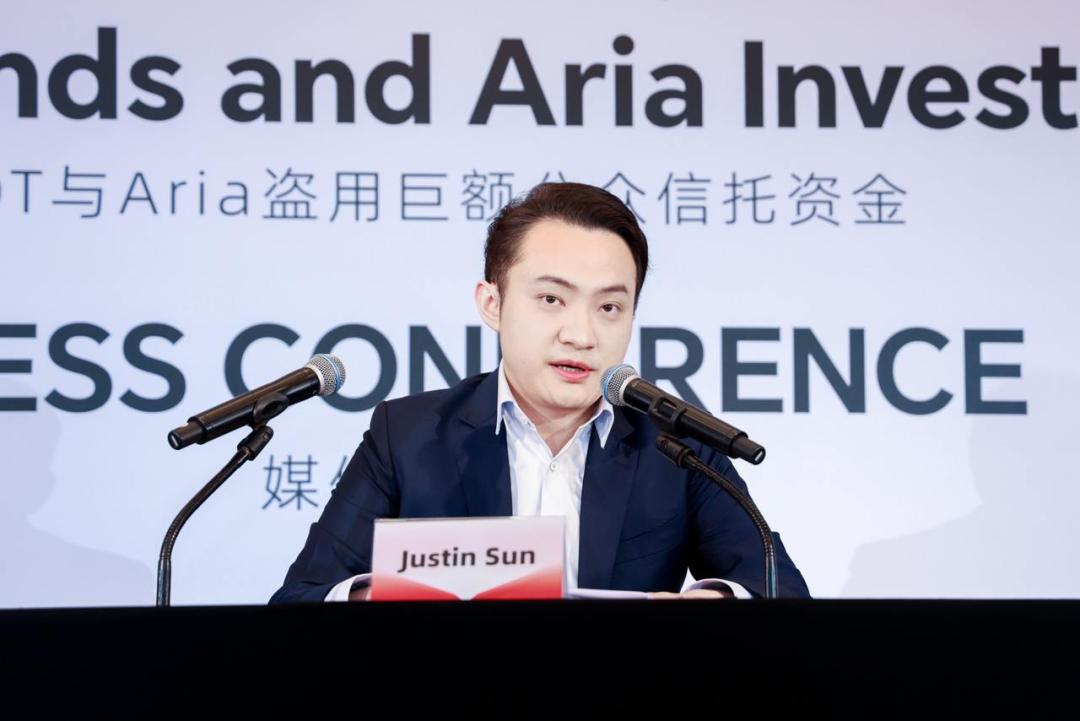
孙宇晨助力TUSD全球维权成功,冻结令后稳定币储备托管走向何方
3 6 Ke· 2025-11-20 07:38
Core Insights - The article discusses a landmark ruling by the Dubai International Financial Centre (DIFC) Court, which issued a global freeze order on Aria Commodities DMCC's assets amounting to $456 million, marking the first such order related to stablecoin reserves [2][4] - This case highlights deep-rooted issues in the stablecoin industry, such as the abuse of custodial power and cross-border regulatory arbitrage, signaling a shift from a "crisis of trust" to a "reconstruction of rules" in the industry [2][9] Group 1: Case Background - The case traces back to December 2020 when Techteryx acquired TrueUSD (TUSD) and entrusted TrueCoin with reserve management, which subsequently misappropriated $456 million in reserves [3][4] - TrueCoin allegedly conspired with First Digital Trust (FDT) to transfer the funds to Aria Commodities DMCC, controlled by Matthew Brittain's wife, instead of a regulated fund [4][7] - Techteryx took over TUSD operations in July 2023 and isolated 400 million TUSD to protect retail users, but faced a reserve shortfall [4][5] Group 2: Legal Proceedings - In 2024, Sun Yuchen intervened by providing a $500 million loan to protect TUSD holders, while the SEC accused TrueCoin of fraud related to the mismanagement of TUSD [5][6] - The DIFC Court's ruling on October 17, 2023, extended the global freeze order, marking the beginning of judicial accountability for the five-year misappropriation case [5][6] Group 3: Industry Implications - The incident underscores that trust is the core value of stablecoins, emphasizing that no technology can replace institutional integrity and legal frameworks [9][10] - The ruling has prompted a reevaluation of trust costs in the stablecoin sector, advocating for transparent reserves, legal constraints, independent audits, and timely disclosures [9][10] Group 4: Regulatory Trends - Global regulatory frameworks for stablecoins are tightening, with the U.S. set to implement the GENIUS Act in 2025, requiring issuers to hold 100% reserves and monthly disclosures [11] - The European MiCA regulation will take effect in 2024, mandating that stablecoins over €500,000 must have electronic money licenses and segregated reserves [12] - Hong Kong and Singapore are also introducing similar regulations, emphasizing high liquidity and low-risk assets for reserves [13] Group 5: Technological Innovations - Innovations such as on-chain reserve proofs and smart contract custodianship are emerging to enhance trust mechanisms in the stablecoin industry [14][15] - These technologies aim to automate redemption processes and prevent fund misappropriation, addressing the vulnerabilities exposed by the TUSD incident [15] Group 6: Market Dynamics - The market is undergoing a reshuffle as traditional financial institutions enter the space, enhancing transparency and competition for native crypto projects [16] - The industry is reassessing two stablecoin models: centralized models relying on institutional trust and algorithmic models dependent on collateral and arbitrage [17]