UltraFan

Search documents
The German plot to woo Rolls-Royce
Yahoo Finance· 2026-01-11 13:00
Core Viewpoint - Rolls-Royce is considering re-entering the narrow-body aircraft engine market, which it exited over a decade ago, amidst growing competition from Germany and the need for significant investment in new technologies like the UltraFan engine [1][7][21]. Group 1: Market Dynamics - The demand for narrow-body aircraft engines has surged, particularly for models like the Boeing 737 and Airbus A320, which Rolls-Royce missed out on due to its previous exit from the market [1]. - Germany is actively seeking to enhance its role in the aerospace sector, particularly in the development of the UltraFan engine, by offering subsidies and positioning itself as a center of excellence for small-business jet engines [3][5][12]. Group 2: Investment and Development - Rolls-Royce plans to invest £3 billion in developing a narrow-body UltraFan demonstrator and is seeking hundreds of millions in subsidies for this program [7]. - The UltraFan engine is expected to improve efficiency by approximately 10% compared to current engines and can be scaled for both narrow and wide-body aircraft [8][9]. Group 3: Strategic Implications - The potential loss of investment by Rolls-Royce to foreign entities could undermine the UK’s industrial strategy and lead to a loss of valuable aerospace expertise [2][21]. - The UK government has been urged to take action to retain Rolls-Royce's operations domestically, as the company is increasingly accountable to shareholders rather than national interests [2][21]. Group 4: Employment and Economic Impact - Aerospace jobs in Germany are projected to rise to 120,000 by 2024, indicating a growing sector that is becoming increasingly important for the German economy [14][16]. - High-value jobs in the UK aerospace sector are crucial for exports and R&D spending, making their retention a priority for national economic strategy [13][21].
Aviation experts say Boeing should be dreaming up its next clean-sheet jet — even if it's a decade away
Business Insider· 2025-10-13 09:07
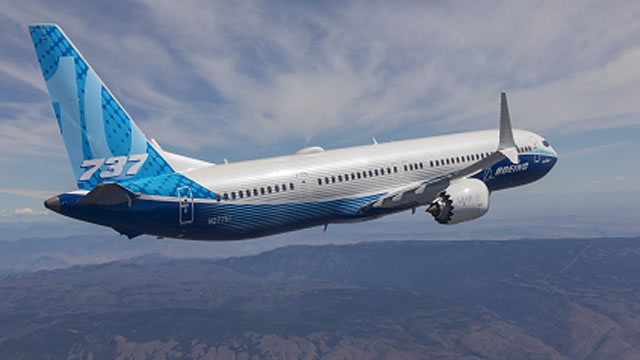
Core Viewpoint - Boeing has not developed a new commercial airplane since the 787 Dreamliner in 2004 and is now considering a clean-sheet design to replace the aging 737, which has undergone four generations of modifications since 1967 [1][3][5]. Group 1: Current Developments - Boeing's 737 narrowbody aircraft is crucial for short and mid-range flights, capable of carrying up to 220 passengers depending on the model [2]. - At a recent conference, Boeing leadership downplayed the imminent launch of a new aircraft design, indicating that while they are exploring new technologies, they are not close to launching a new airplane [3][4]. - Analysts suggest that Boeing's long-term competitiveness relies on developing a new narrowbody aircraft and securing a next-generation engine [3][5]. Group 2: Leadership and Strategy - Boeing's CEO Kelly Ortberg, who took over in August 2024, is seen as a catalyst for positive changes within the company, focusing on quality and operational improvements [6][11]. - Analysts have upgraded Boeing's rating to "buy," citing improvements in operational performance and a renewed focus on quality under Ortberg's leadership [11]. Group 3: Production and Certification Challenges - Boeing faces immediate challenges, including the certification of three unfinished aircraft models and the need to rebuild investor confidence through enhanced production and cash flow [4][19]. - The company has a backlog of over 6,000 jets to deliver, and it is currently focused on certifying its 777X and Max models [21]. Group 4: Future Aircraft Development - A new Boeing aircraft is unlikely to be operational for at least a decade, with industry experts suggesting that a new design announcement could occur within the next three years [5][6]. - The development of a new engine is critical for any new aircraft, with Rolls-Royce pitching a new powerplant to Boeing, which may signal a shift from its long-standing partnership with CFM International [16][17]. - The introduction of new engine technologies is essential to achieve the expected 15-20% fuel efficiency improvements for next-generation single-aisle aircraft [18]. Group 5: Competitive Landscape - Boeing's competitors, including Airbus and emerging startups like Natilus, are also eyeing the narrowbody market, which is projected to see significant demand in the coming decades [14][15].


Aerospace giant Rolls-Royce to build Britain's first small modular nuclear reactors
CNBC· 2025-06-10 09:11
Core Viewpoint - The UK government has backed Rolls-Royce to build the country's first small modular nuclear reactors (SMRs), marking a significant shift towards nuclear energy and investment in energy security [1][2][3]. Group 1: Government Support and Investment - The UK government will invest £14.2 billion ($19.2 billion) to construct the Sizewell C power station, reinforcing its commitment to nuclear power [2]. - The decision to support SMRs is part of a broader strategy to enhance energy security and create jobs, with the potential to support up to 3,000 jobs [2][3]. Group 2: Industry Impact - Rolls-Royce views the government's decision as a "very significant milestone" for its SMR business, indicating strong future growth prospects [4]. - The SMRs are expected to power approximately 3 million homes once operational in the mid-2030s, contributing to the UK's energy landscape [3].


Shares of British aerospace giant Rolls-Royce jump 16% on upbeat outlook, profit beat
CNBC· 2025-02-27 08:39
Core Viewpoint - Rolls-Royce Holdings Plc reported stronger-than-expected full-year earnings, driven by a significant transformation and a £1 billion ($1.27 billion) share buyback program [1][2]. Financial Performance - Rolls-Royce experienced a 57% increase in annual profit, surpassing analyst expectations for 2024 [2]. - The company reinstated shareholder dividends alongside the announcement of the £1 billion share repurchase program [2]. Strategic Transformation - The company is two years into a multi-year transformation journey, with significant progress noted by the CFO, Helen McCabe [3]. - The transformation is seen as a culmination of the company's commitment to improving its earnings potential and balance sheet [3]. Market Reaction - Following the announcement, Rolls-Royce shares surged by as much as 16%, reaching a 52-week high shortly after the market opened [2].