VIX options

Search documents
Using VIX Butterflies as a Tactical Volatility Hedge
Yahoo Finance· 2026-01-07 12:00
Core Viewpoint - Market volatility is currently low, with the CBOE Volatility Index (VIX) closing at 14.75, indicating a low level of risk and fear in the market [2]. Group 1: Market Conditions - The VIX Index is a real-time measure of market expectations for near-term volatility in the S&P 500 index [1]. - The current VIX level is towards the lower end of its range for the year, suggesting a stable market environment [2]. Group 2: Trading Strategy - A long call butterfly strategy using VIX options is proposed as a way to profit if volatility increases next year [2]. - The trade involves buying a 15 strike call, selling two 20 strike calls, and buying one 35 strike call, with a net debit of $250 [3]. Group 3: Trade Outcomes - The maximum potential loss for the trade is $250, while the maximum potential gain is $750 if VIX closes at 25 at expiration [4]. - Three potential outcomes are outlined: - VIX below 15 results in a loss of $250, which is acceptable for most investors [4]. - VIX between 20 and 30 is favorable for the butterfly but may negatively impact stock portfolios [4]. - VIX above 30 leads to a full loss on the VIX trade and significant declines in stock portfolios [4]. Group 4: Risk Management - Using VIX options is a cost-effective way to hedge against a sharp selloff in stocks, with a trade cost of $250 per contract [5]. - It is crucial for traders to understand the unique behavior of VIX options compared to regular stock options [6].
Wall Street’s Fear Gauge Is Eerily Quiet Despite the Government Shutdown. Here’s 1 Options Trade That Could Pay When It Wakes Up.
Yahoo Finance· 2025-10-28 15:00
Core Insights - The U.S. government shutdown has introduced uncertainty into the markets, yet market volatility remains low, suggesting potential investment opportunities [1][3]. Volatility Index (VIX) Overview - The CBOE Volatility Index (VIX) serves as a measure of market expectations for 30-day volatility in the S&P 500 Index, with higher values indicating increased trader anxiety [2]. - Currently, the VIX is around 16, which is below its long-term median of 19-20, despite the presence of significant market uncertainties such as the government shutdown and tariff issues [3][5]. Historical Context - Earlier in 2025, the VIX spiked above 50 due to President Trump's tariff announcement, marking a significant increase in volatility [4]. - The VIX has recently fluctuated between 14 and 25, with current levels near 16 indicating a period of complacency in the market despite ongoing uncertainties [5]. Correlation Dynamics - Historically, the VIX has a strong negative correlation with major stock indexes, particularly the S&P 500, where sharp sell-offs in the index typically lead to spikes in the VIX [6]. - The inverse relationship between the VIX and stock market performance makes the VIX a useful tool for both speculative and defensive trading strategies [7].
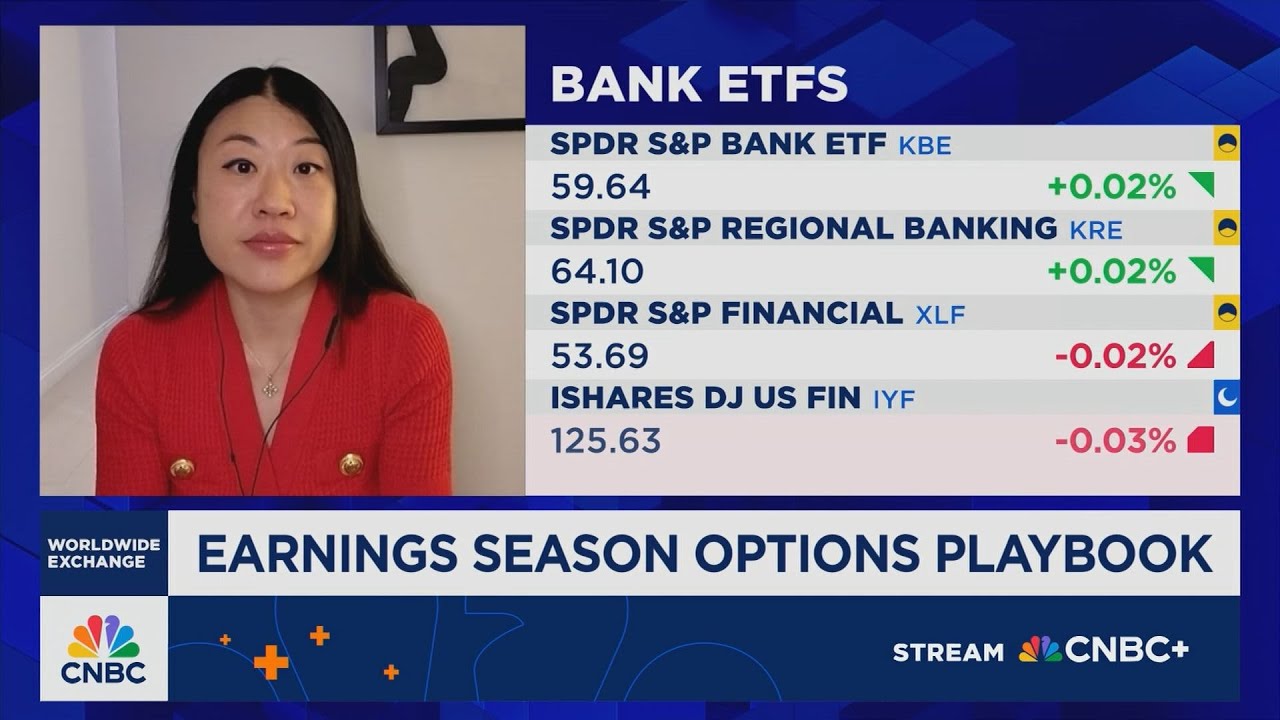
The market's like a paddling duck—calm on top, chaos underneath, says RBC's Amy Wu Silverman
Youtube· 2025-10-07 13:17
Market Volatility and Options - The VIX has remained muted, significantly below earlier highs despite ongoing market events such as government shutdowns and tariffs [1][2] - There is a perception that while the market appears calm, there are underlying movements that are canceling each other out, akin to a "paddling duck" [3][4] - Historically, investors have focused on downside protection through options, but there is a shift towards concerns about missing out on upside opportunities, particularly in tech stocks [5][6] Options Market Dynamics - There is an increase in call options trading, especially in NASDAQ and S&P stocks, driven by fear of missing out (FOMO) on potential gains from AI and tech stocks [7][9] - The demand for downside options is currently low, but it is expected to rise as earnings dates approach for major tech companies [10] Financial Sector Insights - The ongoing government shutdown has not yet impacted pricing in the financial sector or the broader market, but expectations are that this will change [10][11] - The options market is currently pricing in a resolution to the shutdown before the next Federal Reserve meeting, with potential increases in VIX if uncertainty continues [11][12] - Financials, represented by ETFs like KRE or XLF, are typically a good area for volatility trading, as they often experience significant idiosyncratic stock movements [12]