Volvo EX60

Search documents
Volvo Car (OTCPK:VLVC.Y) Update / briefing Transcript
2026-03-27 11:02
Volvo Cars Q1 2026 Earnings Call Summary Industry Overview - The global macroeconomic environment remains mixed with gradual signs of improvement and limited visibility across key regions [1] - Euro area consumer confidence stabilized at 12.2, still below the long-term average; broader economic sentiment indicator remains slightly below normal levels [2] - U.S. consumer sentiment improved modestly to 56.6 in February 2026 from 56.4 in January, but still below 64.7 a year earlier, indicating household caution [2] - In China, retail sales increased by 2.8% year-on-year, and exports rose by 19.2%, but domestic demand remains weak [3] - Competitive intensity in the automotive sector is high, with Chinese manufacturers expanding internationally, increasing pressure in overseas markets [3] - S&P Global forecasts a contraction in the global premium segment by 0.9% in 2026, with specific contractions of 3.0% in the U.S., 0.8% in Europe, and 2.0% in China [3] Company Performance - Volvo Cars reported a 19% decline in retail sales volume for January and February 2026, with January down 16% and February down 22% [4] - The company emphasizes that wholesales, not retail sales, are the best metric for calculating volume effects on revenue [4] - Foreign exchange (FX) impacts are negative due to a stronger Swedish Krona (SEK) and a weaker U.S. dollar compared to the previous year [4] - Higher discounts from Q4 2025 will negatively affect Q1 2026 gross margins, along with tariffs introduced in 2025 [5] - EBIT margins are under pressure due to increased depreciation and amortization from new product launches and the impact of cost and cash programs from 2025 [5] - Free cash flow is expected to be under pressure due to seasonal inventory buildup and continued investments in the SPA3 platform and the Košice plant [6] Key Financial Metrics - The company aims for a balance between retail deliveries and wholesale volumes, but Q1 typically shows weaker cash flow generation due to inventory buildup [6] - The impact of emissions credit revenue is expected to be more evenly distributed throughout the quarters in 2026 compared to the previous year [11] Additional Insights - There is uncertainty regarding the impact of FX on EBIT, as year-over-year comparisons may be affected by previous negative balance sheet revaluations [10] - Used car sales typically peak in Q3 and Q4, with Q1 and Q2 showing lower sales [12] - No significant one-off items affecting comparability were noted for Q1 2026, but the company cannot comment on potential items until results are published [14] - Tariff conditions are reported to be fairly similar to the previous run rate in the second half of 2025 [30]
Volvo is pulling the plug on its entry-level EV
Business Insider· 2026-03-16 19:34
Core Insights - Volvo will cease US sales of the EX30 and EX30 Cross Country after the 2026 model year, despite the vehicles remaining in production until summer 2024 and available at dealerships until the end of 2026 [1][4] Group 1: Company Strategy - Volvo's commitment to electrification remains unchanged, aiming for 90% to 100% of global sales to come from electric vehicles by 2030 [2][5] - The EX30 was initially positioned as an affordable EV for American consumers with a starting price below $35,000, but tariffs have increased its price to approximately $41,740 [3][4] Group 2: Market Context - The decision to discontinue the EX30 reflects broader challenges in the EV market, including a 53.5% and 45.2% decline in dealership EV sales in early 2026 compared to the same period in 2025 [6][7] - The cancellation of the $7,500 federal tax credit for electric vehicles has contributed to a slump in sales, prompting automakers to remove foreign-built EVs from their US lineups [7][8] Group 3: Future Outlook - Analysts expect a continued decline in US EV sales in 2026, with a potential rebound in 2027 as lower-priced models may help revive the market [9] - Rising gas prices could lead consumers to reconsider electric vehicles, as early indicators show increased interest in EV listings [10]


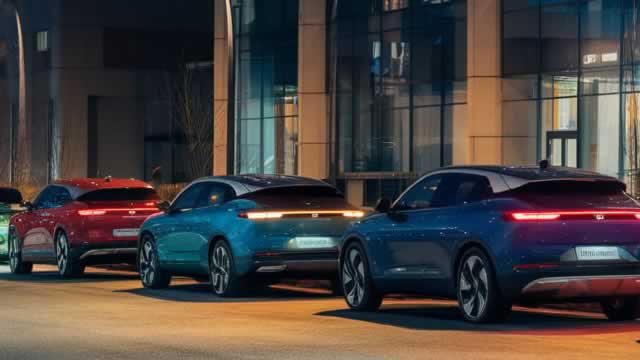
‘The Chinese will not pause': Volvo and Polestar bosses urge EU to stick to 2035 petrol car ban
The Guardian· 2025-12-02 06:00
Core Viewpoint - The debate over the European Commission's 2035 ban on new petrol and diesel cars is intensifying, with Swedish companies Volvo and Polestar advocating for the ban to remain in place, arguing that any delay would hinder electric vehicle adoption and benefit Chinese manufacturers [1][2][10]. Group 1: Industry Perspectives - Polestar's CEO, Michael Lohscheller, strongly opposes pausing the 2035 ban, emphasizing that Europe must lead in the transition to electric vehicles or risk falling behind [2][12]. - Lohscheller highlights the urgency of the situation, stating that delaying the target could jeopardize hundreds of thousands of jobs in the automotive sector [10]. - Volvo's CEO, Håkan Samuelsson, argues that rolling back the ban lacks logic and compares the current resistance to past opposition against safety measures like catalytic converters and seatbelts [4][5][8]. Group 2: Competitive Landscape - Samuelsson warns that if traditional car manufacturers like Volkswagen and BMW slow down their electrification efforts, they will create a competitive advantage for Chinese companies, which are expanding their manufacturing presence in Europe [8][10]. - Both CEOs stress the importance of maintaining momentum in electrification to ensure that European manufacturers remain competitive against Chinese firms [8][17]. Group 3: Consumer Concerns - Samuelsson identifies three main consumer concerns regarding electric vehicles: range, charging time, and price, asserting that addressing these issues will accelerate EV adoption [18][19]. - He believes that the industry should focus on technological advancements rather than delaying regulatory timelines, as innovation is crucial for meeting consumer expectations and environmental goals [20].