AbbVie(ABBV)

Search documents
Trump secures agreements with Merck, Amgen, Novartis and others to cut drug prices under Medicaid
MINT· 2025-12-19 20:04
Core Points - US President Donald Trump announced agreements with nine major pharmaceutical companies to reduce drug prices for Medicaid and cash-paying consumers, aiming to align US drug costs with those in other wealthy nations [1][4] - Trump emphasized that the US was previously subsidizing global drug costs and will no longer do so [2] Group 1: Drugmakers Involved - Participating companies include Bristol Myers Squibb, Gilead Sciences, Novartis, Amgen, Boehringer Ingelheim, Sanofi, GSK, Merck, and Roche's US unit Genentech [3] - Additional companies like Regeneron, Johnson & Johnson, and AbbVie are expected to join after the holidays [3] Group 2: Price Reductions and Commitments - Drugmakers will reduce prices on most medicines sold to Medicaid, promising "massive savings" on widely used drugs, although specific figures were not disclosed [4] - The agreements also include commitments to cut cash prices for select medicines and to launch new drugs in the US at prices equal to those in other wealthy countries [5] Group 3: Specific Drug Pricing - Merck plans to sell diabetes drugs Januvia, Janumet, and Janumet XR at discounts of about 70% off list prices [7] - Amgen will price its migraine drug Aimovig and arthritis treatment Amjevita at $299 per month, which is nearly 60% and 80% below current US list prices, respectively [7] Group 4: Investment and Revenue Sharing - Companies pledged to invest over $150 billion in US research, development, and manufacturing, with Merck alone committing $70 billion [8] - A portion of each company's overseas revenue will be remitted to the US to help offset domestic drug costs, and several companies agreed to donate drug ingredients to the US strategic reserve [9] Group 5: Industry Reaction - Five drugmakers, including Pfizer and Eli Lilly, had already struck similar deals with the administration, and AbbVie is expected to announce its agreement soon [10]


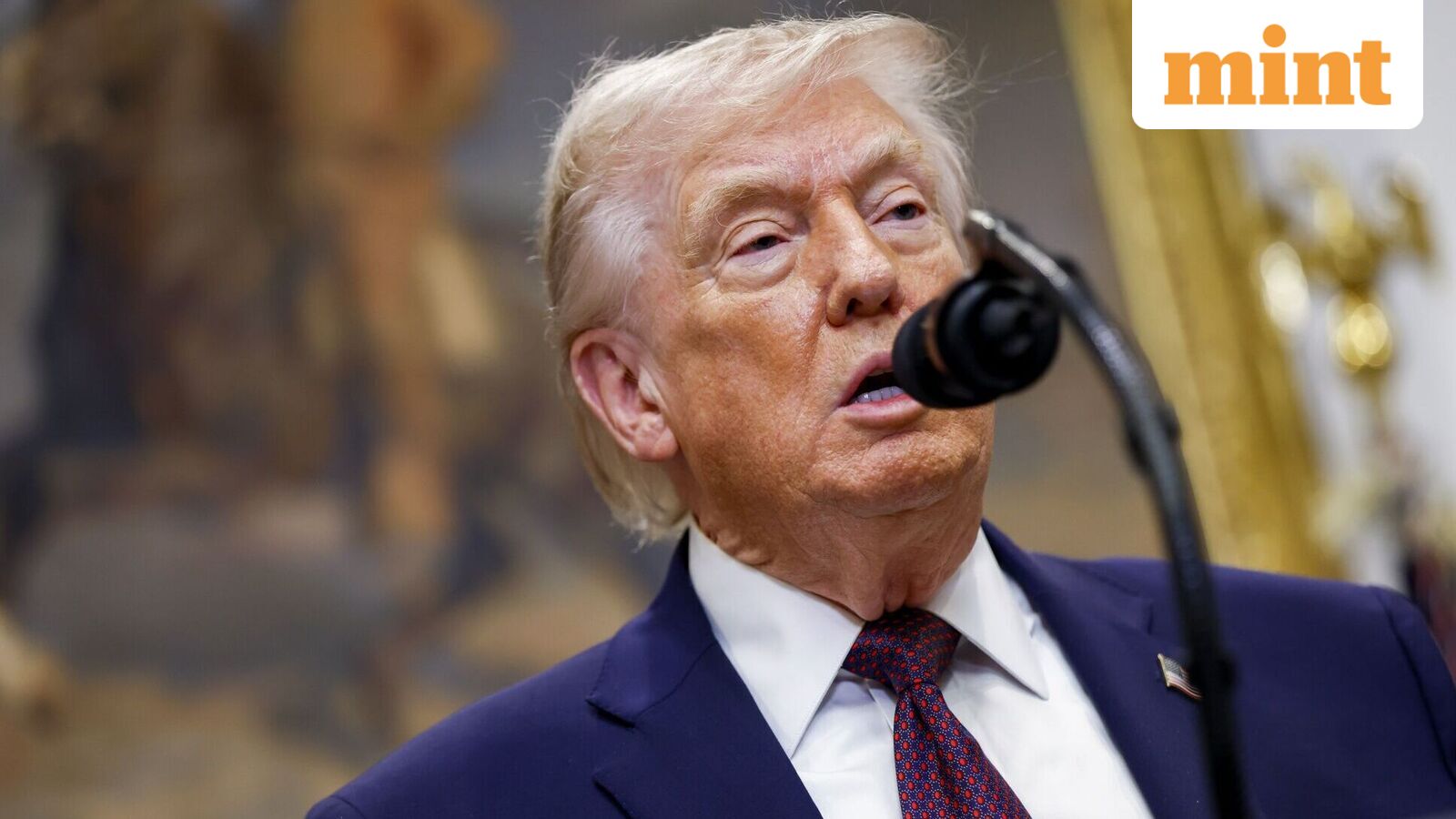
Trump to announce new drug-pricing deals later today
MarketWatch· 2025-12-19 15:45
Core Viewpoint - The White House is preparing to announce additional agreements with pharmaceutical companies aimed at reducing drug prices [1] Group 1 - The upcoming deals are part of a broader initiative to make medications more affordable for consumers [1] - The administration's focus on lowering drug prices reflects ongoing concerns about healthcare costs in the United States [1]


Trump to announce new deals with major drugmakers to lower US prescription drug prices
MINT· 2025-12-19 15:35
Group 1 - The US President is set to announce new agreements aimed at lowering prescription drug prices, with participation from major pharmaceutical companies including AbbVie, Bristol Myers Squibb, Gilead Sciences, and Merck [1] - Swiss drugmakers Novartis and Roche are also reportedly involved in the upcoming deals [1] - Previous agreements have been reached with five companies: Pfizer, Eli Lilly, AstraZeneca, Novo Nordisk, and EMD Serono [3] Group 2 - In July, the President directed 17 major pharmaceutical companies to offer most-favored-nation prices to the US Medicaid program and ensure new drugs are not priced higher than in other wealthy countries [2] - The remaining companies that have not yet reached agreements include Sanofi, Regeneron, Merck, Johnson & Johnson, AbbVie, Amgen, Gilead, Boehringer Ingelheim, Bristol Myers, GSK, Novartis, and Genentech [3] - AbbVie and Merck declined to comment on the new agreements, while Novartis expressed commitment to discussions and Roche supported the goal of reducing drug prices [4] Group 3 - The President has emphasized the significant disparity between US drug prices and those in other high-income countries, where government-run health systems negotiate for price discounts [5]


Worried About the Stock Market in 2026? These 3 Stocks Did Well During the Last Bear Market.
Yahoo Finance· 2025-12-18 19:05
Core Viewpoint - Concerns about potential market downturns in 2025 are prompting investors to consider safer investment options, particularly in blue chip stocks with strong fundamentals [1][2]. Group 1: Investment Strategies - Investors are advised to protect their portfolios by focusing on blue chip stocks that have good fundamentals and are likely to be resilient during market downturns [2]. - Diversifying investments into sectors that may perform better in a downturn is recommended [2]. Group 2: Company Analysis - AbbVie - AbbVie shares rose by 19% during the S&P 500 crash of over 19% in 2022, demonstrating stability and growth with a 3% increase in revenue and a profit margin exceeding 20% [5]. - The company is successfully replacing revenue lost from its top-selling drug Humira with new immunology drugs Skyrizi and Rinvoq, showcasing its innovation capabilities [6]. - AbbVie operates in multiple segments including oncology, aesthetics, and neuroscience, providing various growth avenues [7]. - The stock trades at 16 times estimated future earnings and offers a dividend yield of 3.1%, significantly higher than the S&P 500 average of 1.1%, making it a solid long-term investment [8]. Group 3: Company Analysis - Eli Lilly - Eli Lilly's shares increased by 32% in 2022, significantly outperforming the market, driven by the success of its GLP-1 drugs, Mounjaro for diabetes and Zepbound for weight loss [11].
Analysts Split on AbbVie Inc. (ABBV) as BofA Cuts Target and HSBC Turns Bullish
Insider Monkey· 2025-12-17 22:13
Core Insights - Artificial intelligence (AI) is identified as the greatest investment opportunity of the current era, with a strong emphasis on the urgency to invest now [1][13] - The energy demands of AI technologies are significant, with data centers consuming as much energy as small cities, leading to concerns about power grid capacity and rising electricity prices [2][3] Investment Opportunity - A specific company is highlighted as a critical player in the AI energy sector, owning essential energy infrastructure assets that are poised to benefit from the increasing energy demands of AI [3][7] - This company is not a chipmaker or cloud platform but is positioned to profit from the surge in electricity demand driven by AI data centers [3][6] Market Position - The company is described as a "toll booth" operator in the AI energy boom, collecting fees from energy exports and benefiting from the onshoring trend due to tariffs [5][6] - It has a unique footprint in nuclear energy, which is seen as a key component of America's future power strategy [7][14] Financial Health - The company is noted for being debt-free and holding a significant cash reserve, amounting to nearly one-third of its market capitalization, which positions it favorably compared to other energy firms burdened by debt [8][10] - It also has a substantial equity stake in another AI-related company, providing indirect exposure to multiple growth engines in the AI sector [9][10] Market Sentiment - There is a growing interest from Wall Street in this company, with hedge fund managers beginning to promote it discreetly among wealthy clients due to its undervaluation [9][10] - The company is trading at less than 7 times earnings, which is considered attractive given its ties to the AI and energy sectors [10][11] Future Outlook - The influx of talent into the AI sector is expected to drive continuous innovation and advancements, making investments in AI a strategic move for future growth [12] - The overall narrative suggests that investing in this company represents a chance to capitalize on the impending AI infrastructure supercycle and the associated energy demands [14][15]

AbbVie, several other pharma companies near MFN deal with Trump, sources say
Reuters· 2025-12-17 21:11
Core Insights - AbbVie and several other drugmakers are expected to announce agreements with the U.S. government to lower certain prescription drug prices and meet demands made by President Donald Trump [1] Group 1: Drug Pricing Agreements - The agreements are aimed at reducing the costs of specific prescription drugs [1] - These negotiations are part of broader efforts by the U.S. government to control drug prices [1] - The announcement is anticipated to take place on Friday, indicating a timely response from the pharmaceutical industry [1]

Looking At AbbVie's Recent Unusual Options Activity - AbbVie (NYSE:ABBV)
Benzinga· 2025-12-17 20:01
Core Insights - Investors are showing a bullish stance on AbbVie (NYSE:ABBV), indicating potential upcoming developments that may influence the stock price [1][2] - The options trading activity reveals a split sentiment among large investors, with 43% bullish and 43% bearish positions [3] Options Trading Activity - Benzinga's options scanner identified 16 uncommon options trades for AbbVie, with a total of $1,449,383 in call options and $97,520 in put options [2][3] - Major market movers are focusing on a price range between $120.0 and $250.0 for AbbVie over the last three months [4] - The volume and open interest data for AbbVie's options indicate significant liquidity and interest, particularly within the strike price range of $120.0 to $250.0 [5] Options Snapshot - Notable options trades include: - A bearish call sweep for a strike price of $220.00 with a total trade price of $293.4K [9] - A bullish call sweep for a strike price of $230.00 with a total trade price of $226.5K [9] - Additional bearish call sweeps for the same strike price of $220.00 with total trade prices of $190.9K and $183.3K [9] Company Overview - AbbVie is a pharmaceutical company with strong exposure in immunology and oncology, having expanded its portfolio through acquisitions, including Allergan in 2020 and recent acquisitions of Cerevel and ImmunoGen [10] - Current market consensus from analysts suggests a target price of $267.0 for AbbVie, with ratings from Morgan Stanley and HSBC indicating an Overweight and Buy rating, respectively [12][13] Current Market Performance - AbbVie’s stock price is currently at $225.83, reflecting a 0.97% increase with a trading volume of 2,394,007 [15] - The stock's current RSI values suggest a neutral position between overbought and oversold [15]
How AbbVie's Pipeline Is Lining Up Key Product Launches
ZACKS· 2025-12-16 15:02
Core Insights - AbbVie is increasing its R&D investments to support long-term growth across various therapeutic areas, including immunology, oncology, and neuroscience [1] Pipeline Developments - Key pipeline assets include label expansion studies for Rinvoq and new candidates like tavapadon and pivekimab sunirine (PVEK), with several candidates in late-stage development or under FDA review [2] - Rinvoq is undergoing label expansions for five additional indications, which could add approximately $2 billion to its peak-year sales, with regulatory submissions expected soon [3] - Tavapadon has been submitted for FDA approval as a treatment for Parkinson's disease, supported by positive data from late-stage studies [4] - PVEK is under FDA review for a rare blood cancer and is also being developed for acute myeloid leukemia [5][6] Acquisition Strategy - AbbVie has executed over 30 M&A transactions since early 2024 to enhance its early-stage pipeline, including the acquisition of Gilgamesh Pharmaceuticals for a drug targeting major depressive disorder [7][8] Competitive Landscape - AbbVie remains a dominant player in the immunology market with blockbuster drugs like Skyrizi, Rinvoq, and Humira, despite facing challenges from competitors like Johnson & Johnson and Eli Lilly [9][11][12] Financial Performance - AbbVie shares have outperformed the industry year-to-date and are trading at a slight discount to the industry average based on the P/E ratio [13][14] - EPS estimates for 2025 and 2026 have shown mixed movements, with some revisions indicating slight increases and others showing declines [16]
AbbVie price target lowered to $233 from $248 at BofA
Yahoo Finance· 2025-12-16 14:35
Summary of Key Points Core Viewpoint - BofA has lowered the price target for AbbVie (ABBV) to $233 from $248 while maintaining a Neutral rating on the shares, indicating a cautious outlook on the stock's performance moving forward [1]. Group 1: Valuation and Growth Outlook - The firm perceives "a relatively clean setup" for growth at the high end of the peer group, suggesting that AbbVie has potential for growth compared to its competitors [1]. - The valuation basis is being shifted to FY27 estimates, indicating a long-term perspective on the company's financial performance [1]. Group 2: Pipeline and Market Position - The premium multiple assigned to AbbVie is balanced by limited late-stage pipeline catalysts, which may restrict significant upside potential in the near term [1].
Should You Invest in the State Street Health Care Select Sector SPDR ETF ETF (XLV)?
ZACKS· 2025-12-16 12:21
Core Insights - The State Street Health Care Select Sector SPDR ETF (XLV) is a passively managed ETF launched on December 16, 1998, providing broad exposure to the Healthcare - Broad segment of the equity market [1] - XLV is the largest ETF in its category, with assets exceeding $40.99 billion, and aims to match the performance of the Health Care Select Sector Index [3] Fund Details - The ETF has an annual operating expense ratio of 0.08%, making it the least expensive option in the healthcare ETF space, with a 12-month trailing dividend yield of 1.56% [5] - The fund is fully allocated to the healthcare sector, with top holdings including Eli Lilly + Co (12.97%), Johnson + Johnson, and Abbvie Inc, which together account for approximately 57.14% of total assets [6][7] Performance Metrics - As of December 16, 2025, XLV has returned approximately 14.79% year-to-date and 12.45% over the past year, with a trading range between $128.77 and $158.77 in the last 52 weeks [8] - The ETF has a beta of 0.61 and a standard deviation of 13.38% over the trailing three-year period, indicating a medium risk profile [8] Alternatives - Other healthcare ETFs include iShares Global Healthcare ETF (IXJ) with $4.52 billion in assets and Vanguard Health Care ETF (VHT) with $17.53 billion, each with different expense ratios [11]