Berkshire Hathaway(BRK.B)

Search documents
All You Need to Know About Berkshire Hathaway B (BRK.B) Rating Upgrade to Buy
Yahoo Finance· 2025-11-05 17:00
Investors might want to bet on Berkshire Hathaway B (BRK.B), as it has been recently upgraded to a Zacks Rank #2 (Buy). This upgrade primarily reflects an upward trend in earnings estimates, which is one of the most powerful forces impacting stock prices. The sole determinant of the Zacks rating is a company's changing earnings picture. The Zacks Consensus Estimate -- the consensus of EPS estimates from the sell-side analysts covering the stock -- for the current and following years is tracked by the syst ...
Berkshire Hathaway Stock Outlook: Is Wall Street Bullish or Bearish?
Yahoo Finance· 2025-11-05 13:06
Core Insights - Berkshire Hathaway Inc. has a market capitalization of $1.1 trillion and operates in diverse sectors including insurance, freight rail, utilities, energy, manufacturing, and retail [1] Performance Overview - Over the past 52 weeks, BRK.B shares have increased by 10.3%, underperforming the S&P 500 Index which rose by 18.5% [2] - Year-to-date, BRK.B shares are up 7.6%, compared to the S&P 500's gain of 15.1% [2] - BRK.B has also underperformed the Financial Select Sector SPDR Fund (XLF), which returned 13.3% over the same period [3] Financial Results - In Q3 2025, Berkshire Hathaway reported a 33.6% year-over-year increase in operating earnings, reaching $13.49 billion, primarily due to a significant rise in insurance underwriting earnings, which more than tripled to $2.37 billion [4] - Overall net earnings increased by 17.3% year-over-year to $30.8 billion, with a record cash reserve of $381.67 billion and no share buybacks [4] Earnings Expectations - For the fiscal year ending December 2025, analysts project a 6% year-over-year decline in EPS to $20.68 [5] - The company's earnings surprise history is mixed, with two beats and two misses in the last four quarters [5] Analyst Ratings - Among seven analysts covering BRK.B, the consensus rating is a "Moderate Buy," consisting of three "Strong Buy" ratings and four "Holds" [5] - This rating configuration has improved slightly from three months ago, when there were only two "Strong Buys" [6] Price Targets - UBS raised its price target for Berkshire Hathaway to $595 while maintaining a "Buy" rating [7] - The mean price target of $537.25 indicates a 10.2% premium to the current price, while the highest target of $595 suggests a potential upside of 22% [7]
股神大动作!传巴菲特将再次减持苹果股票,此前曾称其为伯克希尔拥有最佳企业之一【附智能手机行业市场分析】
Qian Zhan Wang· 2025-11-05 07:18
Core Viewpoint - Berkshire Hathaway, led by Warren Buffett, is likely to further reduce its substantial holdings in Apple stock by Q3 2025, following a previous reduction that saw a decrease in the cost basis of its consumer goods holdings by approximately $1.2 billion [2][3]. Group 1: Investment Strategy - Buffett's significant investment in Apple began in 2016, with a total investment of about $37.5 billion made between 2016 and 2018, positioning Apple as one of the four pillars of Berkshire's investment portfolio [2][3]. - Apple has generated over $150 billion in net gains for Berkshire, with its peak holding accounting for nearly 50% of the portfolio [2][3]. - In 2024, Berkshire initiated a large-scale sell-off, reducing its Apple holdings by about two-thirds, with nearly 400 million shares sold in Q2 alone at an average price of approximately $185 per share [3]. Group 2: Market Position - Apple holds a significant market share in the global smartphone market, with an 18.7% share in 2024 [4]. - The Asia-Pacific and Greater China regions account for 55% of the global smartphone market, with shares of 30% and 25% respectively [6]. - Despite a decline in overall revenue in China, the iPhone 17 series has seen a 38% year-on-year sales increase in the first six weeks of its launch, dominating the top three positions in the sales rankings [8].



Berkshire Hathaway's Cash Hoard Makes It An Excellent Market Rebound Stock
Seeking Alpha· 2025-11-04 22:52
Core Insights - Warren Buffett is stepping away from leading Berkshire Hathaway, marking a significant transition for the company and its future direction [1] - The importance of observing megatrends and technological advancements is emphasized as a means to identify investment opportunities [1] - The focus on fundamentals, quality of leadership, and product pipeline remains crucial for investment decisions [1] Company Analysis - Berkshire Hathaway is facing a leadership change with Warren Buffett's departure, which may impact its strategic direction and investment approach [1] - The company has historically benefited from Buffett's investment philosophy, which combined macrotrends with a focus on fundamentals [1] - The transition in leadership could lead to shifts in investment strategies and priorities within Berkshire Hathaway [1] Industry Trends - The article highlights the significance of macrotrends and emerging technologies in shaping future investment landscapes [1] - Companies that can effectively leverage these trends are likely to gain competitive advantages [1] - The evolving nature of society and technology necessitates a keen understanding of market dynamics for successful investment [1]
Berkshire Hathaway Knocks It Out Of The Park In Q3 (Rating Upgrade)

Seeking Alpha· 2025-11-04 20:42
Group 1 - Berkshire Hathaway Inc. released its earnings for the fiscal third quarter of 2025, beating analyst expectations on normalized earnings per share (EPS) [1] - The earnings report indicated a strong performance, although it missed some other analyst expectations [1]
62% of U.S. Adults Own Stock. Here Are 6 That I Think Everyone Should Have in Their Portfolios.
Yahoo Finance· 2025-11-04 14:30
Core Insights - Over half of Americans, specifically 62%, own stock, indicating a significant engagement in the stock market for long-term wealth building [1] Investment Opportunities - Berkshire Hathaway is highlighted as a strong investment due to its diversified portfolio and the leadership transition to Greg Abel in 2026, which may lead to potential dividends in the future [5][6] - Costco is noted for its effective business model that benefits employees, customers, and shareholders, although it is currently considered somewhat overvalued with a forward-looking P/E ratio of 45 compared to its five-year average of 40 [9][10]

“股神”看走眼?巴菲特抛售近70%苹果股票,少赚3500亿元
Mei Ri Jing Ji Xin Wen· 2025-11-04 14:27
Core Insights - Berkshire Hathaway, led by Warren Buffett, has reportedly reduced its stake in Apple, with a significant decrease in the cost basis of its consumer goods stock holdings by approximately $1.2 billion compared to the previous quarter, indicating a potential further reduction in Apple shares by Q3 2025 [1] Group 1: Apple Stock Holdings - Berkshire Hathaway has reduced its Apple stock holdings by nearly 70% over the past year, resulting in a potential loss of $50 billion in unrealized gains [3] - The company initially invested about $37.5 billion in Apple between 2016 and 2018, which at its peak represented nearly 50% of Berkshire's portfolio, generating over $150 billion in net gains [4] - As of June 30, 2025, Berkshire held 280 million shares of Apple, valued at $57 billion, down from 906 million shares at the end of 2023 [4] Group 2: Financial Performance - In Q3 2025, Berkshire reported total revenue of $94.972 billion, a year-over-year increase of 2.13%, and a net profit of $30.796 billion, up 17.31% [8] - The operating profit for Q3 reached $13.485 billion, reflecting a year-over-year growth of 33.65%, indicating strong profitability in Berkshire's traditional businesses [8] - Berkshire's cash reserves have reached a record high of $381.67 billion, highlighting a cautious investment approach in the current market environment [8] Group 3: Leadership Transition - The recent financial report is expected to be the last one released by Buffett before he steps down as CEO, with plans to hand over the position to Greg Abel by the end of the year [9] - Buffett's retirement has led to increased pressure on Berkshire's stock price, with a recent downgrade from KBW [9] - Abel will take over the writing of Berkshire's annual shareholder letter and will lead the annual meeting in Omaha starting next year [11]
“股神”看走眼?巴菲特抛售近70%苹果股票 少赚3500亿元!公司已囤积2.7万亿元现金 连续12个季度净卖出股票
Mei Ri Jing Ji Xin Wen· 2025-11-04 14:08
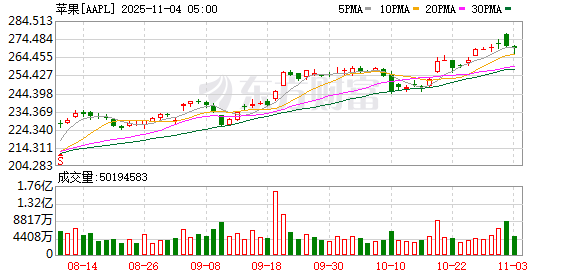
损失500亿美元潜在收益 作为巴菲特投资生涯中最成功的案例之一,伯克希尔曾在2016至2018年间累计投入约375亿美元建仓苹 果,随后苹果股价持续攀升,一度成为伯克希尔投资组合的"四大支柱"之一,持仓占比峰值近50%,为 其创造了超1500亿美元的净收益。 但在2024年,伯克希尔启动了大规模抛售,全年减持约三分之二苹果持仓,其中仅第二季度就减持近4 亿股,大部分股票以每股约185美元的价格出售。 进入2025年,减持步伐并未停止,第二季度继续缩仓后,截至6月底,伯克希尔仍持有2.8亿股苹果股 票,市值达570亿美元,虽仍是第一大重仓股,但持股数量已较2023年底的9.06亿股骤降近70%。 "股神"沃伦·巴菲特旗下的伯克希尔·哈撒韦公司再度传出减持苹果股票的消息。 11月4日,根据一份最新披露的季度监管文件显示,伯克希尔消费品领域股票持仓的成本基准较上一季 度下降约12亿美元,而该类别持仓主要由苹果股票构成。这意味着该公司在2025年第三季度很可能进一 步减持了苹果股票。 1年多减持近70%苹果股票持仓 苹果股价在2025年三季度的强势上涨,10月底苹果股价一度触及277美元的历史新高,收盘价达270美 ...
Warren Buffett Sold This Vanguard ETF That He Recommends for Investors. Should You Follow His Actions or His Advice?
Yahoo Finance· 2025-11-04 12:00
Core Insights - Warren Buffett's influence in the investing world is unparalleled, having transformed Berkshire Hathaway into a trillion-dollar entity since 1965, consistently outperforming the S&P 500 [1] - Buffett advises average investors to invest consistently in an S&P 500 ETF, emphasizing simplicity and potential gains [2][6] Investment Strategy - Berkshire Hathaway sold all its shares in the Vanguard S&P 500 ETF in Q4 2024, raising questions about whether to follow Buffett's advice or Berkshire's actions [3][8] - Investments should align with individual risk tolerance, financial goals, and investment style, suggesting that average investors should heed Buffett's advice rather than mimic Berkshire's moves [4][8] Benefits of S&P 500 Investment - The Vanguard S&P 500 ETF (VOO) provides instant diversification, access to top blue-chip stocks, and a low expense ratio of 0.03%, making it an attractive option for average investors [7]
Warren Buffett Has Been Selling Apple and Bank of America Stock and Piling Into This High-Yield Investment Instead
The Motley Fool· 2025-11-04 09:33
Core Viewpoint - Warren Buffett is strategically positioning Berkshire Hathaway's portfolio ahead of his retirement in 2025, focusing on high-yield investments and reducing stakes in major holdings like Apple and Bank of America [1][2]. Group 1: Portfolio Adjustments - Buffett has sold nearly 70% of Berkshire's stake in Apple since late 2023, despite it being the largest position in the portfolio [4]. - The valuation of Apple has increased significantly, with a current forward P/E ratio above 33, compared to around 10 when Buffett first invested [5]. - In the case of Bank of America, Buffett has reduced his stake to less than 60% of its peak, capitalizing on the bank's increased valuation amid the Federal Reserve's interest rate easing [7][8]. Group 2: Investment in Treasury Bills - As of the end of Q3, Berkshire Hathaway holds $320.5 billion in U.S. Treasury bills, reflecting a consistent increase from $310.6 billion in Q2 [11]. - The interest rates on these T-bills are relatively high, exceeding 3.8%, which aligns with Buffett's preference for safety over yield in short-term investments [12]. - Despite a preference for equities, the current yield from stocks does not significantly surpass that of T-bills, leading to a cautious approach in deploying cash [13][14]. Group 3: Future Opportunities - Buffett's recent investment of $9.7 billion in Occidental Petroleum's OxyChem subsidiary indicates a selective approach to acquisitions, with a need for more similar opportunities to fully utilize Berkshire's cash reserves [15][16]. - Incoming CEO Greg Abel will have substantial capital available for potential deals, providing a strong foundation for future growth [16].