
Chevron(CVX)

Search documents
前沿观察 | 特朗普拟召石油巨头商讨开发委内瑞拉油田
Sou Hu Cai Jing· 2026-01-07 15:12
特朗普拟召石油巨头商讨开发委内瑞拉油田 美国总统唐纳德·特朗普及其内阁成员将于周五在白宫与石油公司首席执行官举行会议,商讨这些公司进入委内瑞拉进行钻 探的计划。 除特朗普外,能源部长克里斯·赖特和内政部长道格·伯古姆亦将出席此次会议。赖特目前正于迈阿密参加一场能源投资者会 议,预计将在此期间与石油行业高管举行会晤。 此次白宫会议是特朗普政府旨在恢复委内瑞拉低迷原油产量愿景的重要举措。尽管迄今为止,考虑到该国政治长期动荡及 近二十年的经济衰退,整个石油行业对投入数十亿美元用于钻探仍持谨慎态度,但目前正就政府可提供何种保障以吸引企 业重返委内瑞拉展开讨论。 对石油行业而言,为在委内瑞拉首都加拉加斯恢复民选政府制定明确的时间表,不失为一种有效的风险保障。然而截至目 前,这一议题在特朗普明确列出的政策优先事项中尚未占据重要位置。 一位知情人士表示:"石油企业将寻求安全保障,并期望白宫能够提供明确的政治时间表。外界普遍关注的问题是:政权过 渡预计何时完成?选举将在什么时间举行?新政府能否尊重法治原则,并确保不没收美国企业的资产?" 白宫方面尚未对相关问题做出即时回应。美国能源部发言人本·迪特里希表示,赖特目前仍与国内多 ...


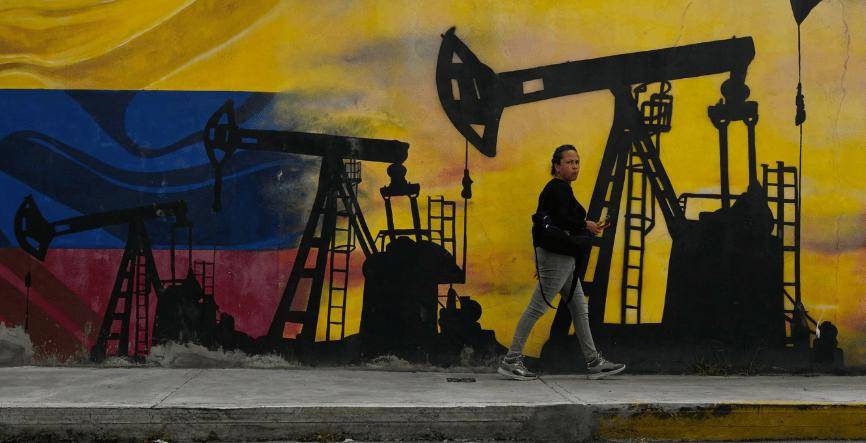
Trump to meet with oil executives about Venezuela on Friday
Fox Business· 2026-01-07 14:51
Group 1 - President Trump will meet with executives from major U.S. oil companies to discuss significant investments in Venezuela following a recent special forces raid [1] - Chevron is currently the only U.S. oil company operating in Venezuela, while ConocoPhillips and ExxonMobil had previously operated there before the nationalization of their assets [2]



Warren Buffett's Chevron bet stands to gain if the US delivers a Venezuelan oil boom
Business Insider· 2026-01-07 14:33
Core Viewpoint - Investors are looking for potential winners from the US capture of Venezuelan leader Nicolás Maduro and President Trump's plans for the nation, with Berkshire Hathaway being a notable contender due to its significant investment in Chevron, the only US oil major still operating in Venezuela [1]. Group 1: Berkshire Hathaway's Investment - Berkshire Hathaway, now led by Greg Abel, holds a 6% stake in Chevron worth approximately $19 billion, making it Chevron's largest corporate shareholder [2]. - As of September 2025, Chevron was the fifth-largest stock position in Berkshire's portfolio, accounting for about 7% of the total $267 billion value of its US stock portfolio [2]. Group 2: Chevron's Position in Venezuela - Venezuela possesses the world's largest proven crude oil reserves but produces only about 1% of global oil output due to decades of underinvestment in its oil infrastructure [3]. - Chevron has received short-term exemptions from US sanctions, allowing it to produce and export limited amounts of Venezuelan oil [3]. Group 3: Market Reactions and Future Prospects - Following Trump's comments about US oil companies revitalizing Venezuela's oil sector, Chevron's shares surged by as much as 6.3%, reaching a nine-month high of about $166, briefly increasing Berkshire's stake value to over $20 billion [8]. - Chevron has established stakes in five production projects in Venezuela and has been operating in the country for over a century, positioning itself to benefit from any potential reopening of the market [9]. Group 4: Challenges Ahead - Analysts caution that revitalizing Venezuela's oil sector will require years and substantial investment, and US companies may hesitate to invest heavily until there is confidence in asset protection and contract stability [11]. - Berkshire Hathaway also has exposure to the oil industry through its significant stake in Occidental Petroleum, valued at $11 billion [12].

Venezuela's Heavy Crude Potential: Can CVX, PSX & VLO Benefit?
ZACKS· 2026-01-07 14:01
Group 1: Core Insights - President Trump has indicated the possibility of allowing U.S. energy majors to access Venezuela's vast oil reserves, which could help revive the country's struggling energy sector [1][8] - Venezuela holds the largest proven crude oil reserves in the world, estimated at 303 billion barrels, representing about 17% of global reserves, creating significant potential for U.S. energy companies [2] - The path to reviving Venezuela's oil production is fraught with challenges, requiring an estimated $53 billion investment over 15 years to maintain current production levels and $183 billion to increase production to 3 million barrels per day by the end of the next decade [3] Group 2: Company-Specific Insights - Chevron (CVX) is uniquely positioned to benefit from any policy shifts regarding Venezuela, as it is the only U.S. energy company currently operating there through joint ventures that account for 23% of the country's oil production [4][5][8] - Phillips 66 (PSX) and Valero Energy Corporation (VLO) are well-positioned to gain from increased crude availability from Venezuela due to their advanced refineries capable of processing heavy, high-sulfur crude into valuable products [6][8] - Both PSX and VLO can potentially enhance their refining margins as heavier crude is cheaper than lighter crude, making them advantageous players in the market [7]
美股前瞻 | 三大股指期货涨跌不一,华纳兄弟再拒派拉蒙,“小非农”今晚公布
Zhi Tong Cai Jing· 2026-01-07 13:13
Market Overview - As of January 7, U.S. stock index futures showed mixed results, with Dow futures up by 0.04%, S&P 500 futures down by 0.08%, and Nasdaq futures down by 0.24% [1] - European indices also displayed varied performance, with Germany's DAX up by 0.55%, the UK's FTSE 100 down by 0.65%, and France's CAC40 down by 0.15% [2][3] - WTI crude oil prices fell by 0.37% to $56.92 per barrel, while Brent crude oil decreased by 0.10% to $60.64 per barrel [3][4] Economic Data and Predictions - The U.S. is set to release key employment data, including the December ADP employment report, which is expected to show an increase of 47,000 jobs, rebounding from a previous negative forecast of 32,000 jobs [5] - The JOLTs report is anticipated to show a slight decline in job openings to 7.6 million for November [5] - In the options market, traders are increasingly betting that the 10-year U.S. Treasury yield will drop below 4% in the coming weeks, reflecting a bullish sentiment [6] Company News - Warner Bros. rejected a revised acquisition proposal from Paramount, reaffirming its support for a merger with Netflix, which it believes is a superior option [9] - United Microelectronics Corporation (UMC) reported a 2.26% year-over-year revenue growth for 2025, reaching NT$237.55 billion, marking the second-highest revenue in its history [9] - Meta announced a significant demand for its AI smart glasses in the U.S., leading to a delay in its global expansion plans due to inventory constraints [10] - NVIDIA's CFO indicated that the company's revenue will likely exceed the previously projected $500 billion by the end of 2026, driven by strong demand in the data center business [11] - Ventyx Biosciences shares surged by 56.22% following reports of a potential $1 billion acquisition by Eli Lilly, aimed at expanding its immunology portfolio [12] - Chevron is reportedly collaborating with Quantum Energy Partners to acquire international assets from Lukoil, valued at $22 billion [13]





Trump signals US control over Venezuela’s oil worth $17T — the largest in the world. How to bet big on America in 2026
Yahoo Finance· 2026-01-07 12:33
Core Insights - U.S. oil companies, particularly Chevron, ExxonMobil, and ConocoPhillips, are showing increased interest in Venezuela's oil sector due to the country's vast heavy crude reserves and potential for investment recovery [1][2][3][4]. Group 1: U.S. Companies and Venezuela - Major U.S. oil firms like Chevron, ExxonMobil, and ConocoPhillips are exploring opportunities in Venezuela, with Chevron already having a presence in the country [1]. - The potential for U.S. companies to recover previously expropriated assets in Venezuela is a significant factor driving interest [1][2]. - Trump indicated that U.S. oil companies are eager to invest in Venezuela's oil infrastructure, which is in need of repair [4][5]. Group 2: Market Reactions - On January 5, shares of Chevron surged by 5.3%, reflecting the market's positive response to the potential for increased U.S. involvement in Venezuela [3]. - Other energy stocks also saw gains, with ConocoPhillips rising 2.6% and ExxonMobil climbing 2.3%, while Valero Energy experienced a notable 9.3% increase [2]. Group 3: Economic Potential - Venezuela is estimated to hold the world's largest proven oil reserves, totaling approximately 303 billion barrels, valued at over $17 trillion at current crude prices [4]. - The scale of investment opportunities in Venezuela's oil sector is attracting attention across the energy industry, with Trump stating that U.S. companies are keen to invest [3][4].
【微特稿】美企开采委内瑞拉石油 美国纳税人买单?
Xin Hua She· 2026-01-07 11:20
据路透社报道,美国三家最大石油公司埃克森美孚、康菲石油和雪佛龙尚未就进入委内瑞拉开发石油与 美国政府举行任何对话。特朗普政府代表正计划与这些公司的高管会面,讨论增加委内瑞拉石油产量事 宜。《卫报》提供的数据显示,委内瑞拉现阶段日均产油约110万桶。 美国有线电视新闻网援引行业消息人士的看法报道,美石油企业不太可能贸然进入委内瑞拉,原因包括 当地实际情况变数大、石油基础设施老化等。若要提高委内瑞拉石油工业水平,美方需投入巨额资金。 这笔费用可能高达数百亿美元。(完)(卜晓明) 【新华社微特稿】美国总统特朗普6日暗示,美国政府可能动用纳税人的钱,补偿美能源企业在委内瑞 拉改造石油基础设施所需成本。 英国《卫报》6日援引特朗普的话说:"这需要投入巨额资金。石油公司会先垫付,然后我们或用收入给 他们报销。" 特朗普6日在社交媒体上说,委内瑞拉将向美国移交3000万至5000万桶"受制裁的高品质石油"。这批石 油将按市场价出售,所得资金将由他"亲自监管"。 ...
Energy Yields Up to 8.4% While Herd Chases Orinoco Pipe Dream
Investing· 2026-01-07 10:26
Group 1 - The article provides a market analysis focusing on major players in the oil industry, specifically Chevron Corp, Exxon Mobil Corp, and Diamondback Energy Inc, along with insights on Crude Oil WTI Futures [1] Group 2 - Chevron Corp and Exxon Mobil Corp are highlighted as leading companies in the oil sector, with their performance being closely monitored due to fluctuations in crude oil prices [1] - The analysis includes a review of Crude Oil WTI Futures, indicating trends and potential impacts on the market [1] - Diamondback Energy Inc is also discussed, emphasizing its role and performance within the energy sector [1]


Chevron: Venezuela Is Not A Catalyst For Investors (NYSE:CVX)
Seeking Alpha· 2026-01-07 09:59
In a crazy turn of events, the United States has captured the President of Venezuela, Nicolas Maduro, and now plans on "running the country" and restoring the country's oil infrastructure toAnalyst’s Disclosure:I/we have no stock, option or similar derivative position in any of the companies mentioned, and no plans to initiate any such positions within the next 72 hours. I wrote this article myself, and it expresses my own opinions. I am not receiving compensation for it (other than from Seeking Alpha). I h ...

花旗下调雪佛龙目标价至179美元
Ge Long Hui A P P· 2026-01-07 09:40
格隆汇1月7日|花旗将雪佛龙的目标价从185美元下调至179美元,维持"买入"评级。(格隆汇) ...
