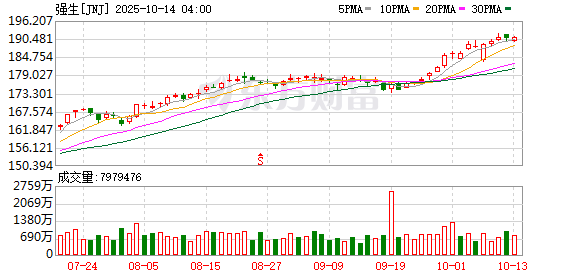
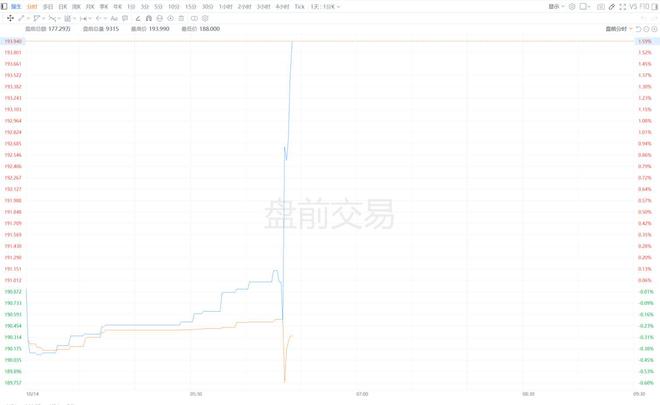
J&J(JNJ)
Search documents
J&J Adds More Than $15B in Six Months: How to Play JNJ Stock?
ZACKS· 2025-06-23 14:25
Core Viewpoint - Johnson & Johnson (J&J) stock has increased by 4.4% over the past six months, adding over $15 billion to its market value, despite facing several challenges including slowing sales in the MedTech segment and the loss of exclusivity for its drug Stelara [1][2]. Group 1: Business Performance - J&J's Innovative Medicine unit is a key growth area, with sales rising 4.4% in Q1 2025 despite the loss of exclusivity for Stelara, driven by products like Darzalex and new drug launches [5][9]. - The company expects to generate over $57 billion in sales from the Innovative Medicines segment in 2025, with anticipated growth of 5-7% from 2025 to 2030 [6][7]. - J&J's diversified business model, with over 275 subsidiaries and 26 platforms generating annual sales exceeding $1 billion, helps it withstand economic cycles [3]. Group 2: Challenges and Risks - The loss of U.S. patent exclusivity for Stelara in 2025, which generated $10.36 billion in sales in 2024, is expected to significantly impact J&J's sales and profits, with Stelara sales declining by 33.7% in Q1 2025 [8][9]. - Sales in J&J's MedTech segment are facing headwinds, particularly in China due to government cost-containment efforts and competitive pressures [12][13]. - J&J is dealing with over 62,000 lawsuits related to its talc-based products, which could create ongoing legal and financial challenges [14][15]. Group 3: Market Position and Valuation - J&J's stock has outperformed the industry, rising 5.3% year-to-date compared to a 1.2% decline for the industry [16]. - The stock is reasonably priced, trading at a price/earnings ratio of 13.9, lower than the industry average of 14.82 [20]. - The Zacks Consensus Estimate for 2025 earnings remains unchanged at $10.60 per share, while the estimate for 2026 has slightly decreased [23]. Group 4: Future Outlook - J&J considers 2025 a "catalyst year," expecting stronger growth in the second half of the year driven by new product launches and pipeline momentum [26][27]. - The company has been active in acquisitions, including the recent purchase of Intra-Cellular Therapies, enhancing its presence in the neurological and psychiatric drug market [27]. - J&J has increased its quarterly dividend by 4.8%, marking the 63rd consecutive year of dividend increases, indicating confidence in its long-term growth [28].
J&J's Drugs Get CHMP Recommendations for Blood Cancer Indications
ZACKS· 2025-06-23 14:15
Core Insights - Johnson & Johnson (J&J) received a positive recommendation from the EMA's CHMP for label expansions of its drugs Darzalex and Imbruvica for new indications [1][8] Group 1: Darzalex - The CHMP recommended expanding Darzalex's label to treat adults with high-risk smoldering multiple myeloma (SMM) [2][4] - If approved, Darzalex will be the first therapy for this patient population, which is currently managed through active monitoring [3] - The decision is supported by data from the phase III AQUILA study, showing significant reduction in the risk of progression or death compared to active monitoring [4] - Darzalex sales increased by 20% year over year to $3.24 billion in Q1 2025, driven by market share gains [5] Group 2: Imbruvica - The CHMP also recommended Imbruvica for treating adults with previously untreated mantle cell lymphoma (MCL) eligible for autologous stem cell transplant [9][10] - If approved, Imbruvica could be the first BTK inhibitor for this indication, potentially offering long remissions without the burden of transplant [10] - The recommendation is based on the TRIANGLE study, which demonstrated improved overall survival with Imbruvica plus chemotherapy [11] - J&J markets Imbruvica in partnership with AbbVie, sharing commercial responsibilities in the U.S. and international profits [12] Group 3: Stock Performance - J&J's stock has risen nearly 4% year to date, outperforming the industry, which has seen a 3% decline [6]
Is Pinterest Stock A Winner?
Forbes· 2025-06-23 13:15
Core Viewpoint - Pinterest stock (PINS) is currently valued at 11 times earnings, making it more attractive compared to Johnson & Johnson's stock, which is valued at 17 times earnings. However, Pinterest's stock has shown significant volatility during market downturns, raising concerns about its stability and risk profile [2][3]. Group 1: Growth - Pinterest's revenue is growing at 18%, significantly outpacing Johnson & Johnson's revenue growth of 4%. Over the last three years, Pinterest's average growth has been 12%, while Johnson & Johnson's has been below 4% [5]. - The company is well-positioned for substantial growth through its visual discovery platform, with an advertising business expected to thrive due to enhanced shopping features and improved targeting [6]. - Pinterest's expanding creator economy, along with international expansion and growing e-commerce integrations, is projected to accelerate revenue growth by transforming its user base into shopping-centric experiences [7]. Group 2: Cash Flows - Pinterest demonstrates robust cash flow, with an average operating cash flow (OCF) margin of 26%, comparable to Johnson & Johnson's 28%. Additionally, Pinterest's free cash flow margin of 25% surpasses Johnson & Johnson's 20% [5]. Group 3: Financial Stability - Johnson & Johnson holds a substantial $39 billion in cash, with cash as a percentage of assets at 20%, compared to Pinterest's $2.5 billion cash reserve and 11% [5]. - Pinterest has minimal debt, with only $144 million, resulting in a debt-to-equity ratio of 0.1%, significantly better than Johnson & Johnson's 14% and $52 billion in debt [5]. Group 4: Risks - Pinterest faces potential risks that could hinder its growth, including a deceleration of revenue growth due to macroeconomic pressures affecting advertising budgets [8]. - Execution risks are present regarding Pinterest's international expansion and efforts to support creators, which could challenge profitability if expected returns are not realized [9].
IMAAVY™ (nipocalimab-aahu) showed greater sustained disease control versus approved FcRn blockers for generalized myasthenia gravis (gMG) at multiple timepoints over 24 weeks in newly published indirect treatment comparison (ITC)
Prnewswire· 2025-06-23 11:32
Core Insights - Johnson & Johnson announced new data from an indirect treatment comparison (ITC) showing that IMAAVY (nipocalimab-aahu) provides consistent and sustained disease control in adults with generalized myasthenia gravis (gMG) compared to other approved FcRn blockers [1][2][4] Company Overview - IMAAVY received U.S. FDA approval for a broad population of gMG patients, including those who are anti-AChR and anti-MuSK antibody positive, as well as pediatric patients aged 12 and older [1][4] - The company is committed to helping patients with chronic autoantibody conditions and continues to research the potential impact of IMAAVY [4][10] Treatment Efficacy - The ITC included data from the pivotal Phase 3 Vivacity-MG3 study, demonstrating that IMAAVY showed comparable onset of symptom relief at Week 1 and statistically significant improvements in MG-ADL scores at multiple timepoints up to 24 weeks [2][5][9] - IMAAVY exhibited significantly greater mean improvements in MG-ADL scores compared to other FcRn blockers, with notable differences observed at Weeks 8-24 [5][8] Regulatory and Market Position - IMAAVY is approved in the U.S. for adult and pediatric patients with gMG, and a Marketing Authorisation Application (MAA) has been submitted to the European Medicines Agency (EMA) for approval in Europe [4][10] - The ITC methodology used in the analysis adheres to global health technology assessment standards, providing valuable comparative data for regulatory agencies and medical guideline committees [4][7] Patient Population and Disease Context - Myasthenia gravis affects an estimated 700,000 people worldwide, with approximately 100,000 individuals in the U.S. living with gMG [6][9] - The disease predominantly affects women and can manifest in pediatric patients, with a significant portion of cases diagnosed in girls [6][9]
强生眼力健陈彪当选中国医疗器械行业协会眼科器械专业委员会主任委员
Sou Hu Wang· 2025-06-18 09:56
Group 1 - The China Medical Device Industry Association Ophthalmic Device Professional Committee held a meeting from May 23 to 28, 2025, where a new chairman was elected, with Chen Biao from Johnson & Johnson Vision Care China appointed as the new chairman [1] - China has the highest number of blind and visually impaired individuals in the world, with increasing rates of myopia among children and adolescents, and a growing incidence of eye diseases in the elderly population [1] - The aging population, changing eye usage patterns, and rising public health demands pose ongoing challenges for comprehensive eye disease prevention and treatment throughout the life cycle [1] Group 2 - Chen Biao expressed gratitude for the trust and support received, emphasizing the committee's commitment to enhancing innovation, industry standards, and serving national strategic needs in the critical period of the "14th Five-Year Plan" for eye health [2] - Johnson & Johnson has been dedicated to developing transformative innovative products to improve eye health, focusing on technological innovation and breakthroughs in the eye health sector in China [2] - The company aims to accelerate the introduction of cutting-edge ophthalmic technologies and innovative products in China, enhancing the safety and outcomes of eye surgeries for domestic patients [2]
Johnson & Johnson CEO: “We’re in the Golden Era of Medical Innovation”
Bloomberg Television· 2025-06-17 19:38
Innovation & R&D - The US leads the world in life science innovation due to a combination of factors including investment in basic research, venture capital, strong companies, and protection of intellectual property [3][5] - Big Pharma increasingly relies on external innovation, with internal drug development accounting for less than 30% of FDA approvals between 2015 and 2021 [11] - AI and machine learning are accelerating drug discovery by enabling the screening of 1.7 million compounds in approximately 5-10 days, significantly reducing the time required for identifying lead compounds [3][14][15] Investment & Finance - In 2021, the pharmaceutical industry invested over $80 billion annually in R&D, a tenfold increase over 10 years, representing approximately 25% of pharma companies' revenues [4] - Venture capital firms investing in biotech require patience, with a time horizon of 10-15 years to see a drug from discovery to commercialization [13] - New Jersey offers an R&D tax credit to attract big pharma companies and has a program allowing early-stage life sciences companies to monetize their net operating losses [20][21] Company Strategy & Focus - Johnson & Johnson (J&J) has invested $50 billion in R&D and M&A since the beginning of last year [10] - J&J actively scouts the world for promising innovations and technologies to leverage its scale in research, development, manufacturing, and commercialization [6] - J&J is developing an oral medicine, icotrokinra, to treat plaque psoriasis, which is expected to be a significant breakthrough and contribute to growth in the second half of the decade [7][9]
Investigational combination of first-in-class bispecifics TALVEY® and TECVAYLI® shows deep and durable responses in heavily pretreated multiple myeloma patients with extramedullary disease
Prnewswire· 2025-06-15 07:15
Group 1 - The Phase 2 RedirecTT-1 study results show a high overall response rate (ORR) of 78.9% in patients with triple-class exposed relapsed/refractory multiple myeloma (RRMM) who have extramedullary disease (EMD) [1][2][3] - The investigational combination of TALVEY® (talquetamab-tgvs) and TECVAYLI® (teclistamab-cqyv) demonstrates deep and durable responses, with 54.4% of patients achieving complete response or better [2][3][4] - The study enrolled 90 patients, with 84.4% being triple-class refractory and 35.6% penta-drug refractory, indicating a heavily pre-treated population [2][3][4] Group 2 - The combination therapy resulted in 61% of patients being progression-free and alive at one year, with a median follow-up of 13.4 months [2][3][4] - Among responders, 66.2% maintained their response, with a median duration of response of 13.8 months [2][3][4] - The safety profile of the combination was consistent with previous reports, with low rates of discontinuation due to adverse events [2][3][4] Group 3 - TALVEY® received FDA approval in August 2023 as a first-in-class GPRC5D-targeting bispecific antibody for RRMM patients who have received at least four prior lines of therapy [3][4] - TECVAYLI® was approved in October 2022 as an off-the-shelf antibody for RRMM patients who have received at least four prior lines of therapy [5][6] - Both TALVEY® and TECVAYLI® have transformed treatment options for relapsed or refractory multiple myeloma, addressing significant unmet needs in this patient population [2][3][5]
Johnson & Johnson's dual-targeting CAR T-cell therapy shows encouraging first results in large B-cell lymphoma
Prnewswire· 2025-06-13 15:00
Core Insights - Johnson & Johnson announced promising results from a Phase 1b study of JNJ-90014496, a dual-targeting CAR T-cell therapy for relapsed or refractory large B-cell lymphoma, showing a 75-80% complete response rate among evaluable patients at the recommended Phase 2 dose [1][2] Company Overview - Johnson & Johnson is committed to advancing innovative therapies for patients with B-cell malignancies, emphasizing their long-term dedication to addressing unmet medical needs [2][4] - The company is expanding its pipeline of CAR T therapies through a collaboration with AbelZeta Inc. to develop next-generation CAR T-cell therapies [2][3] Industry Context - Large B-cell lymphoma, particularly diffuse large B-cell lymphoma, accounts for approximately 40% of all non-Hodgkin lymphoma cases globally, with an estimated 150,000 new cases diagnosed each year [3] - Current single-antigen-targeting CD19 CAR T therapies provide long-term remissions for only about 40% of patients, highlighting the need for innovative treatment options [2][3]
张瑜:全球化“退潮”下美股海外业务的隐忧——七问美股海外经营状况
一瑜中的· 2025-06-13 14:57
Core Viewpoint - The article discusses the increasing discourse on "de-dollarization" in the context of U.S. tariff policies, highlighting the reliance of U.S. companies on overseas business and the potential impact on their performance due to changing global economic dynamics [2][4]. Group 1: Overseas Revenue Proportion - In the S&P 500 index, the proportion of non-U.S. revenue is approximately 30%, which is higher for large enterprises compared to small enterprises, where it is about 20% [6][18]. - The companies disclosing non-U.S. revenue in the S&P 500 represent about 83% of the total market capitalization, indicating a high level of representativeness [6][18]. Group 2: Industry Exposure to Overseas Revenue - The technology sector has the highest exposure to overseas revenue, with over 50% of its revenue coming from non-U.S. sources, followed by materials, healthcare, and communications, all exceeding 30% [7][21]. - Key industries like technology and communications account for nearly half of the total market capitalization of the S&P 500, indicating their significant reliance on overseas business [7][21]. Group 3: Major Companies' Overseas Business - More than half of the major companies in the S&P 500 have overseas business proportions exceeding their respective industry averages [9][26]. - For instance, Apple has 57% of its revenue from overseas, while Nvidia and Broadcom have 56% and 75%, respectively, which are above the technology sector's average of 51% [10][26]. Group 4: Importance of Asian and European Markets - Asian and European markets are nearly equally important, with Asian revenue accounting for 45% and European revenue for 40% of non-U.S. income [12][40]. - In the technology and energy sectors, Asian revenue is significantly higher than European revenue, while in consumer and financial sectors, European revenue dominates [12][40]. Group 5: Growth Rates of Domestic vs. Overseas Revenue - The growth of overseas revenue is generally outpacing domestic revenue growth, particularly in the communications sector, which shows a consistent trend of higher growth in non-U.S. revenue [13][44]. - The materials sector also exhibits higher growth in overseas revenue compared to total revenue for 2023-2024 [13][44]. Group 6: Profitability of Overseas Business - Certain industries, including essential and non-essential consumer goods, materials, and technology, show higher profit margins for overseas business compared to domestic operations [15][50]. - For example, the average operating profit margin for overseas business in the technology sector is 33%, which is higher than the overall average of 20% [15][50]. Group 7: Dependence on Chinese Market - The technology and communications sectors have a higher proportion of revenue from China, at 25.1%, compared to the overall average of 16.5% [16][57]. - However, revenue growth from China for these sectors has slowed in the past two years, potentially due to U.S. restrictions on technology [16][57].
Should You Forget Johnson & Johnson and Buy This Magnificent High-Yield Stock Instead?
The Motley Fool· 2025-06-13 08:25
Group 1: Johnson & Johnson Overview - Johnson & Johnson operates primarily in pharmaceuticals and medical devices after spinning off its consumer-products operations, maintaining a strong position in both sectors [3] - The company is recognized as a Dividend King, having increased its dividend for 63 consecutive years, indicating a robust business model [4] - Johnson & Johnson is currently facing a significant class-action lawsuit related to contaminated talcum powder, which poses a substantial risk and uncertainty for investors [5][6] Group 2: Medtronic Overview - Medtronic is one of the largest medical device manufacturers globally and competes directly with Johnson & Johnson in the medical device sector [9] - The company has increased its dividend for 48 consecutive years, showcasing a strong business foundation comparable to Johnson & Johnson [9] - Medtronic is not currently embroiled in high-profile lawsuits, which positions it more favorably compared to Johnson & Johnson [12] Group 3: Investment Considerations - Both Johnson & Johnson and Medtronic offer similar dividend yields of approximately 3.3%, suggesting attractive pricing for dividend-focused investors [10] - Medtronic is undergoing a business revamp to focus on more profitable product lines and is expected to spin off its diabetes division, which could enhance profitability [12][13] - The downside risk for Medtronic is primarily related to the potential delays in its growth-driven revamp, but the company maintains transparency with its investors [16]