Kinder Morgan(KMI)

Search documents
3 Midstream Stocks That Can Sail Through Energy Volatility
ZACKS· 2025-08-15 14:41
Core Insights - The pandemic initially caused significant uncertainties, leading to a historic drop in crude oil prices, which fell to negative $36.98 per barrel on April 20, 2020, but prices rebounded to $123.64 per barrel by March 8, 2022, due to vaccine rollouts and economic recovery [2]. Midstream Business Resilience - Midstream energy companies like Kinder Morgan, MPLX, and The Williams Companies are less vulnerable to commodity price volatility compared to oil and gas producers, as they generate stable fee-based revenues from long-term contracts [3][4]. - The midstream business model is characterized by lower risk exposure to oil and gas prices and volume fluctuations, making it more resilient during price volatility [4]. Company-Specific Insights - **Kinder Morgan (KMI)**: Operates a vast network of 79,000 miles of oil and gas pipelines, primarily earning revenue from take-or-pay contracts, which provide stable cash flows [5][8]. - **MPLX**: Focuses on transporting crude oil and refined products, securing stable cash flows through long-term contracts with shippers [6][8]. - **The Williams Companies (WMB)**: Engages in transporting, storing, gathering, and processing natural gas and natural gas liquids, well-positioned to meet the growing demand for clean energy [6][7].



3 Long-Term Dividend Buys You Can Get for Under $50
MarketBeat· 2025-08-15 12:35
Group 1: Value Investing Insights - Long-term value investing focuses on total return, which includes healthy, growing dividends, and requires discipline from investors to avoid overreacting to market fluctuations [1] - Many value investors are currently looking at high-yield dividend stocks priced under $50 per share [2] Group 2: Pfizer Inc. (PFE) - Pfizer has a dividend yield of 6.85% with an annual dividend of $1.72 and a dividend payout ratio of 91.49% [2] - Despite a negative total return of 13% over the last five years, Pfizer's long-term performance has been strong, supported by a diversified portfolio and a promising pipeline of new drugs [3][4] - Following a recent earnings report, Pfizer raised its full-year EPS expectations, contributing to a 1.4% increase in stock price [4][5] Group 3: Verizon Communications Inc. (VZ) - Verizon offers a dividend yield of 6.23% with an annual dividend of $2.71 and a payout ratio of 63.17% [6] - The company has experienced a total return of just over 1% in the last five years, primarily due to investments in 5G technology [7] - Recent earnings reports indicate that 5G adoption is leading to recurring revenue growth and improved margins, with stock up nearly 10% since mid-July [8][9] Group 4: Kinder Morgan Inc. (KMI) - Kinder Morgan has a dividend yield of 4.36% with an annual dividend of $1.17 and a payout ratio of 95.90% [10] - The company has delivered a total return of approximately 152% over the last five years, attributed to its extensive pipeline network and steady revenue model [10][11] - Analysts project a 17% upside for Kinder Morgan stock, supported by anticipated increases in oil and natural gas prices as the economy grows [12]

2 All-American Dividend Gems To Buy Before The Market Wakes Up
Seeking Alpha· 2025-08-12 11:30
Core Insights - Las Vegas is currently experiencing one of the worst periods for visitor numbers in the past 22 years, indicating a significant contraction in tourism [1]. Group 1 - The article highlights a chart that illustrates the decline in Las Vegas visitors, emphasizing the severity of the current downturn [1].

Kinder Morgan's Expanding Backlog: Powering the LNG & Electricity Boom
ZACKS· 2025-08-07 15:05
Core Insights - Kinder Morgan Inc. (KMI) has experienced a significant increase in its project backlog, rising from $8.8 billion to $9.3 billion in the June quarter of 2025, indicating strong demand for its services and potential for increased cash flows for shareholders [1][7] Project Developments - In the June quarter, KMI initiated $1.3 billion in new projects, including the Trident Phase 2 and Louisiana Line Texas Access projects, aimed at transporting natural gas from Texas to Louisiana, which is crucial for LNG exports [2][7] - Nearly half of KMI's project backlog is supported by increasing power demand, driven by the growth of data centers and population, highlighting the importance of natural gas transportation and storage [3][7] Industry Comparisons - Other companies in the midstream sector, such as Enterprise Products Partners LP (EPD) and Enbridge Inc. (ENB), also report strong backlogs, with EPD having $5.6 billion in projects and ENB securing a capital program of C$32 billion [4][5] Financial Performance - KMI's stock has appreciated by 34.3% over the past year, outperforming the industry average of 29.2% [6] - The company's current valuation shows a trailing 12-month enterprise value to EBITDA (EV/EBITDA) ratio of 13.77X, which is below the industry average of 13.95X [8] Earnings Estimates - The Zacks Consensus Estimate for KMI's 2025 earnings has been revised upward in the past 30 days, indicating positive sentiment among analysts [10]

Kinder Morgan: Not The Best, But Certainly Deserving Of A Bullish Outlook
Seeking Alpha· 2025-07-29 12:50
Group 1 - The company Kinder Morgan (NYSE: KMI) has shown continued growth, leading to a reaffirmation of a bullish stance on its performance [1] - The focus of the investment service is on cash flow generation within the oil and natural gas sector, highlighting the potential for value and growth [1] - The service offers subscribers access to a stock model account, detailed cash flow analyses of exploration and production firms, and live discussions about the sector [2]
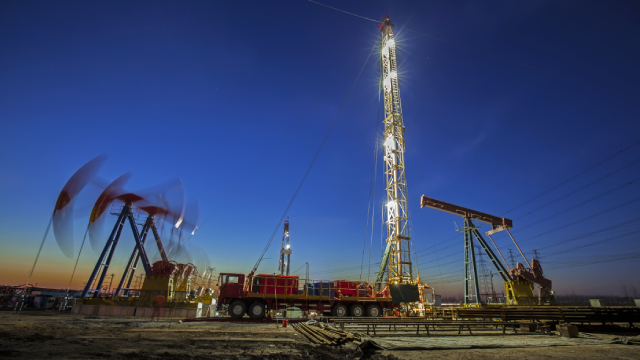
Kinder Morgan Maintains Its Growth Potential Post Acquisition
Seeking Alpha· 2025-07-26 14:55
Company Overview - Kinder Morgan (KMI) is one of the largest energy infrastructure companies in North America with a valuation of $60 billion and a dividend yield exceeding 4% [2]. Investment Strategy - The Value Portfolio focuses on building retirement portfolios using a fact-based research strategy that includes extensive analysis of 10Ks, analyst commentary, market reports, and investor presentations [2]. - The company invests real money in the stocks it recommends, indicating a commitment to its investment strategy [2]. Analyst Position - The analyst has a beneficial long position in KMI shares through stock ownership, options, or other derivatives, reflecting confidence in the company's performance [3].

Kinder Morgan Revenue Jumps 13% in Q2
The Motley Fool· 2025-07-23 16:24
Core Viewpoint - Kinder Morgan reported strong second quarter results for fiscal 2025, with significant revenue growth and a notable increase in net income, reflecting operational strength in its core pipeline and storage businesses [1][5]. Financial Performance - Revenue reached $4.04 billion, exceeding analyst estimates by $213 million, and showing a year-over-year increase of 13.2% from $3.57 billion [2][5]. - Adjusted earnings per share (Non-GAAP) were $0.28, matching consensus estimates and representing a 12% increase from $0.25 in Q2 2024 [2]. - Net income rose to $715 million, a 24.3% increase from $575 million in the prior-year quarter [2]. - Adjusted EBITDA was $1.97 billion, a 6% increase from $1.86 billion in Q2 2024, marking a company record [2][5]. - Free cash flow declined to $1.00 billion, down 9.4% from $1.11 billion in the previous year [2]. Operational Highlights - The Natural Gas Pipelines segment saw a 10% increase in adjusted segment earnings, with transport volumes up 3% due to higher LNG and power generation deliveries [6]. - The Products Pipelines segment experienced a 3% decline in earnings despite a 2% increase in volumes, attributed to weaker commodity prices [6]. - The Terminals segment's adjusted earnings increased by 7%, supported by high capacity utilization in liquid storage at 94.4% [6]. - The CO2 and Energy Transition Ventures segment reported a 10% decrease in earnings, impacted by lower prices for CO2 and regulatory credits [6]. Project Backlog and Investments - Kinder Morgan's project backlog grew by $1.3 billion to $9.3 billion, with 93% dedicated to natural gas projects [7]. - Significant investments include the Trident, Mississippi Crossing, and South System Expansion 4 projects, aimed at meeting rising natural gas demand [7]. - The company placed $750 million worth of projects in service during the quarter [7]. Environmental and Safety Initiatives - The quarter showed progress in environmental and safety initiatives, with no major incidents reported [8]. - Renewable natural gas (RNG) production capacity increased to 6.9 billion cubic feet per year [8]. - Hedging strategies were implemented to protect commodity prices in renewables and CO2 through 2028 [8]. Dividend and Shareholder Returns - The board declared a quarterly dividend of $0.2925 per share, reflecting a 2% year-over-year increase, supported by fee-based cash flows [9][13]. Business Model and Strategic Focus - Kinder Morgan's business model relies on long-term, take-or-pay contracts, providing stable cash flows and insulation from market volatility [10]. - The company focuses on expanding natural gas capacity, growing its project backlog, and securing new contracts to meet demand growth, particularly for LNG exports [4][11]. Future Guidance - Management reaffirmed its fiscal 2025 outlook, projecting net income of $2.8 billion (up 8%), adjusted earnings per share of $1.27 (up 10%), and adjusted EBITDA of $8.3 billion (up 4%) [12]. - The guidance assumes a West Texas Intermediate oil price of $68 per barrel and a Henry Hub natural gas price of $3.00 per million British thermal units [12].

This 4%-Yielding Dividend Stock Adds Another $1.3 Billion of Fuel to Its Growth Engine
The Motley Fool· 2025-07-22 07:10
Core Viewpoint - Kinder Morgan is experiencing significant growth driven by a projected 20% increase in U.S. gas demand by 2030, leading to new expansion opportunities and a $1.3 billion investment in expansion projects during the second quarter [1][5]. Expansion Projects - The company has approved several major expansion projects, including: - Trident Phase 2, increasing capacity from 1.5 Bcf/d to 2 Bcf/d with an estimated cost of $1.8 billion, expected completion in Q1 2027 [5]. - Texas Access Project, a $112 million expansion with a projected in-service date in Q4 2028 [5]. - KinderHawk Expansion, with over $500 million expected investment [5]. - NGPL joint venture expansions totaling $264 million, expected to enter service in 2028 [6]. Growth Backlog - Kinder Morgan's growth project backlog has increased to $9.3 billion through 2030, up from $8.1 billion at the end of the previous year and $3 billion at the end of 2023 [6]. Earnings Visibility - The majority of the projects are backed by long-term contracts and government-regulated rate structures, providing significant visibility into earnings growth over the coming years [7]. Future Growth Catalysts - Analysts predict that U.S. LNG export capacity will more than double by 2030, with Kinder Morgan's contracts to supply gas to LNG facilities increasing from 8 Bcf/d to 12 Bcf/d by 2028 [8]. - Rising power demand from AI data centers, reshoring of manufacturing, and electrification is driving the need for more gas-fired power plants, with half of Kinder Morgan's backlog supporting this demand [9]. Acquisition Strategy - The company has made strategic acquisitions, such as a $640 million purchase of a natural gas gathering and processing system in North Dakota, which enhances income and allows for capital reallocation [10]. Dividend Growth - Kinder Morgan is positioned to continue increasing its dividend, having achieved eight consecutive years of growth, supported by new projects entering commercial service [11].
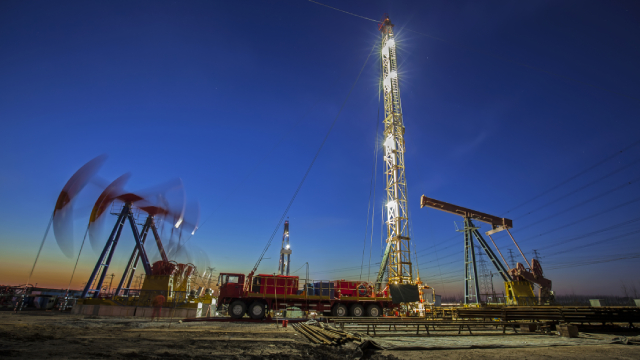
Kinder Morgan: At the Hotspot of the Natural Gas Revolution
MarketBeat· 2025-07-21 16:22
Core Viewpoint - Kinder Morgan is positioned for robust growth driven by an expanding natural gas pipeline network and increasing demand for natural gas resources [1][2][3] Group 1: Growth and Demand - Demand for natural gas is forecasted to grow by 20% through the end of the decade, linked to decarbonization and the expansion of natural gas infrastructure [2] - The company expects to exceed its original net income growth forecast of 8%, supported by a growing project backlog of $9.3 billion, which represents a 6% net increase [10] Group 2: Financial Performance - Kinder Morgan reported Q2 revenue of $4.04 billion, a 13.2% increase, surpassing consensus forecasts by 550 basis points, primarily due to strength in natural gas and LNG export segments [8] - The adjusted earnings of $0.28 met expectations despite the strong revenue performance [9] Group 3: Dividend and Payout - The dividend yield stands at 4.28%, with expectations for future increases, and the payout ratio is nearly 100%, although the business model supports this through long-term contracts [4][6] - The company maintains a payout ratio of 65% in FQ2 2025, indicating a sustainable dividend payment structure [6] Group 4: Balance Sheet and Credit Ratings - The balance sheet shows increased total assets and rising equity, with low leverage as long-term debt is approximately one times the equity [7] - Credit ratings have improved, with two major agencies lifting their outlook to positive, indicating potential for upgrades [7] Group 5: Analyst Ratings and Price Forecast - Analysts have a 12-month stock price forecast of $31.00, indicating an 11.15% upside, with a high forecast of $38.00 representing a 38% upside when combined with the dividend yield [11][12] - Institutional ownership exceeds 60%, with buying activity at a multi-year high, indicating strong support for the stock [13]

Kinder Morgan: Earnings Guidance Raised
Seeking Alpha· 2025-07-19 06:03
Group 1 - Kinder Morgan management anticipates exceeding earnings guidance due to contributions from the Outrigger acquisition, with earnings expected to rise approximately 8% from the previous fiscal year [2] - The oil and gas industry is characterized as a boom-bust, cyclical sector, requiring patience and experience for successful investment [2] Group 2 - The analysis of oil and gas companies focuses on identifying undervalued entities, examining balance sheets, competitive positions, and development prospects [1]