
Nokia(NOK)

Search documents
Super Micro Computer: Nokia Partnership Signals A New Chapter Of Value Compounding
Seeking Alpha· 2025-09-11 14:47
Core Insights - The article discusses the evolution of major tech companies from selling products to enabling broader ecosystems, highlighting Apple and Nvidia as examples of this shift [1]. Company Analysis - Apple transitioned from selling computers to creating a wider ecosystem that enhances user experience and engagement [1]. - Nvidia's role in the tech industry is also mentioned, indicating a similar trajectory in its business model [1]. Investment Perspective - The author emphasizes a focus on fundamental financial ratios and metrics for clearer insights into investment opportunities, particularly in the tech sector [1].



Nokia's Optical Solution Used by i4Networks for Data Center Interconnect
ZACKS· 2025-09-11 14:45
Core Insights - Nokia's technology is being increasingly adopted for modernizing network infrastructure, with i4Networks implementing its optical solutions for next-generation optical data center interconnect (DCI) services in the Netherlands and internationally [1][11] - The new DCI platform enhances the Netherlands' position as a European Internet hub by providing faster and more cost-effective connectivity, supporting the growth of data centers and cross-border data flows [2] Technology Advancements - i4Networks' Software Defined Wave Switching (SDWS) solution, powered by Nokia, allows for rapid activation of network capacity within days, significantly improving upon traditional optical connections that can take weeks or months [3] - The optical layer's agility enables on-demand service activation at higher capacities with enhanced security, catering to the increasing demands from cloud providers, AI workloads, media services, and financial trading platforms [4] Infrastructure Developments - Utilizing Nokia's 1830 PSS-8 and 1830 PSI-M optical platforms, the new network facilitates faster and more reliable interconnection between data centers, allowing customers to scale capacity to 100G or 400G as needed, with built-in resilience for automatic traffic rerouting [5] - Nokia has been selected for projects in the U.S. and India, including providing advanced fiber and IP solutions for the City of Superior and upgrading Vortex Group's IP edge and transport network across Maharashtra, Goa, and Gujarat [6][11] 5G Portfolio and Partnerships - Nokia is enhancing its 5G portfolio, with around 20,000 patents, including 7,000 essential for 5G, enabling customers to transition to demand-driven operations through programmability and flexible automation [7] - Recent collaborations with Supermicro and Extreme Broadband aim to empower cloud providers and enhance AI data center performance and security [8] Market Position and Performance - Nokia faces challenges in the cyclical telecommunications industry, with periods of heavy investment followed by slowdowns impacting revenue growth, alongside competition in the wireless equipment market [9] - The company's stock has gained 8.8% over the past year, compared to a 32.3% growth in the Wireless Equipment industry [12]

Nokia and Kongsberg sign agreement to advance defense communications with 5G technology
Seeking Alpha· 2025-09-11 09:27
Group 1 - Nokia and Kongsberg Defence & Aerospace signed a memorandum of understanding (MoU) to collaborate on tactical communications solutions for the defense sector [1] - The agreement emphasizes the development of deployable 5G solutions for field operations [1] - The collaboration will also explore future technologies such as 6G to enhance situational awareness and military readiness [1]

Nokia and KONGSBERG sign agreement to advance defense communications with 5G technology
Globenewswire· 2025-09-11 07:00
Core Points - Nokia and KONGSBERG have signed a memorandum of understanding to enhance tactical communications solutions for the defense sector, combining KONGSBERG's military expertise with Nokia's leadership in 4G and 5G technologies [1][9] - The collaboration aims to simplify the deployment of 5G in tactical systems, improving battlefield communications and exploring integration with unmanned systems and sensors [2][9] - Future technologies, including Nokia's 6G capabilities, will be investigated to enhance military readiness and situational awareness [2][3] Company Insights - KONGSBERG specializes in advanced defense systems across various domains, including land, sea, air, and space, and is a fast-growing player in space exploration and maritime surveillance [1][8] - Nokia's products are designed for dual-use, serving both commercial and military needs, and the collaboration emphasizes the integration of Nokia's Banshee radio portfolio for tactical operations [4][9] - KONGSBERG reported revenues of NOK 49 billion in 2024 and employs around 14,000 people across approximately 40 countries [10]

Nokia and KONGSBERG sign agreement to advance defense communications with 5G technology
Globenewswire· 2025-09-11 07:00
Core Insights - Nokia and Kongsberg Defence & Aerospace have signed a memorandum of understanding to enhance tactical communications solutions for the defense sector, leveraging Nokia's expertise in 4G, 5G, and private wireless technologies alongside KONGSBERG's military communication capabilities [1][9] Group 1: Collaboration Objectives - The collaboration aims to simplify the deployment of 5G in tactical systems, enhancing reliable and interoperable battlefield communications [2] - It will explore tactical 5G capabilities, integration with unmanned systems and sensors, and participation in European Defense Fund initiatives [2] - The companies will also investigate future technologies such as Nokia's 6G "network as a sensor" to improve situational awareness and military readiness [2][3] Group 2: Strategic Statements - Kjetil R. Myhra from KONGSBERG emphasized that combining their tactical communication assets with Nokia's technologies can accelerate the use of civilian telecom solutions in defense [3] - Giuseppe Targia from Nokia highlighted the dual-use nature of many Nokia products, reinforcing their commitment to providing advanced and secure 5G mobile networks for tactical scenarios [4] Group 3: Company Backgrounds - Kongsberg Defence & Aerospace specializes in advanced systems across various domains, including land, sea, air, and space, and is a fast-growing player in space exploration and maritime surveillance [8][10] - Nokia is recognized as a B2B technology innovation leader, focusing on creating networks that sense, think, and act, with a strong emphasis on intellectual property and long-term research [6][7]
Nokia (NYSE:NOK) Conference Transcript
2025-09-10 18:12
Summary of Nokia's Conference Call Company Overview - **Company**: Nokia - **CEO**: Justin Hotard - **Industry**: Telecommunications and Networking Key Insights and Arguments 1. **Leadership Transition**: Justin Hotard has been CEO for over 100 days and has made structural changes to improve customer engagement and internal operations, emphasizing the need for a consistent approach to customer relationships [4][5][6] 2. **Technology and Customer Relationships**: Nokia possesses significant technology and strong customer relationships, particularly in communications service providers, which has led to positive feedback from customers [4][5] 3. **Infinera Acquisition**: The acquisition of Infinera has enhanced Nokia's capabilities in optical technology and AI, contributing to 5% of the company's revenue in Q2, primarily driven by optical momentum [6][28] 4. **AI and Cloud Demand**: There is a growing demand for AI infrastructure in data centers, particularly in the U.S., with expectations of this trend spreading to Europe. Nokia is focusing on being competitive in AI and fixed infrastructure [8][10][12] 5. **Geographical Growth Opportunities**: The U.S. is identified as the largest growth market due to AI investments, with opportunities also in Europe and emerging markets. Nokia is participating in AI gigafactory bids in Finland [15][17] 6. **Fiber Build-Outs**: Nokia is a market leader in passive optical networks and sees significant growth opportunities in the U.S. and Europe, driven by upgrade cycles and government incentives [18][19] 7. **Photonics and Optical Connectivity**: The shift towards photonics is expected to increase due to bandwidth demands, with Nokia focusing on intra-data center connectivity and optical solutions [37][39] 8. **IP Routing and Switching**: Nokia aims to strengthen its position in IP routing and switching, with plans to invest €100 million in IP networking to drive product innovation [40][43] 9. **Market Dynamics in India**: India presents long-term growth prospects due to increasing mobile penetration, although short-term dynamics may create cycles. Nokia plans to innovate closely with customers in this market [44][46] Additional Important Points 1. **Supply Chain Challenges**: The company has faced supply chain constraints but is optimistic about future growth and is working to improve its response to data center customer demands [32][35] 2. **AI Integration**: Nokia is leveraging AI to enhance automation and improve service delivery, with ongoing projects to integrate AI into their products and services [22][25] 3. **Open RAN Vision**: Nokia supports the Open RAN initiative, which aims to create more efficient and interoperable networks, allowing for competitive advantages through best-of-breed solutions [26] 4. **Future Applications**: The company anticipates future applications in autonomous vehicles, robotics, and AR/VR, which will drive demand for their services [12][24] This summary encapsulates the key points discussed during the conference call, highlighting Nokia's strategic focus areas, market opportunities, and challenges.
“消失”的10大国产手机品牌
创业邦· 2025-09-10 10:31
Core Viewpoint - The article discusses the evolution and decline of various Chinese mobile phone brands, highlighting the competitive landscape and the challenges faced by companies like Waveguide, Gionee, and Meitu, while also emphasizing the rise of new leaders in the industry. Group 1: Market Dynamics - Huawei and Apple are in direct competition, with Huawei's Mate XT and Apple's iPhone 17 series launching in September [6][10] - The latest IDC report indicates that by Q2 2025, Huawei is expected to regain the top position in the domestic market with an 18.1% share, followed closely by Vivo and OPPO [9][10] - The combined market share of Huawei, Xiaomi, OPPO, and Vivo accounts for approximately 66% of the Chinese smartphone market, indicating a strong domestic presence [10] Group 2: Historical Context - Over the past 20 years, more than 87 mobile phone brands have disappeared in China, with a survival rate of less than 15% [11] - Waveguide was the first Chinese brand to gain significant market share in the feature phone era, achieving sales of 700,000 units in 2000 and becoming the top domestic brand for four consecutive years [19] - The launch of the first iPhone in 2007 marked a significant shift in the mobile phone industry, leading to the decline of feature phone giants like Nokia [21][23] Group 3: Brand Decline - Gionee, once a leader in the market, faced a decline due to late entry into the smartphone segment and poor product reception, leading to its eventual bankruptcy in 2018 [27][28] - Meitu and Douwai targeted the female market but failed to maintain their competitive edge as other brands improved their camera technology and overall value [30][37] - The entry of cross-industry players like Haier and Gree into the smartphone market was marked by poor performance and eventual exit due to lack of market presence [40][41] Group 4: Lessons Learned - The article emphasizes that successful marketing and distribution strategies alone are insufficient; companies must also focus on technology and innovation to survive in the competitive landscape [28][49] - The experiences of brands like Meizu and Smartisan illustrate the risks of prioritizing product aesthetics over market demands and operational capabilities [50][57] - The evolution of the smartphone industry in China reflects a shift from following global trends to establishing new standards and innovations [66][67]






Super Micro Stock Is Spiking. It Unveiled an AI Partnership With Nokia.
Barrons· 2025-09-09 18:02
The AI server maker is working with Nokia to create an integrated data-center solution. ...
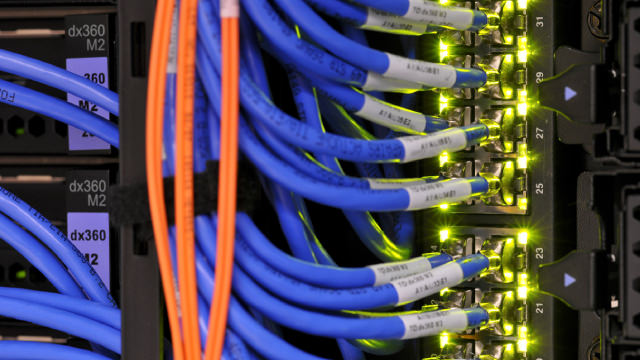
Nokia, Supermicro Join Forces for AI-Optimized Data Center Solutions
ZACKS· 2025-09-09 16:21
Key Takeaways Nokia and Supermicro team up to deliver integrated AI-optimized data center networking solutions.Collaboration combines Supermicro's 800G hardware with Nokia's SR Linux NOS and automation platform.Partnership expands Nokia's enterprise reach through Supermicro's channels, boosting cloud and AI focus.Nokia (NOK) has announced a strategic partnership with Supermicro, a global leader in application-optimized total IT solutions, aimed at empowering cloud providers, hyperscalers, enterprises and co ...
Nokia Strengthens Defense Lineup With New Mission Safe Phone And 5G Tactical Radio
Yahoo Finance· 2025-09-09 10:19
Core Insights - Nokia has introduced two new products in its defense portfolio: the Mission-Safe Phone and an upgraded Banshee 5G Tactical Radio, aimed at enhancing secure communications for military operations [1][4] - The Mission-Safe Phone is designed for durability and security, built on a Qualcomm chipset, and supports customizable applications and upgrades [2][3] - The upgraded Banshee 5G Tactical Radio offers higher bandwidth, lower latency, and improved reliability, marketed as a portable "network in a box" [4] Product Details - The Mission-Safe Phone is a purpose-built defense smartphone that emphasizes adaptability and military-grade durability [2][3] - The Banshee 5G Tactical Radio integrates 5G connectivity, providing rapid deployment and a robust tactical network for better coordination in the field [4] Financial Performance - Nokia's shares have increased by 4% year-to-date, underperforming compared to the NYSE Composite Index's 11% gain [5] - The company has revised its full-year 2025 operating profit outlook down to a range of 1.6 billion euros to 2.1 billion euros, from a previous range of 1.9 billion euros to 2.4 billion euros [6] - Currency fluctuations are expected to impact profits by approximately 230 million euros, with tariffs anticipated to reduce profits by an additional 50 million euros to 80 million euros [7]