Ford Motor

Search documents
VENU Adds Lindsey Stirling, The Black Crowes, and Whiskey Myers to Stellar 2026 Line Up at Ford Amphitheater
Businesswire· 2026-01-30 13:00
Core Insights - Venu Holding Corporation has announced the addition of three major touring artists for its 2026 performance lineup at the Ford Amphitheater in Colorado Springs, CO, including Lindsey Stirling and The Black Crowes & Whiskey Myers [1][2] Company Overview - Venu Holding Corporation is a premier owner, developer, and operator of luxury, experience-driven entertainment destinations, founded by J.W. Roth [3] - The company operates a portfolio of premium brands, including Ford Amphitheater, Sunset Amphitheaters, Phil Long Music Hall, and others, with venues across Colorado, Georgia, Oklahoma, and Texas, and is undergoing nationwide expansion [3] Industry Recognition - Venu has received national recognition from major publications such as The Wall Street Journal, The New York Times, and Billboard for its innovative approach to live entertainment [4] - The company has formed strategic partnerships with industry leaders, including AEG Presents and NFL Hall of Famer Troy Aikman, to shape the future of the entertainment landscape [4] Upcoming Performances - The initial lineup for 2026 includes performances by Yo-Yo Ma with the Colorado Symphony, O.A.R. with Gavin DeGraw, The Black Crowes & Whiskey Myers, Lindsey Stirling, Alison Krauss & Union Station, and Brantley Gilbert [6]



Report Takeaways: Human-Centered Marketing in an Age of AI
Davidmeermanscott· 2026-01-29 16:58
Over more than three decades as a marketer, I’ve seen how seismic changes in technology can disrupt plans and programs. What worked a few years ago can quickly become obsolete.The rise of email marketing, web content and SEO, social media and real-time engagement, and now AI have each disrupted what all kinds of people and organizations are doing. I’m a member of the Marketing AI Industry Council, an invite-only think tank of industry leaders who share a passion for exploring the impact of AI on the market ...

US lawmaker scrutinizes Ford plan to produce batteries with technology from CATL
Reuters· 2026-01-28 18:23
The Republican chair of a U.S. House committee is scrutinizing Ford's plan to repurpose its existing U.S. battery manufacturing facilities to produce lithium iron phosphate cells and grid-scale energy... ...
Earnings Estimates Moving Higher for Ford Motor (F): Time to Buy?
ZACKS· 2026-01-28 18:20
Ford Motor Company (F) could be a solid addition to your portfolio given a notable revision in the company's earnings estimates. While the stock has been gaining lately, the trend might continue since its earnings outlook is still improving.The rising trend in estimate revisions, which is a result of growing analyst optimism on the earnings prospects of this company, should get reflected in its stock price. After all, empirical research shows a strong correlation between trends in earnings estimate revision ...
How Does GM Stock Compare With Ford?
Forbes· 2026-01-28 16:55
General Motors experienced a rise of 8.7% over the past day. You might feel inclined to purchase more shares, or perhaps you want to reduce your investment. However, there is a different viewpoint that could be overlooked. Is there a superior option? It appears that its counterpart Ford Motor provides more advantages. Ford Motor (F) stock showcases excellent revenue growth throughout critical periods, enhanced profitability, and a comparatively lower valuation compared to General Motors (GM) stock. This ind ...

Kodiak Tech Selected for Ford International Airport Innovation Program to Advance Snow Removal Electrification
Globenewswire· 2026-01-28 15:20
GRAND RAPIDS, Mich., Jan. 28, 2026 (GLOBE NEWSWIRE) -- Kodiak Technologies announced today its participation in FLITE, the Ford Launchpad for Innovative Technologies and Entrepreneurship, hosted by the Gerald R. Ford International Airport in Grand Rapids, Michigan. Kodiak Tech is part of FLITE's ninth cohort, a first-of-its-kind aviation program supporting the pilot testing of emerging air travel technologies. Kodiak Tech designs and manufactures high-performance hybrid and electric snow removal vehicles, p ...

Offerpad Appoints Rich Ford as Chief Strategy Officer & President of Cash Offer Marketplace
Businesswire· 2026-01-28 14:10
Core Viewpoint - Offerpad Solutions Inc. has appointed Rich Ford as Chief Strategy Officer and President of Cash Offer Marketplace to enhance its long-term strategy and marketplace-driven transaction ecosystem [1][2]. Group 1: Leadership and Strategy - Rich Ford brings over 25 years of experience in residential real estate, capital markets, and technology, recognized as a pioneer in the single-family rental sector [3][4]. - At Offerpad, Ford will focus on strategy development, marketplace expansion, and transaction optimization, aiming to improve liquidity, execution efficiency, and returns on capital [5][6]. Group 2: Cash Offer Marketplace - The Cash Offer Marketplace is designed to expand buyer demand without increasing balance-sheet intensity, allowing for scalable growth and a capital-efficient, asset-light operating model [2][5]. - The platform connects homes to a diversified network of professional buyers, providing homeowners with multiple selling options through an integrated platform [6].


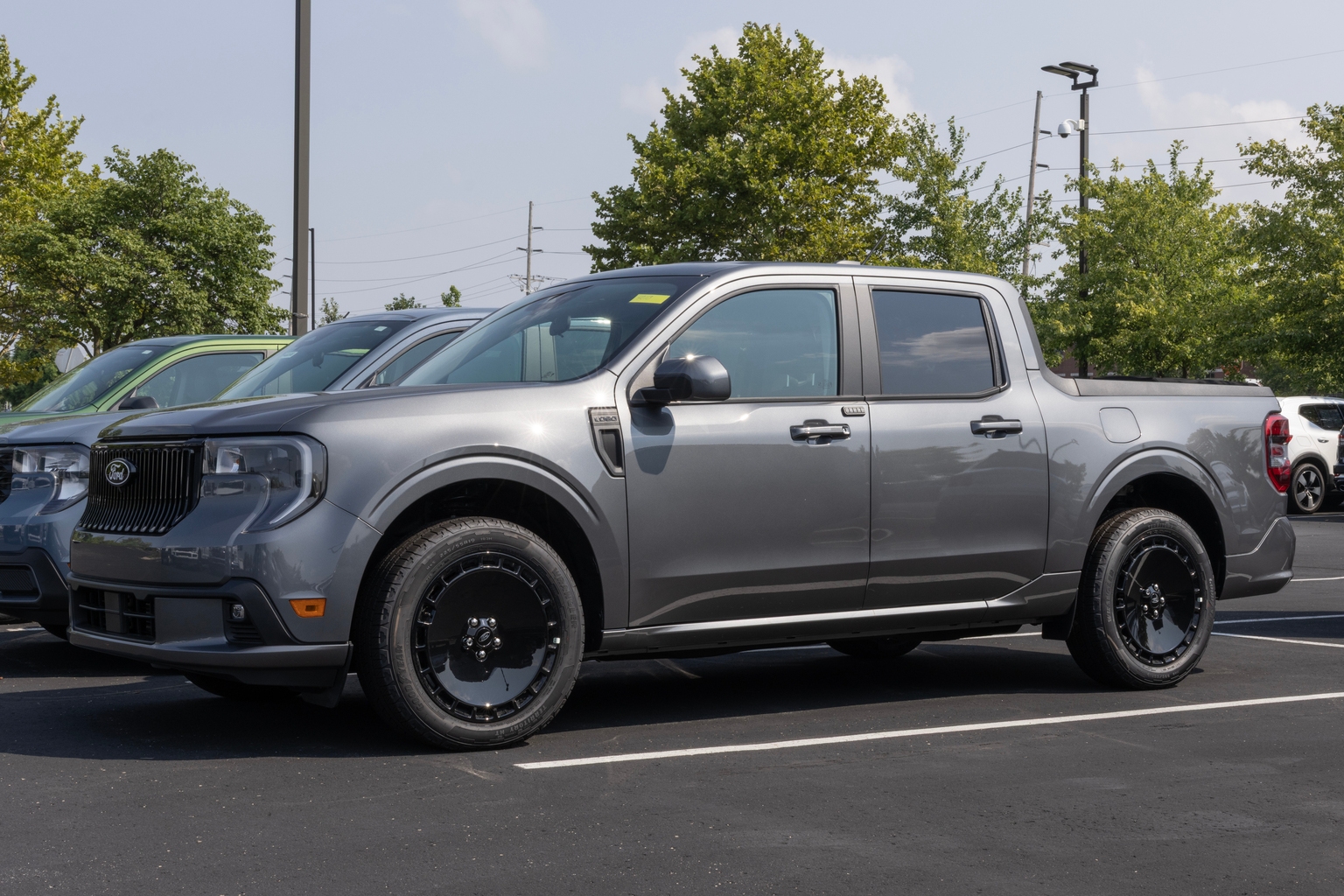
Ford Dominates Market For Compact Pickups, A Positive For Shell-Shocked Investors (NYSE:F)
Seeking Alpha· 2026-01-27 23:26
Core Viewpoint - Ford Motor Co. has announced a significant restructuring charge of $19.5 billion, which is linked to the decision to discontinue the F-150 Lightning battery-electric pickup and reduce focus on battery electric vehicles [1] Financial Impact - The restructuring charge of $19.5 billion represents a substantial impact on Ford's balance sheet, indicating a major shift in the company's strategy regarding electric vehicles [1] Strategic Shift - The decision to scrap the F-150 Lightning suggests a reevaluation of Ford's approach to the electric vehicle market, particularly in response to slow sales [1]
GM expects to top Ford in U.S. vehicle production as it faces up to $4 billion in tariff costs
CNBC· 2026-01-27 16:26
Core Insights - General Motors (GM) aims to increase its domestic production to an industry-leading 2 million units annually, driven by the need to mitigate tariff costs which amounted to $3.1 billion in 2025 [1][2] Production Plans - GM plans to ramp up production by adding gas-powered crossovers from Mexico to plants in Kansas and Tennessee, as well as full-size SUVs and pickup trucks to an idled plant in Michigan, potentially reaching its production goal by 2027 [3] - The company expects to outproduce Ford Motor, which assembled 2.1 million vehicles in the U.S. in 2024, thereby reclaiming its title as the top assembler of vehicles in the U.S. [2][4] Tariff Costs - GM's expected tariff costs for 2026 are projected to be between $3 billion and $4 billion, aligning with the $3.1 billion incurred in 2025, which was lower than previous estimates of $3.5 billion to $4.5 billion [2][6] - The company has managed to reduce its net tariff exposure through self-help initiatives and supportive policy actions, although costs could rise depending on duties on vehicles imported from South Korea [7]
Ford and General Motors in talks with First Brands over rescue financing, FT reports
Reuters· 2026-01-27 02:59
Ford and General Motors are in negotiations with bankrupt car parts supplier First Brands Group over a potential financing package to keep the Ohio-based company operating during its Chapter 11... ...