Walmart

Search documents
Walmart(WMT) - 2025 Q4 - Annual Report
2025-03-14 20:40
Financial Performance - Walmart generated total revenues of $681.0 billion for fiscal 2025, with net sales of $674.5 billion[25]. - For fiscal 2025, net sales increased to $674,538 million, representing a 5.0% change from the previous fiscal year[212]. - Gross profit as a percentage of net sales improved to 24.1% in fiscal 2025, up from 23.7% in fiscal 2024[212]. - Operating income for fiscal 2025 was $29,348 million, with an operating income margin of 4.4%, compared to 4.2% in fiscal 2024[212]. - Consolidated net income for fiscal 2025 was $20.157 billion, reflecting strong business performance and investment returns[219]. - Free cash flow for fiscal 2025 was $12.7 billion, a decrease from $15.1 billion in fiscal 2024, primarily due to a $3.2 billion increase in capital expenditures[222]. - Net cash provided by operating activities for fiscal 2025 was $36.4 billion, up from $35.7 billion in fiscal 2024, reflecting improved operating income[222]. - ROA for fiscal 2025 was 7.9%, up from 6.6% in fiscal 2024, driven by an increase in consolidated net income to $20.157 billion from $16.270 billion[218]. - ROI increased to 15.5% in fiscal 2025 from 15.0% in fiscal 2024, attributed to higher operating income of $29.348 billion compared to $27.012 billion[218]. Sales and Revenue Breakdown - Walmart U.S. segment had net sales of $462.4 billion for fiscal 2025, representing 69% of consolidated net sales[30]. - Walmart International segment had net sales of $121.9 billion for fiscal 2025, accounting for 18% of consolidated net sales[36]. - Sam's Club U.S. segment reported net sales of $90.2 billion for fiscal 2025, representing 13% of consolidated net sales[42]. - Walmart U.S. and Sam's Club U.S. operating segments accounted for approximately 82% of consolidated net sales in fiscal 2025[135]. - Walmart International operations generated approximately 18% of consolidated net sales during fiscal 2025[132]. Store Operations - Walmart U.S. operates 4,605 stores across all 50 states, Washington D.C., and Puerto Rico[30]. - Walmart International operates 5,566 stores across 18 countries[35]. - As of January 31, 2025, Walmart U.S. operates a total of 4,605 retail units, with 3,559 Supercenters and 691 Neighborhood Markets, totaling 697,949 square feet[177]. - Walmart International has 5,566 retail units, including 5,230 retail and 336 wholesale units, covering 274,420 square feet[177]. - The company has a total of 10,771 retail units globally, with 1,052,720 square feet of retail space[177]. Employment and Workforce - Walmart U.S. employs approximately 2.1 million associates as of January 31, 2025[28]. - Approximately 2.1 million associates are employed globally, with 1.6 million in the U.S., where 92% are hourly and 68% are full-time[57]. - Walmart Academy and Live Better U programs provide training and educational opportunities, with about 75% of U.S. salaried management starting in hourly positions[65]. - The company prioritizes creating a culture of belonging and well-being for associates, with initiatives aimed at emotional, physical, and financial health[62]. - The company faces risks from labor costs and the ability to attract qualified associates, which are essential for operational success[124]. Technology and Innovation - Walmart continues to invest in omni-channel capabilities, enhancing customer experience through technology and service offerings[28]. - The company is focusing on investments in eCommerce and technology, including AI, to enhance its omni-channel strategy and maintain market position[72]. - Investments in AI and generative AI technologies are ongoing to enhance customer experience and operational efficiencies, but come with inherent risks[104]. - The company has implemented risk-based security assessments for significant changes to its technologies and information systems[171]. - Walmart's cybersecurity program is guided by the National Institute of Standards and Technology Cybersecurity Framework (NIST-CSF) and includes multiple layers of security[171]. Competition and Market Challenges - The company faces intense competition from various retail formats, including eCommerce and discount stores, which requires a strong omni-channel experience to maintain its competitive position[48]. - Increased online grocery sales could reduce in-store traffic, negatively impacting cross-store sales opportunities and financial performance[74]. - The company is facing risks related to the execution of its omni-channel strategy, which may affect comparable sales and overall market position[73]. - The company anticipates that the portion of total consumer expenditures through digital platforms will continue to increase, impacting net sales and financial performance[72]. - The company is adapting to changing consumer preferences and competitive pressures, which are critical for maintaining market share and financial health[76]. Economic and Regulatory Risks - General economic conditions, such as inflation and changes in consumer spending, may adversely impact net sales and operating results[82]. - The company expects continued uncertainty in the global economy due to inflationary trends and supply chain pressures, which may impact future results[205]. - Changes in tax and trade laws could materially adversely affect financial performance, especially with tariffs and trade barriers impacting costs[135]. - Legal and regulatory risks in international operations could negatively affect business performance due to political instability and compliance challenges[131]. - The company is exposed to future tax legislation and changes in transfer pricing arrangements that could impact tax provisions[137]. Sustainability and ESG Efforts - The company is focused on sustainability efforts, including reducing greenhouse gas emissions and enhancing supply chain efficiency[59]. - Stakeholder expectations regarding ESG efforts are evolving, and failure to meet these expectations could adversely affect the company's reputation and lead to regulatory risks[163]. - Governmental and societal attention to ESG matters could change the scope of reporting and compliance requirements for the company[146]. Cybersecurity and Data Privacy - Cybersecurity incidents have occurred, including malware and ransomware, but have not materially affected operating results to date[107]. - The complexity of digital platforms increases vulnerability to cyberattacks, potentially leading to data misuse and operational disruptions[109]. - Compliance with data protection standards is critical, as breaches could result in substantial liabilities and regulatory fines[117]. - The company has incurred substantial costs to comply with evolving data privacy laws, which are expected to continue in the future[148]. - Failure to maintain the privacy or security of sensitive information could result in reputational damage and legal liabilities[106]. Capital Expenditures and Investments - Total capital expenditures for fiscal 2025 were $23.783 billion, an increase from $20.606 billion in fiscal 2024, with significant investments in supply chain and technology[220]. - Capital expenditures for supply chain and customer-facing initiatives increased to $14.603 billion in fiscal 2025 from $11.828 billion in fiscal 2024[220]. - The company plans to continue focusing on automation and technology investments as part of its strategic capital allocation[220].

Caution Clouds Walmart and Amazon Outlook as Shoppers Tighten Budgets
PYMNTS.com· 2025-03-14 08:00
Core Insights - Amazon and Walmart are preparing for a challenging Q1 earnings season, with cautious outlooks due to persistent inflation, weak consumer demand, and foreign exchange challenges [2][8] - Consumer spending has declined significantly across various retail categories, with a 12% drop in apparel and a 22% drop in athletic footwear compared to the previous year [3] - Both companies are experiencing shifts in consumer behavior, prioritizing essential purchases over discretionary items due to high inflation [3][6] Company-Specific Insights - Walmart's CEO noted that lower-income consumers are particularly affected by rising food prices, leading to more selective purchasing behaviors [3] - Walmart is facing adverse currency movements and margin pressures, despite raising its fiscal 2025 guidance [3] - Amazon's projected Q1 2025 revenue is between $151 billion and $155.5 billion, which is below expectations, reflecting concerns about inflation and consumer spending [3] Market and Economic Context - Tariffs are impacting retailers, with Walmart being particularly vulnerable due to its status as the largest U.S. importer of containerized goods [4][5] - Inflation is leading consumers to focus on value-driven purchases, with a shift towards essentials like groceries and health products [6] - Despite challenges, Amazon surpassed Walmart in quarterly revenue for the first time, reporting $187.8 billion compared to Walmart's $180.5 billion [6] Stock and Performance Insights - Walmart's stock has experienced volatility following a mixed Q4 earnings report, with shares dropping after providing softer-than-expected guidance for Q1 2025 [7] - Both companies are adapting to changing consumer behaviors, which will be crucial for navigating economic headwinds [9]



Why Dollar General Stock Soared Today
The Motley Fool· 2025-03-13 20:39
Core Viewpoint - Dollar General's stock rose 6.8% amid broader market declines, driven by better-than-expected guidance for 2025 despite mixed earnings results [1][2]. Financial Performance - For Q4, Dollar General reported earnings per share (EPS) of $0.87 on sales of $10.3 billion, surpassing Wall Street's expectation of $10.26 billion [2]. - The company's total revenue for the full year reached $40.61 billion, reflecting a nearly 5% increase from last year's $38.69 billion [2]. - Dollar General anticipates comparable-store sales growth of 2.2% in 2025, exceeding the analyst consensus of 1.8% [2]. Market Context - Dollar General's optimistic outlook contrasts with other major retailers, which have issued cautious forecasts due to declining consumer sentiment and recession fears [3]. - The retail industry is experiencing nervousness due to escalating trade tensions between the U.S. and its major trading partners, making Dollar General's relative optimism notable [3]. Competitive Landscape - The company faces significant challenges as consumers are expected to tighten their spending in the coming months [4]. - Increasing competition from discount retailers like Walmart, which have lowered prices in response to consumer sentiment, poses additional pressure on Dollar General [4].

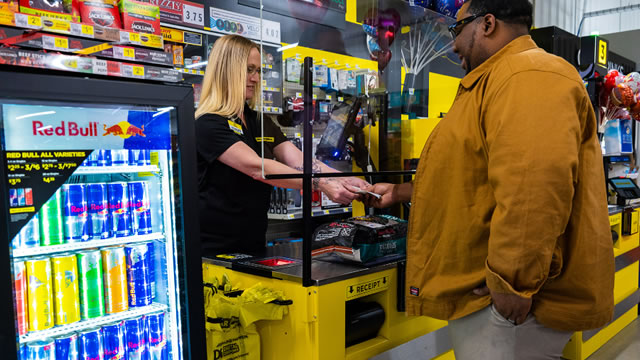
Starbucks CEO defends company's DEI practices, says they are 'key' strength of business
Fox Business· 2025-03-13 15:15
Core Viewpoint - Starbucks CEO Brian Niccol emphasized the company's commitment to diversity as a fundamental strength, stating that it is essential for connecting with customers globally [1][3]. Group 1: Company Strategy - Niccol introduced a "Back to Starbucks" strategy aimed at returning the company to its coffee house roots to increase store traffic [2]. - The company operates 40,000 stores across 88 markets, highlighting the importance of reflecting the diversity of its customers and staff in every location [3]. Group 2: Commitment to Diversity - Chief Partner Officer Sarah Kelly reiterated the company's deep commitment to diversity and inclusion, ensuring that every partner and customer feels a sense of belonging [4]. - Niccol mentioned the focus on enhancing the board's diversity to ensure effective oversight and success of the business [5]. Group 3: Industry Context - The comments come amid a trend where major corporations are scaling back on diversity, equity, and inclusion (DEI) initiatives, facing pressure from various sectors, including political figures [6][8]. - Companies like Target, Amazon, and Walmart have recently pulled back on their DEI programs, indicating a broader industry shift [8].

Dollar General store review and closures dent fourth-quarter earnings
CNBC· 2025-03-13 11:58
Core Insights - Dollar General reported fiscal fourth-quarter revenue that slightly exceeded Wall Street estimates, but a store portfolio review negatively impacted profits [1][2] - The company plans to close 96 Dollar General stores and 45 Popshelf stores, while converting six Popshelf stores into flagship locations [1] Financial Performance - Fourth-quarter revenue increased by 4.5% to $10.3 billion compared to $9.86 billion in the same quarter of 2023, with full-year revenue reaching $40.61 billion, up nearly 5% from $38.69 billion in 2023 [2][3] - Net income for the fourth quarter was $191 million, or 87 cents per share, down from $402 million, or $1.83 per share, in the same quarter a year prior [3][4] - Operating profit fell over 49% year over year to $294 million, with $232 million attributed to store closures and impairment charges [4] Future Outlook - For fiscal year 2025, Dollar General forecasts revenue growth between 3.4% and 4.4%, slightly below Wall Street's expectation of 4.1% [3] - Earnings per share are projected to be between $5.10 and $5.80, compared to the analyst estimate of $5.85 [3] Strategic Initiatives - The company is testing same-day delivery services and plans to introduce about 100 new private-brand products in the first quarter [6][7] - Same-store sales grew by 1.2% year over year for the quarter and are expected to grow between 1.2% and 2.2% for the upcoming fiscal year [5]

Is Target Stock a Buy in March 2025?
The Motley Fool· 2025-03-12 22:14
Core Viewpoint - Target's stock has experienced a significant decline of 55% over the past few years, contrasting sharply with the S&P 500's 20% increase during the same period, raising questions about its investment potential [1][2]. Group 1: Company Performance - Despite the stock's poor performance, Target is a blue-chip company with a strong brand and a history of success, including 58 consecutive annual dividend increases [2]. - Target's business fundamentals remain solid, but its stock price has suffered due to its cyclical nature compared to competitors like Walmart, which has a higher proportion of staple goods sales [2][4]. - Target's merchandise sales include only about 40% from groceries and household staples, making it more vulnerable during economic downturns when discretionary spending decreases [4][6]. Group 2: Financial Health - Target maintains a strong financial foundation, with a current dividend yield of 3.9%, a payout ratio of only 45% of cash flow, and a manageable leverage ratio of 1.8 times EBITDA [8]. - The company has $4.7 billion in cash and holds an "A" credit rating, indicating stability despite current challenges [8]. - Analysts project earnings growth of just over 6% annually over the next three to five years, resulting in a reasonable PEG ratio of 2.1, suggesting the stock is now more appropriately valued [11]. Group 3: Investment Considerations - While the stock is not considered a generational bargain, it could provide solid total returns of 10% to 11% annually through dividends and earnings growth, making it a potential buying opportunity [12]. - The stock may continue to struggle until discretionary spending recovers, but the current financial stability allows for a degree of investor confidence [9][12].

Walmart gets dressing-down from China after pleading with suppliers to absorb tariff costs: report
New York Post· 2025-03-12 20:26
Core Viewpoint - Chinese officials have reprimanded Walmart for allegedly pressuring local suppliers to absorb tariff costs, warning of potential legal consequences if this practice continues [1][6][9]. Group 1: Walmart's Actions and Responses - Walmart has reportedly been urging Chinese suppliers, particularly in kitchenware and clothing, to reduce their prices by as much as 20% to mitigate the impact of tariffs [5]. - The company maintains that its discussions with suppliers aim to fulfill its mission of helping customers save money, emphasizing the importance of collaboration during uncertain times [2][8]. - Walmart executives have expressed a commitment to working with Chinese suppliers to protect their interests and avoid negative repercussions [8]. Group 2: Government Reactions and Market Implications - Chinese officials have indicated that it would be unfair and irresponsible for suppliers to bear the tariff costs, warning that such actions could violate contracts and disrupt market order [6][7]. - The Chinese government has cautioned that if Walmart continues to insist on this approach, it may face serious consequences beyond mere discussions [8]. - Following these developments, Walmart's shares fell by 2.6%, reflecting market concerns over the potential fallout from the situation [9]. Group 3: Financial Performance in China - Walmart reported approximately $5 billion in net sales in China for the most recent quarter, representing a 28% increase from the previous year, although this only accounted for less than 3% of its total global revenue [10].

Acceldata Named to Forbes List of America’s Best Startup Employers 2025
Globenewswire· 2025-03-12 13:00
Core Insights - Acceldata has been recognized for the second consecutive year on Forbes' list of America's Best Startup Employers 2025, highlighting its commitment to an inclusive and innovation-driven workplace [1][2] - The recognition is based on evaluations of company reputation, employee satisfaction, and growth among 3,000 privately-held companies in the U.S. [2] Company Achievements - Acceldata has received multiple accolades from industry analysts, including being named a leader in Everest Group's Data Observability Technology Provider PEAK Matrix® Assessment 2024 and AIM Research's GenAI Observability Vendor Landscape [3] - The company is also recognized in the Gartner® Market Guide for Data Observability Tools and included in the Lazard VGB AI Infra 40, selected from over 2,000 companies in North America and Europe [3] - Additional industry recognitions include the CRN 2024 Big Data 100 list and DBTA 100, showcasing its status as a significant player in the data observability and DataOps sectors [3] Company Overview - Founded in 2018 and based in Campbell, CA, Acceldata specializes in data observability and agentic data management solutions, enabling organizations to gain actionable insights into their data infrastructure [4] - The company utilizes advanced AI technology to provide visibility into data pipelines, helping organizations optimize performance [4] - Acceldata's client base includes notable global companies such as Dun & Bradstreet, PubMatic, and PhonePe [4]

Costco Stock Suffers Biggest 1-Day Drop in Over 3 Years. Is The Dividend-Paying Growth Stock a Buy Now?
The Motley Fool· 2025-03-12 11:33
Core Viewpoint - Costco's stock fell 6.1% following its second-quarter fiscal 2025 results, despite earnings being slightly below Wall Street estimates, indicating a surprising market reaction given Costco's historical stability [1][2]. Financial Performance - Adjusted sales increased by 8.6%, and e-commerce sales grew by 22.2%, showcasing strong performance despite external challenges [3]. - In fiscal 2024, Costco reported sales of $249.6 billion and operating income of $9.29 billion, with membership fees contributing $4.83 billion, highlighting the profitability of its membership model [9][10]. Market Position and Strategy - Costco operates 897 warehouses, with 617 located in the U.S. and Puerto Rico, and 150 in Canada and Mexico, providing geographical diversification but also exposing the company to tariff risks [3]. - The company emphasizes member trust and value, maintaining low prices and thin margins to justify membership fees, which has resulted in a 90% renewal rate among its 137 million cardholders [7][10]. Competitive Landscape - Costco's price-to-earnings (P/E) ratio has risen to 56.3, significantly higher than its historical medians and compared to competitors like Walmart and Target, indicating that the stock may be overvalued [14][15]. - Despite its strong market position, Costco's stock price growth has outpaced earnings growth, leading to concerns about valuation sustainability [13][14]. Dividend and Investment Considerations - The dividend yield is low at 0.5%, and even with special dividends, the total yield remains around 2%, which may not attract passive income investors [16][17]. - A more favorable investment case could emerge if Costco's valuation aligns closer to its historical median, but current levels are deemed too high for consideration [18].

Costco Price Plunge Equals Opportunity for Investors
MarketBeat· 2025-03-11 11:12
Core Insights - Costco Wholesale is experiencing a stock price decline, attributed to a bottom-line miss in Q2 earnings, despite achieving a 9% revenue growth, which outpaces competitors like Walmart and Target [10] - The company is on track for a special dividend payment, with a significant increase in cash reserves, growing by 25% year-to-date in Q2 and 35% year-over-year [1][2] - Analysts maintain a Moderate Buy rating for Costco, with a 12-month stock price forecast of $1,030.43, indicating a potential upside of 10.28% [6] Financial Performance - Costco's annual dividend is $4.64, with a dividend yield of 0.50% and a payout ratio of 27.09% [1] - The company has a strong dividend increase track record, having raised dividends for 21 consecutive years, with an annualized 3-year dividend growth of 13.59% [1] - The balance sheet shows increased cash and assets, with an 8.25% rise in shareholder equity, while maintaining low leverage with long-term debt less than 0.25 times equity [3][4] Market Trends - Institutional buying trends are aligning with analyst support, with significant buying activity noted in early 2025, netting $5 billion worth of shares [8] - The consensus target forecasts a 10% gain for Costco's stock, following a 55% increase in the preceding 12 months, with high-end targets suggesting further potential for growth [7] - Despite the recent stock price drop, long-term investors and institutions continue to provide support, indicating a likely sideways trading pattern until later in the year [11]