
Vanguard

Search documents
The Vanguard Consumer Staples ETF (VDC) Offers Broader Diversification Than the iShares U.S. Consumer Staples ETF (IYK)
The Motley Fool· 2025-11-01 12:53
Core Insights - The Vanguard Consumer Staples ETF (VDC) and the iShares US Consumer Staples ETF (IYK) are both focused on leading U.S. consumer staples companies, but they differ in cost, diversification, and portfolio tilt [1] Cost & Size Comparison - IYK has an expense ratio of 0.38%, while VDC is more affordable at 0.09%, making it cheaper by 0.29 percentage points [2][3] - As of October 27, 2025, IYK has an AUM of $1.3 billion, whereas VDC has a significantly larger AUM of $8.5 billion [2] Performance & Risk Metrics - Over the past five years, IYK has a max drawdown of -15.05%, compared to VDC's -16.54% [4] - A $1,000 investment in IYK would have grown to $1,417 over five years, while the same investment in VDC would have grown to $1,344 [4] Holdings Overview - VDC consists of 103 holdings, primarily in the consumer defensive sector (98%), with major positions in Walmart, Costco, and Procter & Gamble [5] - IYK is more concentrated with 55 holdings and includes a 10% allocation to healthcare stocks, featuring top holdings like Procter & Gamble, Coca-Cola, and Philip Morris International [6] Total Return Analysis - Over the past five years, IYK delivered a total return of 57%, while VDC provided a total return of 51% [8] - In a 10-year timeframe, IYK's total return was 132%, outperforming VDC's 110% [9] Dividend Performance - The latest quarterly dividend payment for VDC was 28.1% lower than five years ago, indicating disappointing cash flow growth for investors [10] - Conversely, IYK's latest dividend payment was 108% higher than the payout from a year earlier, showing positive growth in dividends [10]



VOO & Two More Vanguard ETFs to Buy Before 2026
247Wallst· 2025-11-01 11:46
Core Insights - Vanguard is recognized as a leader in the exchange traded fund (ETF) revolution, reflecting its significant influence in the investment management industry [1] Company Overview - Vanguard has established itself at the forefront of the ETF market, indicating its commitment to innovation and growth within this financial product category [1]

三年募资270亿,“投GP的GP”是怎么玩的?
3 6 Ke· 2025-10-31 23:32
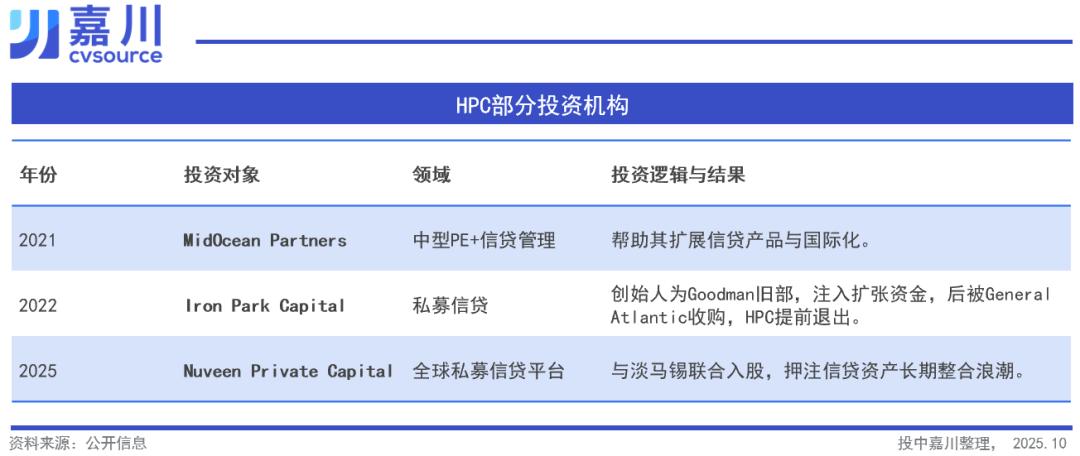
Core Viewpoint - The emergence of Hunter Point Capital (HPC) signifies a shift in the investment landscape, where investment institutions themselves become the targets of investment, moving from traditional capital investment in companies and projects to investing in General Partners (GPs) [2][4]. Group 1: Hunter Point Capital Overview - HPC, established in 2020, focuses on acquiring minority stakes in GPs rather than investing in companies or funds, raising over $3 billion in just three years [2][10]. - The firm represents a new trend in the asset management industry, where capital is now directed towards the operators of capital rather than the capital itself [2][4]. Group 2: Market Dynamics - The concentration in the global asset management industry has increased, with the top three firms (Vanguard, BlackRock, and Fidelity) controlling 51% of managed assets in 2023, up from 43% in 2013 [3]. - Mid-sized GPs face challenges such as prolonged fundraising cycles and declining management fees, creating a "growth capital vacuum" that HPC aims to address [4][10]. Group 3: Investment Strategy - HPC's strategy is to invest in people rather than projects, acquiring minority stakes in GPs to gain future management fees and performance-based income [12][13]. - The firm provides post-investment support, including fundraising assistance and financial structure optimization, positioning itself as a "Strategic Minority Partner" [16][17]. Group 4: Investment Performance - HPC's investments are designed to yield returns through two main avenues: dividend income from increased management fees and capital appreciation from the GP's brand and asset growth [15][20]. - The firm has invested in eight notable investment institutions, demonstrating its ability to identify GPs at critical expansion points [17][19]. Group 5: Future Outlook in China - The private equity sector in China is experiencing similar challenges, with many mid-sized GPs facing survival anxiety due to fundraising difficulties and market concentration [21]. - There is potential for local institutions to adopt HPC's model of minority stake investment in GPs, although current market conditions and regulatory environments may pose challenges [21].
Moving Averages of the Ivy Portfolio & S&P 500: October 2025
Etftrends· 2025-10-31 21:55
Core Insights - The article provides an update on the performance of the S&P 500 and the Ivy Portfolio, highlighting that all five ETFs in the Ivy Portfolio remain in an "invest" position as of the end of October [5][7][14]. Ivy Portfolio Overview - The Ivy Portfolio is constructed using an asset allocation strategy similar to that of Harvard and Yale endowment funds, consisting of five ETFs that cover various asset classes [2]. - The strategy involves creating a diversified portfolio with equal weight across asset classes, calculating a 10-month moving average for each fund, and making buy/sell decisions based on whether the fund closes above or below this average [3]. Ivy Portfolio Performance - At the end of October, none of the five ETFs in the Ivy Portfolio closed below their 10-month or 12-month simple moving averages, indicating a continued "invest" position [5][7]. - The percentage above or below the moving average for each fund is tracked, with funds within 2% of the signal highlighted for potential position reversals [6]. S&P 500 Performance - The S&P 500 closed October with a monthly gain of 2.3%, marking the sixth consecutive month of gains, and closed 11.0% above its 10-month simple moving average [8][10]. - The index also closed 11.6% above its 12-month simple moving average, maintaining an "invest" position for six straight months [12]. Moving Averages Strategy - Utilizing a moving average strategy can effectively manage risks associated with bear markets, where holding the index is advised when it closes above the moving average and moving to cash when it closes below [9]. - The article illustrates that a 10- or 12-month simple moving average strategy would have allowed participation in most upside movements since 1995 while significantly reducing losses [10][15]. Psychological Factors - The article discusses the psychology behind momentum signals, noting that human behavior often leads to buying during market uptrends and selling during downturns, which can create cycles of buying and selling momentum [16]. Implementation Considerations - The moving average strategy is most effective when applied to specific investments rather than broad indices, as signals may differ due to factors like dividend reinvestment [17]. - The strategy is recommended for use in tax-advantaged accounts with low-cost brokerage services to maximize gains [18].

S&P 500 Snapshot: Index Posts 2.3% Gain in October
Etftrends· 2025-10-31 20:54
Core Insights - The S&P 500 finished October with a gain of 2.3% from September, marking its fourth weekly gain in the last five weeks [1] - Year-to-date, the S&P 500 is up 16.56%, while the S&P Equal Weight Index has increased by 7.53% [4] Performance Overview - The S&P 500 index recorded a weekly gain of 0.7% [1] - Historical context shows the index reached an all-time high of 1565.15 on October 9, 2007, before experiencing a significant drop of approximately 57% by March 9, 2009, during the Global Financial Crisis [1] - The index took over five years to recover and reach a new all-time high of 1569.19 on March 28, 2013 [1] Volatility Analysis - The S&P 500 experienced its largest intraday price volatility of 10.77% on April 9, 2023, since December 24, 2018 [3] - The average percent change from intraday low to high over the past 20 days is 1.07% [3] Index Comparison - The S&P 500 is a market cap-weighted index, while the S&P Equal Weight Index gives equal weight to each constituent [4] - The performance disparity between the two indices highlights the stronger performance of the S&P 500 in 2023 [4]

Janus Henderson Group plc (JHG) Maintains Positive Outlook Despite "Hold" Recommendation
Financial Modeling Prep· 2025-10-31 20:05
Core Insights - Janus Henderson Group plc (JHG) is a significant player in the asset management industry, competing with firms like BlackRock and Vanguard [1] - Evercore ISI has a "Positive" rating for JHG, raising the price target from $48 to $50, indicating a favorable outlook despite a "hold" recommendation [1][4] - As of October 31, 2025, JHG's stock price was $43.39, with a slight increase of 1.05% to $43.46 [1][4] Financial Performance - During the Q3 2025 earnings call on October 30, 2025, key figures from the company discussed performance metrics, with participation from analysts from TD Cowen, BofA Securities, and Morgan Stanley [2] - JHG's market capitalization is approximately $6.78 billion, reflecting its substantial presence in the asset management sector [3][4] - The stock has experienced a trading range over the past year, with a high of $49.42 and a low of $28.26, indicating volatility and growth potential [3]


Meet Short-Term Savings Goals in 2026 With These ETFs
Etftrends· 2025-10-31 17:52
Core Insights - The article discusses the financial behavior of Americans in the context of high inflation and their focus on building cash reserves for 2026, with 84% of respondents actively saving through emergency funds and high-yield savings accounts [1][2]. Group 1: Consumer Behavior and Confidence - A significant majority, just over 80%, of respondents express confidence in achieving their financial goals for the upcoming year [2]. - Different generations are prioritizing their cash needs, indicating a tailored approach to savings across age groups [2]. Group 2: Savings Strategies - Americans are encouraged to utilize the end of the year to reassess their savings strategies, with a focus on high-yield savings vehicles that can significantly outperform traditional bank accounts [3]. - Vanguard's Cash Plus Account is highlighted as a high-yield option, offering returns more than eight times greater than average traditional savings accounts [3]. Group 3: Investment Options for Cash Needs - Short-term bond ETFs are recommended as effective tools for meeting future cash obligations, providing liquidity, tax efficiency, and cost-effectiveness [5]. - Specific ETFs such as Vanguard 0-3 Month Treasury Bill ETF (VBIL), Vanguard Ultra-Short Treasury ETF (VGUS), Vanguard Short Duration Bond ETF (VSDB), and Vanguard Short-Term Bond Index Fund ETF Shares (BSV) are suggested for their low expense ratios and indexed exposure to short-duration bonds [6].

More retirement investors opting for 'good enough' stock portfolio strategy to protect their market money
CNBC· 2025-10-31 12:30
Core Insights - Retirees and investors nearing retirement face challenges in achieving growth from their stock portfolios to combat inflation and rising healthcare costs, while also being wary of potential market downturns [1] - The current investment strategy suggests that recent retirees should maintain over half of their portfolios in stocks, but concerns arise due to the concentration of the U.S. stock market in a few large tech companies and the potential for an AI bubble [2] - Chip sales have significantly contributed to GDP growth, accounting for approximately 92% in the first half of the year, highlighting the importance of AI as a growth driver for the U.S. economy, though it poses short-term risks for investors [3] Investment Trends - Many retirees are shifting their investments towards equity income-generating ETFs to reduce stock exposure while still aiming for growth [4] - Buffered ETFs, which protect against losses while allowing for some upside, have seen substantial growth since the pandemic, with assets exceeding $30 billion and an average return of about 11% per year over five years [5] - There is a notable shift in investor mindset, with retirees now prioritizing steady and predictable returns over outperforming the S&P 500, seeking "performance that's good enough" [6] Cost Considerations - Buffered ETFs typically charge higher fees (0.75% to 0.85%) compared to standard equity index ETFs (around 0.03%), but the added cost may be justified for retirees focused on capital preservation and risk management [7] - Major buffered equity ETFs include FT Vest Laddered Buffer ETF (BUFR) with $7.9 billion in assets and a 0.95% expense ratio, Innovator Defined Wealth Shield ETF (BALT) with $1.9 billion and a 0.69% expense ratio, among others [8]

Here’s how many Americans actually have $1M by retirement — and the 3 big moves they made. Make sure you're on track
Yahoo Finance· 2025-10-31 11:55
Core Insights - The article emphasizes the importance of establishing a steady saving habit and making informed financial decisions to enhance retirement savings, particularly aiming for a million-dollar nest egg [1][2][3] Savings Strategies - Maximizing contributions to tax-efficient savings plans like 401(k) and Roth IRA is crucial, with a recommended monthly savings rate of at least 10% to improve retirement outcomes [2][3] - The average personal savings rate in the U.S. was reported at 4.6% as of mid-2025, indicating that most Americans are saving less than $1 for every $20 in disposable income [3][4] Retirement Account Statistics - Only 4.6% of American households had over $1 million in retirement accounts, highlighting the challenge of achieving significant retirement savings [5] - Among older Americans aged 55 to 64, 9.2% had $1 million or more in retirement accounts, while the median retirement savings across all households was only $88,000 [4][5] Investment Strategies - Passive investing in low-cost index funds has gained popularity, with Vanguard's S&P 500 ETF delivering an annualized return of 13.62% since 2015, slightly above the historical average of over 10% [9][10] - A consistent investment strategy, combined with a 10% annual savings rate on a $70,000 salary, could lead to a $1 million retirement fund within 29 years [10][11] Debt Management - Reducing debt is essential for achieving a comfortable retirement, as nearly half of American seniors carry credit card debt, with high-interest rates complicating financial stability [14][15] - Homeowners can leverage home equity to manage debt, with the average homeowner sitting on approximately $311,000 in equity as of Q3 2024 [18][19]
How Much Should Retirees Have Invested by Age 67?
Yahoo Finance· 2025-10-31 09:30
Group 1 - Long-term budgeting for retirement is challenging due to the unpredictability of life and the difficulty in planning 30 years ahead [1] - Financial preparedness for retirement is crucial as costs typically rise over time, and there is no universal solution for savings [2] - Fidelity recommends specific savings benchmarks based on age, suggesting that individuals should save a multiple of their annual salary as they age [3][4] Group 2 - Fidelity's recommendations include saving the equivalent of one's salary by age 30, two times by age 35, eight times by age 60, and ten times by age 67 [5] - Current data indicates that many Americans are falling short of these savings goals, with inflation significantly impacting living costs [6] - Vanguard's 2025 report shows that the average 401(k) balance for Americans aged 65 and older is nearly $300,000, which is approximately 4.7 times the average U.S. salary, while the median balance is only $95,425 [7]