HDFC Bank

Search documents
Sensex dips 31 points amid relentless foreign fund outflows
Rediff· 2025-12-03 11:09
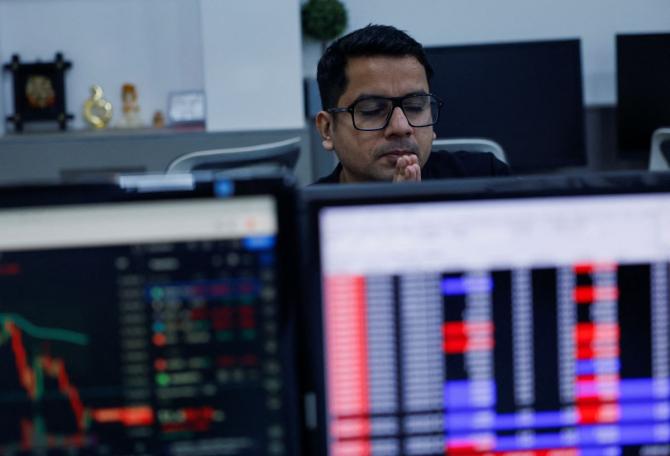
Stock market benchmark indices Sensex and Nifty ended lower in a largely range-bound trade on Wednesday amid persistent foreign fund outflows and profit-taking by investors.Photograph: Francis Mascarenhas/ReutersFalling for the fourth day in a row, the 30-share BSE Sensex dipped 31.46 points or 0.04 per cent to settle at 85,106.81.During the day, it dropped 374.63 points or 0.44 per cent to 84,763.64. The 50-share NSE Nifty skidded 46.20 points or 0.18 per cent to 25,986.From the Sensex firms, Bharat Electr ...

Sensex tanks nearly 504 pts, Nifty slips to 26,032
Rediff· 2025-12-02 10:59
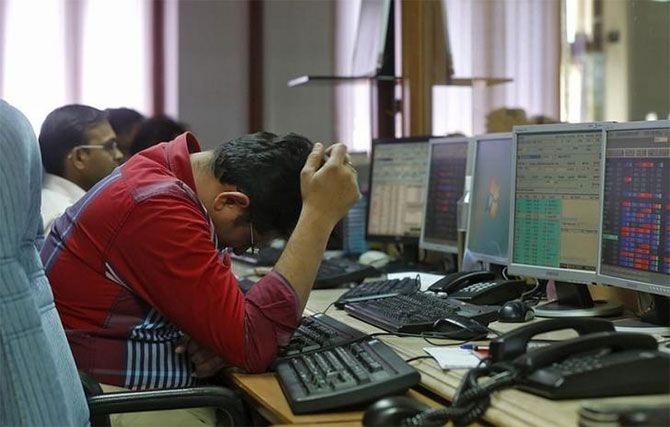
Stock markets declined on Tuesday, with the benchmark Sensex tumbling nearly 504 points due to selling in blue-chip bank stocks and Reliance Industries, and persistent foreign fund outflows.Photograph: Shailesh Andrade/ReutersFalling for the third straight session, the 30-share BSE Sensex tumbled 503.63 points or 0.59 per cent to settle at 85,138.27.During the day, the benchmark tanked 588.9 points or 0.68 per cent to hit a low of 85,053. The index had scaled a record high level in intra-day trade in the pr ...
Equity markets decline in early trade dragged by bank stocks, foreign fund outflows
The Hindu· 2025-12-02 04:44
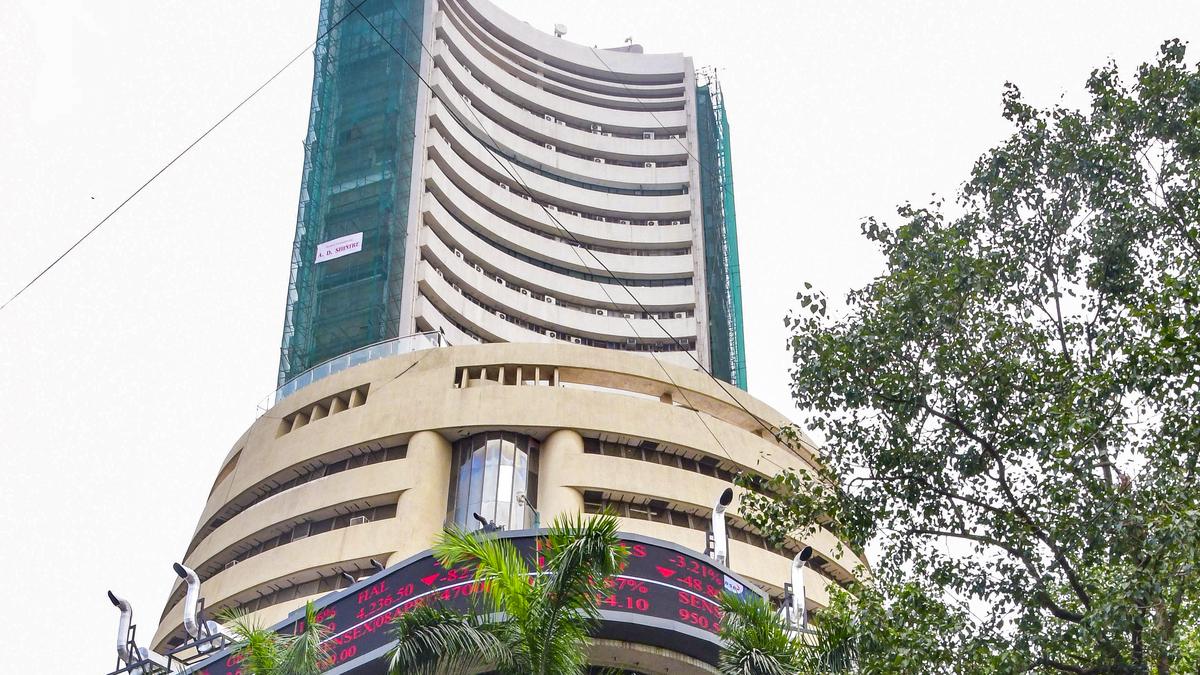
Market Performance - Benchmark indices Sensex and Nifty declined in early trade on December 2, 2025, due to pressure from blue-chip bank stocks and ongoing foreign fund outflows [1][2] - The 30-share BSE Sensex fell by 380.02 points to 85,261.88 during initial trade after reaching a record high in the previous session [1] - The 50-share NSE Nifty decreased by 98.3 points to 26,077.45 [2] Sector Performance - Major laggards from the Sensex firms included HDFC Bank, ICICI Bank, Axis Bank, Adani Ports, Tata Motors Passenger Vehicles, and Eternal [2] - In contrast, gainers included Asian Paints, Bharti Airtel, Infosys, and Bajaj Finance [2] Foreign and Domestic Investment - Foreign Institutional Investors (FIIs) sold equities worth ₹1,171.31 crore on December 1, while Domestic Institutional Investors (DIIs) purchased stocks worth ₹2,558.93 crore [2] Global Market Context - Asian markets showed mixed performance, with Shanghai's SSE Composite index trading lower, while South Korea's Kospi, Japan's Nikkei 225, and Hong Kong's Hang Seng indices were in positive territory [3] - U.S. markets ended lower on December 1, and Brent crude oil prices dipped 0.03% to $63.15 per barrel [3] Recent Trading Activity - On December 1, the Sensex ended 64.77 points or 0.08% lower at 85,641.90 after earlier gains, having reached a record intra-day high of 86,159.02 [3] - The Nifty settled at 26,175.75, down 27.20 points or 0.10%, after climbing to a lifetime high of 26,325.80 during the day [4]
Finance ministry rejects Washington Post's claims of influence on LIC investments in Adani firms
MINT· 2025-12-01 12:16
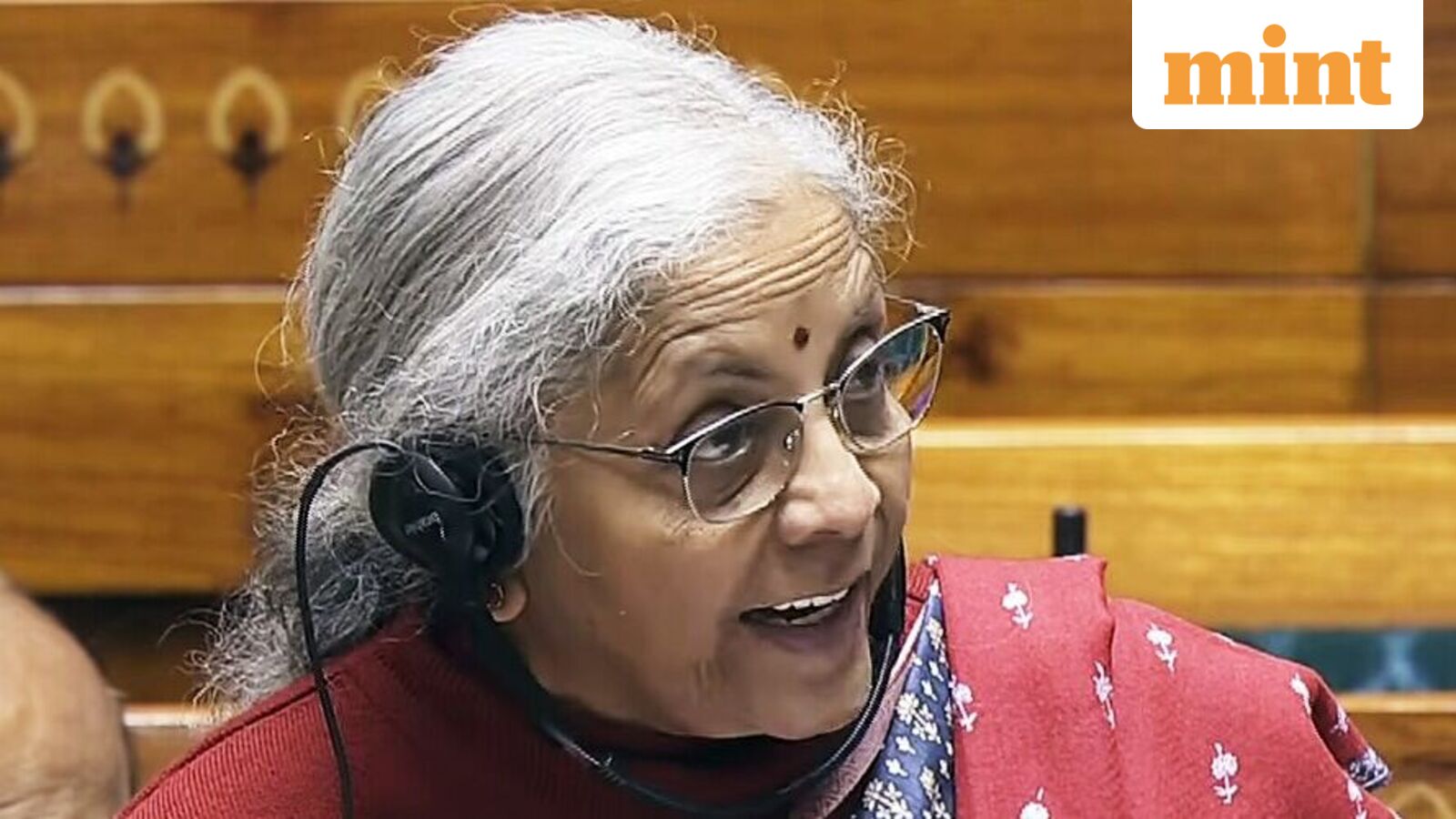
The finance ministry does not issue any advisory or direction to Life Insurance Corporation of India (LIC) on matters related to investments, finance minister Nirmala Sitharaman told Parliament on Monday, reiterating that the state-run insurer operates independently.“The investment decisions of LIC are taken by LIC alone following strict due diligence, risk assessment, and fiduciary compliance and are governed by the provisions of Insurance Act, 1938, as well as regulations issued by the Insurance Regulator ...
Personal loan interest rates: Top 7 banks charge these rates in December 2025
MINT· 2025-12-01 09:35
Before you decide to raise a personal loan, it is recommended to compare the interest rates charged by different banks. These rates tend to change from time to time.-Notably, even a small difference of 50 basis points in interest rates on personal loans can lead to huge savings for investors over a period of time. For instance, a ₹10 lakh loan for 5 years can lead to savings of ₹14,711 when the interest is 9.5% (instead of 10%). The savings amount to ₹29,422 when the loan amount is ₹20 lakh with all other v ...
Mega PSU bank merger plan: Can India do it without amplifying risks?
MINT· 2025-12-01 07:16
Core Viewpoint - The Indian government is preparing for another round of public sector bank consolidation to create larger institutions capable of meeting the country's growing investment and credit needs, following a previous consolidation that reduced the number of state-owned banks from 27 to 12 [1][5]. Group 1: Current State of Indian Banking - The Indian banking system is considered small by global standards, with only two banks, State Bank of India (SBI) and HDFC Bank, ranking among the world's 100 largest banks at 43rd and 73rd respectively [2][5]. - The 12 public sector banks (PSBs) collectively manage assets worth approximately $1.95 trillion, significantly smaller than major Chinese banks [5]. - PSBs have recently shown strong financial performance, recording a net profit of ₹1.78 trillion in 2024-25, supported by improved loan books and a gross non-performing asset (NPA) ratio that has declined to a ten-year low of 2.6% [6][7]. Group 2: Implications of Consolidation - The government aims to leverage the current financial strength of PSBs to facilitate consolidation without risking instability, as profitable banks can better absorb transition costs [10]. - A Reserve Bank of India (RBI) study indicates that past bank mergers have generally improved balance-sheet strength, with 70% of acquirers showing better loan-to-assets and loan-to-deposits ratios [11]. - However, operational efficiency improvements have been mixed, with only one-third of mergers strengthening the cost-to-income ratio, suggesting that integration synergies may take time to realize [12]. Group 3: Risks of Increased Concentration - Consolidation may lead to the creation of "too big to fail" institutions, with the potential for a single large bank's failure to impact the entire banking system, eroding capital buffers and triggering liquidity stress [15][18]. - The concentration of banking power raises concerns, as the top three lenders already control around 41% of total assets, which could increase further with consolidation [22]. - The experience of other countries suggests that scale and depth in banking can be achieved without high concentration, indicating that a more diversified banking system could mitigate systemic risks [19][22].
RBI MPC 2025 ET Poll: Rate cut likely amid low inflation, high growth; tough call for Malhotra & co.
The Economic Times· 2025-12-01 00:30
Core Insights - The Indian economy grew at 8.2% in the second quarter of FY26, surpassing the RBI's projection of 6.8%, marking the fastest growth in six quarters [5][8] - Retail inflation dropped to 0.25% in October, the lowest since 2015, complicating the RBI's monetary policy decisions [5][8] - A poll of 20 economists showed 12 expect a 25 basis points rate cut to 5.25%, while 8 anticipate the rate will remain unchanged [8] Economic Growth - The nominal GDP growth for the second quarter was recorded at 8.7%, slightly down from 8.8% the previous year [5][8] - Economists are cautious about future growth, with expectations of a slowdown in the second half of FY26 [7][8] Inflation Forecast - The RBI has revised its full-year FY26 inflation estimate down to 2.6% from 4.2% in February, with forecasts of 4% in Q4 FY26 and 4.5% in Q1 FY27 [6][8] - Current estimates suggest inflation could undershoot the RBI's forecast by 50-60 basis points, potentially supporting a rate cut in December [7][8] Monetary Policy Outlook - The RBI has cut the policy rate by 100 basis points since February, maintaining a pause since August, while rates on outstanding loans have decreased by 54 basis points [8] - Economists express mixed views on the upcoming RBI rate decision, with some indicating a need for caution due to low nominal growth numbers [7][8]

Mcap of 7 of top-10 most valued firms climbs by Rs 96,201 cr; Reliance, Bajaj Finance biggest winners
The Economic Times· 2025-11-30 05:39
Market Performance - The BSE benchmark increased by 474.75 points or 0.55%, reaching a record high of 86,055.86 on Thursday [1][6] - The combined market valuation of seven of the top-10 most valued firms rose by Rs 96,200.95 crore last week [6] Top Gainers - Reliance Industries saw an increase of Rs 28,282.86 crore, bringing its market valuation to Rs 21,20,335.47 crore [1][6] - Bajaj Finance's valuation climbed by Rs 20,347.52 crore to Rs 6,45,676.11 crore [2][6] - HDFC Bank's valuation jumped by Rs 13,611.11 crore to Rs 15,48,743.67 crore [4][6] - ICICI Bank surged by Rs 13,599.62 crore to Rs 9,92,725.97 crore [4][6] - Hindustan Unilever's market capitalisation increased by Rs 7,671.41 crore to Rs 5,79,644.16 crore [5][6] - State Bank of India's valuation rose by Rs 6,415.28 crore to Rs 9,04,185.15 crore [5][6] - Infosys' valuation climbed by Rs 6,273.15 crore to Rs 6,47,961.98 crore [6] Top Losers - Bharti Airtel's market capitalisation dropped by Rs 35,239.01 crore to Rs 11,98,040.84 crore [6] - LIC's market capitalisation declined by Rs 4,996.75 crore to Rs 5,65,581.29 crore [6] - TCS's valuation dipped by Rs 3,762.81 crore to Rs 11,35,952.85 crore [6] Ranking of Top Firms - The ranking of the top-10 firms is led by Reliance Industries, followed by HDFC Bank, Bharti Airtel, TCS, ICICI Bank, State Bank of India, Infosys, Bajaj Finance, Hindustan Unilever, and LIC [6]
Mcap boost: 7 of top-10 firms gain ₹96,201 cr; Reliance, Bajaj Finance lead chart
BusinessLine· 2025-11-30 05:04
Market Valuation Overview - The combined market valuation of seven of the top-10 most valued firms increased by ₹96,200.95 crore last week, driven by Reliance Industries and Bajaj Finance amid a positive equity market trend [1] - The BSE benchmark rose by 474.75 points or 0.55%, with the Sensex reaching a record high of 86,055.86 [1] Gainers and Losers - Among the top-10 firms, Reliance Industries, HDFC Bank, ICICI Bank, State Bank of India, Infosys, Bajaj Finance, and Hindustan Unilever saw increases in their valuations, while Bharti Airtel, Tata Consultancy Services (TCS), and Life Insurance Corporation of India (LIC) experienced declines [2] - Reliance Industries' market valuation increased by ₹28,282.86 crore, reaching ₹21,20,335.47 crore [2] Individual Firm Valuations - Bajaj Finance's valuation rose by ₹20,347.52 crore to ₹6,45,676.11 crore [4] - HDFC Bank's valuation increased by ₹13,611.11 crore to ₹15,48,743.67 crore [4] - ICICI Bank's valuation surged by ₹13,599.62 crore to ₹9,92,725.97 crore [4] - Hindustan Unilever's market capitalization edged up by ₹7,671.41 crore to ₹5,79,644.16 crore [4] - State Bank of India's valuation increased by ₹6,415.28 crore to ₹9,04,185.15 crore [4] - Infosys' valuation climbed by ₹6,273.15 crore to ₹6,47,961.98 crore [5] Declines in Valuation - Bharti Airtel's market capitalization fell by ₹35,239.01 crore to ₹11,98,040.84 crore [6] - LIC's market capitalization decreased by ₹4,996.75 crore to ₹5,65,581.29 crore [6] - TCS's valuation dipped by ₹3,762.81 crore to ₹11,35,952.85 crore [6] Ranking of Top-10 Firms - The ranking of the top-10 firms is led by Reliance Industries, followed by HDFC Bank, Bharti Airtel, TCS, ICICI Bank, State Bank of India, Infosys, Bajaj Finance, Hindustan Unilever, and LIC [6]
Capital Gains Account Scheme Deposits: Old rules, new updates
BusinessLine· 2025-11-29 14:41
Investing in properties is among the most preferred options across age groups in India. It is also common for holders of old or ancestral properties to sell their residence and use the proceeds to buy an apartment or a villa in gated communities. Many would also want to use the money to construct their own property. The sharp appreciation in real estate assets has given many the affordability to deploy the gains for moving to newer acquired residences.However, on the operational front it is not always easy ...