Equinor

Search documents
Equinor Approves Johan Sverdrup Field Expansion With $1.29B Investment
ZACKS· 2025-07-02 14:40
Core Insights - Equinor ASA has approved a $1.29 billion investment for phase 3 of the Johan Sverdrup field, expected to increase recoverable reserves by 40-50 million barrels of oil equivalent [1][8] - The project will involve new subsea equipment, including two subsea templates with a total of eight wells, and is projected to start production in Q4 2027 [2] - The use of artificial intelligence in project planning has resulted in $13 million in savings during the development of phase 3 [3] - The recovery rate from the Johan Sverdrup field is expected to rise from 66% to approximately 75% with the completion of phase 3, which is crucial for maintaining high production levels [4][6] - Equinor holds a 42.6% interest in the Johan Sverdrup field, with partners including Aker BP, Petoro, and TotalEnergies EP Norge [5] - The project aims to enhance Europe's energy security by increasing recoverable volumes from the largest producing oilfield in western Europe [6]


Equinor Encounters New Oil at Johan Castberg Field, Boosts Reserves
ZACKS· 2025-06-30 13:36
Core Insights - Equinor ASA has discovered oil at a new exploration well in the Johan Castberg field, achieving a peak output capacity of 220,000 barrels of oil per day [1][9] Exploration and Discovery - The exploration well 7720/7-DD-1H was drilled in the Drivis Tubåen prospect, marking the 14th well drilled within production license PL 532, with preliminary estimates suggesting 9-15 million barrels of oil in the new discovery [2][3] - The water depth at the drilling site is approximately 345 meters, and the discovery will enhance existing reserves at the Johan Castberg field [3] Future Potential and Production - The Johan Castberg field is expected to have a production life of 30 years, with estimated recoverable resources of 450-650 million barrels, and the company aims to increase reserves by 250-550 million barrels through ongoing exploration [5][9] - Equinor plans to drill one or two exploration wells annually near the Johan Castberg field to further enhance its resource base [5] Industry Context - The Barents Sea is considered one of the least explored regions of the Norwegian Continental Shelf, yet it is believed to hold significant untapped reserves of oil and gas [4] - The Johan Castberg field's operational status since March 2025 has opened new opportunities for oil discoveries in the region [4]

CNBC's Pippa Stevens tours Equinor's South Brooklyn Marine Terminal
CNBC Television· 2025-06-26 22:54
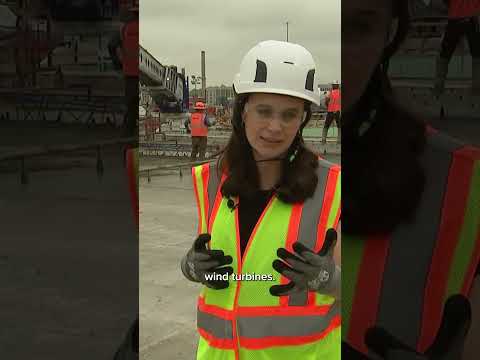
Project Overview - Ecuador is redeveloping the South Brooklyn Marine Terminal for its offshore wind project, Empire Wind 1, off Long Island [1] - The project represents a $5 billion investment by Norway-based Ecuador, including $1 billion for the marine terminal redevelopment [1] - Construction at the port commenced approximately one year prior to the report [1] Project Details - Empire Wind 1 will consist of 54 turbines, each 951 feet (approximately 290 meters) tall, generating 810 megawatts [1] - The generated power is sufficient to supply electricity to 500,000 homes annually [1][3] - Offshore components are expected to arrive by next spring, with deployment to sea scheduled for July [2] Infrastructure Development - Concrete reinforcement is underway to support specialized cranes for handling heavy wind turbine equipment [2] - Power will make landfall 40 nautical miles (approximately 74 kilometers) away via two underwater cables [2] - A substation is being built to connect to Con Edison and feed power into New York City's power grid [3]
Offshore wind’s future uncertain as Congress targets federal subsidies
CNBC Television· 2025-06-26 11:32
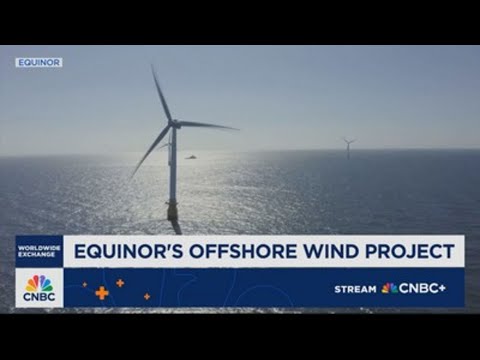
Project Overview - Ecuador is redeveloping the South Brooklyn Marine Terminal for the Empire Wind One offshore wind project [1] - The Empire Wind One project will consist of 54 turbines, each 951 feet tall, generating 810 megawatts of power, enough to power 500,000 homes [1] - Ecuador is investing approximately $5 billion in the project, including $1 billion for the marine terminal redevelopment [1] - The project is expected to be fully operational by 2027 [4] Economic Impact - The project is creating over 1,000 union jobs [1] Challenges and Incentives - The offshore wind industry in the US has faced challenges due to high costs and complex supply chains [3] - Federal incentives are helping to offset costs, with Ecuador expecting to recoup 40% of the project's cost through investment tax credits [3] - Proposed changes to tax credits in Congress could significantly reduce incentives for future projects, potentially stifling the industry [3] Regulatory Hurdles - The project faced a temporary setback when President Trump issued a stop work order in April, but the order was reversed on May 19th [2] Strategic Positioning - Ecuador is relying on other offshore wind projects utilizing its specialized marine terminal, which is equipped to handle custom vessels and large cranes [3]
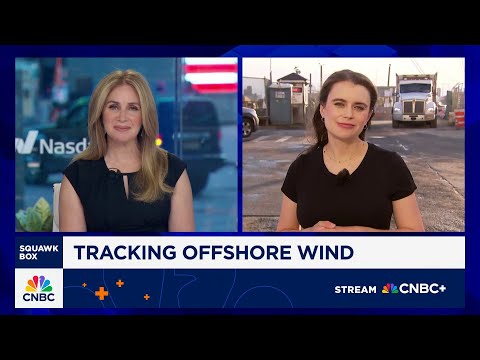
Wind projects blown away? Tracking offshore wind projects
CNBC Television· 2025-06-26 11:15
President Trump's budget bill cuts federal subsidies for new offshore wind projects and that throws the future of the industry into question. Pippa Stevens is in Brooklyn. She's got a look at one project that's getting off the ground and what it means for the surrounding community.Pippa, good morning. Good morning, Becky. I'm here at the South Brooklyn Marine Terminal, which Ecuador is redeveloping in order to service its offshore wind project called Empire Wind One.It's about 15 to 30 miles south of Jones ...
Equinor's Johan Castberg Field Reaches New Production Milestone
ZACKS· 2025-06-23 14:20
Core Insights - Equinor ASA has achieved peak output capacity of 220,000 barrels of oil per day at the Johan Castberg field, just three months after production commenced, leading to a 150% increase in total oil and gas delivery from the Barents Sea [1][8] - The Barents Sea is becoming crucial for Norway's energy security and exports, with shipments valued at approximately 500 million Norwegian kroner occurring every three to four days from the Johan Castberg field [2][8] - The Johan Castberg field consolidates three oil discoveries and is expected to enhance Norway's offshore oil production with an estimated production life of nearly 30 years [3] Expansion Plans and Resource Upside - Equinor holds a 46.3% interest in the Johan Castberg field, with partners Vår Energi and Petoro holding 30% and 23.7% respectively; 17 out of 30 wells have been completed, with production meeting expectations [4] - The initial estimated recoverable volumes were between 450-650 million barrels, but Equinor plans to increase reserves by an additional 250-550 million barrels through further development [4][5] - To achieve these goals, Equinor intends to extend its drilling program by adding six more wells, which will help sustain peak production levels for a longer duration [5] Future Developments - The Isflak project, a fast-paced field development plan, is expected to reach a final investment decision by the end of 2025 and commence operations as early as 2028 [6][5] - Equinor plans to drill one or two exploration wells near the Johan Castberg field annually to further exploit its potential [6] Infrastructure - The FPSO Johan Castberg has a storage capacity of 1.1 million barrels of oil and began production on March 31, 2025; nearly all oil production from the Norwegian Continental Shelf is exported to Europe [7]

高盛:石油巨头-2025 年展望_在不确定的宏观环境中寻求差异化增长、现金回报与韧性
Goldman Sachs· 2025-06-23 02:09
Investment Rating - The report maintains a cautious view on the European Oils sector despite raising the Brent oil price assumption due to higher geopolitical risk premium [1][2]. Core Insights - The report highlights differentiated growth stories, resilient cash returns, and asset monetization optionality as key themes for the sector [1]. - It emphasizes the importance of strong balance sheets and value crystallization through disposals, with specific companies like Saudi Aramco, Equinor, Shell, and Galp noted for their financial strength [3][6]. - The report identifies potential divestment opportunities among EU Big Oils, particularly for Repsol, BP, and ENI, which could significantly impact their equity value [69][70]. Summary by Sections Commodity Price Outlook - Brent oil prices dipped to the low $60s/bbl but recovered to approximately $75/bbl, while EU gas prices saw a significant drop quarter-over-quarter [2][30]. - The report adjusts the Brent price assumption for 2H25 to $65/bbl and maintains a negative outlook on oil despite a higher long-term price forecast [31][39]. Financial Performance and Cash Returns - The sector is expected to see a 20% quarter-over-quarter decrease in operating cash flow (OCF) due to higher seasonal tax payments, with average gearing projected to increase modestly [3][64]. - EU Big Oils are projected to offer a total cash return to shareholders of 11.7% in 2025, combining a 5.4% dividend yield and 6.3% from buybacks [6][26]. Growth and Capital Expenditure - Companies like Galp and Shell are highlighted for their differentiated cash flow growth and capital expenditure flexibility, with Galp expected to see over 20% production growth from the Bacalhau start-up in 2025 [7][48]. - TotalEnergies is forecasted to have the strongest production growth among the Big Oils, exceeding 3% in 2025, while Repsol and Shell also show promising growth profiles [49][55]. Divestment Strategies - Major EU Big Oils are adopting diverse divestment strategies to streamline portfolios, focusing on high-return projects [69]. - BP is noted for its significant divestment pipeline, targeting $20 billion in disposals by 2027, while Repsol has already announced substantial asset rotations in renewables [73][76].
瑞银:全球石油和天然气_ 2025 年 6 月 13 日全球油气估值
瑞银· 2025-06-18 00:54
Investment Rating - The report provides a "Buy" rating for Chevron, ExxonMobil, Shell, TotalEnergies, GALP, OMV, and Cenovus Energy, while BP and Eni are rated as "Neutral" [10]. Core Insights - The report highlights a positive outlook for major oil companies, driven by expected increases in free cash flow and production growth rates. The average expected production growth for 2025-2027 is projected at 7% for the global sector [10]. - The report emphasizes the importance of refining margins, with European composite margins expected to stabilize around 5.00 in 2025, while US composite margins are projected to be around 15.67 [7][10]. - The macroeconomic assumptions indicate a gradual recovery in commodity prices, with Brent crude oil expected to average $65.99 per barrel in 2025, reflecting a slight increase from previous years [7]. Summary by Relevant Sections Company Ratings - BP: Current price at 380.7, target price 400, with a 5% upside, rated as Neutral (CBE) [10]. - Chevron: Current price at 144.97, target price 177, with a 22% upside, rated as Buy (CBE) [10]. - ExxonMobil: Current price at 109.73, target price 130, with an 18% upside, rated as Buy (CBE) [10]. - Shell: Current price at 2,615, target price 2,900, with an 11% upside, rated as Buy (CBE) [10]. - TotalEnergies: Current price at 54.74, target price 60, with a 10% upside, rated as Buy (CBE) [10]. - Eni: Current price at 13.86, target price 13.0, with a -6% downside, rated as Neutral (CBE) [10]. - Cenovus Energy: Current price at 14.42, target price 25, with a 73% upside, rated as Buy [10]. Financial Metrics - The report provides various financial metrics for the companies, including EV/DACF, FCF Yield, and P/E ratios, indicating strong financial health and potential for growth in the coming years [10]. - The average expected free cash flow yield for the sector is projected at 7.4% for 2025, reflecting robust cash generation capabilities [10]. Market Trends - The report notes a trend towards increased investment in renewable energy sources among major oil companies, which may impact their long-term strategies and market positioning [10]. - The refining sector is expected to see improvements in margins, particularly in the US and Europe, as demand recovers post-pandemic [7][10].





Equinor ASA: Buy-back of shares to share programmes for employees
Globenewswire· 2025-06-17 10:03
Group 1 - The buy-back programme for Equinor ASA was announced on 5 February 2025, with a duration from 14 February 2025 to 15 January 2026 [1] - The total purchase amount under the buy-back programme is NOK 1,992,000,000, with a maximum of 19,080,000 shares to be acquired [2] - As of 13 June 2025, Equinor ASA has purchased a total of 581,274 shares at an average price of NOK 271.8164 per share, totaling NOK 157,999,806 [2][3] Group 2 - The accumulated buy-backs under the programme amount to 3,180,225 shares, with a total transaction value of NOK 805,999,350 [3] - Following the transactions, Equinor ASA owns a total of 93,637,393 shares, representing 3.35% of its share capital [3] - The company is obligated to disclose this information under the EU Market Abuse Regulation and the Norwegian Securities Trading Act [4]

Equinor's 2025 Energy Outlook Warns of Fragmented Energy Transition
ZACKS· 2025-06-16 13:20
Core Insights - Equinor ASA has released its Energy Perspectives 2025 report, outlining four divergent scenarios for the global economy, energy markets, and greenhouse gas emissions amid rising geopolitical tensions and a delayed energy transition [1][9] Group 1: Emissions and Climate Action - Equinor's chief economist highlighted that the current geopolitical landscape and trade conflicts hinder global cooperation necessary for a Paris-aligned energy transition, with short-term political priorities overshadowing climate ambitions [2] - The report indicates that rising global greenhouse gas emissions in 2024 suggest a deviation from the 1.5°C climate target set by the Paris Agreement, with fragmentation in the global response to climate change posing significant risks [3] Group 2: Future Scenarios - The Energy Perspectives 2025 report presents four scenarios: Walls, Silos, Plazas, and Bridges, reflecting varying levels of cooperation, technological advancement, and policy direction, aimed at facilitating strategic thinking in an uncertain environment [4][9] - The "Walls" and "Silos" scenarios depict a fragmented world with slow progress on climate goals, while "Plazas" suggests moderate collaboration that still fails to meet the 1.5°C target; only the "Bridges" scenario aligns with the Paris Agreement but requires rapid global cooperation [5] Group 3: Long-Term Vision - Despite the challenges, the Bridges scenario indicates a potential pathway to a sustainable future aligned with the Paris Agreement, emphasizing the need for swift global cooperation to avoid a slower and more costly energy transition [6][7]