
Volkswagen

Search documents
Volkswagen pushing ahead with German cost-cutting, brand boss says
Reuters· 2025-12-18 11:47
Core Insights - Volkswagen is advancing in its cost-cutting initiatives, as stated by the head of the company's core brands in a recent media interview [1] Group 1: Cost-Cutting Measures - The company is implementing headcount reductions as part of its strategy to lower costs [1] - Savings are being realized across the group, indicating a broader effort to enhance financial efficiency [1]


X @Bloomberg
Bloomberg· 2025-12-17 07:38
Business Strategy - Volkswagen's battery business is compelled to seek external financing [1] - The carmaker reduced its five-year spending plan [1]
Volkswagen battery business PowerCo looking more intensively at external funding
Reuters· 2025-12-17 07:36
Core Insights - Volkswagen's PowerCo is exploring external financing options due to reduced investment from its struggling German parent company [1] Group 1 - PowerCo's CEO indicated that the company is looking more closely at external financing options [1] - The decision comes as the parent company, Volkswagen, reins in its investment [1]


Tesla stock hits record as Wall Street rallies around robotaxi hype despite slow EV sales
CNBC· 2025-12-16 20:35
Core Viewpoint - Tesla's stock has rebounded significantly after a rough start to the year, reaching an all-time high of $489.48, following a 36% decline in the first quarter [1][2]. Group 1: Stock Performance - After a 36% plunge in Q1, Tesla shares rallied to an all-time high of $489.48, surpassing the previous record of $488.54 [1][2]. - Tesla's market capitalization increased to $1.63 trillion, making it the seventh-most valuable publicly traded company [2]. Group 2: Business Developments - CEO Elon Musk announced that Tesla has been testing driverless vehicles in Austin, Texas, which has sparked investor optimism regarding the company's long-standing promise to develop robotaxis [2][3]. - Tesla reported a 12% increase in third-quarter revenue, driven by a rush of buyers taking advantage of a federal tax credit that expired at the end of September [6]. Group 3: Challenges and Competition - Despite the recent stock rally, Tesla faces ongoing challenges, including a loss of the federal tax credit, backlash against Musk, and strong competition from companies like BYD, Xiaomi, and Volkswagen [7]. - The introduction of more affordable variants of the Model Y SUV and Model 3 sedans has not significantly boosted U.S. or European sales, with U.S. sales dropping to a four-year low in November [8]. Group 4: Analyst Insights - Mizuho raised its price target on Tesla to $530 from $475, maintaining a buy recommendation, citing improvements in Tesla's Full Self-Driving technology as a potential driver for accelerated expansion of its robotaxi fleet [9].

EU drops 2035 combustion engine ban as global EV shift faces reset
Yahoo Finance· 2025-12-16 18:02
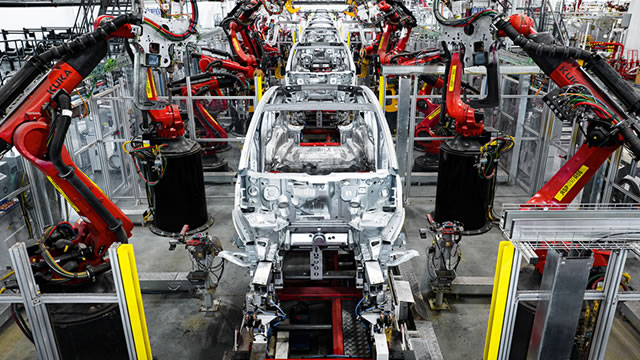
Group 1 - The European Commission plans to drop the effective ban on new combustion-engine cars from 2035, marking a significant retreat from its green policies due to pressure from the auto sector [1][2] - The proposal allows continued sales of non-electric vehicles, including plug-in hybrids and range extenders, as carmakers in Germany and Italy seek to ease regulations [2][3] - Volkswagen supports the proposal, stating it is economically sound and aligns with market conditions, while also advocating for support of small electric vehicles and more flexible targets for 2030 [3] Group 2 - The new EU targets would require a 90% cut in CO2 emissions from 2021 levels, a shift from the previous requirement for zero emissions from all new cars and vans by 2035 [5] - Automakers will need to offset remaining emissions using lower-carbon materials and synthetic or non-food biofuels, with a three-year window from 2030 to 2032 to achieve a 55% reduction in car CO2 emissions [6] - The EU's decision follows Ford's announcement of a $19.5 billion writedown due to the cancellation of several EV models, indicating a complex landscape for EVs in Europe [7][8]
Volkswagen shutters a German plant for first time ever as Trump tariffs squeeze car giant
New York Post· 2025-12-16 17:55
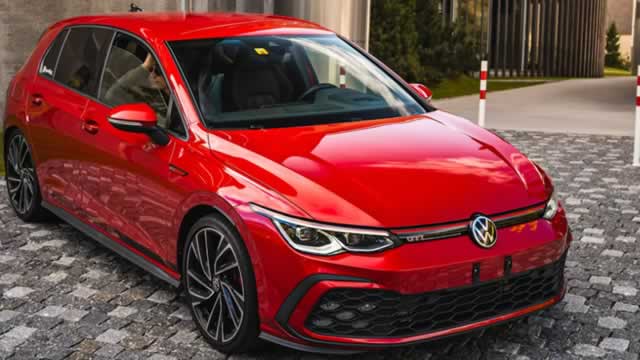
Core Viewpoint - Volkswagen is closing its Dresden factory, marking the first closure of a plant in Germany in its 88-year history due to declining demand and significant US tariffs impacting the company [1][5]. Group 1: Production and Economic Impact - The last vehicle produced at the Dresden site, known as the "Transparent Factory," was completed on Tuesday, concluding 24 years of production that began in 2001 [1][7]. - The decision to cease vehicle production was described as economically necessary by Volkswagen brand CEO Thomas Schäfer, highlighting the pressures faced by the company [3][9]. - Volkswagen has faced challenges from high energy and labor costs in Germany, alongside difficulties in global markets, contributing to the decision to close the plant [9]. Group 2: Transition and Workforce - The Dresden facility will be repurposed into a technology research hub focusing on artificial intelligence, robotics, and chip design, ending its role as a vehicle assembly site [3]. - An agreement has been reached with the works council regarding the future of the remaining 230 employees, who will be offered severance packages, early retirement options, or transfers to other locations in Germany [4][9]. - The final vehicle produced, a red ID.3 GTX electric car, will be signed by workers and displayed at the site as a commemorative piece [4]. Group 3: Financial Challenges - Volkswagen has attributed part of its $1.5 billion loss last quarter to tariffs imposed by the US, with expected tariff-related costs to exceed $5 billion in the next 12 months [10]. - The company's struggles reflect broader economic weaknesses in Germany, which has experienced stagnation and contraction in recent years [10].
Volkswagen Announces Unprecedented Plant Closure
Yahoo Finance· 2025-12-16 17:32
Core Viewpoint - Volkswagen plans to establish a research hub at its Transparent Factory in Dresden, Germany, marking the first plant closure in Germany for the automaker [1] Group 1: Research Hub and Production Changes - The Transparent Factory, known for its glass walls, will phase out vehicle production by the end of the year, with the ID.3 production line set to be dismantled in January [2] - Joint research projects with the Technical University of Dresden are expected to begin in mid-2026, with regular operations scheduled for 2027 [2] - The research hub will focus on technologies such as artificial intelligence, robotics, microelectronics, and chip design, with the university anticipated to occupy nearly half of the factory's floor space [3] Group 2: Employment and Capacity Reductions - Volkswagen plans to reduce its technical production capacity across Germany by over 730,000 vehicles annually by 2028 and cut 35,000 jobs at German locations by 2030 [3] - The Dresden plant currently employs 230 workers, with some expected to retire, while the company will offer transfers to other German plants, partial retirement packages, and severance agreements [4] Group 3: Economic Context - The decision to end vehicle production at the Transparent Factory was described as "absolutely necessary" from an economic perspective by Volkswagen Brand CEO Thomas Schäfer [5] - In July, the company reported a 33% decline in operating income for the first half of 2025, attributing this to high costs from increased U.S. import tariffs totaling approximately $1.5 billion [5]
Rivian’s Autonomy Bombshell Changes Everything—Even Its Valuation
Yahoo Finance· 2025-12-15 18:38
Core Viewpoint - Rivian is transitioning from a traditional automaker to a technology-focused company, which could lead to higher valuation multiples if it successfully sells high-margin technology products rather than just low-margin vehicles [1][4][17] Company Developments - Rivian's stock price surged by 12.1% to $18.42, driven by positive analyst sentiment and a shift in market perception towards its technology capabilities [5][3] - The company is preparing to launch an affordable mass-market vehicle platform, supported by a joint venture with Volkswagen and a strong balance sheet [6][11] Technological Advancements - Rivian is developing proprietary technology, including the Rivian Autonomy Processor (RAP1) and the Autonomy+ software platform, which are expected to reduce costs and enhance profitability [7][15] - The Autonomy+ platform, set to launch in early 2026, will offer subscription-based revenue opportunities, creating a predictable cash flow model [8][9] Financial Performance - Rivian reported a 324% year-over-year increase in Software & Services revenue to $416 million, largely due to its joint venture with Volkswagen [11] - The company achieved a positive Gross Profit of $24 million in Q3 2025, indicating effective cost management ahead of its mass-market vehicle launch [12] Production and Market Strategy - The R2 platform, a midsize SUV, is scheduled for production in the first half of 2026, targeting a broader demographic with a starting price around $45,000 [13][14] - Rivian's proprietary technology is crucial for maintaining margins while offering a more affordable vehicle, positioning the R2 as a potential volume seller [15] Competitive Positioning - Rivian has differentiated itself from other struggling EV startups by securing significant capital and validating its technology through in-house development [16] - Analysts believe Rivian's current valuation does not fully reflect its potential as a leader in software-defined technology, suggesting further growth opportunities if it successfully executes its plans [17]

How QuantumScape's 2025 Milestones Set the Stage for 2026
ZACKS· 2025-12-15 14:31
Core Insights - QuantumScape Corp. has made significant strides in the electric vehicle battery sector, with its stock rising over 125% year to date, outperforming the broader industry [2][4]. Technological Advancements - The company achieved a major milestone with the Cobra separator process, which is approximately 25 times faster and more compact than the previous Raptor system, addressing critical barriers to commercial viability [5][6]. - QuantumScape's QSE-5 cells demonstrated impressive performance metrics, including an energy density of 844 Wh/L and rapid charging capabilities [14]. Financial Developments - QuantumScape secured up to $131 million from Volkswagen PowerCo to support the development of its QSE-5 pilot line, indicating strong strategic alignment and commitment from Volkswagen [9][10]. - The company reported $12.8 million in customer billings in Q3, marking a significant shift towards monetization, although these billings were not recognized as revenue [11][12]. Operational Progress - The installation of core equipment for the Eagle Line pilot production facility has been completed, allowing the company to focus on ramping up output and refining processes [15][16]. - B1 sample deliveries have commenced, with multiple OEM partners evaluating the cells, showcasing active engagement in development programs [13]. Future Outlook - The Zacks Consensus Estimate predicts year-over-year improvements of 20% and 16% for QuantumScape's bottom line in 2025 and 2026, respectively [17]. - With approximately $1 billion in cash, the company expects its financial runway to extend through 2029, providing additional visibility for future operations [21].

Volkswagen's $3.5B gamble: Can it win back share in the competitive Chinese market
Yahoo Finance· 2025-12-15 04:24
Core Insights - Volkswagen is making a significant investment of 3 billion euros ($3.5 billion) in a new research and development center in Hefei, China, aiming to regain market share in a highly competitive auto market [1][2] - The company is shifting its strategy from developing cars overseas to creating vehicles specifically tailored for Chinese consumers, marking a paradigm shift in its approach [2][3] - The introduction of new models developed "in China, for China" is part of Volkswagen's strategy to compete with local manufacturers like BYD and Geely [3][5] Investment and Strategy - Volkswagen's investment in Hefei represents its largest R&D center outside Germany, indicating a strong commitment to the Chinese market [1] - The company is focusing on developing electric vehicles and incorporating advanced digital features to meet the evolving expectations of Chinese consumers [6] - Analysts suggest that while this strategy may help Volkswagen maintain its current market share, it may not be sufficient to regain the market share lost in recent years [4] Market Dynamics - The Chinese auto market has undergone dramatic changes, with electric vehicles now accounting for about half of new car sales, pushing foreign automakers to adapt quickly [6] - Local competitors have significantly impacted the sales of foreign brands, prompting Volkswagen to rethink its traditional business model [2][4] - The competitive landscape in China is characterized by rapidly changing consumer preferences and aggressive pricing strategies, which pose challenges for foreign automakers [4][5]