
Geely

Search documents
How America's EV retreat is increasing China's control of global markets
CNBC· 2026-02-06 14:19
Core Viewpoint The U.S. electric vehicle (EV) industry is facing a significant crisis as American automakers retreat from EV production, while Chinese manufacturers rapidly advance in the global market, raising concerns about the future competitiveness of U.S. companies in the automotive sector. Group 1: U.S. Automakers' Challenges - Stellantis announced a $26 billion charge due to a major business overhaul, including a reduction in EV production, leading to a stock drop of over 20% [2] - U.S. automakers like General Motors and Ford have lost billions on EVs and are shifting focus back to larger gas-powered vehicles due to the loss of federal tax credits and weak consumer demand [3] - Tesla has been surpassed by BYD in EV sales, indicating a decline in its market share and appeal, particularly in Europe [4] Group 2: Chinese Automakers' Growth - Chinese automakers have increased their global market share from less than 3% to an estimated 11.1% from 2019 to 2025, while U.S. automakers' share has dropped from 21.4% to 15.7% [12] - The global market share of Chinese brands has surged nearly 70% in five years, with significant growth in EV sales, which increased from approximately 572,300 in 2020 to 4.95 million in 2025 [5][11] - Chinese EV sales outside of China have also seen a remarkable increase of over 1,300%, from less than 33,000 to more than 474,000 [11] Group 3: Market Dynamics and Future Outlook - The U.S. automotive industry, which constitutes about 5% of the country's GDP, is concerned about the long-term implications of Chinese competition, especially as Chinese brands expand into markets traditionally dominated by U.S. automakers [6] - Experts highlight that the combination of government support, vertically integrated supply chains, and rapid execution in China poses an existential threat to traditional U.S. automakers [8] - GlobalData forecasts that Chinese EV sales will continue to grow, reaching approximately 6.5 million units by 2030 and nearly 8.5 million by 2035 [16] Group 4: Strategic Responses from U.S. Automakers - GM is adjusting its EV strategy to align with natural demand rather than regulatory pressures, while Ford is pivoting towards smaller, more affordable electric models to compete with Chinese manufacturers [22][24] - The Alliance for Automotive Innovation is advocating for protective measures against Chinese government-backed auto manufacturers to maintain competitiveness in the U.S. market [19] - The U.S. EV market saw a peak of 10.3% in September, but demand has since plummeted to an estimated 5.2% in the fourth quarter [21]


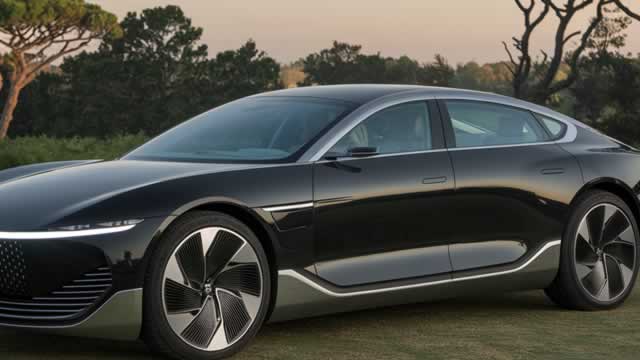
Ford CEO shares photos teasing $30,000 EV pickup
Business Insider· 2026-02-06 09:00
Core Insights - Ford is undergoing a significant overhaul of its manufacturing processes to better compete with Chinese automakers, particularly in the electric vehicle (EV) market [1][2] - The Universal Electric Vehicle project is described as one of the most important initiatives in Ford's history, focusing on innovation to maintain competitiveness against global rivals [1][6] Manufacturing Innovations - The new manufacturing system employs a three-pronged "assembly tree" approach, which allows for parallel construction of vehicle components, reducing the number of fasteners by 25% and halving the number of cooling hoses and connections [9] - A unicasting system is being implemented to decrease the number of vehicle parts, potentially leading to lower car prices [10] Product Development - The first vehicle on the new platform is a midsize electric pickup truck expected to launch in the US in 2027, with a starting price of $30,000 [6][7] - Engineers are dedicating extensive time to refining the truck's aerodynamics and design [7] Strategic Shift - Ford is shifting its focus towards smaller, more affordable electric vehicles and extended-range electric vehicles (EREVs) after incurring a $19.5 billion write-down due to canceled EV programs [11] - The company is responding to competitive pressures from the Chinese EV market, where BYD has become the world's largest EV seller, and is exploring potential manufacturing cooperation with China's Geely [12]

Lear(LEA) - 2025 Q4 - Earnings Call Transcript
2026-02-04 15:02
Financial Data and Key Metrics Changes - Lear Corporation reported a 5% increase in revenue for Q4 2025, totaling $23.3 billion for the full year [4] - Core operating earnings were $1.1 billion, representing 4.6% of net sales for the full year [4] - Adjusted earnings per share increased by 1% to $12.80, marking the fifth consecutive year of growth [4] - Operating cash flow was $1.1 billion, with free cash flow at $527 million for 2025 [4][5] Business Line Data and Key Metrics Changes - In the Seating segment, sales for 2025 were $17.3 billion, a slight increase of 0.4% from 2024, with adjusted operating margins at 6.4% [34][35] - E-Systems sales decreased by 2% to $6 billion, with adjusted earnings at $293 million, or 4.9% of sales [36][37] - The company secured over $1.4 billion in E-Systems business awards, the strongest performance in over a decade [8] Market Data and Key Metrics Changes - Global vehicle production increased by 1% year-over-year, with production volumes flat in North America and down 2% in Europe, while China saw a 3% increase [30] - Lear expects more than 50% of its revenue in China to come from domestic automakers next year [22] Company Strategy and Development Direction - Lear's strategic priorities include extending leadership in Seating, expanding margins in E-Systems, and supporting sustainable value creation through disciplined capital allocation [5] - The company is focused on innovation and technology, particularly in modularity and automation, to enhance manufacturing efficiency and product design [56][59] - Lear aims to achieve a seating market share of 29%, supported by strong relationships with both traditional and domestic Chinese automakers [60] Management's Comments on Operating Environment and Future Outlook - Management expressed confidence in the company's ability to grow revenue, operating income, margins, and free cash flow in 2026 and beyond [47] - The company anticipates continued strong performance from its IDEA initiatives and digital transformation efforts, which are expected to drive future savings and operational improvements [64] - Management acknowledged the challenges posed by industry volatility but emphasized the company's solid foundation for growth [46] Other Important Information - Lear repurchased $325 million in shares during 2025, exceeding the initial target of $250 million, returning nearly $500 million to shareholders [10] - The company has a robust backlog of $1.325 billion, with significant contributions expected from new business awards in both Seating and E-Systems [24] Q&A Session Summary Question: Can you discuss the conquest win and its impact on seating share? - Management highlighted the significance of the conquest win as the largest in Lear's history, driven by innovation and technology, and expressed confidence in achieving a 29% seating market share [52][60] Question: What is the outlook for Net Performance in 2026? - Management indicated that they expect similar levels of Net Performance in 2026 as in 2025, with continued opportunities for savings from digital and automation initiatives [62][64] Question: How should investors think about earnings cadence throughout the year? - Management noted a strong start to the year, with expectations for Q1 revenues around $6 billion and operating income of approximately $260 million, despite some anticipated downtime [68][70] Question: Can you provide details on onshoring wins and their launch timing? - Management confirmed that the Orion award will benefit 2027, with limited additional onshoring activity expected until 2028 and 2029 [73][74] Question: What is the expected revenue impact of the large conquest win? - Management clarified that the large conquest win is outside the current backlog and is expected to launch in late 2028, potentially generating $400 million-$500 million in annual revenue [79][80]

X @Bloomberg
Bloomberg· 2026-02-04 09:04
Ford has held discussions with China’s Geely about sharing manufacturing capacity in Europe https://t.co/9Vsb5i7JXo ...
Should You Buy Nio Stock While It's Below $5 a Share?
The Motley Fool· 2026-02-01 06:35
Core Viewpoint - Nio, despite being an innovative player in the Chinese auto market, faces significant challenges and is viewed as a less attractive investment due to market consolidation and competition from larger manufacturers [1][3]. Industry Overview - The Chinese auto market accounted for 30% of global auto sales in 2025, significantly larger than the U.S. market at 18% and other major markets [1]. - In the first half of 2025, new energy vehicles (including electric vehicles and hybrids) made up 50.1% of new car sales in China [2]. Company Performance - Nio has delivered approximately 1 million cars since its inception in 2019, with 326,028 units delivered in 2025, reflecting a growth of 46.9% compared to 2024 [5]. - Despite this growth, Nio has not yet turned a profit, while competitor BYD reported a net profit of $2.9 billion for the first nine months of 2025 [5]. Market Challenges - The Chinese EV market is expected to face difficulties in 2026, with a projected decline in passenger vehicle deliveries due to the end of government subsidies for EVs and rising lithium prices affecting battery costs [8][10]. - EV sales growth in China slowed to just 2% in December 2025, marking the slowest growth in nearly two years [9]. - Nio and other smaller EV manufacturers did not rank among the top 10 manufacturers for sales in December 2025, with the top 10 accounting for 95% of all EV and hybrid sales [9]. Competitive Landscape - The market is consolidating, with the top three manufacturers—BYD, Changan, and Geely—each achieving annual sales of over 1 million to 2 million units, positioning Nio as too small to compete effectively [10].


Chinese carmakers cash in on Britain’s EV credits
Yahoo Finance· 2026-01-31 14:00
Group 1 - Major car manufacturers in Britain, including Jaguar Land Rover and Toyota, failed to meet electric vehicle (EV) sales targets, leading to potential fines and the need to purchase credits from competitors [1][5] - Four Japanese manufacturers—Suzuki, Nissan, Mazda, and Honda—are significantly behind the targets and will need to acquire credits to avoid fines, with a collective risk of around £50 million if they do not comply [2][6] - The zero-emission vehicle (ZEV) mandate requires increasing proportions of electric vehicles in manufacturers' sales, starting at 22% in 2024 and rising to 80% by 2030 [3][4] Group 2 - Manufacturers can receive allowances for low-emission vehicles and may borrow against future sales, but this borrowing is capped, necessitating credit acquisition for those far below targets [4][5] - The analysis indicates that last year, when the target was 28%, most carmakers missed the quota based solely on EV sales, with some needing to borrow against future sales to meet requirements [5] - Industry experts criticize the mandate for favoring Chinese manufacturers, as those selling exclusively EVs have surplus credits to sell, impacting competition [3][4]
中国汽车制造商 2026 展望:5 大积极因素、5 大风险及 5 只推荐买入个股-China Auto Manufacturers 2026 Outlook 5 Positives 5 Negatives and 5 Stocks to Buy
2026-01-30 03:14
Summary of China Auto Manufacturers Conference Call Industry Overview - **Industry**: China Auto Sector - **Outlook for 2026**: The sector is expected to face both positives and negatives, with a cautious outlook for the first half of the year. Key Positives 1. **Surging LiDAR/ADAS/Robotaxi Penetrations**: Increased adoption of advanced technologies is anticipated to drive growth in the sector [1] 2. **Export Growth**: Projected export growth of 19% YoY, with New Energy Vehicles (NEV) expected to grow at 49% YoY [1] 3. **Commercial Vehicle Demand**: Demand for commercial vehicles is in a favorable position due to overseas demand and a stabilizing domestic market [1] 4. **End of Price Cuts**: The trend of price cuts in passenger vehicles (PV) is expected to come to an end, stabilizing margins [1] 5. **Market Concentration Improvements**: Gradual improvements in market concentration and utilization rates are expected, with overall NEV sales per model projected to increase slightly [1] Key Negatives 1. **Cost Inflation**: Anticipated cost inflation may erode auto maker net profit margins (NPM) by 2-5 percentage points [1] 2. **Cautious Outlook for 1Q/2Q**: A very cautious outlook for the first two quarters, with EV retail sales expected to slow to 4% and 0% YoY respectively [1] 3. **Lower PV Wholesale/Retail Forecasts**: FY26 wholesale and retail forecasts for PV have been lowered to -3.8% and -9.6% YoY, with internal combustion engine (ICE) vehicles expected to decline by 25% YoY [1] 4. **High ICE Inventories**: Concerns over high ICE inventories leading to destocking issues [1] 5. **Earnings Forecast Cuts**: Valuations have bottomed, but consensus earnings forecasts are expected to be cut soon [1] Stock Recommendations - **Stocks to Buy**: 1. **BYD**: Strong export and domestic consolidation potential [11] 2. **Pony/WeRide**: Benefiting from the China robotaxi upcycle [11] 3. **Hesai**: Growth in L3 policy, exports, and new robotic business [11] 4. **Weichai**: Data center-related energy supply solutions [11] 5. **Minth**: Data center cooling solutions and robot parts [11] Market Trends - **Pricing and Consolidation**: No significant price cuts are anticipated in 2026 due to anti-involution regulations and rising raw material costs, which may drive industry consolidation [3] - **Global PV Market Shares**: China's PV export sales are projected to maintain strong growth, with NEV exports driving this growth [4] - **Earnings Visibility**: Companies like Seres, Li Auto, SAIC, Changan, and GAC are expected to underperform due to margin dilution and negative sales outlooks for ICE vehicles [2] Additional Insights - **High Beta Rally**: Potential high-beta rallies may favor tech and ADAS/robotaxi companies over traditional NEV makers due to decelerating growth [5] - **Commercial Vehicle Outlook**: Positive outlook for commercial vehicle manufacturers like Sinotruk, driven by decent orders growth and potential policy stimulus [14] - **Inventory Levels**: High inventory levels for PVs and NEVs indicate a cautious market environment, with end-2025 ICE inventories reported as high to very high [22] This summary encapsulates the key points from the conference call, highlighting the current state and future outlook of the China auto sector, along with stock recommendations and market trends.
中国汽车_长远视角 -加速全球扩张-Chinese Autos_ The Long View – Accelerating Global Expansion
2026-01-29 10:59
Summary of Chinese Auto Brands' Overseas Expansion Industry Overview - The report focuses on the Chinese automotive industry, particularly the international expansion of Chinese auto brands, forecasting significant growth in overseas sales volumes and market share by 2030E. Key Forecasts and Projections - Chinese brands' overseas sales volume is projected to reach approximately **8-10 million units by 2030E**, up from **4 million units in 2025**. This indicates a **CAGR of 17-23%** from 2025 to 2030E [1][11][19]. - Long-term potential suggests that overseas volumes could reach **13-15 million units**, translating to a **20% market share** contingent on factors like regional EV adoption and geopolitical stability [1][11]. Market Share Growth - Chinese brands are expected to increase their market share outside China from **4% in 2023 to 6% in 2025E**, with a more bullish forecast of **13% by 2030E** [1][19]. - In **Eastern & Central Europe**, market share is projected to grow from **17% in 2023 to 24% in 2025**, with a forecast of **37% by 2030E** [2][19]. - In the **Middle East & Africa**, market share is anticipated to rise from **10% in 2023 to 17% in 2025**, with a target of **30% by 2030E** [3][19]. - In **LATAM**, market share is expected to increase from **7% in 2023 to 13% in 2025**, with a forecast of **30% by 2030E** [3][19]. Regional Insights - **ASEAN**: EV penetration is projected to exceed previous forecasts, reaching **18% in 2025** compared to an earlier estimate of **11%**. Chinese brands' market share is expected to grow from **5% in 2023 to 14% in 2025**, with a target of **35% by 2030E** [4][31]. - **Western Europe**: Despite geopolitical tensions, there is cautious optimism for market entry, with potential sales exceeding initial forecasts driven by strong ICE sales. Proposed tariff relaxations could further enhance market opportunities [5][21]. - **Oceania**: Chinese brands are gaining market share from Japanese brands, increasing from **12% in 2023 to 17% in 2025**, with a forecast of **30% by 2030E** [4][73]. Competitive Landscape - Chinese OEMs have outperformed expectations in both ICE and EV segments, with significant market share gains at the expense of established brands [2][27]. - The report highlights that Chinese brands are particularly strong in the EV market, capturing **77% of the EV market share in LATAM** [44]. Investment Implications - **BYD** is identified as the top pick for overseas expansion due to its strong portfolio of affordable and competitive electric vehicles, including both BEVs and PHEVs [8][9]. - Other brands rated as Outperform include **Xiaomi** and **Geely**, while brands like **XPeng**, **Li Auto**, **NIO**, **Great Wall**, **SAIC**, and **GAC** are rated as Market-Perform [9]. Challenges and Risks - Chinese brands face challenges from geopolitical tensions, brand perception issues, and limited local expertise in foreign markets. Localization strategies are deemed essential to mitigate these risks [6][20]. - The report notes that while Chinese brands are well-positioned for growth, they must navigate operational challenges such as underdeveloped charging infrastructure and after-sales service networks [32]. Conclusion - The outlook for Chinese auto brands in international markets is increasingly positive, with significant growth potential driven by competitive pricing, technological advancements, and strategic market entries. The report emphasizes the importance of adapting to local market conditions and consumer preferences to sustain this growth trajectory [6][24].

Navigating 50% tariffs: strategic options for Chinese automakers in Mexico
Yahoo Finance· 2026-01-28 13:21
Group 1: Tariff Changes and Impact - Mexico will raise tariffs on Light Vehicles (LVs) from 20% to 50% starting January 2026, affecting countries without a Free Trade Agreement (FTA) [1] - The most significant impact is expected on Chinese and Indian vehicle manufacturers, as sales of Chinese-made vehicles in Mexico have rapidly increased, accounting for 25.4% of total sales in 2025, up 4.6 percentage points from 2023 [2] - The tariff increase poses a challenge for Chinese OEMs, particularly in the Electric Vehicle (EV) segment, where affordability has been their main competitive advantage [3] Group 2: Affected Companies and Strategies - Indian manufacturers, especially Hyundai, Volkswagen, and Suzuki, will also be impacted by the tariff increase, with Suzuki expected to be more resilient due to its export strategy and recent land acquisition in India [4] - Strategies for OEMs to mitigate tariff impacts include inventory planning and cost absorption, with Geely indicating it will not raise prices to remain competitive [5] - Another strategy involves importing from countries with FTAs, such as Brazil, which allows tariff-free LV imports under certain conditions, despite not having a formal FTA with Mexico [7]
中国:北京或从地缘政治格局变化中略有受益-China_ Beijing might start to benefit slightly from the changing geopolitical landscape
2026-01-26 02:49
Summary of Key Points from the Conference Call Industry and Company Involved - **Industry**: Electric Vehicles (EVs) and Agri-food - **Countries**: China and Canada Core Insights and Arguments 1. **Trade Agreement Overview**: A new trade agreement between China and Canada was announced, involving the removal of punitive tariffs on Chinese EVs and a reduction of tariffs on Canadian canola seeds, establishing a "new strategic partnership" [3][4][5] 2. **Impact on EV Exports**: The quota for Chinese EVs set at 49,000 units annually represents less than 3% of Canada's total new vehicle market, indicating a limited impact on China's overall export growth [2][3][9] 3. **Projected Economic Benefits**: The agreement is expected to unlock nearly CAD3 billion in export orders for Canadian producers, with a target of increasing Canadian exports to China by 50% by 2030 [4][27] 4. **Market Dynamics**: The new quota aligns closely with pre-tariff levels of Chinese EV exports to Canada, with expectations that over 50% of imported vehicles will be affordable models priced under CAD35,000 within five years [4][8] 5. **Macroeconomic Implications**: The overall macroeconomic impact on China is expected to be limited, with the additional revenue from this agreement representing under 0.1% of total export value [9][15] 6. **Geopolitical Context**: The agreement signifies a potential easing of trade tensions and barriers, enhancing China's diplomatic leverage amid changing geopolitical dynamics [2][15] Additional Important Content 1. **Local Manufacturing and Investment**: The agreement includes expectations for joint-venture investments in Canada, which may necessitate increased Chinese investment and technology transfers, raising concerns about intellectual property and compliance with local regulations [16] 2. **Canola Seed Tariff Reduction**: The reduction of tariffs on Canadian canola seeds from 85% to approximately 15% is expected to stabilize China's domestic edible oil supply chains, which are heavily reliant on Canadian imports [17][25] 3. **Trade Flow Disruptions**: Previous tensions under the Trudeau administration led to significant disruptions in trade flows, particularly affecting canola, valued at around CAD4 billion annually [5][18] 4. **Future Uncertainties**: There are uncertainties regarding the compliance of the trade agreement with the USMCA, which is up for renegotiation, potentially impacting the long-term viability of the deal [26] This summary encapsulates the key points from the conference call, focusing on the implications of the trade agreement between China and Canada, particularly in the EV and agri-food sectors.