PepsiCo

Search documents
PepsiCo, Inc. (PEP) Presents at Consumer Analyst Group of New York Conference 2026 Transcript
Seeking Alpha· 2026-02-18 20:54
Core Insights - PepsiCo is the world's largest convenience food and beverage company with over $90 billion in revenue [1] Company Strategy - PepsiCo is undergoing a transformation journey aimed at enhancing its competitiveness and financial performance [1] - The company is refreshing its existing portfolio, which includes brands like Lay's, Tostitos, Gatorade, and Quaker [1] - PepsiCo is introducing an expansive slate of innovation and sharper affordability initiatives within its North American food business [1]



Retirees Are Quietly Accumulating This 8% Dividend Grower With a Half-Century of Increases
247Wallst· 2026-02-18 17:03
Core Insights - PepsiCo has maintained a dividend increase for over 50 consecutive years, earning it the title of Dividend King, which is highly regarded among income investors seeking reliable returns in retirement portfolios [1] - The company recently paid a quarterly dividend of $1.4225 per share, with an annualized dividend yield of approximately 3.5%, which is competitive compared to the current 10-year Treasury yield of 4.04% [1] - PepsiCo's free cash flow payout ratio reached 99.6% in fiscal 2025, indicating a tighter cash flow coverage compared to historical norms, but the dividend remains fully covered by free cash flow [1] Dividend Growth - Over the past decade, PepsiCo's quarterly dividend has increased from $0.7025 in 2016 to $1.4225 in 2026, reflecting a compound annual growth rate (CAGR) of approximately 7.3% [1] - The five-year CAGR stands at 6.8%, showcasing consistent mid-to-high single-digit growth through various economic cycles [1] - The most recent dividend increase was 5% year-over-year, indicating a commitment to sustainable growth rather than aggressive hikes [1] Cash Flow and Financial Health - In fiscal 2025, PepsiCo generated $7.67 billion in free cash flow while paying out $7.64 billion in dividends, resulting in a payout ratio of 99.6% [1] - Historical averages from 2015 to 2021 showed a free cash flow payout ratio of 60-85%, providing a cushion for reinvestment and unexpected challenges [1] - Operating cash flow of $12.09 billion offers substantial room for the company to manage its dividend obligations despite tighter free cash flow coverage [1] Management Commitment - CEO Ramon Laguarta emphasized a balanced approach to capital allocation during the February 3, 2026 earnings call, indicating expectations for growth in volume, net revenue, and operating margin [1] - The company announced a $10 billion share repurchase program for 2026-2030, reflecting confidence in its ability to return capital while maintaining dividend growth [1] Insider Confidence - In December 2025, five board members purchased shares at $149.51, indicating strong insider confidence in the company's long-term prospects [1] Investment Proposition - PepsiCo presents a compelling option for income-focused investors, offering a current yield competitive with investment-grade corporate bonds and a long track record of annual increases [1] - The stock has delivered a total return of 17.4% over the past year and 43% over five years, demonstrating that reliable dividends can coexist with capital appreciation [1]

PepsiCo, Inc. (PEP) Presents at Consumer Analyst Group of New York Conference 2026 - Slideshow (NASDAQ:PEP) 2026-02-18
Seeking Alpha· 2026-02-18 15:02
To ensure this doesn’t happen in the future, please enable Javascript and cookies in your browser.If you have an ad-blocker enabled you may be blocked from proceeding. Please disable your ad-blocker and refresh. ...

PepsiCo (NasdaqGS:PEP) 2026 Conference Transcript
2026-02-18 15:02
Summary of PepsiCo Conference Call Company Overview - **Company**: PepsiCo - **Industry**: Food and Beverage - **Revenue**: Over $90 billion, with $94 billion reported last year and $15 billion in operating profit [1][3] - **Market Position**: World's largest convenience food and beverage company, with a strong presence in savory snacks and beverages [4] Core Messages - **Transformation Journey**: PepsiCo is focused on transforming its portfolio to enhance competitiveness and financial performance, including refreshing existing brands and introducing innovations [2][3] - **Productivity Acceleration**: The company is in a multi-year productivity acceleration phase, with record productivity achieved last year and expected to continue this year [3][4] Financial Performance - **Revenue Growth**: Organic net revenue growth of 7% since 2020, with EPS growth aligned with long-term guidance at 8% [7] - **International Business**: The international segment has been growing at mid-single digits, contributing $12 billion in growth since 2019, with an operating margin of 18% [6] Consumer Trends - **Health and Wellness**: Increasing consumer focus on health, wellness, and functionality in food and beverages [8] - **Diverse Preferences**: Consumers are becoming more diverse, necessitating a broader range of flavors and products [8] - **Shopping Behavior**: Shift towards omni-channel shopping and increased consumption of food and beverages outside the home [8] Strategic Focus Areas - **Portfolio Transformation**: Emphasis on innovation and elevating the "away from home" business to capture more market opportunities [10][26] - **Sustainability Initiatives**: Commitment to positive agriculture practices, reducing plastic waste, and ensuring water sustainability [12][36] Innovation Strategies - **Brand Restaging**: Major brands like Lay's, Tostitos, Gatorade, and Quaker are being revamped to focus on natural ingredients and health benefits [13][15] - **New Product Development**: Introduction of products with reduced sodium, zero sugar, and no artificial ingredients, targeting consumer preferences for healthier options [18][19] - **Mini-Meals and Crafted Beverages**: Development of new meal solutions and crafted beverage experiences to cater to changing consumer lifestyles [27][30] Capital Allocation and Financial Strategy - **Investment Priorities**: Focus on investing in growth, innovation, and sustainability, with a commitment to maintaining a meaningful and growing dividend [41][42] - **Margin Improvement Goals**: Targeting a 100 basis point increase in core operating margin over the next three years, supported by productivity gains and volume growth [45][58] Key Performance Indicators (KPIs) - **Volume Share and Brand Penetration**: Monitoring volume share gains and brand penetration as critical KPIs for success in the market [52] - **Free Cash Flow Goals**: Aiming for over 90% free cash flow conversion by 2027, with tighter working capital management [43] Conclusion - **Long-term Growth Outlook**: PepsiCo expects to achieve mid-single digit organic revenue growth and high single-digit EPS growth in the long term, supported by a strong dividend policy [45]
PepsiCo (NasdaqGS:PEP) 2026 Earnings Call Presentation
2026-02-18 14:00
HUNGRY & THIRSTY FOR GROWTH Ramon Laguarta Chairman & CEO Steve Schmitt CFO 2026 SAFE HARBOR STATEMENT & NON-GAAP INFORMATION Safe Harbor Statement Statements in this communication that are "forward - looking statements," including our guidance and long - term targets, are based on currently available information, operating plans and projections about future events and trends. Terminology such as "aim," "anticipate," "believe," "drive," "estimate, " "expect," "expressed confidence," "forecast," "future," "g ...
Cheerios maker says cost of living, housing expenses changing way consumers spend
Fox Business· 2026-02-17 18:10
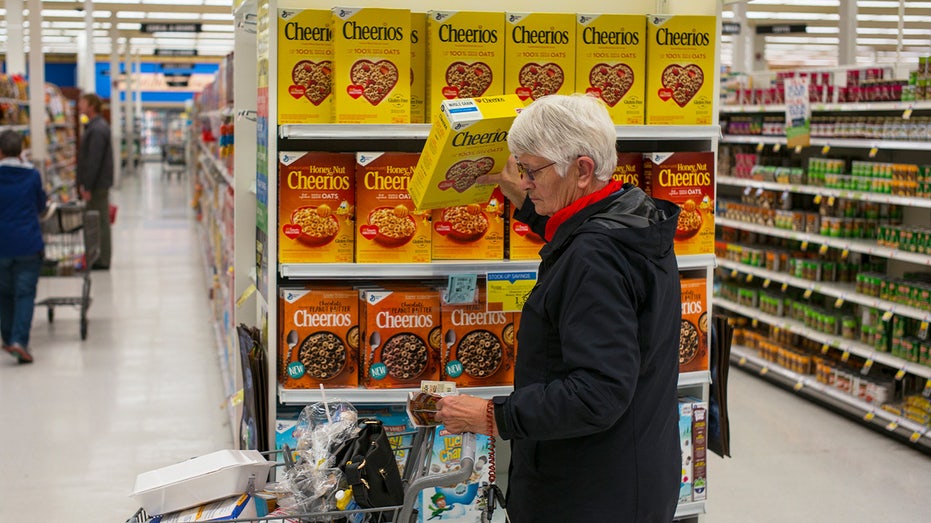
Core Viewpoint - General Mills has reduced its annual sales and profit forecasts due to weak consumer sentiment and a shift towards healthier, lower-cost food options impacting demand for packaged products [1][9]. Group 1: Sales and Profit Forecasts - The company now expects annual sales to decline by 1.5% to 2%, a revision from its previous forecast of a decline of 1% to an increase of 1% [11]. - General Mills anticipates that annual adjusted operating profit and adjusted earnings per share will fall by 16% to 20% in constant currency, compared to the earlier outlook of a 10% to 15% decline [13]. Group 2: Consumer Behavior and Market Trends - Weak consumer sentiment, heightened uncertainty, and significant volatility have negatively impacted category growth and altered consumer purchasing patterns, leading to a slower recovery in volume and higher costs than expected [2]. - The shift in consumer preferences towards healthier options and the increased use of GLP-1 weight-loss drugs are further pressuring demand for packaged foods [3][6]. - Economic pressures are causing lower- and middle-income consumers to focus more on value, reshaping their spending patterns [6][7]. Group 3: Competitive Landscape - General Mills faces growing competition in the protein options market, which is affecting its product lines, including its own protein cereals [5]. - Other companies in the industry, such as PepsiCo, have responded to consumer backlash by cutting prices on core brands, indicating a trend towards value offerings [9].

Is PepsiCo's International Business Its Most Reliable Growth Engine?
ZACKS· 2026-02-16 17:05
Core Insights - PepsiCo Inc.'s international business is a key growth driver, generating $38 billion in revenues in 2025, accounting for over 40% of total net revenues and core segment operating profit [1][9] - The international segment achieved 4.5% organic revenue growth in 2025, with consistent performance across food and beverage categories [2][4] Financial Performance - The international segment recorded its 19th consecutive quarter of mid-single-digit organic revenue growth, alongside a 27% growth in core operating profit and a 225 basis points margin expansion in Q4 2025 [2][9] - PepsiCo's shares have increased by 15.7% year-to-date, outperforming the industry growth of 13.3% [8] Geographic Diversification - Growth is geographically diversified, with strong performance in markets such as Mexico, Brazil, Argentina, India, Germany, Egypt, and Thailand for food, and Mexico, the U.K., Spain, Poland, Pakistan, and Australia for beverages [3][4] Strategic Initiatives - Management anticipates a "long runway for profitable growth" driven by localized innovation, expanded distribution in developing markets, and increased participation in energy and functional categories [4] - The company is well-positioned for further scaling due to resilient demand, margin expansion, and sustained share gains in international markets [4] Valuation and Earnings Estimates - PepsiCo trades at a forward price-to-earnings ratio of 19.11X, compared to the industry average of 20.08X [10] - The Zacks Consensus Estimate for PepsiCo's earnings per share implies year-over-year growth of 5.4% and 6.7% for 2026 and 2027, respectively [11]
Looking for A Bankable Passive Income Stream? This High-Yielding Dividend King Offers a Very Satisfying Payout.
The Motley Fool· 2026-02-14 11:06
Core Viewpoint - PepsiCo is recognized as an elite dividend stock, having extended its dividend growth streak to 54 consecutive years, making it a member of the Dividend Kings group, which signifies companies that have increased their dividends for at least 50 years [2][11] Dividend Growth - PepsiCo's dividend yield is currently around 3.5%, significantly higher than the S&P 500's yield of 1.2%, making it an attractive option for passive income [2] - The company announced a 5% increase in its March dividend payment compared to the previous year and a 4% increase for the June payment, marking its 54th consecutive annual dividend increase [4] Financial Health - In the previous year, PepsiCo generated approximately $12.1 billion in operating cash flow, which comfortably covered its capital expenditures of $4.4 billion and dividend payments of $7.6 billion [5] - The company ended the year with about $9.5 billion in cash on its balance sheet, supporting its strong A+ credit rating [5] Future Cash Returns - PepsiCo anticipates returning $7.9 billion in dividends to investors in 2026, alongside a planned stock repurchase of $1 billion as part of a $10 billion repurchase program through early 2030 [7] Revenue and Earnings Growth - The company expects net revenue growth of 4% to 6% and organic revenue growth of 2% to 4% in 2026, which will support core earnings-per-share growth of 4% to 6% on a constant-current basis [8] - PepsiCo aims for long-term annual organic revenue growth of 4% to 6% and high single-digit earnings-per-share growth on a constant currency basis [9] Strategic Investments - The company is investing nearly 5% of its net revenue in 2026 to support growth, focusing on high-growth areas [9] - PepsiCo made strategic acquisitions, including the purchase of Poppi for $1.7 billion and increasing its stake in Celsius to 11% through a $585 million acquisition of convertible preferred stock [10]
PepsiCo: Solid Momentum Coming Into 2026, But I Still Rate It A Hold For Now
Seeking Alpha· 2026-02-13 12:45
Core Viewpoint - The article emphasizes the importance of dividend investing in quality blue-chip stocks, Business Development Companies (BDCs), and Real Estate Investment Trusts (REITs) as a strategy for building wealth and achieving financial independence. Group 1: Investment Strategy - The company focuses on a buy-and-hold investment strategy, prioritizing quality over quantity in its portfolio selection [1]. - The aim is to supplement retirement income through dividends within the next 5-7 years [1]. Group 2: Target Audience - The company aspires to assist hard-working lower and middle-class workers in building investment portfolios comprised of high-quality, dividend-paying companies [1]. - The goal is to provide a new perspective to help these investors reach financial independence [1].
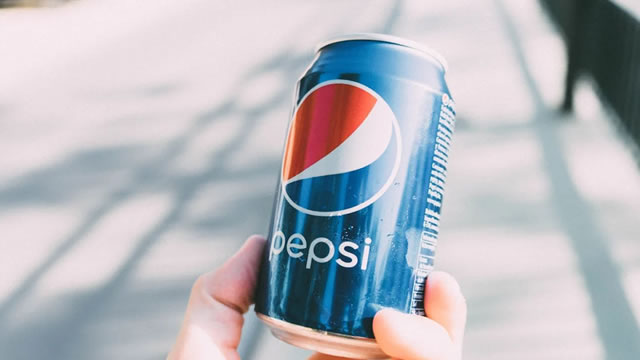
PepsiCo: Solid Momentum Coming Into 2026, But Still A Hold (NASDAQ:PEP)
Seeking Alpha· 2026-02-13 12:45
Core Viewpoint - The article emphasizes the importance of dividend investing in quality blue-chip stocks, Business Development Companies (BDCs), and Real Estate Investment Trusts (REITs) for building a sustainable retirement income stream. Group 1: Investment Strategy - The company focuses on a buy-and-hold investment strategy, prioritizing quality over quantity in its portfolio selection [1]. - The aim is to help lower and middle-class workers build investment portfolios that consist of high-quality, dividend-paying companies [1]. Group 2: Personal Background - The analyst is a Navy veteran with a decade of experience in investment banking, specializing in industry and company research [1]. - The analyst's goal is to achieve financial independence through dividend income within the next 5-7 years [1].