Chevron

Search documents
Frontera signs deal to supply crude oil to Chevron unit for up to $120 million
Reuters· 2025-12-29 13:05
Core Insights - Frontera Energy's Colombian unit has entered into a prepayment and commercial agreement with Chevron, valued at up to $120 million, to supply crude oil over a two-year period [1] Company Summary - The agreement signifies a strategic partnership between Frontera Energy and Chevron, enhancing Frontera's operational capacity and financial stability through upfront capital [1] - The deal is expected to bolster Frontera's crude oil supply chain, providing a reliable revenue stream over the next two years [1] Industry Context - This agreement reflects ongoing trends in the oil industry where companies are seeking to secure supply agreements to mitigate market volatility and ensure steady cash flow [1] - The collaboration between a Canadian company and a U.S. oil major highlights the increasing cross-border partnerships in the energy sector, particularly in Latin America [1]



Warren Buffett Is Leaving Investors With a Clear Warning Before He Retires in January. Here's What Investors Can Do Heading Into 2026.
Yahoo Finance· 2025-12-27 13:39
Core Insights - The significant difference between the amounts bought and sold in Berkshire Hathaway's portfolio is attributed to rising market valuations, especially among large-cap stocks [1] - Warren Buffett has been a net seller of stocks for 12 consecutive quarters, resulting in nearly $184 billion in net sales over the past three years [3] - Buffett's actions and comments indicate a cautious approach to the stock market as he prepares for retirement, emphasizing the importance of valuation awareness [5][6] Portfolio Management - Additions to the portfolio have been modest, primarily involving a few hundred million dollars to existing positions, with notable new investments in Chubb, Alphabet, and Sirius XM [2] - Berkshire Hathaway's stock portfolio is currently valued at approximately $315 billion, but it could exceed $500 billion if not for the significant stock sales over the last three years [4] Market Valuation Trends - Apple trades at 33 times forward earnings, a significant increase from when Buffett initially purchased it at around 10 times forward earnings [7] - The S&P 500 index is trading at roughly 22 times forward earnings, a level rarely seen since the early 2000s, with the CAPE ratio reaching 40 for only the second time in history [8] Investment Strategies - Investors are advised to take gains when appropriate, as holding onto high-valuation stocks can be risky, exemplified by Berkshire's heavy reliance on Apple [11][12] - Maintaining a cash position is recommended as valuations rise, allowing for downside protection and opportunities during market corrections [14][15] - Holding high-conviction stocks is crucial, as demonstrated by Buffett's long-term investments in American Express and Coca-Cola, which he has held for over 30 years [16][17]


Chevron, Kimberly-Clark Among 16 Companies To Kick Off 2026 With Annual Dividend Increases In January
Seeking Alpha· 2025-12-27 03:35
Core Insights - The article emphasizes the effectiveness of investing in dividend growth stocks and reinvesting dividends as a strategy for long-term wealth growth [1] Group 1: Investment Strategy - The individual investor has explored various investment styles over 25 years, concluding that dividend growth stocks are a reliable method for wealth accumulation [1] - The investor operates a blog focused on S&P Dividend Aristocrats and other dividend growth stocks, indicating a commitment to sharing knowledge in this investment area [1]

Geopolitics Lifts Oil Prices in Thin Holiday Trading
Yahoo Finance· 2025-12-26 10:00
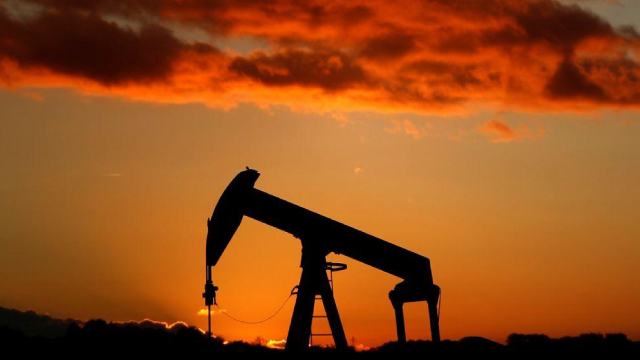
Group 1: Oil Prices and Geopolitical Risks - Oil prices increased as geopolitical tensions rise, with ICE Brent surpassing $62 per barrel [2] - The U.S. military has been ordered to quarantine Venezuelan oil for at least two months, impacting oil supply dynamics [3] Group 2: International Oil Trade and Production - China's Commerce Ministry issued 19 million tonnes of refined product export quotas, maintaining year-on-year volumes as domestic consumption is prioritized [4] - Kazakhstan's CPC Blend oil exports were reduced by a third to 1.14 million barrels per day due to adverse weather and repairs following a Ukrainian drone attack [6] Group 3: Company Developments - Eneos is positioned to acquire Chevron's stake in the Jurong Island refinery in Singapore, valued at approximately $1 billion [5] - Fitch Ratings upgraded Pemex's long-term national rating to AA, citing government support amid a $10 billion debt tender [8] - Reliance Industries received a one-month waiver from the U.S. to continue importing 350,000 barrels per day of Russian crude from Rosneft [9] - Stonepeak and Canada's Pension Plan Investment Board agreed to purchase a 65% stake in BP's Castrol division for $6 billion, with BP retaining a 35% stake [9]
Japan's Eneos leads bids for Chevron's Singapore oil refinery stake, Bloomberg News reports
Reuters· 2025-12-24 05:29
Group 1 - Eneos, Japan's top oil refiner, is leading the competition to acquire Chevron's stake in a Singapore refinery [1] - The deal is reportedly nearing completion, although there may be potential delays [1]
1 Big Reason to Avoid Energy Stocks in 2026
The Motley Fool· 2025-12-23 04:05
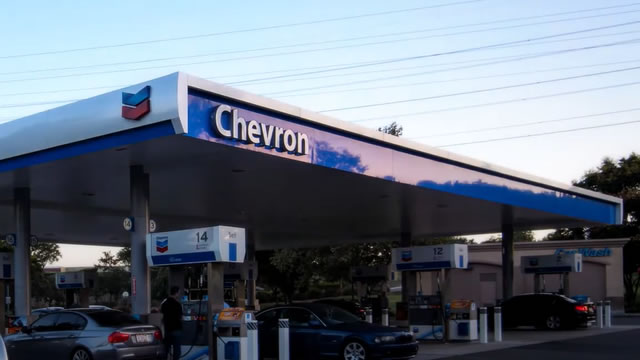
Core Viewpoint - A growing global oil glut is leading to declining oil prices and negatively impacting energy stocks, suggesting investors reconsider their positions in this sector as they approach the new year [1]. Oil Supply and Prices - There are currently 1.4 billion barrels of oil in transit or storage, which is 24% higher than the average for this time of year from 2016 to 2024 [2]. - West Texas Intermediate oil is trading at approximately $57 per barrel, down $15 from the start of the year, while Brent oil is priced around $60 per barrel, also down $15 from early 2025 [3]. - The average price of gasoline in the U.S. has fallen below $2.90, marking the lowest level since the COVID-19 pandemic [4]. Impact on Energy Stocks - Energy stocks are experiencing downward pressure due to falling oil prices, with Chevron's share price down 9% since early September [5]. - ExxonMobil has shown slightly better resilience but is also trending lower, while ConocoPhillips has decreased about 9% since early September [7]. - Occidental Petroleum is down 20% for the year, and Marathon Petroleum has dropped 16% over the past month [8]. Future Outlook - Analysts predict that the global oil oversupply will continue into 2026, with the International Energy Agency forecasting a supply-demand mismatch of over 3.8 million barrels per day [11]. - The U.S. Energy Information Administration anticipates that rising inventories will exert downward pressure on oil prices, projecting Brent oil to fall to $55 in the first quarter of 2026 [12]. Industry Adjustments - Major oil companies are responding to the downturn by reducing their workforces, with ExxonMobil announcing 2,000 job cuts as part of a restructuring plan [15]. - Other companies, including ConocoPhillips and Chevron, are also implementing layoffs [15]. Economic Implications - Lower oil prices can stimulate economic growth globally, except in countries heavily reliant on oil exports, which negatively affects oil companies and their shareholders [17]. - The relationship between oil prices and supply is complex, as lower prices can lead to reduced production and investment, eventually decreasing supply while increasing demand [18].


Permian Operations to Drive Resilience for These 3 Oil Stocks in 2026
ZACKS· 2025-12-22 15:01
Core Insights - The Permian Basin is the most productive oil and gas region in the U.S., significantly contributing to the country's energy supply and economic stability [1][3] - Advanced drilling techniques have made operations in the Permian economically viable, even in low oil price environments, making it attractive for upstream players [2][5] Production Projections - The U.S. crude oil production is projected to increase by 1.9 million barrels per day from 2020 to 2024, with 93% of this production coming from just 10 counties in Texas and New Mexico, all located in the Permian Basin [3] - The EIA forecasts that Permian crude oil production will reach 6.56 million barrels per day in 2026, surpassing the estimated 6.54 million barrels per day for 2023 and 6.28 million barrels per day for 2024 [4] Price and Cost Dynamics - Despite expectations of declining oil prices, with the EIA projecting an average price of $51.42 per barrel for next year compared to $65.32 per barrel this year, production in the Permian is expected to rise due to low operating costs [5][10] - Companies operating in the Permian, such as Diamondback Energy, ExxonMobil, and Chevron, have low breakeven prices, allowing them to remain profitable even if oil prices fall to $50 per barrel [7][10] Company-Specific Insights - Diamondback Energy has a significant presence in the Permian with approximately 9,600 gross drilling locations, which are economically viable even at lower oil prices [7] - ExxonMobil is enhancing its production capabilities in the Permian through advanced technologies and strategic acquisitions, such as Pioneer Natural Resources, which is expected to contribute to long-term growth [8] - Chevron has a strong operational footprint in the Permian, managing to increase production while reducing capital expenditures through advanced drilling techniques [9][11]

Chevron Keeps Venezuelan Oil Flowing Despite Rising U.S. Pressure
ZACKS· 2025-12-22 14:01
Core Insights - Chevron Corporation (CVX) continues to operate in Venezuela, successfully loading shipments despite U.S. sanctions and geopolitical tensions [1][2][3] - The company has a U.S. license allowing it to extract and export crude oil from Venezuela, which has some of the largest oil reserves globally [2][6] - Venezuela's crude oil production has significantly declined, with output estimated at 860,000 barrels per day in November, down from over 1 million barrels per day in September [4][9] Chevron's Operations - CVX has loaded cargo onto the vessels Searuby and Minerva Astra, with one shipment set to export 1 million barrels of crude oil [1][9] - The company maintains compliance with U.S. regulations and sanctions, allowing it to continue operations without legal repercussions [6][12] - CVX's ability to navigate international regulations has enabled it to maintain a foothold in Venezuela's oil industry, unlike other companies facing stricter sanctions [7][12] Venezuela's Oil Industry Challenges - Venezuela's oil production is hindered by aging infrastructure, financial difficulties, and a lack of foreign investment [4][16] - U.S. sanctions have significantly impacted Venezuela's ability to sell oil internationally, contributing to the production decline [5][10] - The activation of a U.S. naval blockade has further complicated Venezuela's oil exports, forcing many tankers to avoid Venezuelan waters [10][11] Future Outlook - Despite current challenges, there is potential for recovery in Venezuela's oil industry if international investment can be attracted and sanctions circumvented [16][17] - CVX's strategic approach may serve as a model for other companies looking to engage with Venezuela's oil sector [15][17]
Meet the "Magnificent Seven" Stock That Pays More Dividends Than Any Other S&P 500 Company. Here's Why It's a Buy Before 2026.
The Motley Fool· 2025-12-21 23:45
Core Viewpoint - Microsoft is recognized for rewarding long-term investors through substantial dividends and stock buybacks, positioning itself as a strong investment choice among the "Magnificent Seven" stocks [1][2]. Dividend and Buyback Summary - In fiscal 2025, Microsoft allocated $24.08 billion to dividends and $18.42 billion to stock buybacks, surpassing other S&P 500 companies in total cash spent on dividends [2]. - Microsoft announced a 10% increase in dividends, marking its 16th consecutive annual increase, despite a current yield of only 0.7% [2][3]. - Over the past decade, Microsoft has increased its dividend by over 250%, although the yield has decreased due to a significant rise in stock price [9]. Investment Thesis - Microsoft is characterized as an underrated dividend stock, with a focus on dividend growth rather than just forward yield, which can misrepresent a stock's true income potential [5][8]. - The company is noted for its balanced approach to capital deployment, with a strong presence in cloud computing, AI, software, gaming, and personal computing [11][12]. - Microsoft's commitment to returning capital to shareholders through dividends and buybacks positions it as a foundational stock for long-term investment [16][17]. Financial Metrics - Microsoft has a market capitalization of $3.6 trillion and a gross margin of 68.76%, indicating strong financial health [11]. - The company's free cash flow (FCF) remains robust, with capital expenditures rising but not outpacing cash flow from operations, unlike some competitors [12][15].


My Top High-Yield ETF to Buy Before the End of the Year (and It's Not Even Close)
The Motley Fool· 2025-12-20 10:45
Core Viewpoint - The Schwab U.S. Dividend Equity ETF (SCHD) is highlighted as an ideal investment for income-focused investors, offering a combination of high yield and potential capital gains through a diversified portfolio of stocks [2][4]. Group 1: ETF Overview - The Schwab U.S. Dividend Equity ETF has been established for 14 years and is managed by Charles Schwab, boasting over $71 billion in net assets, making it one of the largest high-yield ETFs [4]. - The ETF has a low expense ratio of 0.06%, ensuring that investors are not overpaying for its benefits [5]. - It pays quarterly dividends with a 30-day SEC yield of 3.8%, which is close to the 10-year Treasury rate of 4.2%, providing a competitive passive income option [6]. Group 2: Investment Strategy - The ETF targets large-cap, high-yield stocks, with approximately 90% of its investments in companies with market capitalizations exceeding $15 billion, appealing to investors seeking diversification [8]. - Over half of the ETF's investments are concentrated in three sectors: energy, consumer staples, and healthcare, which are known for prioritizing dividend growth [9]. Group 3: Sector and Holdings - Key energy holdings include major companies like Chevron, ConocoPhillips, and EOG Resources, which help manage risk across the oil and gas value chain [10]. - The top healthcare holdings, such as Merck and Amgen, offer high yields and favorable valuations, while leading consumer staples like PepsiCo and Coca-Cola have consistently raised dividends for over 50 years, earning the title of Dividend Kings [11]. Group 4: Performance and Value - Since its inception in October 2011, the Schwab U.S. Dividend Equity ETF has more than tripled in value, demonstrating its potential for capital gains alongside dividend income [13]. - The ETF is positioned as a foundational holding for value-focused portfolios or as a means to balance portfolios that have become overly concentrated in growth stocks [12].