Ford Motor

Search documents
Ford CEO Farley Says EV Overhaul Is a Great Investment
Youtube· 2025-12-15 22:17
Core Viewpoint - Ford is undergoing a significant transformation in its electric vehicle (EV) strategy, incurring approximately $19.5 billion in charges, including the cancellation of its next-generation electric F-Series truck to focus on hybrids and more affordable EVs [1][4][20]. Group 1: Business Strategy and Market Response - The shift in Ford's strategy is largely driven by changing consumer preferences, with a notable 30% increase in hybrid sales and an 80% market share in hybrid trucks [3][4]. - The U.S. EV market share has dropped from 12% to 5%, prompting Ford to pivot towards a mix of hybrids and electric vehicles rather than solely focusing on pure electrics [4][16]. - Ford plans to produce more profitable vehicles, including an affordable pickup truck in Tennessee and a new van in Ohio, which are expected to meet current market demands [7][19]. Group 2: Financial Outlook and Profitability - Ford has raised its profitability forecast for EVs from $6 billion to $7 billion, attributing this to improved quality and competitive costs [6][21]. - The company is reallocating $5.5 billion of the $19.5 billion charge towards more profitable product lines, indicating a strategic shift in capital allocation [21][23]. - The energy storage business is projected to be profit-positive, with plans to convert battery plants for energy storage solutions, targeting a capacity of 20 gigawatt hours by late 2027 [8][13]. Group 3: Competitive Positioning and Innovation - Ford aims to compete effectively against Chinese manufacturers by localizing production and innovating its manufacturing processes to reduce costs [28][29]. - The company emphasizes the importance of understanding customer preferences in the truck market, asserting that it knows American consumers better than its competitors [30]. - Ford's strategy includes offering a diverse lineup of vehicles, including hybrids and traditional trucks, to cater to varying consumer needs while maintaining a commitment to reducing CO2 emissions [17][30].


Ford takes $19.5 billion charge as it retreats from EVs
Fastcompany· 2025-12-15 22:08
Core Viewpoint - Ford Motor is taking a significant $19.5 billion writedown and discontinuing several electric vehicle (EV) models, reflecting the auto industry's retreat from battery-powered vehicles due to changing policies and declining demand for EVs [1][5]. Group 1: Company Actions - Ford will cease production of the F-150 Lightning in its electric form, shifting to an extended-range electric model (EREV) that utilizes a gas-powered generator [2]. - The company is also canceling the next-generation electric truck, known as the T3, and planned electric commercial vans [2]. - Ford plans to pivot towards gas and hybrid models, with an expectation that hybrids, extended-range EVs, and pure EVs will make up 50% of its global mix by 2030, up from 17% currently [3]. Group 2: Financial Implications - The $19.5 billion writedown will be spread out primarily in the fourth quarter and continue through 2027, with $8.5 billion related to canceled EV models, $6 billion tied to a dissolved battery joint venture with SK On, and $5 billion for program-related expenses [4]. - Ford has raised its 2025 guidance for adjusted earnings before taxes and interest to approximately $7 billion, up from a previous range of $6 billion to $6.5 billion [4]. Group 3: Market Context - The shift in Ford's strategy reflects a broader trend in the auto industry, as demand for battery-powered models has decreased significantly, particularly after the expiration of a $7,500 consumer tax credit [5][6]. - U.S. sales of electric vehicles fell by about 40% in November, indicating a substantial decline in consumer interest [6]. - The Trump administration's policies have reduced federal support for EVs and eased emissions regulations, further impacting the market outlook for electric vehicles [5]. Group 4: Future Plans - Ford is now focusing on developing more affordable EV models, with the first model from a specialized team in California expected to be priced around $30,000 and available in 2027 [10]. - The production of the new gas-powered trucks will begin in 2029 at a new facility in Tennessee, replacing the previously planned EV pickup [9].
Fast Retailing Remains An Interesting Story, If You Can Handle The Valuation
Seeking Alpha· 2025-12-15 22:07
Valuation always matters sooner or later, but that gap between “sooner” and “later” can cover a lot of ground and a lot of gains. I think it’s a relevant point to make in regards toAnalyst’s Disclosure:I/we have no stock, option or similar derivative position in any of the companies mentioned, and no plans to initiate any such positions within the next 72 hours. I wrote this article myself, and it expresses my own opinions. I am not receiving compensation for it (other than from Seeking Alpha). I have no bu ...

Ford takes $19.5bn hit amid electric vehicle retreat as Trump policies bite
The Guardian· 2025-12-15 22:02
Core Viewpoint - Ford is taking a significant $19.5 billion writedown and discontinuing several electric vehicle (EV) models, reflecting the auto industry's retreat from battery-powered vehicles due to changing policies and declining demand for EVs [1][5]. Group 1: Company Actions - Ford will cease production of the F-150 Lightning in its electric form and will instead focus on an extended-range electric model, a hybrid called Erev [2]. - The company is also canceling the next-generation electric truck, T3, and planned electric commercial vans [2]. - Ford plans to pivot towards gas and hybrid models, expecting its global mix of hybrids, extended-range EVs, and pure EVs to reach 50% by 2030, up from 17% today [3]. Group 2: Financial Implications - The $19.5 billion writedown will be spread out, primarily occurring in the fourth quarter and continuing through 2027, with $8.5 billion related to canceled EV models, $6 billion tied to a dissolved battery joint venture with SK On, and $5 billion for "program-related expenses" [4]. - Sales of the F-150 Lightning have decreased by 10% year-over-year, with only 25,583 units sold through November [8]. Group 3: Market Context - US sales of electric vehicles fell approximately 40% in November, following the expiration of a $7,500 consumer tax credit, which had been in place for over 15 years [6]. - The shift in Ford's strategy reflects a broader trend in the auto industry, as companies reassess their investments in EVs amid waning demand and changing regulatory environments [5][7]. Group 4: Future Plans - Ford's future EV lineup will focus on more affordable models, with the first model from a specialized team in California expected to be priced around $30,000 and available in 2027 [9].

Ford CEO on ending Ford Lightning EV production: We are following market trends
Youtube· 2025-12-15 21:56
Core Insights - The company is pivoting its strategy in response to a decline in the high-end electric vehicle (EV) market, which has seen a 5% shrinkage in the US, particularly affecting vehicles priced between $50,000 and $80,000 [1] - A significant pre-tax charge of $19.5 billion is being taken to facilitate this strategic shift, with $5.5 billion of that being cash charges, which are expected to yield a strong return [2][1] - The company aims to focus on affordable trucks and vans, leveraging its existing strengths in hybrid and electric range-extended vehicles (e-revs) to enhance profitability and meet customer demand [2][5] Market Positioning - The company forecasts that by 2030, half of its global sales will consist of hybrids, e-revs, or pure EVs, up from approximately 17% currently, indicating a significant ramp-up in production and sales over the next five years [4] - The company holds an 80% market share in hybrid trucks in the US and plans to expand its hybrid lineup, including the Bronco, to cater to consumer preferences [5] - The company recognizes regional differences in EV adoption, noting that while China has over 50% electric vehicle sales, the US market is currently at 5% [6][8] Strategic Collaborations - In Europe, the company is partnering with Renault to offer affordable EVs, avoiding heavy investments in its own EV production in that region [7] - The company is focusing on the truck and SUV market globally, emphasizing hybridization as a viable option to meet diverse consumer needs [8] Product Development - The company is committed to bringing its new product lineup to market, with a goal for its Model E division (EV business) to achieve profitability by 2029 [3] - The company is developing an affordable EV platform priced at $30,000, which is expected to resonate well with consumers [2][5] - The company believes that e-revs, which can travel 700 miles on a tank of gas while primarily operating in electric mode, are a more practical solution for consumers than high-priced all-electric trucks [9]

Ford killing F-150 EV pickup, warns of whopping $19.5B writedown in dramatic electric shift
New York Post· 2025-12-15 21:26
Core Viewpoint - Ford Motor is taking a significant $19.5 billion writedown and discontinuing several electric vehicle models due to declining EV demand and changes in government policies [1][6]. Group 1: Company Actions - Ford will cease production of the F-150 Lightning in its electric form and will instead focus on an extended-range electric model, transitioning to a hybrid vehicle known as EREV [2][5]. - The company is also canceling the next-generation electric truck, T3, and planned electric commercial vans [2]. - Ford plans to pivot towards gas and hybrid models, with an expectation that hybrids, extended-range EVs, and pure EVs will make up 50% of its global mix by 2030, up from 17% currently [3]. Group 2: Financial Implications - The $19.5 billion writedown will be spread out primarily in the fourth quarter and continue through 2027, with $8.5 billion related to canceled EV models, $6 billion tied to a dissolved battery joint venture with SK On, and $5 billion for program-related expenses [5]. - Ford has raised its 2025 guidance for adjusted earnings before taxes and interest to approximately $7 billion, an increase from the previous range of $6 billion to $6.5 billion [5]. Group 3: Market Context - The auto industry is responding to a significant drop in demand for battery-powered vehicles, with U.S. sales of electric vehicles falling about 40% in November following the expiration of a consumer tax credit [6][7]. - The shift in policy under the Trump administration has reduced federal support for EVs and eased emissions regulations, prompting automakers to focus more on gas-powered vehicles [6][7]. Group 4: Future Strategy - Ford is effectively discontinuing its entire second-generation EV lineup and will focus on developing more affordable EV models, with the first model expected to be priced around $30,000 and available in 2027 [11].

Ford is starting a battery storage business to power data centers and the grid
TechCrunch· 2025-12-15 21:17
Core Insights - Ford is shifting its focus from large electric vehicles to a new battery storage business, repurposing its battery manufacturing capacity to create storage systems for data centers and electric grid demand management [1][2] Group 1: Business Strategy - Ford plans to invest approximately $2 billion into the new battery storage business over the next two years [2] - The company aims to build an annual capacity of 20GWh for its battery storage systems, which are expected to start shipping in 2027 [2] - Existing manufacturing capacity at Ford's Kentucky factory will be repurposed to produce LFP prismatic cells and battery energy storage system modules [2] Group 2: Market Focus - The primary target market for Ford's new battery storage systems will be commercial grid customers, with data centers as a secondary focus [3] - Ford also anticipates offering home storage products in the future [3] Group 3: Competitive Landscape - Ford will join other automakers like Tesla and General Motors in the battery storage market, with Tesla currently deploying around 10GWh of battery storage products every quarter [4]
Ford retreats from EVs, takes $19.5 billion charge as Trump policies take hold
Reuters· 2025-12-15 21:07
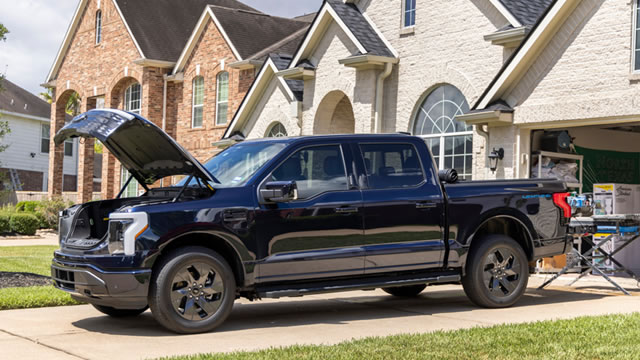
Ford Motor said on Monday it will take a $19.5 billion writedown and is killing several electric-vehicle models, in the most dramatic example yet of the auto industry's retreat from battery-powered mo... ...
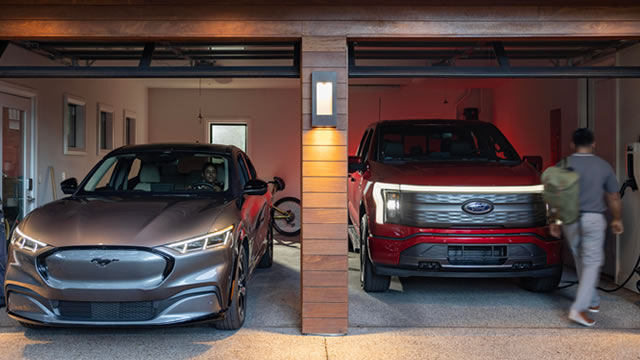
Ford Will Take $19.5 Billion Hit as It Rolls Back E.V. Plans
Nytimes· 2025-12-15 21:05
Core Insights - Ford Motor has decided to reduce its production of electric vehicles and increase the manufacturing of hybrid vehicles that utilize both gasoline engines and batteries [1] Group 1 - The decision to produce fewer electric vehicles is a strategic shift in Ford's approach to its vehicle lineup [1] - The increase in hybrid vehicle production indicates a response to market demand and possibly regulatory considerations [1]

Ford's next F-150 Lightning will have a gas generator as it pivots away from large EVs
TechCrunch· 2025-12-15 21:05
Core Viewpoint - Ford is discontinuing the production of the fully-electric F-150 Lightning and shifting to an "extended range electric vehicle" version, which includes a gas generator for recharging the battery, allowing for over 700 miles of range [1][4]. Group 1: Production Changes - The new F-150 Lightning's release date and pricing have not been disclosed [2]. - Ford will incur a charge of $19.5 billion in special items, primarily in the fourth quarter, due to the impact of this strategic shift on various vehicle and battery factories [2]. - The next-generation all-electric truck, referred to as "T3," has been canceled, along with plans for a next-generation commercial van, while the current E-Transit model will continue [3]. Group 2: Market Strategy - Ford is abandoning plans for larger electric vehicles due to diminished business cases stemming from lower-than-expected demand, high costs, and regulatory changes [4]. - The company plans to introduce a mid-sized all-electric pickup truck in 2027, utilizing a platform developed by former Tesla executives [4]. - Ford's president stated that funds previously allocated for large EVs will be redirected towards more profitable areas, including hybrid trucks and vans, extended range electric vehicles, affordable EVs, and energy storage opportunities [5]. Group 3: Market Performance - The F-150 Lightning struggled in the U.S. market, with a price tag of $40,000 that was not realized for most buyers, as it was primarily aimed at fleet customers [8]. - Over the past two years, Ford sold approximately 7,000 Lightnings per quarter, peaking at nearly 11,000 in the fourth quarter of 2024 [8]. - The electric vehicle market has faced challenges, including a price war initiated by Tesla and changes in political policies affecting EV sales [9][10].