UEV

Search documents
Ford to take $19.5B charge on electric vehicle strategy pivot
Youtube· 2025-12-16 12:07
Core Insights - Ford is re-evaluating its electric vehicle (EV) strategy, acknowledging that its previous approach was not successful, leading to a multi-billion dollar charge [1][2] Financial Impact - The company will incur a charge of $19.5 billion, primarily in 2025, with additional amounts in 2026 and 2027, to account for EV asset impairment [2][3] Strategic Shift - Ford plans to shift production in North America, moving away from large all-electric pickup trucks to potentially producing extended-range EVs and hybrids [3][4] - The company is developing a new model called the unboxed EV (UEV), expected to launch by the end of 2027, which will focus on lower price points and smaller sizes [4][5] Market Adaptation - Ford's sales of hybrids have increased by 19.4% this year, indicating a successful pivot towards hybrid models, which now represent a significant portion of their sales [6] - The company is raising its 2025 EBIT guidance to $7 billion, up from a previous estimate of $6 to $6.5 billion, reflecting improved performance [6] Industry Trends - The electric vehicle market is developing slower than anticipated, prompting Ford to adapt its strategy towards more hybrids and smaller or extended-range EVs, particularly in the pickup truck segment [7][8]


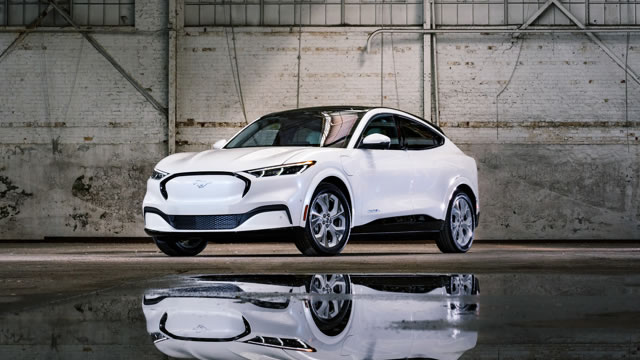
Ford CEO on ending Ford Lightning EV production: We are following market trends
Youtube· 2025-12-15 21:56
Core Insights - The company is pivoting its strategy in response to a decline in the high-end electric vehicle (EV) market, which has seen a 5% shrinkage in the US, particularly affecting vehicles priced between $50,000 and $80,000 [1] - A significant pre-tax charge of $19.5 billion is being taken to facilitate this strategic shift, with $5.5 billion of that being cash charges, which are expected to yield a strong return [2][1] - The company aims to focus on affordable trucks and vans, leveraging its existing strengths in hybrid and electric range-extended vehicles (e-revs) to enhance profitability and meet customer demand [2][5] Market Positioning - The company forecasts that by 2030, half of its global sales will consist of hybrids, e-revs, or pure EVs, up from approximately 17% currently, indicating a significant ramp-up in production and sales over the next five years [4] - The company holds an 80% market share in hybrid trucks in the US and plans to expand its hybrid lineup, including the Bronco, to cater to consumer preferences [5] - The company recognizes regional differences in EV adoption, noting that while China has over 50% electric vehicle sales, the US market is currently at 5% [6][8] Strategic Collaborations - In Europe, the company is partnering with Renault to offer affordable EVs, avoiding heavy investments in its own EV production in that region [7] - The company is focusing on the truck and SUV market globally, emphasizing hybridization as a viable option to meet diverse consumer needs [8] Product Development - The company is committed to bringing its new product lineup to market, with a goal for its Model E division (EV business) to achieve profitability by 2029 [3] - The company is developing an affordable EV platform priced at $30,000, which is expected to resonate well with consumers [2][5] - The company believes that e-revs, which can travel 700 miles on a tank of gas while primarily operating in electric mode, are a more practical solution for consumers than high-priced all-electric trucks [9]