
Ford Motor

Search documents
Health Care Advocates Slam Ford Government for Privatizing Surgeries While Pushing Public Hospitals into Deficit
Globenewswire· 2025-12-11 20:50
Core Viewpoint - The Ontario Health Coalition criticizes the Ford government's plan to privatize orthopedic surgeries, claiming it misuses public funds and exacerbates deficits in public hospitals [1][4]. Group 1: Financial Implications - Ontario's public hospitals are facing deficits and are being pressured to make cuts while the government reallocates hundreds of millions to for-profit clinics [1][6]. - The Ford government has increased funding for private clinics, with announcements of $155 million in the summer and an additional $125 million recently, diverting funds from public hospitals [7]. Group 2: Operational Concerns - There are existing operating rooms in public hospitals that remain underutilized due to lack of funding, while the government opts for privatization instead of maximizing public hospital capacity [2][3]. - The privatization process has delayed surgeries for patients as it involves a lengthy bidding process for private corporations [3]. Group 3: Quality of Care - The Ontario Health Coalition argues that the quality and safety standards in public hospitals are superior to those in private clinics, which have faced issues with quality control and patient safety [8][9]. - Public hospitals have established peer review systems and quality improvement committees, while private clinics lack similar oversight, leading to higher morbidity and mortality rates [8][9].



Ford Joint BEV With Renault Could Be Last-Gasp Effort To Stay Viable In Europe (NYSE:F)
Seeking Alpha· 2025-12-11 17:04
Core Insights - Weaker-than-expected demand for battery electric vehicles (BEVs) in North America and Europe is prompting Ford Motor Company to adjust its electrification strategy [1] - The company is shifting its focus towards gas-electric hybrids in the short-to-medium term while working on developing lower-cost BEVs compared to its current models like the Mach-e and F150 [1]

Ford and SK On are ending their U.S. battery joint venture
TechCrunch· 2025-12-11 16:11
Core Insights - Ford and SK On have agreed to end their joint venture, which was initially established to invest $11.4 billion in battery production for electric vehicles [1][2] - Ford will take ownership of the battery plants in Kentucky, while SK On will operate the factory in Tennessee, maintaining a strategic partnership focused on the Tennessee facility [2] Industry Context - The joint venture was formed during a period of significant investment in electric vehicle production, but demand has not met the industry's high expectations [3] - The cessation of the federal EV tax credit has negatively impacted electric vehicle sales, contributing to the decision to dissolve the joint venture [3]
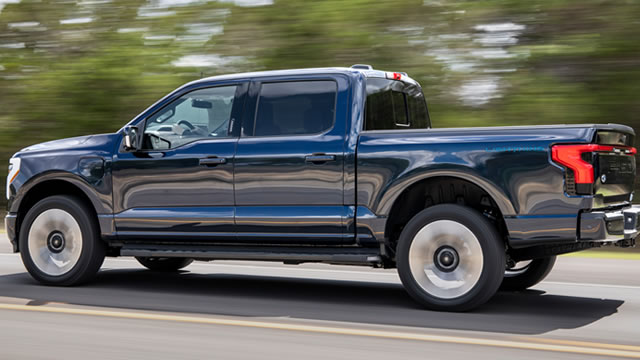
Major automakers say China poses 'clear and present threat' to U.S. auto industry
Reuters· 2025-12-11 15:25
Core Viewpoint - Major automakers are urging the U.S. government to block Chinese government-backed automakers and battery manufacturers from establishing manufacturing plants in the United States, citing potential threats to national security and competition in the automotive industry [1] Group 1: Industry Concerns - The automotive industry is concerned about the implications of allowing Chinese-backed companies to enter the U.S. market, which could lead to increased competition and potential job losses [1] - Automakers warn that the entry of these companies could undermine the domestic manufacturing base and hinder innovation within the U.S. automotive sector [1] Group 2: Government Action - Major automakers are calling for immediate action from Washington to prevent the establishment of manufacturing plants by these foreign entities [1] - The request highlights the need for regulatory measures to protect the interests of U.S. manufacturers and ensure fair competition [1]

Ford, SK On To End $11.4 Billion Battery Venture Amid EV Rollback, CAFE Relaxations - Ford Motor (NYSE:F)
Benzinga· 2025-12-11 10:57
Core Insights - Ford Motor Co. and SK On have decided to terminate their EV battery manufacturing partnership due to challenges in the electric vehicle market, including regulatory changes and declining demand [1][2][3] Company Developments - SK On will shift its focus towards Energy Storage Systems and has announced changes in ownership of the battery plants, with Ford taking full ownership of the Kentucky plant and SK On assuming control of the Tennessee plant [2][3] - The partnership, known as BlueOval SK, had involved significant investments, totaling approximately $11.4 billion, primarily for the $5 billion Kentucky plant, which was producing batteries for the F-150 Lightning EV Pickup Truck [4] Market Context - The decision to end the partnership aligns with a broader strategy to reduce debt and enhance profitability, as SK On has reported multi-million dollar losses amid falling EV demand [3] - Ford's EV sales have seen a drastic decline, with a reported 60% drop in November, raising concerns about the viability of ongoing EV projects [4] Regulatory Environment - Recent regulatory changes, including the rollback of Corporate Average Fuel Economy (CAFE) Standards by President Trump, have contributed to the challenges faced by the EV sector [5] - Ford's CEO, Jim Farley, has expressed a commitment to EVs despite these challenges, emphasizing the importance of remaining competitive in the global market [6]
South Korea's SK On, Ford Motor to end US battery joint venture
Reuters· 2025-12-11 07:23
Core Viewpoint - SK On has decided to terminate its joint venture with Ford Motor for two battery factories in the United States [1] Company Summary - SK On is a South Korean battery manufacturer [1] - The joint venture with Ford was focused on establishing battery production facilities in the U.S. [1] Industry Summary - The decision reflects a significant shift in the electric vehicle battery manufacturing landscape [1] - The termination of the joint venture may impact the supply chain and production capabilities for electric vehicle batteries in the U.S. [1]
Ford suppliers receive China's new streamlined rare-earth licences
Reuters· 2025-12-10 18:26
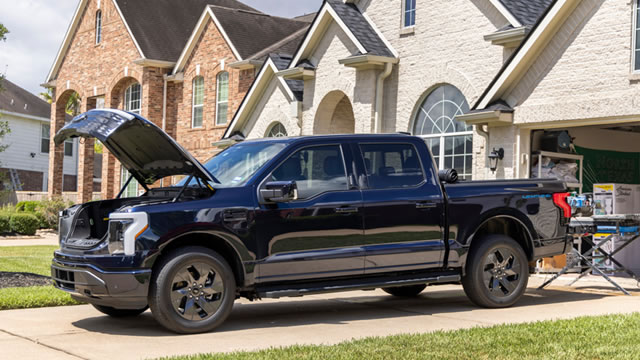
Core Viewpoint - Chinese rare-earth magnet suppliers to U.S. automaker Ford Motor have been included in the first batch of new export licenses issued by Beijing to enhance shipments and alleviate shortages of these essential components [1] Group 1 - The issuance of new export licenses aims to boost shipments of rare-earth magnets [1] - The decision is part of efforts to reduce shortages of vital components for the automotive industry [1]
Ford and Renault team up on cheaper EVs in a ‘fight for our lives'
TechCrunch· 2025-12-09 18:01
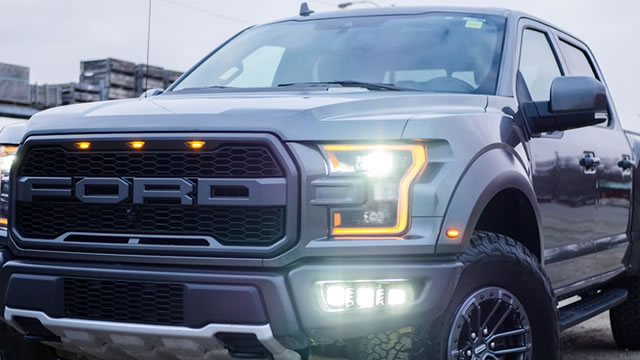
Core Insights - Ford is facing significant competition in Europe, particularly from Chinese automakers, and is committed to remaining competitive in the market [1][3] - The partnership with Renault aims to introduce two affordable Ford-branded electric vehicles in Europe by 2028, with Ford leading the design and Renault handling assembly [2][3] - This collaboration is part of Ford's broader strategy to enhance agility and cost efficiency in response to the influx of cheaper vehicles from competitors like BYD and SAIC Motor [3][4] Company Strategy - Ford's CEO emphasized the importance of the European market as a critical battleground for the global transformation of the automotive industry [4] - The partnership with Renault is seen as a strategic move to innovate and invest more effectively in Europe [4] - Ford is committed to accelerating its operations in Europe to ensure a vibrant future in the region [4]

Have $1,000? These 3 Stocks Are Great for Any Portfolio
The Motley Fool· 2025-12-09 14:30
Core Viewpoint - Investing can be straightforward by focusing on quality companies that are unlikely to face bankruptcy in the near term. Group 1: Ford Motor Company - Ford has a current dividend yield of 4.48% and a strong cash position of $26.8 billion, indicating a safe dividend payout [2][6]. - In Q3, Ford reported automotive revenue of $47.19 billion, exceeding expectations of $43.08 billion, with adjusted earnings of $0.45 per share [3]. - The stock trades at a low valuation of approximately 11.4 times earnings, suggesting limited downside risk [5]. Group 2: JPMorgan Chase - JPMorgan has significantly outperformed the market, doubling the S&P 500's return over the last five years, and is a leading bank in the U.S. [7][8]. - In Q3, JPMorgan reported a return on equity of 17% and assets under management increased by 18% year over year to $4.6 trillion [8]. - Earnings for the third quarter rose 16% year over year to $5.07 per diluted share, showcasing consistent performance [8][10]. Group 3: Nvidia - Nvidia has returned 40% to shareholders year to date, benefiting from its position in the growing AI industry [11]. - In Q2, Nvidia's revenue increased by 56% year over year to $46.7 billion, with net income rising 59% to $26.42 billion [12]. - The company has a gross margin of 70.05% and is well-positioned for future growth in the AI sector, making it a strong buy-and-hold candidate [14][15].


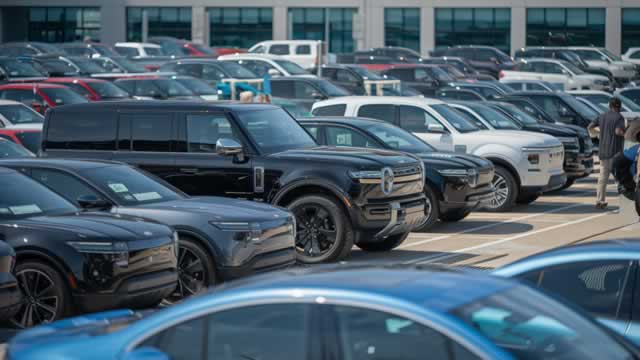
Ford, GM Race Ahead of the Market
247Wallst· 2025-12-09 14:15
Group 1: Market Performance - Ford Motor Co. stock is up 33% this year, while General Motors Co. is 41% higher, compared to a 16% increase in the S&P 500 [1] - Both companies were expected to struggle in the electric vehicle (EV) market, lagging behind Tesla, which holds about a 45% EV market share in the U.S. [1] Group 2: EV Market Challenges - The EV market has declined significantly, with sales as a percentage of total U.S. new car sales dropping from 8% in Q3 to 4% in Q4, and expected to remain at that level through 2026 [2] - Concerns about EVs include range anxiety, charging station availability, and performance issues in cold temperatures [4] Group 3: Legacy Business Strength - GM and Ford have invested billions in EV development but have found their traditional gasoline-powered vehicles, particularly full-sized pickups, to be very profitable [3] - The average price of gasoline has dropped to $3 per gallon, reducing the cost advantage of EVs that was more pronounced when gas prices were higher [5] Group 4: Consumer Preferences - There are approximately 175,000 gas stations in the U.S., making refueling quicker and more convenient than charging EVs [6] - Negative sentiment towards Tesla CEO Elon Musk has influenced some consumers to prefer traditional combustion engine vehicles over EVs [6]

