
PDVSA

Search documents
Chevron Set to Increase Venezuelan Crude Oil Exports to the United States
Yahoo Finance· 2026-01-30 17:53
Group 1 - Chevron Corporation is recognized as one of the 10 Best American Oil and Gas Stocks to Buy [1] - Chevron is set to increase its Venezuelan crude oil exports to the United States to approximately 300,000 barrels per day (bpd) in March, a significant rise from 100,000 bpd in December and around 230,000 bpd in January [3] - The company is currently producing about 240,000 to 250,000 barrels of sour Venezuelan crude per day in a joint venture with state-run PDVSA, which is favored by US Gulf Coast refineries [4] Group 2 - Chevron has been operating under a special US license in Venezuela and has become a key beneficiary of recent US actions in the country [3] - The company is now facing competition from trading houses Vitol and Trafigura, which have also received US licenses to export Venezuelan oil [4]

Venezuela Signals a Historic Energy Reset as Oil Laws Open to Foreign Capital
Yahoo Finance· 2026-01-29 01:00
Core Viewpoint - Venezuela is on the verge of a significant energy shift, with proposed reforms to the Organic Hydrocarbons Law aimed at reshaping the oil and gas sectors to attract foreign investment and modernize the industry [1][2]. Group 1: Proposed Reforms - The reforms are currently being discussed in Venezuela's National Assembly and would fundamentally change the fiscal and contractual rules governing the oil and gas sectors [1]. - The new framework would allow external operators to engage more deeply in the production process, potentially increasing foreign investment [2]. - A significant aspect of the reform is the expansion of operational roles, allowing mixed enterprises and private Venezuelan companies to collaborate with state authorities on projects [3]. Group 2: Structural Changes - The reforms aim to create a dual-track system that aligns with the financial realities of Venezuela's oil industry, providing flexibility in structuring investment deals [4]. - The interim administration seeks to move away from the rigid investment framework that has historically constrained the sector [5]. - The proposed changes would permit state-owned companies to transfer operational responsibilities to private partners, marking a substantial shift in government policy [6][7]. Group 3: Operational Dynamics - The long-standing joint-venture system has been characterized by structural rigidity, with operational control remaining with state entities despite external partners providing capital and expertise [7]. - The reforms would enable hybrid operating models that are better suited to the complexities of oil projects, enhancing both construction and financing efforts [7].
Analysis-Venezuela oil reform encourages immediate investment, still needs to go deeper, executives say
Yahoo Finance· 2026-01-26 22:53
Core Viewpoint - The proposed reform of Venezuela's oil law aims to encourage investment by providing joint-venture partners with more control and flexibility, but significant ambiguities and contradictions in the proposal may deter international energy companies from investing [1][6][18]. Industry Context - The reform is seen as a response to long-standing requests from existing partners, including Chevron and other international companies, for more operational control and better financial terms [2][4]. - PDVSA currently holds a monopoly on oil operations, which has been a barrier to attracting foreign investment [4][6]. Proposed Changes - The reform would allow PDVSA's joint-venture partners to have greater autonomy over project operations, including direct access to oil sale proceeds and the ability to negotiate better sale prices [2][8]. - A new production-sharing contract model is expected to be formalized, which would allow several companies to operate in Venezuelan oilfields [7][14]. - The government may lower royalty rates from 33% to as low as 15%, which could make Venezuela more competitive in attracting investment [9][10]. Legal and Regulatory Framework - The reform would grant the oil ministry precedence over Congress in tax and ownership changes, potentially speeding up project approvals but raising concerns about oversight [12][15]. - There are concerns regarding the discretionary powers given to the government, which may undermine the National Assembly's oversight [15][16]. - The proposed reforms have been criticized for lacking clarity on the rights of joint-venture partners and failing to address the structural issues within PDVSA [16][17]. Investment Outlook - While the reform is viewed as a step forward, deeper changes are necessary to attract the estimated $100 billion needed to revamp Venezuela's energy sector [6][10]. - Many analysts believe that major U.S. producers may remain cautious and wait for clearer reforms before committing to new contracts [18].
Trading houses to begin exporting Venezuelan LPG, sources and document say
Yahoo Finance· 2026-01-26 20:34
Group 1 - Trading houses are preparing to load and export Venezuelan liquefied petroleum gas (LPG) as part of a 50-million-barrel oil supply deal between Caracas and Washington [1] - Traders Vitol and Trafigura have been granted U.S. licenses to handle supplies from a $2 billion deal, exporting about 10 million barrels of Venezuelan crude so far [2] - Venezuela is set to export LPG after meeting its domestic fuel demand, which had previously limited LPG exports [3] Group 2 - The Singapore-flagged vessel Chrysopigi Lady, chartered by Trafigura, is approaching Venezuela's Jose port to pick up an LPG cargo [4]
X @Bloomberg
Bloomberg· 2026-01-26 14:40
Acting President Delcy Rodríguez said Venezuela has “had enough” of US interference, while addressing state oil workers in Anzoátegui state on Sunday https://t.co/pTxAImLKih ...
Financial Neutrality in 2026: Why Crypto Is No Longer Optional
Yahoo Finance· 2026-01-26 13:58
Individual Level - Ordinary households are using crypto-exchanges as a "financial VPN" to move money and protect savings from unpredictable political actions [1] - Cryptocurrency has become a practical infrastructure for families to maintain purchasing power amid economic instability and hyperinflation [36][39] - In countries like Venezuela and Iran, crypto serves as a lifeline for families facing financial turmoil, allowing them to bypass local economic failures [38][39] Corporate Level - Corporations in developed markets are increasingly adopting cryptocurrency to bypass traditional banking systems and enhance financial resilience [26] - Retail businesses are experiencing higher conversion rates and average order values through crypto transactions, with significant growth in luxury sectors [27][28] - Companies like Sony Honda are integrating blockchain technology into their products, creating decentralized ecosystems that enhance user experience and financial independence [30][32] Sovereign Level - Nations are rethinking financial security in light of "strategic instability," where traditional financial systems are weaponized for geopolitical control [2][7] - Venezuela's economic isolation serves as a case study for how dependence on foreign-controlled infrastructure undermines national resilience [11][13] - Iran has developed a parallel financial system using cryptocurrency to support imports and trade, demonstrating a more systemic integration compared to Venezuela [21][24] Financial Neutrality - The concept of "financial neutrality" is emerging, allowing states, corporations, and individuals to store and transfer value independently of politically controlled financial infrastructure [5] - The rise of financial neutrality marks a shift towards viewing digital assets as strategic hedges against asset freezes and sanctions [19] - The ability to transact freely is increasingly recognized as a fundamental human right, essential for financial autonomy and freedom [40][42]
US Pushes for Quickest Fixes to Boost Venezuela Oil Output
Yahoo Finance· 2026-01-24 13:00
Group 1: U.S. Strategy and Venezuelan Oil Production - The U.S. aims to quickly increase Venezuelan crude flows to enhance American energy dominance and address domestic cost-of-living concerns ahead of midterm elections [1][4] - A modest supply boost from Venezuela is expected to help stabilize crude and gasoline prices while allowing the U.S. to take action against Iran without disrupting the market [1] - The Trump administration's strategy includes reviving Venezuela's oil industry to approach its 1970 peak production of approximately 3.75 million barrels per day from current levels of less than 1 million [4] Group 2: Immediate Production Gains - Analysts believe that while significant long-term production increases will take at least a decade, there are immediate production gains to be realized [3] - With limited investment, Venezuela could potentially boost production by several hundred thousand barrels in the short term through repairs and upgrades to existing infrastructure [5][10] - Chevron plans to increase production from its joint ventures with PDVSA by 50% within the next 18 to 24 months, currently producing about 240,000 barrels per day [10] Group 3: Industry Participation and Opportunities - Major oilfield service companies like Halliburton, SLB, and Baker Hughes are looking to capitalize on the opportunity to revive Venezuela's oil production [2][6][13] - The U.S. is in discussions with these companies to quickly revive output at a fraction of the estimated $100 billion cost for complete rebuilding [6] - The potential market for drilling and completion spending could reach $10 billion if production returns to previous levels of about 3 million barrels per day [15] Group 4: Challenges and Considerations - Venezuela's oil infrastructure has suffered from decades of underinvestment and neglect, posing challenges for immediate production recovery [8] - Concerns about political stability and worker safety in Venezuela remain, with industry leaders seeking financial and security guarantees from the U.S. [12] - Despite past losses, U.S. service providers are eager to return to Venezuela, which holds one of the world's largest oil reserves [13][14]
US oilfield service firm SLB says it can rapidly boost Venezuela operations
Yahoo Finance· 2026-01-23 17:25
Core Viewpoint - U.S. oilfield service companies, particularly SLB and Halliburton, are looking to increase their operations in Venezuela following the recent political changes, contingent on the establishment of appropriate licensing and compliance measures [1][3]. Group 1: SLB's Position and Plans - SLB has indicated it can rapidly scale up its activities in Venezuela if the necessary licensing and safety measures are in place [1]. - The company reported a larger-than-expected profit for the fourth quarter and has maintained its operational presence in Venezuela, providing services for Chevron [4]. - SLB previously generated over $1 billion in peak annual revenue from Venezuela and employed more than 3,000 people there a decade ago, though it currently has about 80 Venezuelans working on-site [5]. Group 2: Halliburton's Intentions - Halliburton is also seeking to re-enter the Venezuelan market, contingent on resolving commercial and legal terms, including payment certainty [3]. - The company is actively recruiting for various positions in Venezuela and has stated it can quickly mobilize equipment to become operational [6]. Group 3: Market Context and Analyst Insights - Both SLB and Halliburton are viewed as well-positioned to benefit from potential new investments in Venezuela, according to industry analysts [6]. - President Trump has indicated that U.S. oil companies will soon begin drilling in Venezuela, although there are concerns regarding the feasibility of a rapid return to operations [7].


Venezuelan oil exports under supply deal with US progressing slowly -documents, data
Reuters· 2026-01-21 15:37
Core Insights - The volume of Venezuelan oil exported under a $2 billion supply deal with the U.S. reached approximately 7.8 million barrels, indicating a significant level of trade activity between the two countries [1] Group 1 - The export volume of Venezuelan oil highlights the ongoing economic relationship between Venezuela and the U.S. [1] - The $2 billion supply deal serves as a critical component of Venezuela's oil export strategy [1] - Vessel tracking data and PDVSA documents confirm the substantial volume of oil exported, reflecting operational capabilities [1]

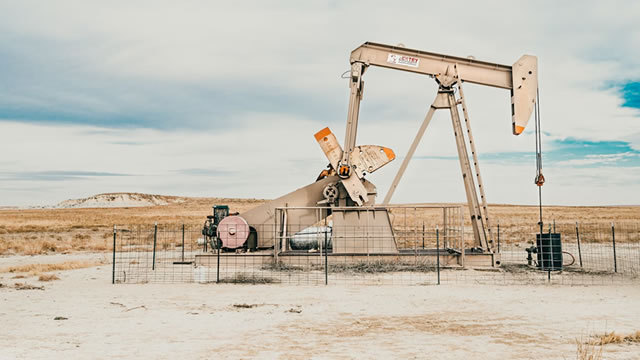
Venezuela’s Oil Reset Has Finally Begun
Yahoo Finance· 2026-01-20 01:00
Core Insights - Venezuela possesses the world's largest proven crude reserves, approximately 303 billion barrels, which is about 17% of the global total, despite the challenges posed by state control and mismanagement [2][3] Group 1: Production Potential - Macquarie Group's energy strategist identifies four main opportunities for restoring Venezuelan oil output, including excess declines of 200,000 to 500,000 barrels per day (bpd) that could be remedied with sanctions relief and investment within 6 to 24 months [1] - Revitalizing old fields could yield an additional 100,000 to 200,000 bpd within a 1 to 3-year timeframe, while existing Orinoco projects could restore 200,000 to 300,000 bpd over a 1 to 4-year horizon [1] - New investment initiatives could potentially add 500,000 to 700,000 bpd, with lead times of 3 to 6 years, suggesting a long-term upside to about 2 million bpd if 75% of these volumes are achieved [1] Group 2: Current Production and Infrastructure - Venezuela's oil production has drastically declined from around 3 million bpd in 2008 to approximately 963,000 bpd by the end of last year due to collapsed infrastructure and sanctions [2] - The main constraints include a chronic shortage of diluent, broken upgraders, and the hollowing out of PDVSA, which has been severely impacted by mismanagement and sanctions [2] Group 3: International Involvement and Investment - Chevron and Repsol are expected to lead the charge in revitalizing Venezuela's oil production, with Chevron aiming to boost production by about 50% in the next 18 to 24 months [7] - Repsol's CEO indicated plans to triple production in the next two to three years, contingent on legal clarifications regarding operations and profits [7] - The U.S. government is focusing on monetizing oil held in storage, with estimates suggesting around 34 million barrels of crude stored in Venezuela and additional amounts in Aruba and the Bahamas [5][6] Group 4: Regulatory and Political Landscape - Maria Corina Machado proposes downsizing PDVSA and transferring assets to private investors, aiming to create a regulatory agency independent of the state oil company [8] - Recent legislation presented by Delcy Rodriguez aims to encourage foreign investment in oil fields and infrastructure, incorporating production models from the Anti-Blockade Law into Venezuela's Hydrocarbons Law [8] - The future of Venezuela's oil sector will depend on rebuilding institutional frameworks and achieving a balance between private participation and state sovereignty [9]