
新大陆

Search documents
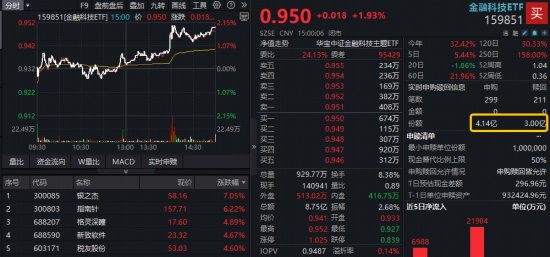
金融科技突然启动,什么信号?银之杰、指南针逼近前高,百亿金融科技ETF(159851)涨近2%大举吸金
Xin Lang Ji Jin· 2025-09-16 11:52
Core Viewpoint - The financial technology sector experienced a significant surge, with the China Securities Financial Technology Theme Index rising nearly 2%, driven by over 50 constituent stocks increasing in value [1][3]. Group 1: Market Performance - The financial technology sector saw notable stock performances, with Yinzhijie leading with a 7% increase, and Zhinancun rising over 6%, approaching previous highs [1]. - The Financial Technology ETF (159851) experienced a price increase of 1.93%, with a total trading volume of 875 million yuan and a net subscription of 11.4 million units on the same day [1][4]. Group 2: Factors Behind the Surge - The continuous high trading volume, exceeding 1.5 trillion yuan for 44 consecutive trading days, indicates a strong recovery trend for internet brokerages, with projected net profit growth of 70% for the third quarter [3]. - The integration of AI in financial services is creating new growth opportunities, enhancing product value and customer loyalty, with leading firms expected to maintain their competitive edge [3]. - Expectations of overseas interest rate cuts are improving market risk appetite, benefiting small-cap stocks, particularly in the financial technology sector, where over 42% of constituent stocks have a market capitalization below 10 billion yuan [3]. Group 3: Investment Recommendations - The financial technology sector is viewed as having significant allocation value due to its low current fundamentals and valuations, with expectations of a gradual upward trend supported by policy initiatives and economic stabilization [4]. - The Financial Technology ETF (159851) and its associated funds are recommended for investment, as they comprehensively cover popular themes such as internet brokerages, financial IT, cross-border payments, and AI applications [4].


新大陆:公司致力于“为人赋码,为民服务”
Zheng Quan Ri Bao Zhi Sheng· 2025-09-16 11:40
Core Viewpoint - The implementation of the "National Network Identity Authentication Public Service Management Measures" by six departments, including the Ministry of Public Security and the National Internet Information Office, aims to protect citizens' identity information and support the healthy and orderly development of the digital economy starting from July 15, 2025 [1] Company Summary - The company, Newland, is committed to "empowering people with codes and serving the public," focusing on personal information protection and data interoperability [1] - Newland has developed a comprehensive "one code for all" identity authentication system that integrates online and offline services, facilitating secure data interconnection across different domains [1] - The company possesses multiple self-developed decoding chips and utilizes artificial intelligence technology to create customized intelligent hardware products and solutions that align with various industry application scenarios [1] - As of now, Newland's self-developed series of applications based on trusted digital identity authentication and QR code scenario solutions have been deployed in over ten cities, telecom operators, banks, and industry enterprises in China, providing secure interaction capabilities for trusted digital identities [1]

新大陆:公司已完成回购注销相关事宜
Zheng Quan Ri Bao Zhi Sheng· 2025-09-16 11:40
Group 1 - The company has completed the repurchase and cancellation of shares, totaling 18,965,022 shares, which accounts for 1.84% of the total shares before cancellation [1] - The actual amount spent on the repurchase and cancellation was RMB 281,123,045 [1] - Following the repurchase, the total number of shares has changed from 1,032,062,937 to 1,013,097,915 [1]
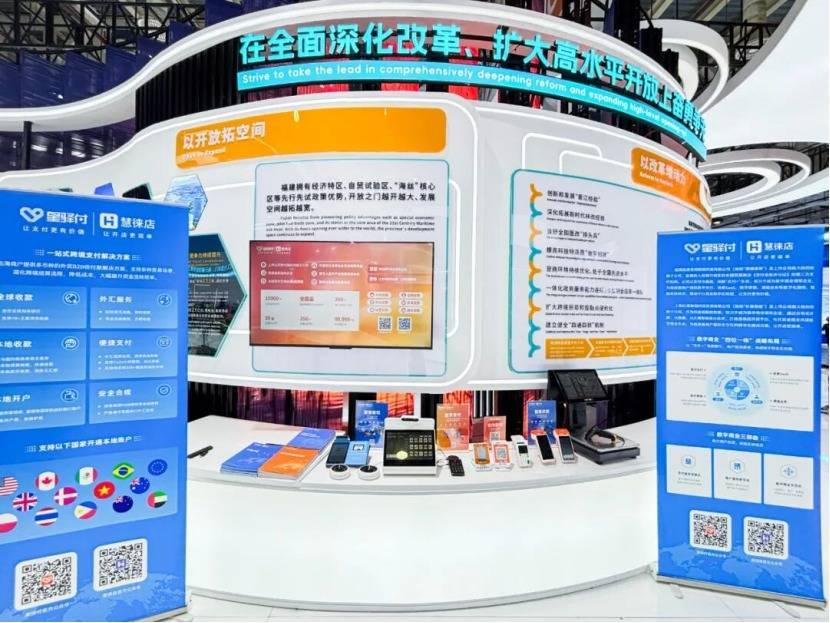
新大陆科技集团参展投洽会 展示跨境支付实力,赋能全球贸易新生态
Sou Hu Cai Jing· 2025-09-16 10:32
Group 1 - The 25th China International Investment and Trade Fair (CIFIT) was held in Xiamen from September 8 to 11, attracting representatives from over 120 countries and regions, and 11 international organizations, making it a significant platform for showcasing cutting-edge technology and discussing industry trends [1] - Newland Technology Group showcased a series of innovative technology products and smart scene solutions in the Fujian Pavilion, highlighting its leading position in the digital commerce sector and its global layout, providing valuable "Chinese solutions" for the digital transformation of global commerce [3] - The company has obtained the Money Services Business (MSB) license in the United States and launched a one-stop cross-border payment solution, focusing on the needs of outbound merchants and supporting multiple trade scenarios, significantly improving fund circulation efficiency [3] Group 2 - Newland's subsidiary, Fujian Guotong Xingyi Network Technology Co., Ltd., is enhancing terminal product upgrades and innovations, with the T9 smart terminal achieving high-speed processing of mainstream foreign card transactions, addressing issues of frequent power outages [5] - The non-contact scanning box redefines the "Card Code PAY" payment method, improving user experience by enabling instant payment and reducing transaction complexity and wait times, thus helping merchants retain customers [5] - The company aims to leverage CIFIT to deepen its engagement in the digital commerce sector, expand its international vision and cooperation network, and inject new momentum into the rapid development of digital commerce and the digital transformation of global trade [7]
新大陆涨2.04%,成交额3.39亿元,主力资金净流入1765.84万元
Xin Lang Zheng Quan· 2025-09-16 06:08
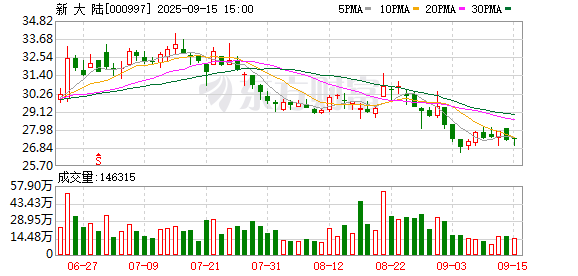
Group 1 - The core viewpoint of the articles highlights the recent performance and financial metrics of Newland Digital Technology Co., Ltd, including stock price movements and trading volumes [1][2] - As of September 16, Newland's stock price increased by 2.04% to 27.97 CNY per share, with a total market capitalization of 28.336 billion CNY [1] - Year-to-date, Newland's stock has risen by 41.72%, with a recent 5-day increase of 1.93%, but a decline of 3.72% over the last 20 days and 7.40% over the last 60 days [1] Group 2 - For the first half of 2025, Newland reported a revenue of 4.02 billion CNY, reflecting a year-on-year growth of 10.54%, and a net profit attributable to shareholders of 595 million CNY, up 12.36% [2] - The company has distributed a total of 2.694 billion CNY in dividends since its A-share listing, with 1.062 billion CNY distributed in the last three years [2] - As of June 30, 2025, major shareholders include Hong Kong Central Clearing Limited, which increased its holdings by 11.51 million shares, and Southern CSI 500 ETF, which increased its holdings by 260,400 shares [2]
汇聚数智力量,领航数字商业——新大陆科技集团闪耀2025服贸会
Huan Qiu Wang· 2025-09-15 10:12
Core Insights - The 2025 China International Service Trade Fair (CIFTIS) was held in Beijing from September 10 to 14, focusing on the theme "Digital Intelligence Leading, Service Trade Renewed," attracting 85 countries and nearly 2,000 enterprises to showcase innovations in international service trade [1] Group 1: Company Highlights - Newland Technology Group showcased its digital payment innovations and smart scene solutions through its brands StarPay and Huilei Store, receiving recognition from officials for its advanced technology and innovative products [1] - Newland's subsidiary, Fujian Guotong Xingyi Network Technology Co., Ltd. (Guotong Xingyi), presented a diverse range of digital payment products, including a non-contact scanning box that enables instant payment and card acceptance capabilities for foreign visitors [2] - The company is actively exploring AI technology applications in physical merchant services, enhancing efficiency and resilience across various industries, with products like the lightweight cash register Huilei Store and AI smart scales addressing specific retail challenges [3] Group 2: Industry Trends - The demand for cross-border payment services is diversifying due to the increasing trend of Chinese enterprises going global and the rise of cross-border e-commerce and trade investments [2] - Newland aims to promote the adoption of digital RMB and support national policies through optimized foreign card payment services and innovative payment solutions tailored for various merchant needs [2][3] - The company's participation in CIFTIS highlights the role of Chinese enterprises in the global service trade landscape, emphasizing the importance of digital transformation for merchants across industries [3]
新大陆:截至2025年9月10日公司股东人数为69722户
Zheng Quan Ri Bao· 2025-09-15 09:09
Group 1 - The company, Newland, reported that as of September 10, 2025, the number of shareholders is 69,722 [2]
盘中震荡,金融科技ETF华夏(516100)跌0.13%
Xin Lang Cai Jing· 2025-09-15 06:55
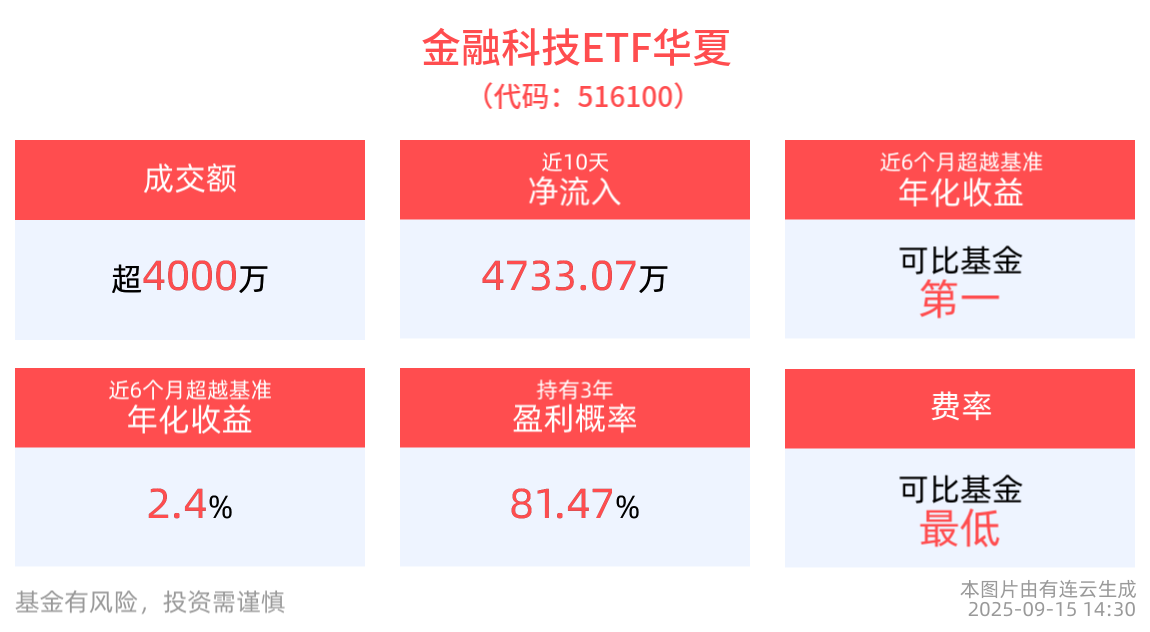
Core Insights - The three major indices collectively declined on September 15, with the fintech and brokerage sectors experiencing downward pressure [3] - The Huaxia Fintech ETF (516100) saw a slight decrease of 0.13% as of 14:30, with mixed performance among its holdings [3] - Over the past year, the Huaxia Fintech ETF has achieved a net value increase of 149.83%, ranking first among comparable funds [3] Fintech ETF Performance - The Huaxia Fintech ETF closely tracks the CSI Fintech Theme Index, with the top ten weighted stocks accounting for 54.08% of the index [3] - The top ten stocks in the index include Tonghuashun, Dongfang Caifu, and Hengsheng Electronics, with respective weightings of 9.23%, 8.50%, and 7.31% [5] - The ETF's performance is reflected in the mixed results of its holdings, with some stocks like Ronglian Technology hitting the daily limit while others like Donghua Software and Zhongke Jincai faced declines [3][5]
2025年1-7月计算机、通信和其他电子设备制造业企业有29994个,同比增长5.4%
Chan Ye Xin Xi Wang· 2025-09-15 03:08
Core Insights - The article discusses the growth of the computer, communication, and other electronic equipment manufacturing industry in China, highlighting an increase in the number of enterprises in this sector [1]. Industry Overview - As of January to July 2025, there are 29,994 enterprises in the computer, communication, and other electronic equipment manufacturing industry, which is an increase of 1,537 enterprises compared to the same period last year, representing a year-on-year growth of 5.4% [1]. - This sector accounts for 5.76% of the total industrial enterprises in China [1]. Company Listings - The article lists several companies in the industry, including China Great Wall (000066), Inspur Information (000977), Newland (000997), Meishi Technology (001229), and others [1]. Research Report - The insights are based on a report by Zhiyan Consulting titled "Market Monitoring and Development Trend Analysis of China's Communication Equipment Industry from 2025 to 2031" [1]. Statistical Data - The data referenced is sourced from the National Bureau of Statistics and organized by Zhiyan Consulting, indicating a robust growth trend in the manufacturing sector [1].

2025年1-4月全国计算机、通信和其他电子设备制造业出口货值为19116.6亿元,累计增长4.5%
Chan Ye Xin Xi Wang· 2025-09-15 01:08
Core Viewpoint - The report highlights the performance and trends in China's computer, communication, and other electronic equipment manufacturing industry, indicating a slight decline in export value in April 2025 while showing overall growth in the first four months of the year [1]. Group 1: Industry Overview - In April 2025, the export value of the computer, communication, and other electronic equipment manufacturing industry reached 473.51 billion yuan, representing a year-on-year decrease of 2.7% [1]. - From January to April 2025, the cumulative export value for the industry was 1,911.66 billion yuan, reflecting a year-on-year growth of 4.5% [1]. - The report includes a statistical graph depicting the export value trends from 2019 to April 2025, sourced from the National Bureau of Statistics and organized by Zhiyan Consulting [1]. Group 2: Companies Mentioned - Listed companies in the report include China Great Wall (000066), Inspur Information (000977), Newland (000997), Meishi Technology (001229), Zhiwei Intelligent (001339), Nasda (002180), Zhengtong Electronics (002197), Dahua Technology (002236), Electric Science Network Security (002268), Zhongwei Electronics (300270), Zhiditech (301503), Zhongrun Optics (688307), YingShi Network (688475), and Sanwei Xinan (688489) [1]. Group 3: Research and Consulting - Zhiyan Consulting is identified as a leading industry consulting firm in China, specializing in deep industry research and providing comprehensive consulting services, including industry research reports, business plans, feasibility studies, and customized services [1]. - The firm emphasizes its professional approach, quality service, and keen market insights to empower investment decisions [1].
