Bharti Airtel

Search documents
Stock markets end higher; ITC, banks lead recovery
Rediff· 2026-02-06 12:04
Market Overview - Domestic equity markets experienced subdued trading before a late recovery, driven by selective buying in FMCG and private banking stocks [9] - The BSE Sensex closed at 83,580.40, up by 266.47 points or 0.32%, while the NSE Nifty ended at 25,693.70, gaining 50.90 points or 0.20% [3][4] Central Bank Policy - The Reserve Bank of India (RBI) maintained its benchmark interest rate at 5.25%, as inflation remained manageable and growth concerns eased due to increased government spending and reduced tariff pressures [4][7] - The RBI's Monetary Policy Committee voted unanimously to keep the repo rate unchanged, signaling a neutral policy stance for the foreseeable future [7] Sector Performance - ITC was the top gainer among Sensex firms, rising by 5.09%, with other notable gainers including Kotak Mahindra Bank, Hindustan Unilever, and Bajaj Finance [5][6] - In contrast, major laggards included Tata Consultancy Services, Tech Mahindra, and Adani Ports [8] Real Estate Financing - The RBI proposed allowing banks to lend to Real Estate Investment Trusts (REITs) with certain prudential safeguards to enhance financing for the real estate sector [3][11] - This regulatory clarity is expected to improve long-term funding visibility for the real estate and credit ecosystem [11] Foreign Investment - Foreign institutional investors sold equities worth ₹2,150.51 crore on Thursday, indicating a potential shift in investment sentiment [10]

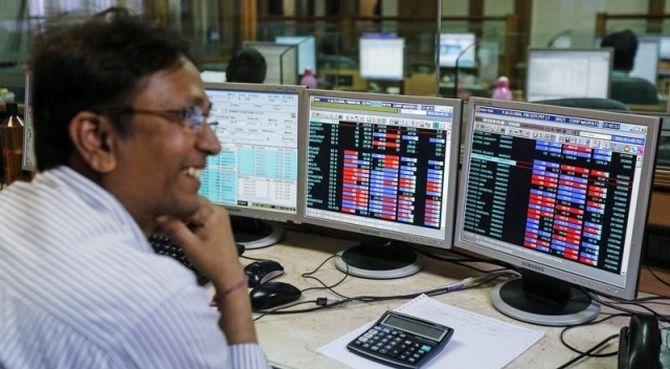
Sensex falls over 200 pts, Nifty below 25,600 ahead of RBI MPC decision; mid, smallcaps slip
The Economic Times· 2026-02-06 03:56
Market Overview - The Nifty and Sensex indices opened lower, continuing losses for a second consecutive session, with the BSE Sensex dropping over 200 points below 83,100 and the Nifty 50 declining over 80 points below 25,600 [16] - The Nifty Smallcap 100 index fell by 1%, while the Midcap 100 index decreased by 0.35% [16] Global Market Sentiment - Global markets are experiencing a risk-off sentiment, with Bitcoin falling below $64,000 and silver correcting sharply to around $71 from recent highs of approximately $121 [2][16] - The tech-heavy Nasdaq has declined about 6% from its peak, indicating sustained pressure on technology and AI-related stocks [5][16] - U.S. equities have seen a decline for two consecutive sessions, with the Dow Jones Industrial Average falling 592.58 points (1.20%) to close at 48,908.72, and the S&P 500 dropping 1.23% to 6,798.40 [8][16] Foreign Institutional Investment - Foreign institutional investors (FIIs) turned sellers again, selling Rs 2,150 crore on February 5, while domestic institutional investors (DIIs) bought nearly Rs 1,130 crore [6][7][16] - FIIs had previously staged a strong comeback, being net buyers of Rs 5,236 crore, marking the highest single-day inflow since October 28 [7][16] Domestic Economic Indicators - Expectations for the Reserve Bank of India's (RBI) Monetary Policy Committee (MPC) meeting suggest a status quo on interest rates, with a rate cut seen as unlikely [6][16] - A potentially dovish tone in the policy and an upward revision to FY27 growth projections could improve market sentiment [6][16] Commodity Market - U.S. crude futures extended losses, with Brent crude falling 50 cents (0.74%) to $67.05 per barrel and West Texas Intermediate (WTI) crude declining 52 cents (0.82%) to $62.77 per barrel [10][16] Currency Exchange - The Indian rupee opened stronger at 90.29 against the US dollar, compared to the previous closing level of 90.36 [11][16]

Sensex sinks 504 points amid weak global trends
Rediff· 2026-02-05 11:46
Market Performance - Indian equity markets experienced a tight trading range, indicating a cautious wait-and-watch phase among investors due to the absence of fresh domestic triggers [1][11] - The benchmark indices Sensex and Nifty ended lower, with the BSE Sensex dropping 503.76 points or 0.60% to close at 83,313.93, and during the day, it fell as much as 666.07 points or 0.79% to 83,151.62 [3][4] - The NSE Nifty declined by 133.20 points or 0.52% to finish at 25,642.80 [4] Major Gainers and Losers - Major laggards from the Sensex firms included Eternal, Bharti Airtel, Bharat Electronics, ITC, Infosys, Reliance Industries, ICICI Bank, and Asian Paints [5] - Gainers included Trent, Tata Steel, State Bank of India, and Bajaj Finance [5] Global Market Influence - Asian markets showed a negative trend, with South Korea's Kospi down nearly 4%, while Japan's Nikkei 225 and Shanghai's SSE Composite also ended lower, contrasting with Hong Kong's Hang Seng index which settled higher [8] - Concerns over a broad-based tech sell-off in international markets and heightened US–Iran tensions contributed to a risk-off sentiment, adding pressure to Indian equities [10] Investor Sentiment and Future Outlook - Market participants are focusing on the upcoming RBI policy meeting, reflecting a cautious sentiment in the absence of new domestic catalysts [11] - The overall market sentiment remained stable, but benchmarks struggled to maintain momentum at higher levels, indicating a lack of follow-through buying despite previous positive trends [12] - Investors are awaiting clearer signals from global macro developments and trends in foreign institutional flows to determine the market's next decisive move [13]
Vodafone Idea’s ₹35,000-crore loan bid faces fresh lender scrutiny
MINT· 2026-02-05 00:00
Core Viewpoint - Vodafone Idea Ltd is facing significant financial challenges, including high spectrum dues and subscriber losses, as lenders evaluate its request for a fresh loan of ₹35,000 crore [1][5]. Financial Situation - Vodafone Idea's total debt stands at ₹2 trillion, with AGR dues of ₹87,695 crore and deferred spectrum payment obligations of ₹1.25 trillion as of December 31 [7]. - The company owes ₹1,126 crore to banks as of December 31, and it raised ₹3,300 crore through a subsidiary via non-convertible debentures during the December quarter [6]. Subscriber Losses - The telecom operator has lost 7 million subscribers since the techno-economic viability (TEV) study was conducted, bringing its total mobile subscriber base down to 193 million [4][21]. - Vodafone Idea's average revenue per user (Arpu) is ₹172 per month, significantly lower than competitors Jio's ₹213.70 and Airtel's ₹256 [4][5]. AGR and Spectrum Dues - The Supreme Court's ruling has frozen Vodafone Idea's AGR dues, allowing the government to reassess these obligations, which is crucial for the company's financial viability [8][10]. - The company has spectrum payment obligations of approximately ₹49,000 crore over the next three years, with instalments of ₹7,000 crore, ₹15,000 crore, and ₹27,000 crore planned for each respective year [12]. Future Plans and Growth Strategy - Vodafone Idea has announced a ₹45,000 crore capital expenditure plan over the next three years, aiming for double-digit revenue growth and a threefold increase in EBITDA [13][14]. - The management is optimistic about raising ₹35,000 crore in bank debt, including ₹10,000 crore in non-funded debt, to support its operations and growth plans [16]. Market Position and Competitive Landscape - Analysts express concerns about Vodafone Idea's ability to compete effectively in a market dominated by Jio and Airtel, especially given its lower Arpu and ongoing subscriber losses [19][20]. - The company has been losing approximately 15-16 million customers annually over the past six years, with 5.3 million losses reported this year alone [21][22].
Q3 Results This Week: Tata Steel, Bharti Airtel, SBI, Bajaj Finance Among 650+ Companies To Declare Earnings During Feb 2-7
Www.Ndtvprofit.Com· 2026-02-02 03:35
About 680 companies are set to announce their Q3FY26 results between Feb. 2 and 7. They cover sectors including automotive, finance, housing, infrastructure and chemicals.These companies will share insights on revenue, margins and profits during the October to December period. Investors and analysts will watch closely to see if results meet street expectations as this can affect stock prices. Management commentary is expected during earnings calls. Some companies may also announce dividends.Some of the clos ...

India’s data centre boom turns to IPOs as AI-driven capex surges
MINT· 2026-01-29 00:30
Industry Overview - India's data centre industry is entering a new phase with increasing interest in public market listings and joint ventures as funding options due to surging demand for AI-ready infrastructure [1] - The industry has experienced a growth rate of 25.47% annually from 2021 to 2025, making it one of the fastest-growing sectors in the Asia-Pacific region [8][9] - India's current data centre capacity is significantly lower than global leaders, with the US having nearly 18 times and China around 3.5 times greater capacity [9] Company Developments - Sify Infinit Spaces Ltd has received regulatory approval for a ₹3,700 crore IPO, with ₹1,325 crore allocated for capital expenditure on data centres [2] - Yotta Infrastructure plans to pursue a domestic stock market listing before considering US capital markets, potentially listing in the next financial year [2] - Nxtra Data Ltd, a subsidiary of Bharti Airtel, is contemplating a potential IPO amid competitive pressures from Reliance Industries and Adani Enterprises, with estimated valuations around $3 billion [3][4] - CtrlS Datacenters Ltd is also looking at a public listing to meet capital expenditure needs [5] Investment and Joint Ventures - Major investments in the data centre sector include $60 billion in total announcements in 2025, with significant contributions from Reliance Industries, Adani Group, and major tech companies like Google and Microsoft [11] - Notable projects include RIL's $11 billion investment for a 1 GW data centre in Visakhapatnam and a $15 billion partnership between Google and Adani Enterprises for India's largest AI data centre campus [12][13] - The future of the sector is expected to be defined by partnerships and joint ventures, combining local infrastructure with global expertise [14][15]


Sensex jumps 487 points on optimism over India-EU FTA
Rediff· 2026-01-28 11:56
Equity benchmark indices Sensex and Nifty ended higher on Wednesday, extending their previous day's rally, on optimism over the India-EU landmark free trade agreement.Photograph: Danish Siddiqui/ReutersThe 30-share BSE Sensex jumped 487.20 points or 0.60 per cent to settle at 82,344.68.During the day, it soared 646.49 points or 0.78 per cent to 82,503.97.The 50-share NSE Nifty surged 167.35 points or 0.66 per cent to end at 25,342.75.From the 30-Sensex firms, Bharat Electronics surged nearly 9 per cent post ...
Resolution of AGR dues marks decisive turning point for Vodafone Idea: KM Birla
ETTelecom.com· 2026-01-28 05:57
Core Viewpoint - The resolution of the adjusted gross revenue (AGR) dues represents a significant turning point for Vodafone Idea (Vi), allowing the company to focus on sustainable growth after years of uncertainty [1][8]. Financial Developments - Vi has received a 10-year relaxation on the majority of its AGR liabilities, with the Department of Telecommunications freezing these dues and allowing staggered repayments until 2041 [2][8]. - According to the revised payment schedule, Vi will pay ₹124 crore annually for six years from March 2026 to March 2031, followed by ₹100 crore per year for four years from March 2032 to March 2035, meaning nearly 95% of Vi's total AGR liability of ₹87,695 crore will remain frozen for the next decade [3][10]. - Vi reported a sequential reduction in net loss to ₹5,286 crore in Q3 FY26 from ₹5,524 crore in the previous quarter, attributed to an improved 4G/5G subscriber mix and revenue growth, despite ongoing customer losses [5][10]. - The average revenue per user (ARPU) increased to ₹172 from ₹167 in the preceding quarter, driven by higher data consumption [6][10]. Strategic Initiatives - The company successfully raised ₹3,300 crore through non-convertible debentures (NCD) by pledging its infrastructure subsidiary, indicating lender confidence in its ability to enhance business performance [6][10]. - These developments are expected to strengthen the trajectory of Vi's debt discussions, enabling the execution of a larger capital expenditure plan aimed at network enhancement and improved customer experience [7][10]. Industry Outlook - The chairman of the Aditya Birla Group emphasized the importance of a healthy and competitive telecom industry for India's digital future, asserting that the country deserves a successful Vodafone Idea [4][10].

₹2.5 lakh crore! M-cap of 9 of India's 10 most valuable companies nosedive amid market bloodbath last week
MINT· 2026-01-25 07:08
Market Overview - The combined market valuation of nine of the top-10 most valued firms decreased by ₹2.51 lakh crore last week, with Reliance Industries experiencing the largest decline [1][2] - The BSE benchmark Sensex fell by 2,032.65 points or 2.43 percent during the same period [1] Company-Specific Valuations - Reliance Industries' market valuation dropped by ₹96,960.17 crore to ₹18,75,533.04 crore [3] - ICICI Bank's valuation decreased by ₹48,644.99 crore to ₹9,60,825.29 crore [3] - HDFC Bank's market cap fell by ₹22,923.02 crore to ₹14,09,611.89 crore [3] - Bharti Airtel's valuation diminished by ₹17,533.97 crore to ₹11,32,010.46 crore [3] - Tata Consultancy Services (TCS) saw a decline of ₹16,588.93 crore to ₹11,43,623.19 crore [3] - Larsen & Toubro's market cap decreased by ₹15,248.32 crore to ₹5,15,161.91 crore [3] - Bajaj Finance's valuation fell by ₹14,093.93 crore to ₹5,77,353.23 crore [4] - State Bank of India's market cap edged lower by ₹11,907.5 crore to ₹9,50,199.77 crore [4] - Infosys' valuation dived by ₹7,810.77 crore to ₹6,94,078.82 crore [4] - Hindustan Unilever's market cap increased by ₹12,311.86 crore to ₹5,66,733.16 crore [4] Market Sentiment - The market sell-off was attributed to weak global cues, persistent foreign institutional investor (FII) outflows, a depreciating rupee, and subdued corporate earnings [2][5] - Escalating geopolitical tensions and aggressive FII selling contributed to the market correction [5]




Mcap of 9 of top-10 most valued firms plunges by ₹2.51 lakh crore; Reliance biggest laggard
BusinessLine· 2026-01-25 07:07
Market Overview - The combined market valuation of nine of the top-10 most valued firms decreased by ₹2.51 lakh crore last week, with Reliance Industries experiencing the largest decline [1][2] - The BSE benchmark Sensex fell by 2,032.65 points or 2.43 percent during the same period [1] Company Valuations - Reliance Industries' market valuation dropped by ₹96,960.17 crore to ₹18,75,533.04 crore [3] - ICICI Bank's valuation decreased by ₹48,644.99 crore to ₹9,60,825.29 crore [3] - HDFC Bank's market valuation fell by ₹22,923.02 crore to ₹14,09,611.89 crore [3] - Bharti Airtel's valuation diminished by ₹17,533.97 crore to ₹11,32,010.46 crore [3] - Tata Consultancy Services (TCS) saw a decline of ₹16,588.93 crore in its market capitalisation, bringing it to ₹11,43,623.19 crore [3] - Larsen & Toubro's market capitalisation decreased by ₹15,248.32 crore to ₹5,15,161.91 crore [3] - Bajaj Finance's valuation declined by ₹14,093.93 crore to ₹5,77,353.23 crore [4] - State Bank of India's market capitalisation edged lower by ₹11,907.5 crore to ₹9,50,199.77 crore [4] - Infosys' market valuation dived by ₹7,810.77 crore to ₹6,94,078.82 crore [4] - In contrast, Hindustan Unilever's market capitalisation increased by ₹12,311.86 crore to ₹5,66,733.16 crore [4] Market Sentiment - The market correction was attributed to several factors, including escalating geopolitical tensions, aggressive foreign institutional investor (FII) selling, and concerns regarding the depreciation of the rupee [5]