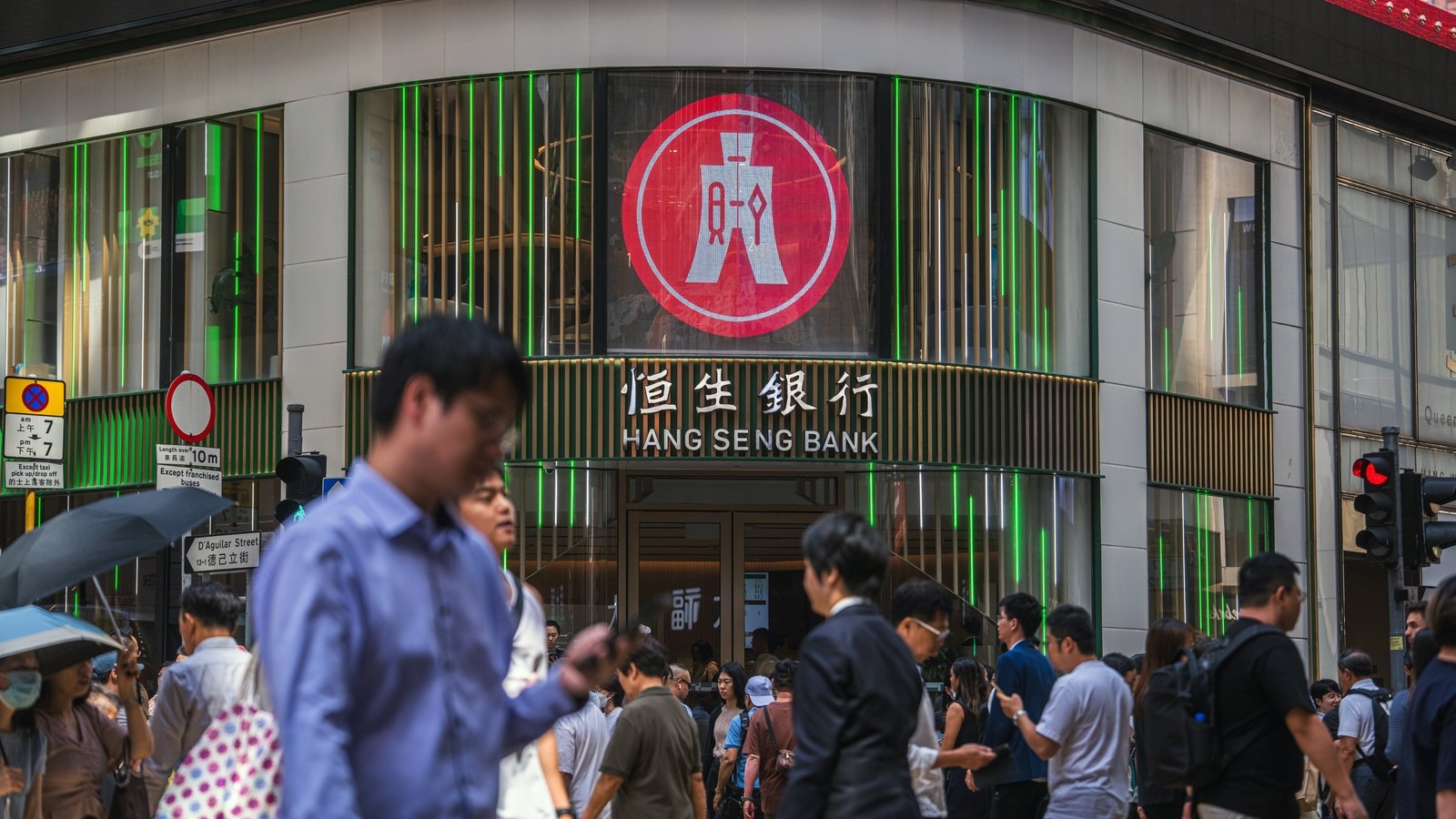
Hang Seng Bank

Search documents
HSBC stock slumps after $14 billion bet on Hong Kong — at a hefty premium
MarketWatch· 2025-10-09 07:40
HSBC Holdings on Thursday said it was offering a 30% premium to buy just over the one-third of Hang Seng Bank it didn't already own. ...


HSBC proposes privatisation of Hang Seng Bank
RTE.ie· 2025-10-09 07:28
Core Viewpoint - HSBC plans to privatize Hang Seng Bank in a deal valued at HK$106.1 billion ($13.63 billion) due to concerns over its performance and exposure to struggling property markets in Hong Kong and mainland China [1] Group 1: Transaction Details - HSBC will offer HK$155 per share for the 36.5% of shares it does not already own, valuing Hang Seng Bank at $37 billion [1] - The offer represents a 30.3% premium over Hang Seng Bank's closing price of HK$119 prior to the announcement [2] - This transaction is the largest banking acquisition in Hong Kong in over a decade, surpassing OCBC's acquisition of Wing Hang Bank in 2014 for $5.3 billion [3] Group 2: Strategic Implications - HSBC's CEO stated that this move is a medium to long-term investment in a leading local bank with strong financial standing and good liquidity ratios [4] - The privatization reflects HSBC's confidence in Hong Kong's economy and its future as a global financial center [6] - HSBC plans to pause share buybacks for about three quarters to accumulate the necessary capital for the acquisition [8] Group 3: Market Reactions - Hang Seng Bank shares initially surged to HK$168 before settling at HK$150.3, reflecting a 26.3% increase but still below the offer price [2] - HSBC's stock fell by 6.2% to HK$103.7, contrasting with a minor decline of 0.15% in the benchmark Hang Seng Index [2] Group 4: Financial Health and Risks - Hang Seng Bank has seen rising bad loans, with impaired loans reaching 6.7% of gross loans as of June 2025, up from 2.8% at the end of 2023 [11] - HSBC anticipates a negative impact of about 125 basis points on its common equity tier 1 (CET1) ratio, which was 14.6% at the end of June [13] - The CEO emphasized that the privatization is not a bailout, despite concerns over Hang Seng Bank's loan book [12]
HSBC shares slide 6% from peaks on Hang Seng buyout move
Reuters· 2025-10-09 07:13
Core Viewpoint - HSBC shares experienced a 6% decline in London after the announcement of plans to buy out minority shareholders in its majority-held Hang Seng Bank subsidiary for approximately $13.6 billion [1] Company Summary - HSBC's decision to acquire minority interests in Hang Seng Bank indicates a strategic move to consolidate its ownership and potentially enhance operational efficiency [1] - The deal is valued at around $13.6 billion, reflecting HSBC's commitment to strengthening its position in the Asian market [1] Market Reaction - The announcement led to a notable drop in HSBC's share price, falling 6% from near record levels, suggesting investor concerns regarding the financial implications of the acquisition [1]
HSBC's Hong Kong Shares Dip After $13.6 Billion Take-Private Deal For Hang Seng Bank - IBM (NYSE:IBM), HSBC Holdings (NYSE:HSBC)
Benzinga· 2025-10-09 07:00
HSBC‘s (HKG: 0005) (NYSE:HSBC) (LSE: HSBA) Hong Kong shares dropped over 7% on Thursday, after the European lender announced plans to privatize its majority-owned local unit, Hang Seng Bank (HKG: 0011), in a deal valued at HK$106.1 billion (about $13.63 billion).They were last down to HK$103 per share, as the bank said it would refrain from share buybacks in the coming three quarters in order to restore its capital ratio to its operating range.HSBC Offers HK$155 Per Share Amid Restructuring HSBC, which alre ...
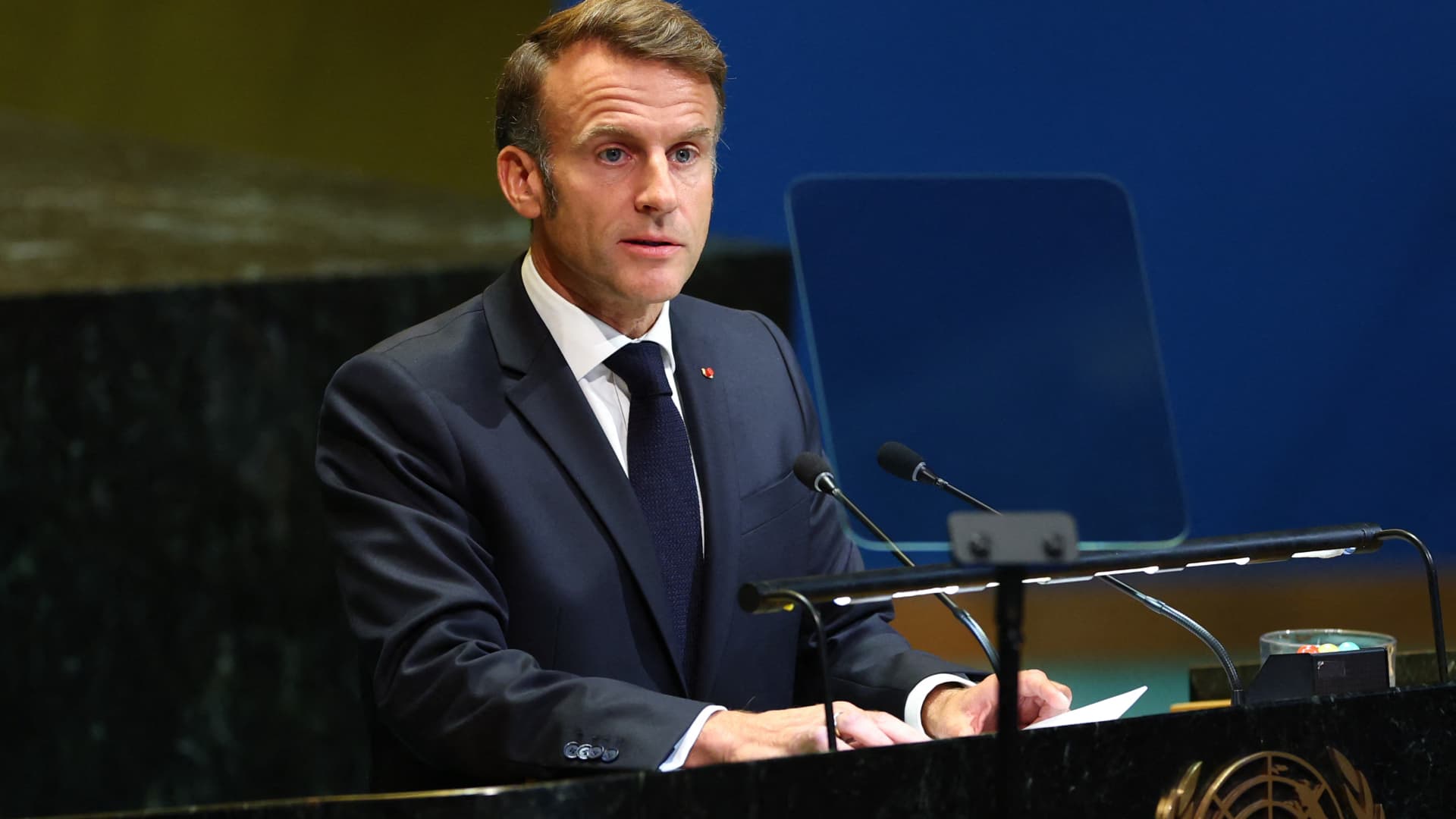
European markets set to open in negative territory as traders assess France news
CNBC· 2025-10-09 05:29
Company Overview - HSBC's shares fell over 6% following a privatization bid for its Hong Kong-based subsidiary, Hang Seng Bank [1] - HSBC holds a 63% stake in Hang Seng and proposed to make it a wholly owned subsidiary, which would lead to its delisting from the Hong Kong Stock Exchange if approved [2] Market Impact - The privatization proposal negatively affected European banks, causing the sector to drop by 1.4% in opening trade [2] - The pan-European Stoxx index also edged lower by 0.15% at the market opening [1]

What is Hang Seng Bank and what does HSBC's proposed privatisation entail?
Reuters· 2025-10-09 03:36
HSBC on Thursday proposed to take Hong Kong-listed Hang Seng Bank private for HK$155 per share, valuing the lender at about HK$290 billion ($37 billion). ...
Stocks Mixed As Traders Assess AI Rally, US Rates And Shutdown
International Business Times· 2025-10-09 03:21
Company and Industry Insights - Technology firms are experiencing significant growth, driven by substantial investments in AI, but concerns are rising regarding whether returns will match these investments, leading to warnings about potential overvaluation [2] - Oracle's recent disclosure highlighted slim margins in its AI cloud business, which includes server rentals using Nvidia chips, raising questions about the sustainability of the AI investment boom [3] - Tesla's stock dropped 4.5% following the reveal of its lower-priced Model 3/Y, which underwhelmed analysts, although third-quarter earnings are still expected to be strong [3] - Hang Seng Bank's shares surged over 26% on reports that HSBC plans to take the bank private, valuing the deal at approximately $37 billion, while HSBC's shares fell more than 6% [8]

Israel, Hamas Reach Hostage Deal in Gaza Breakthrough | Bloomberg: The Asia Trade, 10/09/25
Bloomberg Television· 2025-10-09 03:03
WE HAVE TARGETED FUNDERS. THIS IS THE ASIA TRADE. I'M PAUL IN SYDNEY. I'M AVERILL IN SINGAPORE. PAUL: PRESIDENT TRUMP SAID ISRAEL AND HAMAS SIGNED OFF ON THE FIRST PHASE OF A PEACE PLAN IN. A DUTY SOCIAL POST, PRESIDENT TRUMP SAID ALL HOSTAGES WILL BE RELEASED SOON AND ISRAEL WILL WITHDRAW ITS TROOPS AN AGREED UPON LINE. LET'S GET MORE ON THIS STORY WITH MIKE. THIS JUST DROPPED A FEW MOMENTS AGO. WHAT DO WE KNOW? MIKE: IT'S BELIEVED TO BE 20 LIVING ISRAELI HOSTAGES, ISRAEL IS DRAW TO RELEASE 2,000 PALESTINI ...

Hang Seng Bank shares jump 30% on parent HSBC's privatization bid, valuing it at over $37 billion
CNBC· 2025-10-09 02:00
Core Viewpoint - HSBC plans to take Hang Seng Bank private, valuing it at over HK$290 billion (over $37 billion), which has led to a significant increase in Hang Seng Bank's shares by 29.5% [1][2] Group 1: Privatization Proposal - HSBC has requested Hang Seng Bank's board to propose a privatization plan to shareholders under Hong Kong's Companies Ordinance [1] - The offer includes a cancellation of shares at HK$155 each, approximately 33% above the average share price of HK$116.5 over the past 30 days [2] Group 2: Strategic Intent - HSBC's Group Chief Executive, Georges Elhedery, emphasized the opportunity to grow both Hang Seng and HSBC while preserving Hang Seng's brand and investing in new strengths [3] - The deal reflects HSBC's confidence in Hong Kong as a global financial center and its role as a connector between international markets and mainland China [3] Group 3: Financial Implications - The deal values HSBC's stake in Hang Seng Bank at HK$106 billion, as HSBC owns around 63% of the bank [2] - The offer allows for adjustments based on any dividends declared after the announcement date, excluding Hang Seng's third interim dividend for 2025 [4] Group 4: Governance Perspective - Hang Seng Bank is a key regional unit for HSBC, with a significant presence in the Hong Kong banking sector [5] - Analysts view the move as positive for governance, addressing issues related to parent-subsidiary double listings [5]
HSBC proposes to privatise Hang Seng Bank for $37.36 billion
Reuters· 2025-10-09 00:18
Core Viewpoint - HSBC has initiated a request for the board of Hang Seng Bank to present a privatisation proposal to shareholders, utilizing a scheme of arrangement under Hong Kong's Companies Ordinance [1] Group 1 - HSBC is seeking to privatize Hang Seng Bank, indicating a strategic move to consolidate its operations and potentially enhance shareholder value [1] - The proposal will be submitted to shareholders, suggesting that the decision will ultimately rest with them [1] - The process will follow the legal framework established by Hong Kong's Companies Ordinance, ensuring compliance with local regulations [1]