Rivian Automotive

Search documents
Rivian Automotive(RIVN) - 2025 Q4 - Earnings Call Transcript
2026-02-12 23:02
Financial Data and Key Metrics Changes - In 2025, the company achieved nearly $5,500 improvement in average sales price year-over-year due to the introduction of second generation R1 quad models and increased base prices for the 2026 model year [11] - The automotive cost of goods sold per unit improved by approximately $9,500 year-over-year due to material cost reductions and operational efficiencies [11] - The company reported over $1.3 billion improvement in full year gross profit, marking 2025 as the first full year of positive gross profit [12] - Consolidated revenues for Q4 were approximately $1.3 billion, with a gross profit margin of 9% [14] - Adjusted EBITDA losses for Q4 were -$465 million, a $137 million improvement from Q3 2025 [14] Business Line Data and Key Metrics Changes - In Q4, the company produced 10,974 vehicles and delivered 9,745 vehicles, generating $839 million in automotive revenue [14] - Automotive gross profit for Q4 was -$59 million, a $71 million improvement from Q3 2025 due to a higher mix of commercial vans [15] - The software and services segment reported $447 million in revenue and $179 million in gross profit, with 60% of this revenue attributable to the joint venture with Volkswagen Group [15] Market Data and Key Metrics Changes - The R1S was the best-selling premium electric vehicle priced above $70,000 in several states, including California and New York [5] - The company anticipates delivering between 62,000-67,000 total vehicles across R1, R2, and commercial vans in 2026, with quarterly deliveries expected to be approximately 9,000-11,000 in the first half of 2026 [16] Company Strategy and Development Direction - The company aims to scale its business with the launch of R2, targeting the mass market and driving automotive segment growth and profitability [11] - The R2 vehicle is designed to provide a compelling alternative in the mid-size SUV market, priced around or below $50,000 [6] - The company is focused on developing its autonomy platform and plans to launch new features, including point-to-point navigation, by the end of the year [81] Management Comments on Operating Environment and Future Outlook - Management believes 2026 will be a transformational year for automotive gross profit, with expectations of positive gross profit for R2 and overall automotive segment by year-end [22] - The company is confident in the demand for R2, citing a lack of high-quality choices in the mid-size SUV segment [27] - Management acknowledges potential challenges in ramping production but is focused on coordinating with the supply chain to meet demand [46] Other Important Information - The company ended 2025 with approximately $6.1 billion in cash and equivalents, expecting an additional $2 billion from the Volkswagen joint venture in 2026 [15][40] - Capital expenditures for 2026 are expected to be between $1.95 billion and $2.05 billion, related to R2 construction and infrastructure development [18] Q&A Session Summary Question: What is the expected cadence for vehicle deliveries in 2026? - Management expects first deliveries of R2 to begin in Q2 2026, with a gradual ramp-up in the second half of the year [21] Question: Is there confidence in demand for R2 before the new ADAS platform is available? - Management is confident that the demand for R2 will remain strong despite the absence of the new hardware at launch [28] Question: What is the outlook for the Volkswagen relationship and potential licensing deals? - The Volkswagen relationship is progressing well, with ongoing winter testing and potential for future collaborations with other manufacturers [31] Question: How will the company manage hiring for the second and third shifts? - The hiring process is on track, with sufficient candidates available, and training programs are in place to prepare new hires [74] Question: What are the expectations for working capital flows during the R2 ramp? - Working capital is expected to be an outflow in 2026 due to inventory buildup associated with R2 [83]

Rivian Automotive(RIVN) - 2025 Q4 - Earnings Call Transcript
2026-02-12 23:02
Financial Data and Key Metrics Changes - In 2025, the company achieved nearly $5,500 improvement in average sales price year-over-year due to the introduction of second generation R1 quad models and increased base prices for the 2026 model year [12] - The automotive cost of goods sold per unit improved by approximately $9,500 year-over-year due to material cost reductions and operational efficiencies [12] - The company reported over $1.3 billion improvement in full year gross profit, marking 2025 as the first full year of positive gross profit [13] - For Q4 2025, consolidated revenues were approximately $1.3 billion, with a gross profit of $120 million and a gross profit margin of 9% [15] - Adjusted EBITDA losses for Q4 were -$465 million, a $137 million improvement from Q3 2025 [15] Business Line Data and Key Metrics Changes - In Q4, the company produced 10,974 vehicles and delivered 9,745 vehicles, generating $839 million in automotive revenue [15] - Automotive gross profit for Q4 was -$59 million, a $71 million improvement from Q3 2025 due to a higher mix of commercial vans [16] - The software and services segment reported $447 million in revenue and $179 million in gross profit, with approximately 60% of this revenue attributable to the joint venture with Volkswagen Group [16] Market Data and Key Metrics Changes - The R1S was the best-selling premium electric vehicle priced above $70,000 in several states, including California and New York [5] - The company anticipates that R2 will address the lack of high-quality EV choices in the market, particularly in the mid-size SUV segment priced around or below $50,000 [6][7] Company Strategy and Development Direction - The company aims to scale its business and believes that 2026 will be a transformative year, particularly with the launch of R2 [12][19] - The focus is on developing a mass-market product portfolio and enhancing the customer experience through technology and autonomy [11][19] - The company is committed to building a category-defining brand and believes the future of the automotive industry will be fully electric, autonomous, and AI-defined [10][19] Management's Comments on Operating Environment and Future Outlook - Management expressed confidence in the demand for R2 and the overall market's need for more choices in the mid-size SUV segment [28] - The company expects to face challenges in automotive gross profit during the second and third quarters of 2026 due to the complexity of launching a new vehicle [18] - Management believes that autonomy will be a key long-term differentiator for the business and is focused on scaling operations and enhancing technology [19] Other Important Information - The company ended 2025 with approximately $6.1 billion in cash, cash equivalents, and short-term investments, with an expectation of receiving an additional $2 billion from the Volkswagen Group in 2026 [16][41] - Capital expenditures for 2026 are expected to be between $1.95 billion and $2.05 billion, related to the construction and tooling for R2 and the Georgia plant [19] Q&A Session Summary Question: What is the expected cadence for vehicle deliveries in 2026? - The company expects to deliver between 62,000-67,000 total vehicles across R1, R2, and commercial vans, with approximately 9,000-11,000 deliveries per quarter in the first half of 2026 [17][22] Question: Will R2 achieve profitability in 2026? - Management expects 2026 to be a transformational year for automotive gross profit, with both R2 and overall automotive gross profit expected to be positive by the end of the year [23] Question: What is the demand outlook for R2? - Management is confident in the demand profile for R2, citing a significant backlog and the need for alternatives in the mid-size SUV market [28] Question: How is the partnership with Volkswagen progressing? - The relationship with Volkswagen is strong, with ongoing winter testing and plans for multiple product launches in 2027 [37][39] Question: What are the expectations for software and services revenue growth? - The company anticipates about 60% year-over-year growth in its software and services business, which will significantly contribute to gross profit [40] Question: How will the company manage production ramp-up for R2? - The company is focused on ensuring a smooth production launch and ramp, coordinating closely with its supply base to manage potential bottlenecks [46][48]
Rivian Automotive(RIVN) - 2025 Q4 - Earnings Call Transcript
2026-02-12 23:00
Financial Data and Key Metrics Changes - In 2025, the company achieved nearly $5,500 improvement in average sales price year-over-year due to the introduction of second-generation R1 quad models and increased base prices for the 2026 model year [10] - The automotive cost of goods sold per unit improved by approximately $9,500 year-over-year due to material cost reductions and operational efficiencies [10] - The company reported over $1.3 billion improvement in full-year gross profit, marking 2025 as the first full year of positive gross profit [11] Business Line Data and Key Metrics Changes - In Q4 2025, the automotive segment produced 10,974 vehicles and delivered 9,745 vehicles, generating $839 million in automotive revenue [12] - Automotive gross profit for Q4 was -$59 million, a $71 million improvement from Q3 2025, attributed to a higher mix of commercial vans [13] - The software and services segment reported $447 million in revenue and $179 million in gross profit, with 60% of this revenue coming from the joint venture with Volkswagen Group [13] Market Data and Key Metrics Changes - The R1S was the best-selling premium electric vehicle priced above $70,000 in several states, including California and New York [4] - The company anticipates delivering between 62,000-67,000 total vehicles across R1, R2, and commercial vans in 2026, with a quarterly delivery expectation of approximately 9,000-11,000 in the first half of the year [14] Company Strategy and Development Direction - The company aims to scale its business with the launch of R2, targeting the mass market and expecting it to drive significant growth and profitability [10][14] - The focus on autonomy and AI is seen as a long-term differentiator, with plans to enhance the software and services segment significantly [15] - The joint venture with Volkswagen Group is expected to expand, with ongoing winter testing and potential for additional product offerings [33][34] Management's Comments on Operating Environment and Future Outlook - Management expressed confidence that 2026 will be a transformational year, with expectations for improved automotive gross profit and a focus on ramping production and deliveries of R2 [15] - The company is aware of the challenges posed by new vehicle launches but believes that the demand for R2 will be strong despite potential initial complexities [15] - Management highlighted the importance of operational efficiencies and the need to coordinate with the supply chain to meet production goals [41] Other Important Information - The company ended 2025 with approximately $6.1 billion in cash and equivalents, with an additional $2 billion expected from the joint venture with Volkswagen Group in 2026 [13][36] - Capital expenditures for 2026 are projected to be between $1.95 billion and $2.05 billion, focusing on R2 production and infrastructure development [15] Q&A Session Summary Question: Clarification on vehicle delivery cadence for 2026 - Management confirmed that the first deliveries of R2 are expected in Q2 2026, with initial numbers being small as production ramps up [18] Question: Expectations for R2 profitability - Management anticipates that both R2 and overall automotive gross profit will be positive as they exit 2026 [20] Question: Demand for R2 and impact of ADAS platform - Management expressed confidence in demand for R2, noting that many customers are eager for a mid-size SUV, and the lack of new hardware will not significantly deter deliveries [25] Question: Progress on the Volkswagen relationship - The Volkswagen relationship is progressing well, with ongoing winter testing and plans for multiple product launches in 2027 [33] Question: Insights on automotive COGS reduction - The reduction in COGS per unit was driven by a higher mix of commercial vans and operational efficiencies, with expectations for further reductions as R2 production ramps up [58] Question: Hiring for production shifts - The hiring process for additional shifts is proceeding as planned, with a strong candidate pool and training programs in place [66]
What xAI is bringing to the table in SpaceX merger, Rivian stock revs up on Q4 earnings
Youtube· 2026-02-12 22:45
分组1 - Tech stocks are facing pressure, particularly in the software sector, but some analysts believe the fears are exaggerated [1][24] - Rivian's shares surged following better-than-expected fourth-quarter results, with delivery guidance for 2026 set between 62,000 to 67,000 vehicles, surpassing street expectations [2][20] - SpaceX is preparing for a highly anticipated IPO, with Elon Musk indicating a potential July debut, following a merger with AI startup XAI, raising questions about its valuation and market positioning [3][6][9] 分组2 - The merger between SpaceX and XAI is seen as a strategic move to enhance their combined value, with potential for significant revenue generation from both aerospace and AI sectors [6][11] - Rivian's CEO highlighted the complexities of ramping up supply chains as a risk factor, particularly concerning the new R2 vehicle, which is expected to drive profitability [22] - The software sector is experiencing volatility due to AI disruption fears, but analysts argue that established companies are already integrating AI into their products, suggesting that the market reaction may be overblown [24][27] 分组3 - Pinterest shares fell after missing fourth-quarter earnings estimates and providing disappointing guidance, coinciding with recent layoffs as the company pivots towards AI products [38] - Airbnb's stock rose due to better-than-expected revenue and guidance, driven by strong travel demand, despite adjusted EPS falling short of estimates [39] - Arista Networks reported a nearly 29% year-over-year revenue increase to approximately $2.49 billion, with strong earnings and positive guidance for the first quarter, indicating ongoing momentum [40]

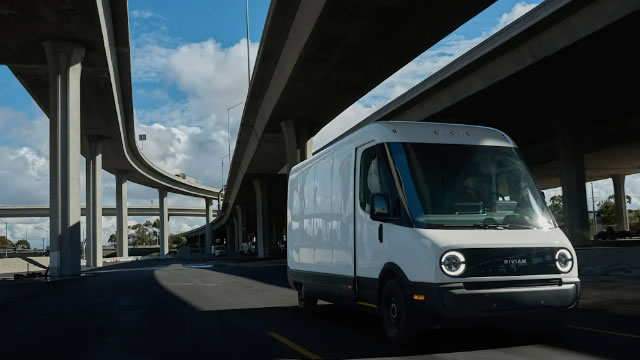
Rivian CEO on earnings, guidance: R2 deliveries expected to begin in Q2
Youtube· 2026-02-12 22:33
Core Insights - Rivian's shares experienced a significant increase in after-hours trading following the release of its financial results, indicating positive market sentiment towards the company's performance and future prospects [1] Financial Performance - In Q4, Rivian reported a positive gross margin on a cash basis, achieving approximately $2,000 profit per vehicle, although the company continues to incur losses, expecting to lose between 1.8% and 2.1% this year [2][1] - The difference between cash basis profit and GAAP profit is primarily due to depreciation, which stands at $11,000 per unit [2] Production and Delivery Outlook - Rivian plans to deliver between 62,000 to 67,000 vehicles in the current year, with the R2 program expected to contribute significantly to these figures [3] - Production and delivery of customer vehicles for the R2 program is set to begin in Q2 of this year, with a ramp-up throughout the year [4] Product Pricing and Launch - The starting price for the R2 vehicle is set at $45,000, although the initial launch configuration will be priced higher, with the $45,000 option becoming available shortly thereafter [5][7] - A portfolio of vehicles will be unveiled on March 12, showcasing various combinations and configurations [6]
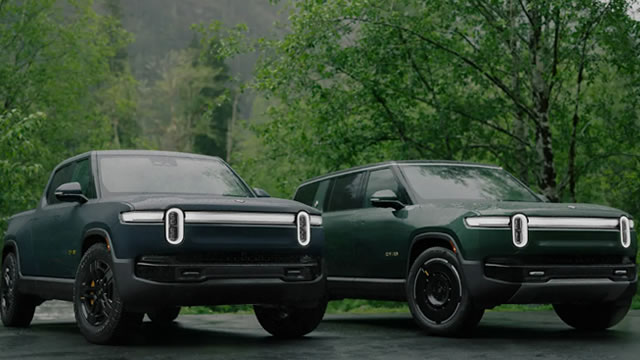
Rivian's stock jumps as investors cheer big growth potential this year
MarketWatch· 2026-02-12 22:24
Core Insights - Rivian anticipates delivering up to 67,000 electric vehicles (EVs) in the current year, indicating a significant ramp-up in production capacity [1] - The company plans to invest over $2.1 billion in capital expenditures to support its expansion roadmap, highlighting its commitment to growth and development in the EV market [1] Company Summary - Rivian's delivery target of 67,000 EVs represents a strategic goal to enhance its market presence and meet increasing consumer demand for electric vehicles [1] - The planned capital expenditures of more than $2.1 billion will likely be allocated towards scaling production facilities, enhancing technology, and expanding product offerings [1]
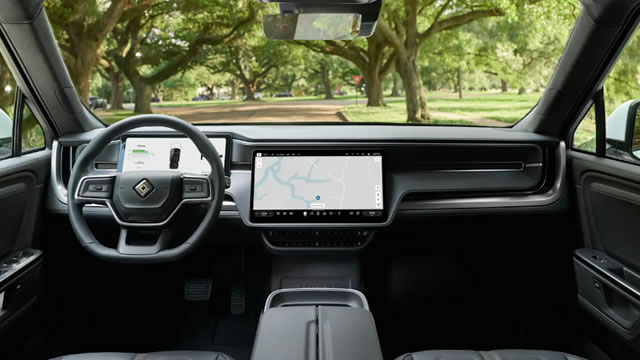
Rivian Automotive Widens Loss as Automotive Revenue Slides
WSJ· 2026-02-12 22:02
Core Viewpoint - The company's automotive revenue experienced a significant decline of 45%, totaling $839 million in the fourth quarter [1] Group 1: Financial Performance - Automotive revenue, which constitutes the majority of the company's total revenue, fell to $839 million [1]
Rivian Automotive(RIVN) - 2025 Q4 - Annual Report
2026-02-12 22:01
Manufacturing and Production Capacity - Rivian's manufacturing facility in Normal, Illinois has an annual production capacity of up to 215,000 vehicles, with a planned split of 155,000 R2 vehicles, 85,000 R1 vehicles, and 65,000 Rivian Commercial Vans[41]. - The company plans to construct a second manufacturing facility in Georgia with an anticipated capacity of 400,000 vehicles annually, starting production in 2028[42]. - The Normal Factory is currently operating below full production capacity, with no certainty on when production capacity will expand[118]. - The company is experiencing significant delays in vehicle manufacturing and delivery, which could adversely affect its business and financial condition[117]. Financial Performance and Projections - The company incurred net losses of $5,432 million, $4,746 million, and $3,626 million for the years ended December 31, 2023, 2024, and 2025, respectively, and does not expect to achieve profitability in the foreseeable future[91]. - Significant capital will be required to develop and grow the business, including costs related to production, research and development, and expanding sales and service operations[95]. - The company anticipates needing additional equity and/or debt financing in both the near- and long-term to support its business plan, which may be affected by market conditions and investor confidence[96]. - The company may not be able to accurately estimate the supply and demand for its vehicles, leading to inefficiencies and potential revenue loss[154]. Market and Competitive Landscape - The company faces intense competition in the EV market from both established automotive companies and new entrants, which may affect its market share and pricing strategies[101]. - Future growth is dependent on the adoption of EVs by consumers and commercial fleets, with the need for effective marketing and education on the benefits of EVs[105]. - The automotive industry is experiencing volatility in demand, influenced by factors such as economic conditions, interest rates, and government incentives, which could impact sales and revenue[100]. - Legislative changes and the rollback of government incentives for EVs could negatively impact customer demand and the company's growth prospects[110]. Supply Chain and Raw Materials - Rivian's supply chain faces challenges, particularly with battery raw materials like lithium and nickel, which are critical for vehicle production[50]. - There are potential challenges in securing necessary raw materials and components, which could impact production timelines and costs[118]. - The company has experienced significant cost increases and disruptions in the supply of raw materials, components, and equipment, which could adversely affect its business and financial condition[140]. - The company is exposed to fluctuations in prices of raw materials and components, which could increase operating costs and reduce margins if not managed effectively[153]. Technology and Innovation - Rivian's Autonomy+ feature significantly expanded its assistive hands-free driving capabilities from fewer than 150,000 miles to over 3.5 million miles of roads in North America[37]. - The company plans to introduce new EV models and technologies, including financing and software solutions, to meet evolving consumer expectations and market demand[111]. - The company is dependent on a joint venture for software development, which may introduce vulnerabilities if updates are not managed effectively[175][177]. Customer and Market Engagement - The company aims to generate a recurring revenue stream through value-added software and services, including vehicle repair, maintenance, and software subscriptions[37]. - Rivian's ability to offer attractive financing and leasing options is critical for vehicle demand, with potential financial risks if these options are limited[162]. - Future success depends on increasing sales of commercial vehicles and securing agreements with businesses, which involves complex sales cycles and competition[173]. Regulatory and Compliance Issues - Rivian's vehicles, including R1T, R1S, EDV, and Rivian Commercial Van, are fully compliant with all applicable NHTSA Safety Standards without the need for exemptions[60]. - The company has received EPA Certificates of Conformity and California Executive Orders for applicable model years for its vehicles[61]. - The company is subject to various international risks, including regulatory changes, supply chain disruptions, and geopolitical tensions[217]. Workforce and Talent Management - Rivian's workforce comprised 15,232 employees across North America and Europe as of December 31, 2025[79]. - The company has increased compensation to attract talent in the Normal, IL area, indicating a competitive hiring environment[220]. - The ability to provide competitive compensation and benefits is crucial for attracting and retaining employees, especially in light of stock price fluctuations[221]. Environmental and Social Responsibility - The company aims to match 100% of the energy consumed by vehicles with clean energy for the first 10,000 miles of driving[84]. - Rivian is exploring options to embed circular principles into its business to reduce waste and decarbonize operations[77]. - Rivian's philanthropic efforts through the Rivian Foundation aim to protect nature and advance a better energy future[82]. Risks and Challenges - The company faces significant risks related to product liability claims, which could adversely affect its financial condition and cash flows[211]. - A significant portion of the company's automotive revenues comes from Amazon Logistics, which represents 12.7% of its voting power as of December 31, 2025, and any changes in this relationship could materially affect the company's financial condition[156]. - The company is highly dependent on the services and reputation of its Founder and CEO, Robert J. Scaringe, and any adverse events affecting him could significantly disadvantage the company[160].
Rivian Q4 Highligths: Double Beat, R2 On Track For Q2, Delivery Guidance 62,000 To 67,000
Benzinga· 2026-02-12 21:53
Core Insights - Rivian Automotive reported fourth-quarter revenue of $1.29 billion, a decrease from $1.73 billion in the same quarter last year, but above the consensus estimate of $1.27 billion [2][3] - The company experienced a significant decline in automotive revenue, which totaled $839 million, down 45% year-over-year, attributed to lower vehicle deliveries and average sales price [3] - Rivian's software and services revenue increased by 109% year-over-year, reaching $447 million in the fourth quarter [3] - The company reported a loss of 54 cents per share, which was better than the expected loss of 68 cents per share [3] - Rivian's consolidated gross profit for the fourth quarter was $120 million, with a full-year gross profit of $144 million, an improvement of $1.3 billion compared to fiscal 2024 [4] Production and Deliveries - Rivian produced 10,974 vehicles and delivered 9,745 vehicles in the fourth quarter, with total deliveries for the fiscal year reaching 42,247 vehicles [4] - The full-year revenue for Rivian was $5.39 billion, reflecting an 8% increase year-over-year [4] Future Outlook - The company plans to deliver the R2 vehicle to customers in the second quarter of 2026, with expectations of strong early reviews for pre-production builds [6] - Rivian provided guidance for 2026, projecting deliveries of 62,000 to 67,000 vehicles, a significant increase from 2025 [6] - Adjusted EBITDA is expected to range from a loss of $2.1 billion to a loss of $1.80 billion for fiscal 2026, with capital expenditures estimated between $1.95 billion and $2.05 billion [7] Stock Performance - Rivian's stock rose by 16.6% to $16.30 in after-hours trading, within a 52-week trading range of $10.36 to $22.69 [8]
Rivian sees 2026 delivery jump driven by rollout of smaller, more affordable R2 SUVs
Reuters· 2026-02-12 21:09
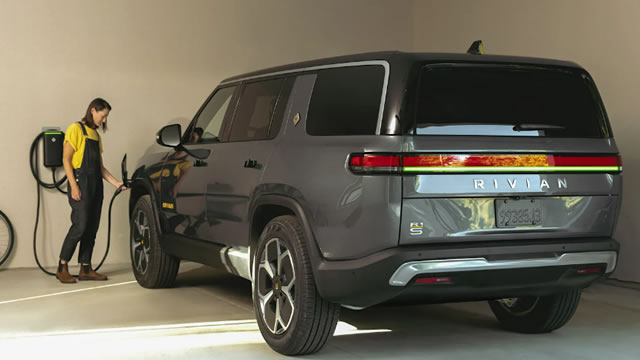
Core Viewpoint - Rivian Automotive forecasts a 53% increase in deliveries by 2026, aligning with Wall Street expectations, primarily due to the launch of its more affordable R2 SUVs [1] Company Summary - Rivian is set to roll out its R2 SUVs, which are expected to drive significant growth in deliveries [1] Industry Summary - The electric vehicle market is anticipated to see increased competition and growth, particularly with the introduction of more affordable models like Rivian's R2 SUVs [1]