
Berkshire Hathaway

Search documents
Warren Buffett Said Anyone Working 40 Hours a Week Deserves a 'Decent Living' —But Raising Minimum Wage Isn't the Answer. Here's What He Proposes
Yahoo Finance· 2025-12-19 17:01
Core Viewpoint - The discussion centers around the need for a shift in how income is structured in the U.S., emphasizing the importance of a minimum income rather than solely a minimum wage, as proposed by Warren Buffett [1][2]. Group 1: Income Structure - Buffett advocates for an expanded earned income tax credit that supplements lower wages, allowing workers earning $7.50 or $9 an hour to effectively take home the equivalent of $15 [3]. - The focus should be on ensuring that anyone working full-time can achieve a decent living through a combination of wages and government support, rather than just increasing hourly pay [1][2]. Group 2: Economic Implications - Buffett warns that raising minimum wages could lead to job losses in industries with tight margins, suggesting that maintaining employer flexibility is crucial [2]. - He estimates that a stronger earned income tax credit system would cost about $60 billion annually, which is feasible given the U.S. economy's size, with a GDP of approximately $30.5 trillion [5]. Group 3: Policy Recommendations - The proposed tax credit could incentivize skill building, enhancing workers' earning potential without negatively impacting job availability [4]. - Buffett emphasizes that the goal is to improve conditions for existing jobs rather than to reduce the number of jobs available [2].
Buffett Leaving Berkshire Creates a ‘Vacuum Risk' and a $381 Billion Question
247Wallst· 2025-12-19 13:18
Core Viewpoint - The discussion begins with an acknowledgment of a sentiment that seems almost unnatural for long-time observers of Berkshire [1] Group 1 - The company is recognized for its long-standing reputation and the unique perspectives that come with it [1]

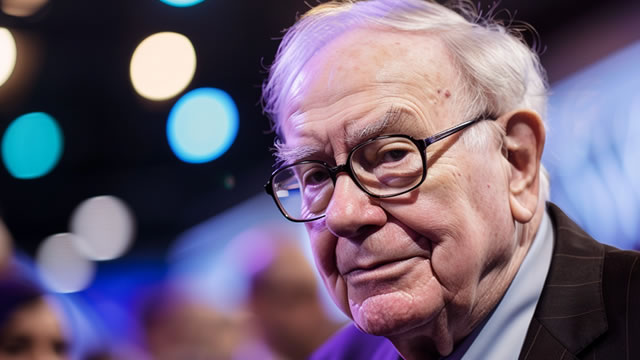
Is Warren Buffett's Last Purchase at Berkshire Hathaway a Top Stock Pick for 2026?
The Motley Fool· 2025-12-19 10:30
Core Insights - Berkshire Hathaway, led by Warren Buffett, has taken a significant stake in Alphabet during the second quarter, marking a notable investment decision as Buffett has previously expressed regret for not investing in Alphabet sooner [1][2] - Alphabet's stock has experienced substantial growth since Berkshire's investment, raising questions about its future value and whether it remains a good investment for 2026 [2][5] Investment Details - Berkshire's investment in Alphabet was disclosed through Form 13F filings, indicating that shares were purchased between July 1 and September 30, with potential gains depending on the timing of the purchases [4] - Since July 1, Alphabet's stock has increased by approximately 75%, and even if purchased at the end of September, it has still risen nearly 30%, showcasing strong short-term performance [5] Valuation Analysis - At the time of Berkshire's potential purchase, Alphabet was trading at over 16 times forward earnings, but it has since risen to 29 times forward earnings, indicating a shift from a discount to a premium compared to the S&P 500, which trades at 22 times forward earnings [7][9] - The significant increase in valuation raises questions about the current attractiveness of Alphabet as an investment [9] Growth Drivers - Alphabet's recent stock surge can be attributed to positive developments in a court case regarding its Google Search engine, where it faced less severe concessions than anticipated [9] - The company has also established itself as a leader in the generative AI sector, prompting competitors like OpenAI to express concern over Alphabet's advancements [10] Financial Performance - Alphabet's core businesses, including advertising and cloud computing, have shown strong growth, with Google Search revenue increasing by 15% year-over-year and Google Cloud growing by 34% in the third quarter, contributing to an overall growth of 16% for the quarter [12] - Diluted earnings per share (EPS) rose by 35%, indicating robust financial health and potential for continued success [12] Future Outlook - Given Alphabet's strong position and growth trajectory, it is suggested that investors may consider following Buffett's lead in investing in Alphabet, although returns may differ due to the timing of entry into the stock [13]

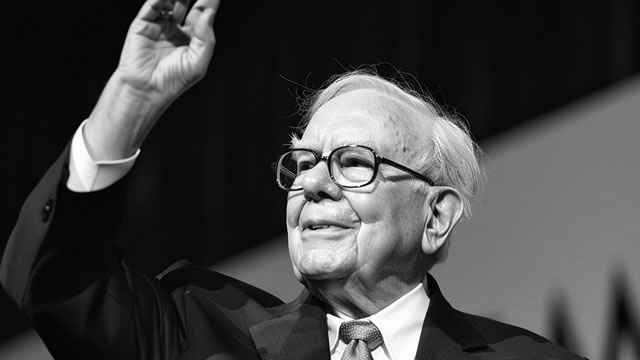
The future of Berkshire Hathaway's stock without Warren Buffett, plus the day's trading takeaways
Youtube· 2025-12-18 22:50
Group 1: Berkshire Hathaway - Berkshire Hathaway is viewed as a long-term investment, but concerns arise regarding its future without Warren Buffett leading the company [3][11] - The bull case highlights Berkshire's diversified portfolio, which includes both cyclical and counter-cyclical businesses, providing a lower-risk alternative to the broader market [5][6] - Valuation remains reasonable, with a price-to-earnings ratio aligning closely with the overall market, and a book value around 1.5 times, slightly above historical averages [7][8] - The leadership transition raises questions about the potential loss of the "Buffett premium," which has contributed to the company's performance [11][12] - Future returns are expected to be more modest, with a focus on discipline in capital allocation and potential for steady, market-like returns [14][15] Group 2: Salesforce - Salesforce is one of the worst performers in the Dow Jones Industrial Average, with shares down over 22% in 2025 due to concerns about AI competition and activist investor pressure [36] - The company struggles with monetizing AI, and analysts suggest that traditional software vendors may not be able to effectively capitalize on AI advancements [37][40] - Salesforce's recent acquisition of Informatica is viewed as lacking strategic value, primarily serving to buy growth rather than enhance core capabilities [44][46] - The outlook for Salesforce's growth is uncertain, with potential declines in revenue growth rates from low double digits to mid-single digits [48]

3 Top Dividend Stocks to Buy for 2026
Yahoo Finance· 2025-12-18 21:15
Core Viewpoint - Investors are encouraged to consider adding dividend stocks to their portfolios for a more consistent income stream, which can be more predictable than pure appreciation investments. The focus should be on companies with solid dividend yields, strong track records, and sufficient earnings or free cash flow to cover and increase dividends [1]. Group 1: Realty Income - Realty Income offers a trailing-12-month dividend yield of approximately 5.62%, making it one of the top dividend-paying companies [3][5]. - The company operates as a triple-net lease REIT, leasing properties to tenants responsible for maintenance, taxes, and insurance, which allows for long-term leases and favorable rates [4]. - Realty Income has a history of paying and increasing dividends for over 30 years, with a compound annual growth rate of 4.2% for its dividends [5][6]. Group 2: Sirius XM - Sirius XM Holdings provides an annual yield of about 5.02%, although its stock performance has not been strong in terms of appreciation [7]. - The company has faced challenges in stabilizing its subscriber base, with a year-over-year decline of about 1% in subscribers at the end of the third quarter [9]. - Warren Buffett's Berkshire Hathaway has acquired a significant stake in Sirius, indicating potential long-term value despite current competition from platforms like Spotify [9].


Can Greg Abel Sustain Berkshire's Legacy After Buffett Steps Down?
ZACKS· 2025-12-18 16:46
Group 1 - Berkshire Hathaway is entering a transitional year as Warren Buffett steps down as CEO, with Greg Abel set to take over the role on January 1, 2026, while Buffett will remain on the board [1][8] - Greg Abel has been preparing for the CEO role for several years, overseeing non-insurance operations and serving as CEO of Berkshire Hathaway Energy since January 2018 [1][8] - The company's investment strategy is based on a diversified portfolio that generates resilient cash flows, supported by a strong insurance float from GEICO and Berkshire Hathaway Reinsurance, which facilitates long-term compounding [2] Group 2 - Under Warren Buffett's leadership, Berkshire Hathaway has maintained a disciplined, value-oriented investment philosophy focused on acquiring undervalued assets with long-term potential, creating significant value for shareholders over nearly six decades [3][4] - The company's shares have gained 11.3% year to date, outperforming the industry [7] - Berkshire Hathaway's current price-to-book value ratio is 1.55, slightly above the industry average of 1.52, indicating an expensive valuation [9] Group 3 - The Zacks Consensus Estimate for Berkshire Hathaway's fourth-quarter 2025 EPS is 4.89, with no movement in estimates over the past seven days, while the 2025 and 2026 EPS estimates indicate a year-over-year decline [10][11] - The consensus estimates for 2025 and 2026 revenues suggest year-over-year increases, contrasting with the EPS estimates [11]
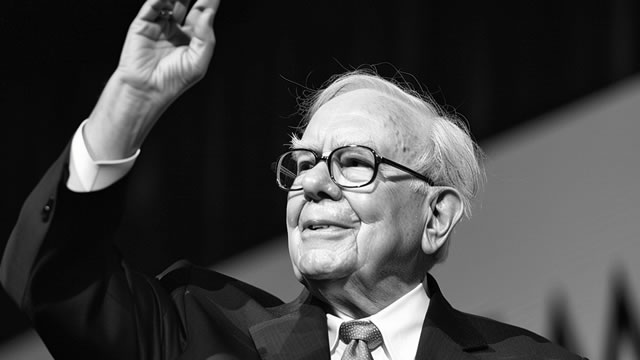
Howard Hughes Holdings (NYSE:HHH) M&A Announcement Transcript
2025-12-18 15:52
Summary of Howard Hughes Holdings (NYSE: HHH) M&A Announcement Company Overview - **Company Involved**: Howard Hughes Holdings (HHH) - **Acquisition Target**: Vantage, an insurance company Key Points and Arguments 1. **Acquisition Details**: Howard Hughes is acquiring Vantage for a purchase price of $2.1 billion, which is valued at approximately 1.5 times book value, expected to decrease to 1.4 times by closing [6][11] 2. **Earnings Perspective**: The focus is on book value rather than earnings multiples due to Vantage being in a growth phase, with 70% of pre-tax income derived from investment income [15][16] 3. **Management Alignment**: Pershing Square owns 47% of Howard Hughes, aligning incentives with stock price performance, and a separate committee was formed to manage potential conflicts in the transaction [8][9] 4. **Financing Structure**: Howard Hughes secured $1 billion in bridge equity from Pershing Square without a commitment fee, allowing flexibility in financing options [9][12] 5. **Profitability Expectations**: Vantage is expected to improve profitability over time, with a projected return on equity increasing from 13% to potentially over 20% as the business scales [19][20][64] 6. **Investment Strategy**: The plan includes shifting Vantage's investment portfolio towards common stocks, aiming for a diversified asset allocation that balances liquidity and returns [23][62] 7. **Market Positioning**: The acquisition is seen as a transformative step towards building a diversified holding company akin to Berkshire Hathaway, leveraging Howard Hughes' existing real estate business [66][67] 8. **Regulatory Considerations**: The approach to investing in equities will be gradual, with ongoing discussions with regulators to ensure compliance and build confidence [38][62] 9. **Future Growth Potential**: The diversified nature of Vantage's business lines allows for flexibility in underwriting and pricing, which is expected to enhance profitability [53][55] Additional Important Insights 1. **Risk Management**: The acquisition is viewed as low-risk due to Vantage's diversified portfolio and strong management team, with no significant catastrophic risks anticipated [29][30] 2. **Long-Term Vision**: The focus is on building intrinsic value per share without diluting ownership, contrasting with typical hedge fund strategies that prioritize asset growth [68][69] 3. **Synergies with Real Estate**: While direct customer synergies are limited, Vantage's insurance needs may benefit from Howard Hughes' real estate expertise [49][50] 4. **Operational Governance**: The existing management team at Vantage will continue to run the business, with oversight from Howard Hughes' board, ensuring operational independence while maintaining strategic alignment [76][79] This summary encapsulates the critical aspects of the M&A announcement, highlighting the strategic rationale, financial metrics, and future outlook for Howard Hughes and its acquisition of Vantage.

Howard Hughes Holdings (NYSE:HHH) M&A Announcement Transcript
2025-12-18 14:32
Summary of Howard Hughes Holdings Conference Call Company and Industry Overview - **Company**: Howard Hughes Holdings (NYSE: HHH) - **Acquisition Target**: Vantage Group Holdings - **Industry**: Specialty Insurance and Reinsurance Key Points and Arguments 1. **Acquisition Announcement**: Howard Hughes Holdings announced the acquisition of Vantage Group Holdings for $2.1 billion in cash, representing 1.5 times the estimated book value for 2025 [6][7][48]. 2. **Strategic Vision**: The acquisition is part of a broader strategy to transform Howard Hughes into a diversified holding company, similar to Berkshire Hathaway's model [4][5]. 3. **Vantage's Business Model**: Vantage operates as a specialty insurance and reinsurance platform, with a focus on diversified business lines, reducing exposure to any single market sector [12][15]. 4. **Financial Performance**: Over the last 12 months, Vantage has written approximately $1.2 billion in premiums, with a balanced portfolio of 60% specialty insurance and 40% reinsurance [16][21]. 5. **Growth Potential**: The anticipated growth in Vantage's book value post-acquisition could lower the effective purchase price to 1.4 times book value, making it an attractive investment [7][48]. 6. **Management Team**: Vantage's management team is experienced, with a strong track record in the insurance industry, which is expected to enhance operational performance under Howard Hughes [19][20]. 7. **Regulatory Considerations**: The acquisition will require regulatory approvals from Delaware and Bermuda, as Vantage operates in both jurisdictions [8]. 8. **Investment Strategy**: Howard Hughes plans to manage Vantage's assets without charging management fees, which could save $30-$60 million annually and enhance profitability [24][36]. 9. **Long-term Focus**: The acquisition aligns with Howard Hughes' long-term strategy, emphasizing profitability over rapid growth, contrasting with the typical private equity model [26][27]. 10. **Creditworthiness**: Vantage starts with an A-rated balance sheet, which is expected to improve by becoming part of Howard Hughes, enhancing its credit profile [30][54]. Additional Important Insights 1. **Market Positioning**: Vantage's limited exposure to catastrophe reinsurance (less than 1% of gross written premiums) positions it favorably in the insurance market [19]. 2. **Operational Efficiency**: Vantage's combined ratio is currently around 97%, with expectations for improvement as the company scales and benefits from being part of a holding company [41][42]. 3. **Future Valuation**: The acquisition is expected to create a business that could achieve returns on equity in the high teens or even exceed 20% over time, potentially trading at higher multiples in the market [44][49]. 4. **Cash Flow Generation**: Howard Hughes anticipates generating excess cash from its real estate operations, which can be reinvested into Vantage, further enhancing its growth potential [64][68]. 5. **Management Philosophy**: The focus will be on underwriting profitability and strategic capital allocation, rather than merely chasing growth, which is a common pitfall in the insurance industry [27][28]. This summary encapsulates the key points discussed during the conference call regarding the acquisition of Vantage Group Holdings by Howard Hughes Holdings, highlighting the strategic vision, financial implications, and operational insights that underpin this transformative transaction.
Without Warren Buffett as Its CEO, Is Berkshire Hathaway Stock Still a Good Buy in 2026?
The Motley Fool· 2025-12-18 02:19
Greg Abel is set to take over as CEO of Berkshire Hathaway at the end of the year.The end of the year is fast approaching, and for Berkshire Hathaway (BRK.A +0.93%)(BRK.B +0.85%) shareholders, that means one important thing: Their company will have a new CEO. Warren Buffett, who has been at the helm of Berkshire for decades, is finally retiring. The billionaire investor has enjoyed a remarkably successful career, which will finally draw to a close.Losing its visionary and long-term leader will obviously be ...
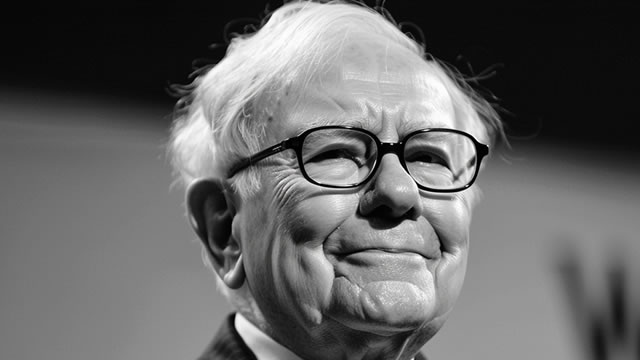
Investors Love Warren Buffett, So Why Aren’t They Listening to His Warning?
Yahoo Finance· 2025-12-17 18:31
Chip Somodevilla / Getty Images Quick Read Warren Buffett has been a net seller of stocks for 12 straight quarters. Berkshire Hathaway (BRK-A, BRK-B) now holds a record $382B in cash. Berkshire reduced its Apple stake from 50% of the portfolio to 20% over the past year. The Buffett Indicator sits at 223%, signaling extreme overvaluation at 77% above trend line. If you’re thinking about retiring or know someone who is, there are three quick questions causing many Americans to realize they can retir ...