Invesco QQQ Trust

Search documents
SCHD Is A Suckers ETF, Buy These Instead
247Wallst· 2025-12-12 19:18
Core Viewpoint - The article compares various ETFs, highlighting their yields, returns, and suitability for different types of investors, particularly focusing on dividend investors and those seeking growth. Group 1: Schwab U.S. Dividend Equity ETF (SCHD) - SCHD offers a high yield of 3.83% and a low expense ratio of 0.06% [1] - Despite its high yield, SCHD has only produced an annualized return of 5.6% over the past three years, which is comparable to some corporate bonds [2] - SCHD is considered suitable for retirees due to its low volatility, but it may not be the best option for maximizing returns [2] Group 2: Invesco QQQ Trust (QQQ) - QQQ has delivered an impressive annualized return of 29.5% over the past three years and an average return of 19.3% over the past decade [3] - The ETF heavily emphasizes large-cap tech stocks, particularly the "Magnificent Seven," with tech making up more than half of its assets [4] - QQQ has a lower SEC yield of 0.44% and a higher expense ratio of 0.20% compared to SCHD, but it has historically provided better returns [5] Group 3: VanEck Semiconductor ETF (SMH) - SMH has a lower SEC yield of 0.28% and a higher expense ratio of 0.35% [6] - The ETF focuses on semiconductor stocks benefiting from the AI boom, with Nvidia making up 17% of its total assets [6] - SMH has achieved an annualized return of 48.9% over the past three years and 30.4% over the past decade, significantly outperforming SCHD [7] Group 4: Vanguard High Dividend Yield Index Fund ETF (VYM) - VYM offers a lower yield of 2.39% but has an annualized return of 12.0% over the past three years and 11.2% over the past decade [8] - The ETF is well-diversified with over 550 stocks, and its top 10 holdings account for only 28% of total assets [9] - VYM is considered a better choice for growth compared to SCHD, especially for investors not relying on immediate dividends [10]

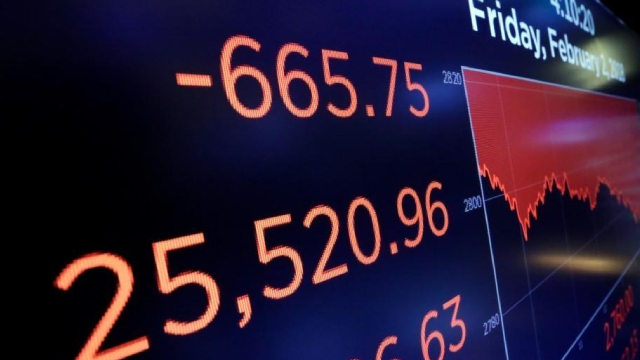
QQQ vs ONEQ: Is There Any Real Difference Between These ETFs?
Yahoo Finance· 2025-12-12 16:21
Core Viewpoint - The article discusses investment opportunities in technology-focused exchange-traded funds (ETFs), particularly highlighting the Invesco QQQ Trust and the Fidelity Nasdaq Composite Index ETF as popular options for investors looking to capitalize on the tech sector and the AI boom. Group 1: Invesco QQQ Trust (QQQ) - The Invesco QQQ Trust tracks the Nasdaq 100, which includes the 100 largest non-financial firms on the Nasdaq exchange, providing significant exposure to mega-cap tech companies [3] - The QQQ has a low total expense ratio of 0.2%, making it a cost-effective option for investors seeking growth [3] - Over the past decade, QQQ has gained 453%, significantly outperforming the S&P 500, which increased by 238% during the same period [4][6] Group 2: Fidelity Nasdaq Composite Index ETF (ONEQ) - The Fidelity Nasdaq Composite Index ETF holds over 1,000 stocks, offering broader market exposure compared to QQQ, which only includes 100 stocks [6] - ONEQ has returned 370% over the past 10 years, showcasing strong performance, although it lags behind QQQ [6] - Both QQQ and ONEQ experienced a 15.6% increase over the past year, despite their differing underlying index breadth [6] Group 3: Market Performance and Risks - The Nasdaq 100 has outperformed the S&P 500 significantly in recent years, but it is also more volatile, amplifying market movements in both directions [4][5] - Historical performance indicates that during downturns, such as the dot-com bust, the Nasdaq 100 has underperformed relative to the S&P 500, suggesting potential risks in a tech-centric correction [5]
3 High-Powered ETFs That Have Doubled in Value in Just 3 Years
Yahoo Finance· 2025-12-12 14:54
Core Insights - Exchange-traded funds (ETFs) provide a safer, lower-risk investment option compared to individual stocks, allowing for broad or narrow investment strategies [1] - Many ETFs focus on high-performing growth stocks, with some funds doubling in value over the past three years [2] Group 1: Invesco QQQ Trust - Invesco QQQ Trust tracks the largest non-financial companies on the Nasdaq Stock Exchange via the Nasdaq-100 index, with a modest expense ratio of 0.2% [4] - The fund has a significant exposure to the tech sector, comprising nearly two-thirds of its portfolio, with consumer discretionary stocks making up 18% [5] - Over three years, Invesco QQQ Trust has risen by 123%, outperforming the S&P 500's 75% gain during the same period [6] Group 2: Vanguard Information Technology Index Fund - The Vanguard Information Technology Index Fund has outperformed Invesco QQQ Trust, with a 133% increase over three years, making it the top-performing ETF on the list [9] - This fund holds over 300 stocks and charges a low expense ratio of 0.09%, providing broader exposure compared to Invesco QQQ Trust [9]
Too Many People Just Buy SPY, These Are The ETFs I’d Own Instead
Yahoo Finance· 2025-12-11 18:56
Core Insights - The ETF industry is experiencing significant growth, with over 4,000 U.S.-listed ETFs available, making it a crucial component of individual investment portfolios [1] - The SPDR S&P 500 ETF (SPY) remains a dominant player since its launch in 1996, currently managing $708.62 billion in assets and investing in 500 stocks [2][7] - There is a shift in investor preferences towards yield-focused funds with lower risk, particularly among Gen Z investors, prompting a recommendation for alternatives like Invesco QQQ Trust (QQQ), iShares Core S&P 500 ETF (IVV), and International Dividend Appreciation ETF (VIGI) [2] Invesco QQQ Trust - Invesco QQQ Trust tracks the Nasdaq-100 Index, holding 100 stocks with an expense ratio of 0.20% and a cumulative 10-year return of 486% [4] - The fund is heavily invested in technology, allocating 64% of its portfolio to this sector, with significant holdings in major tech companies [5][6] - As of 2025, QQQ has gained 22.35% and is priced at $624, expected to provide above-average returns due to its focus on leading tech stocks [6] iShares Core S&P 500 ETF - The iShares Core S&P 500 ETF tracks the S&P 500 index, investing in the 500 largest U.S. stocks based on market capitalization [8] - It offers a yield of 1.04% and has a low expense ratio of 0.03%, making it an attractive option for investors [8] International Dividend Appreciation ETF - The International Dividend Appreciation ETF (VIGI) focuses on dividend growers, with 41.90% of its investments in Europe and 33.50% in Pacific markets [7]
JEPQ’s 10% Dividend Is Legendary, But At What Cost?
Yahoo Finance· 2025-12-11 15:42
Core Viewpoint - The JPMorgan Nasdaq Equity Premium Income ETF (JEPQ) has attracted nearly $32 billion in assets due to its high dividend yield of 11.52%, but this comes at the cost of potential capital appreciation [3] Group 1: JEPQ's Structure and Performance - JEPQ mirrors the Nasdaq-100 and generates income by selling covered call options, which provide monthly distributions but limit upside during stock rallies [4] - The fund has maintained monthly distributions since its inception in May 2022, with amounts fluctuating between $0.34 and $0.68 per share based on market volatility [4] - JEPQ has a competitive expense ratio of 0.35% and holds a significant portion of its assets in mega-cap technology stocks [4][7] Group 2: Opportunity Cost and Comparison with QQQ - JEPQ's top holdings include Nvidia (8.02%), Apple (7.58%), Microsoft (6.48%), Alphabet (5.88%), and Broadcom (4.95%), which have shown substantial capital appreciation over the years [5] - The Invesco QQQ Trust (QQQ), which does not employ covered calls, has outperformed JEPQ with a year-to-date return of 22.27% and a five-year return of 106.68% [6] - JEPQ's strategy results in an annual return reduction of 10-12 percentage points compared to QQQ, highlighting the trade-off between high income and capital gains [7]
The Big Three ETFs To Dominate 2026
Yahoo Finance· 2025-12-10 20:03
Core Insights - The ETF industry has experienced significant growth in 2025, with all major ETFs seeing inflows and trends indicating continued momentum into 2026 [2][7] - ETFs are favored for their low-risk, steady returns, and diversification, particularly during market uncertainty [2] Group 1: SPDR S&P 500 ETF (SPY) - SPY is the leading ETF in 2025, with the highest inflows and $672.7 billion in assets under management [4][7] - The ETF tracks the S&P 500 index, has an expense ratio of 0.0945%, and holds 500 stocks [4] - SPY has gained 16.98% in 2025, currently priced at $683.89, and offers a quarterly dividend yield of 1.03% [5][6] - The top sectors in SPY's allocation are technology (34.74%), financials (13.20%), and communication services (10.65%) [5] - SPY's top holdings include Nvidia, Apple, Microsoft, Amazon, Alphabet, Broadcom, and Meta Platforms, with Nvidia having the highest weight at 7.48% [6] Group 2: Invesco QQQ Trust (QQQ) - QQQ has grown from $100 billion in assets in 2020 to over $400 billion in 2025, marking a 300% increase [8] - The fund tracks the Nasdaq 100 and invests in leading U.S. companies within the index [8] Group 3: Vanguard S&P 500 ETF (VOO) - VOO attracted over $105 billion in inflows in 2025 and currently holds $800.2 billion in total assets [7]
My 2025 Year-End Portfolio Review: Top Winners, Biggest Losers, And Lessons For 2026
Seeking Alpha· 2025-12-10 19:54
分组1 - Year-end portfolio reviews are essential for ensuring adequate returns against benchmarks and achieving investment goals [1] - Brett Ashcroft Green is a CERTIFIED FINANCIAL PLANNER™ with extensive experience in private credit and commercial real estate mezzanine financing [1] - The family operates a real estate brokerage in Nevada, known for its tax advantages for retirement and estate planning [1] 分组2 - Brett has worked with high-net-worth individuals globally and has collaborated with leading commercial real estate developers [1] - He is fluent in Mandarin Chinese, enhancing his ability to operate in business and legal settings [1]

The Smartest Tech ETF to Buy With $500 Right Now
The Motley Fool· 2025-12-09 21:30
Core Viewpoint - The "Magnificent Seven" companies are pivotal in the tech and AI revolution, representing a solid investment opportunity due to their consistent track records of success [1] Group 1: Roundhill Magnificent Seven ETF - The Roundhill Magnificent Seven ETF (MAGS) is an equally weighted portfolio of Nvidia, Apple, Microsoft, Amazon, Meta Platforms, Tesla, and Alphabet, making it a strategic investment choice [3] - MAGS is priced around $67, allowing investors to enter the market with a modest investment of $500 [3] - The fund rebalances quarterly, implementing a "buy low, sell high" strategy, which can benefit investors [4] Group 2: Market Performance and Valuation - The average forward price-to-earnings ratio for the "Magnificent Seven" stocks is approximately 29, higher than the S&P 500's P/E ratio of 22, indicating premium valuations [5] - Despite high valuations, the long-term potential of these companies remains optimistic due to their involvement in major industries like AI, cloud computing, and semiconductors [6] Group 3: Financial Strength and Competitive Advantages - The "Magnificent Seven" companies have strong balance sheets and generate durable cash flows, providing a cushion against market volatility [7] - These companies possess wide economic moats, including network effects and brand value, which contribute to their competitive advantages [7] Group 4: Investment Considerations - Investors should consider the above-average volatility and concentration risk associated with MAGS, as it may experience significant fluctuations [9] - MAGS has shown a year-to-date return of 22.7%, slightly outperforming the Invesco QQQ Trust's 21.7% return, and has significantly outperformed it since its rebranding [11] - MAGS could be an appealing option for investors looking to increase mega-cap tech exposure, although it may not be suitable to replace an S&P 500 ETF [12]

'Boring' ETF Is Winning Big As Investors Park Billions During Murky Fed Outlook
Benzinga· 2025-12-09 18:56
Core Insights - U.S.-listed ETFs experienced significant inflows of $44.2 billion last week, bringing year-to-date inflows to a record high of $1.28 trillion, primarily driven by equity funds as the S&P 500 approached its October record [1] - The iShares 0-3 Month Treasury Bond ETF (SGOV) saw a notable inflow of $2.7 billion, indicating a cautious investor sentiment amidst overall market optimism [2][3] ETF Inflows and Market Sentiment - Equity ETFs attracted substantial inflows of $30.1 billion, with major contributors including SPDR S&P 500 ETF Trust ($18.1 billion) and Invesco QQQ Trust ($4.2 billion), reflecting a bullish sentiment in the equity market [6] - Despite the bullish trend in equities, the inflow into SGOV suggests that investors are seeking a safety cushion, indicating a selective approach rather than a broad shift towards safety [7][8] Treasury Bond ETFs Performance - The iShares 7-10 Year Treasury Bond ETF experienced an outflow of $464 million, while the iShares Short Treasury Bond ETF saw a loss of $555 million, highlighting the sensitivity of longer-duration bonds to Federal Reserve decisions [4] - SGOV's profile as a near-cash investment with low sensitivity to interest rate changes provided a stable option for investors seeking yield with minimal risk [5] Overall Market Dynamics - Precious metals ETFs, such as SPDR Gold Trust and iShares Silver Trust, attracted approximately $1.3 billion, while emerging-market bond ETF EMB drew $644 million, indicating a continued interest in diversifying yield sources [7] - The overall inflow dynamics suggest that while investors are optimistic about equities, there is a calculated move towards specific low-risk assets like SGOV, reflecting a balance between risk-taking and caution in the current market environment [8]

This Dividend Aristocrat Turned $100k Into $4 Million in 25 Years
247Wallst· 2025-12-09 18:05
Core Viewpoint - Canadian Natural Resources (CNQ) is an underappreciated Dividend Aristocrat that has outperformed the Nasdaq-100 over the past 25 years, demonstrating the power of compounding dividends [1][2]. Company Overview - Canadian Natural Resources is one of the largest independent crude oil and natural gas producers globally, operating across the entire oil and gas value chain, including exploration, production, and marketing [3]. - The company has a robust midstream infrastructure that supports its operations [3]. Dividend Strategy - CNQ has raised its dividends for 25 consecutive years, with a forward dividend yield of nearly 5% and a 5-year dividend growth rate of 22.37% annually [4]. - The company returned over CAD 6 billion in the first nine months of 2025, maintaining a forward payout ratio of 64%, indicating financial stability even in challenging market conditions [4]. Historical Performance - An investment of $100,000 in CNQ in mid-2000, with dividends reinvested, would yield an overall return of 3,925.28%, equating to over $4 million today [6]. - In contrast, a similar investment in the Invesco QQQ Trust would result in only $823,680, highlighting CNQ's superior performance [6]. Market Conditions and Future Outlook - The demand for oil and gas is expected to remain strong, particularly for North American companies like CNQ, due to ongoing re-industrialization and onshoring trends [11]. - Sanctions on certain countries post-2022 have positioned CNQ favorably, as European countries increasingly rely on North American energy sources [12]. - Analysts project that CNQ's earnings per share (EPS) will double from 2025 to 2029, indicating continued growth potential [12].