Lockheed Martin

Search documents
Better Buy: Boeing vs. Lockheed Martin
The Motley Fool· 2025-03-26 08:06
Core Viewpoint - Boeing has secured a significant contract from the Department of Defense, leading to a 3.1% increase in its stock, while Lockheed Martin's stock fell by 5.8% due to losing the contract [1] Boeing - Boeing has faced numerous challenges over the past five years, including the suspension of its dividend in March 2020 due to the COVID-19 pandemic and issues with the Boeing 737 Max, including a recent investigation revealing quality control problems [3][5] - The company anticipates a ramp-up in new aircraft versions and expects to reduce losses in its Defense, Space & Security segment, guiding for positive free cash flow (FCF) in the second half of 2025 [4] - Boeing's backlog has grown significantly, reaching $521 billion at the end of 2024, with 5,500 commercial airplanes ordered, indicating strong demand despite execution challenges [5] - Analysts project further losses in 2025, but expect a turnaround with earnings per share (EPS) of $4.23 starting in 2026, making the stock potentially attractive if the company can manage its backlog effectively [6] Lockheed Martin - Lockheed Martin is characterized by its profitability and a consistent dividend increase for 22 consecutive years, with a valuation of less than 20 times trailing earnings and free cash flow [7] - The company has experienced weak growth recently, highlighted by a disappointing quarter and guidance, leading to a 9.5% decline in stock year-to-date [8][9] - Lockheed's adjusted EPS guidance for 2024 is between $27 and $27.30, with a projected EPS of $29.75 in 2026, indicating modest growth of 6.3% compared to 2024 [9] - Unlike Boeing, Lockheed has a strong track record of managing its backlog and delivering profitable programs, such as the F-35 fighter jet [10] Investment Considerations - The choice between Boeing and Lockheed Martin depends on investment objectives and risk tolerance; Boeing presents higher risk with potential for greater rewards, while Lockheed offers stability and consistent dividends [11][12] - Boeing's balance sheet is weaker than Lockheed's, with a financial debt-to-equity ratio of 0.4 and a debt-to-capital ratio over 100%, suggesting a need for financial improvement before reinstating dividends [13]



Why Lockheed Martin (LMT) Outpaced the Stock Market Today
ZACKS· 2025-03-25 23:05
Company Performance - Lockheed Martin's stock closed at $442.07, reflecting a +1.63% increase compared to the previous day, outperforming the S&P 500's gain of 0.16% [1] - Over the last month, Lockheed Martin's shares decreased by 1.2%, underperforming the Aerospace sector's gain of 5.69% and the S&P 500's loss of 3.59% [1] Upcoming Earnings - Analysts expect Lockheed Martin to report earnings of $6.42 per share, indicating a year-over-year growth of 1.42% [2] - The consensus estimate for revenue is $17.74 billion, representing a 3.19% increase from the same quarter last year [2] Annual Estimates - For the annual period, earnings are anticipated to be $27.15 per share, with revenue projected at $74.27 billion, reflecting changes of -4.64% and +4.55% respectively from the previous year [3] - Recent changes in analyst estimates suggest a positive outlook for the company's business trends [3] Valuation Metrics - Lockheed Martin has a Forward P/E ratio of 16.02, which is below the industry average of 21.66 [6] - The company holds a PEG ratio of 2.06, compared to the industry average PEG ratio of 1.88 [6] Industry Ranking - The Aerospace - Defense industry, which includes Lockheed Martin, has a Zacks Industry Rank of 142, placing it in the bottom 44% of over 250 industries [7] - The Zacks Industry Rank indicates that top-rated industries tend to outperform lower-rated ones by a factor of 2 to 1 [7]
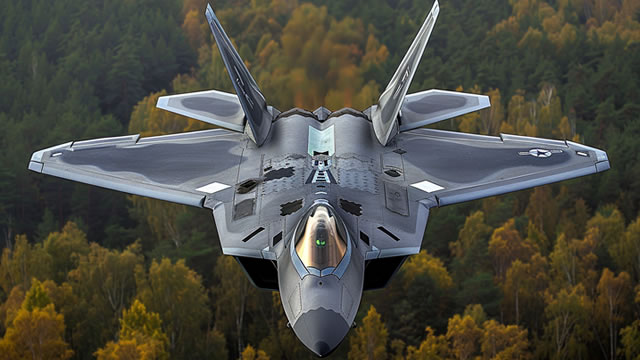
Pentagon's pick of Boeing to build next-generation F-47 fighter jets in $50B deal stuns experts
New York Post· 2025-03-25 17:35
Core Insights - The Trump administration awarded Boeing the contract to build the next-generation F-47 fighter jets, surprising industry observers and beating out Lockheed Martin [1][2][3] - The contract could exceed $50 billion, providing a critical opportunity for Boeing to stabilize after financial setbacks and safety scandals [3][12] - Boeing will benefit from a "cost-plus" agreement, which covers development costs and guarantees profit, contrasting with its recent fixed-price deals that resulted in losses [4] Company Performance - Boeing has not successfully introduced a new commercial or military aircraft in over a decade, raising skepticism about its capabilities [1][5] - The company has limited experience with stealth technology, which is essential for the F-47, and has faced challenges in other defense projects [5][6] - Boeing's recent military aircraft, such as the T-7 trainer, were co-developed with Saab, indicating a lack of independent production experience [6] Industry Context - The F-47 is designed to operate alongside semi-autonomous drones and features advanced stealth technology, crucial for countering China's military expansion [4] - Boeing's selection over Lockheed Martin has left Wall Street analysts surprised and Lockheed officials disappointed [2][11] - The decision reflects a significant shift in the competitive landscape of military aircraft production, with Boeing needing to recruit skilled engineers to meet technological demands [5][6]

3 Defense Stocks in Focus Amid Sector Updates
Schaeffers Investment Research· 2025-03-24 19:14
Group 1 - Boeing Co (NYSE:BA) has been awarded a contract to build the U.S. Air Force's latest fighter jet, the F-47, which is impacting its competitors negatively, particularly Lockheed Martin (LMT) [1] - Boeing's shares increased by 1.9% to $181.47, marking the highest level in over a month, and have risen 16.4% over the last six months [2] - Northrop Grumman Corp (NYSE:NOC) shares are trading at $491.38, up 0.1%, with a notable increase of 14.4% over the last nine months, although it faces resistance around the $510 level [3] Group 2 - General Dynamics Corp (NYSE:GD) shares are up 0.2% to $263.91, having trimmed a 14.4% deficit over six months, and successfully retested the $260 support level [4] - The stock of General Dynamics has shown resilience after bouncing back from a 52-week low of $239.87 [4]

Lockheed Martin: Buy The Drop On This Mispriced Bargain
Seeking Alpha· 2025-03-24 17:28
Group 1 - iREIT+HOYA Capital focuses on income-producing asset classes that provide sustainable portfolio income, diversification, and inflation hedging [1] - The service offers a free two-week trial for potential investors to explore exclusive income-focused portfolios [1] Group 2 - The concept of "buy-the-drop" opportunities is highlighted, indicating that quality companies often present investment chances during periods of negative news [2] - Investors are encouraged to assess whether the market has overreacted to bad news when considering these opportunities [2]

Tariffs, Tesla, and Short Squeezes: A Look Ahead
ZACKS· 2025-03-24 17:16
Trump Tariffs Narrower Than ExpectedTariff fears have been the proverbial pebble in the shoe for U.S. equity markets since late February, leading to a rapid 10% correction in the S&P 500 Index. Though then-candidate Donald Trump made clear he would impose reciprocal tariffs during his campaign for the White House, executives and investors on Wall Street have complained that the tariffs have changed too rapidly and have been too unpredictable, making it difficult for companies to plan ahead.However, U.S. mar ...


Northrop Grumman: The Forgotten Winner Of Boeing's F-47
Seeking Alpha· 2025-03-24 16:37
Core Insights - Boeing has won the bid for the US Air Force's Next Generation Air Dominance (NGAD) program, marking a significant achievement for the company as it competes against Lockheed Martin [1] Group 1: Company Performance - This victory is particularly meaningful for Boeing as it represents the first time the company has secured this type of contract, which could enhance its position in the aerospace and defense sector [1] Group 2: Industry Context - The win highlights Boeing's competitive edge in the aerospace and defense industry, which is characterized by significant growth prospects and ongoing technological advancements [1]

Boeing Space JV Cuts 2025 Launch Rate by 40%
The Motley Fool· 2025-03-24 16:05
Core Viewpoint - Boeing's stock is facing challenges in 2025 due to delays in the certification of its joint venture ULA's new Vulcan Centaur rocket, which is critical for revenue generation [1][11]. Group 1: ULA's Launch Plans - ULA, a joint venture between Boeing and Lockheed Martin, planned to launch its Vulcan Centaur rocket 20 times in 2025, aiming for approximately $100 million per launch [2]. - Half of these launches were intended for commercial customers, while the other half were for U.S. government missions, including national security [3]. - ULA needs certification from the U.S. Space Force for the Vulcan rocket to proceed with its planned launch cadence [3][4]. Group 2: Certification Delays - ULA successfully launched the Vulcan rocket for the first time in January 2024, but a subsequent launch in October faced issues with one of its solid rocket boosters [5][6]. - The Federal Aviation Administration initially deemed the anomaly not serious, but later reconsidered the need for an investigation [6][7]. - ULA's CEO expressed optimism about receiving certification soon, but as of late March, no decision had been made [7][9]. Group 3: Financial Implications - ULA has reduced its 2025 launch target from 20 to 12, with only half of these being Vulcan launches, leading to a projected 40% decrease in revenue [9][10]. - This reduction could result in approximately $800 million less revenue for ULA, translating to a potential $39 million profit loss for both Lockheed Martin and Boeing [11]. - Boeing, already facing significant losses, may find this revenue shortfall impactful despite it being relatively small compared to its overall financial situation [12]. Group 4: Future Concerns - There are concerns regarding the potential for further delays in certification, which could lead to ULA losing future launch contracts to competitors like SpaceX [13][14]. - ULA's CEO has downplayed these concerns, but any negative developments could further reduce ULA's launch opportunities and revenue, impacting Boeing's profits [14].

This favourite Congress defence stock just received 2 major Wall Street downgrades
Finbold· 2025-03-24 15:23
Core Viewpoint - Lockheed Martin (LMT) has faced significant downgrades from analysts, reflecting concerns over its earnings quality, competitive losses, and reduced growth expectations, amidst increasing capital outflows and a bearish stock sentiment [1][6][7]. Analyst Downgrades - Bank of America downgraded LMT from 'Buy' to 'Neutral', lowering the price target from $685 to $485, citing concerns over earnings quality and loss of key programs [6][7]. - Melius Research also downgraded LMT from 'Buy' to 'Hold', cutting the price target from $603 to $483, driven by competitive losses and concerns over reduced reliance on U.S. defense contractors in Europe [8][9]. Stock Performance - As of the latest report, LMT stock was down over 2%, trading at $429.70, with a year-to-date decline exceeding 10% [4]. - The stock is trading below its 50-day simple moving average of $461.43 and 200-day simple moving average of $512.87, indicating a bearish sentiment [4]. Competitive Landscape - Despite winning an $18 billion contract for the Next-Generation Interceptor missile defense, LMT has faced recent contract losses to competitors such as Northrop Grumman, Raytheon, and Textron, signaling headwinds for future growth [10]. - The loss of the Next Generation Air Dominance contract to Boeing, a $20 billion program, has contributed to recent volatility in LMT's stock [11][12]. Positive Outlook from Some Analysts - Truist Securities maintained a 'Buy' rating with a price target of $579, highlighting LMT's strong fundamentals and long-term growth potential despite recent challenges [11]. - Analyst Michael Ciarmoli noted that while the loss of the NGAD contract could have generated significant revenue, LMT's dominance in the aerospace and defense sector remains supported by its F-35 program and other defense contracts [12].

Boeing Secures a Contract to Build a Next-Generation Fighter Aircraft
ZACKS· 2025-03-24 15:16
Core Viewpoint - Boeing has secured a significant contract to design and deliver its next-generation fighter aircraft, the F-47, under the Next Generation Air Dominance (NGAD) program, which is expected to enhance its position in the U.S. Defense market and negatively impact Lockheed Martin's prospects [1][2][3]. Summary by Sections Contract Details - The initial value of the contract for the new fighter jet is $20 billion, aimed at replacing Lockheed Martin's F-22 Raptor and designed to operate alongside drones [3]. - Boeing anticipates additional orders worth hundreds of billions from the U.S. Government and its foreign allies [3]. Market Dynamics - Increasing military conflicts, terrorism, and technological advancements in combat jets are driving nations to boost their defense spending, particularly on combat-proven jets [4]. - Mordor Intelligence forecasts a compound annual growth rate of 4.7% for the global military aviation market from 2025 to 2030 [4]. Boeing's Growth Opportunities - Boeing's Defense, Space & Security segment secured contracts worth $8 billion in Q4, resulting in a backlog of $64.02 billion as of December 31, 2024 [5]. - The company has a strong portfolio of established combat jets, including the F/A-18 Super Hornet and F-15 [5]. Competitors and Market Outlook - Northrop Grumman is positioned to benefit from the expanding military aviation market, with a long-term earnings growth rate of 4.2% and a projected 3% sales growth for 2025 [6][7]. - Embraer also shows potential with a 15.1% year-over-year sales growth estimate for 2025 and an average earnings surprise of 138.39% over the last four quarters [7][8]. Stock Performance - Boeing's shares have increased by 17% over the past six months, contrasting with an 8.2% decline in the industry [9].