Tesla

Search documents
Elon Musk Says 'Saving The State' As Delaware Supreme Court Slashes Tesla Legal Fees By Over $100 Million - Tesla (NASDAQ:TSLA)
Benzinga· 2026-02-01 08:17
Core Viewpoint - The Delaware Supreme Court reduced the legal fees owed by Tesla Inc. from $176.1 million to $70.9 million in a shareholder lawsuit regarding director compensation, indicating a significant reevaluation of the settlement's value [1]. Group 1: Legal Developments - The Delaware Supreme Court ruled that the Chancery Court judge overvalued the settlement when determining attorney fees [1]. - The court stated that the intrinsic value of returned stock options should have been excluded from settlement calculations [3]. Group 2: Financial Implications - Tesla directors, including Chair Robyn Denholm and James Murdoch, agreed to return approximately $277 million in cash and stock options to the company as part of the settlement [2]. - The total settlement is valued at $919 million according to attorneys representing the shareholders [2]. Group 3: Elon Musk's Position - Elon Musk was not part of the settlement and successfully defended his compensation in a separate case, with the Delaware Supreme Court overturning a previous ruling that voided his 2018 pay package [4].


Tesla: The Most Expensive Story Ever Told (NASDAQ:TSLA)
Seeking Alpha· 2026-02-01 07:34
I wrote my first article about Tesla ( TSLA ) last year in September and argued that the company is priced to perfection, although the core business segment, automotive, is struggling and most profitsThe stock market and value investing are my greatest passions. I bought my first shares at the age of 11, and since then, my fascination with capital markets has only grown stronger. Today, I look back on nine years of in-depth experience. Every day, I dive into company research, analyze annual reports, listen ...
特斯拉(TSLA):FY25Q4 业绩点评:Robotaxi 实现无人运营,Optimus 量产加速布局
国泰海通· 2026-02-01 06:29
股 票 研 究 股票研究 /[Table_Date] 2026.02.01 Robotaxi 实现无人运营,Optimus 量产加速布局 特斯拉(TSLA.O) ——特斯拉 FY25Q4 业绩点评 | [姓名table_Authors] | 电话 | 邮箱 | 登记编号 | | --- | --- | --- | --- | | 秦和平(分析师) | 0755-23976666 | qinheping@gtht.com | S0880523110003 | | 龚浩(研究助理) | 021-23183306 | gonghao2@gtht.com | S0880125090016 | 本报告导读: 储能拉动业绩亮点,汽车毛利率持续回升。Robotaxi 无安全员运营启动,商业化进 程加速。 Optimus 量产布局提速,2026 年 CapEx 大幅增长。 投资要点: | 财务摘要(百万美元) | 2024 | 2025 | 2026E | 2027E | 2028E | | --- | --- | --- | --- | --- | --- | | 营业总收入 | 97,690 | 94,827 | 106 ...
I Predicted That Broadcom Would Continue to Soar in the Second Half of 2025. Here's Why the "Ten Titans" Growth Stock Has Room to Run in 2026.
The Motley Fool· 2026-02-01 00:05
Core Viewpoint - Broadcom is identified as one of the top artificial intelligence (AI) stocks for long-term investors, with significant growth potential due to its leadership in global connectivity and AI [1] Group 1: Performance and Market Position - Broadcom's stock increased by 25.6% in the second half of 2025, finishing the year up 75.5%, outperforming the "Magnificent Seven" stocks [1] - The company has compounded in value significantly, leading to its inclusion in a newly coined group called the "Ten Titans," which collectively represent 38.1% of the S&P 500 [2] - Despite a recent pullback of 22.5% from its 52-week high, Broadcom's stock is still up 447% over the last three years, indicating strong long-term performance [2][3] Group 2: Business Segments and Growth Drivers - Broadcom's non-AI semiconductor revenue grew by only 2% year over year, while its AI business is experiencing substantial growth [4] - The company has established a valuable niche in the AI value chain by designing custom XPU chips and networking devices, which are more cost-efficient than general-purpose GPUs for certain AI functions [4][5] - Broadcom's integrated systems address network issues in AI data centers, enhancing bandwidth despite not solving memory bottlenecks [5][7] Group 3: Competitive Landscape - The recent sell-off in Broadcom's stock is attributed to its earnings growth being heavily reliant on AI spending from major hyperscalers and competition from Nvidia, which has reduced GPU operating costs [8] - The hyperscaler spending cycle and competition are critical factors to monitor, but the market is large enough for both Broadcom and Nvidia to grow as AI infrastructure expands [9] Group 4: Valuation and Future Outlook - Broadcom's forward price-to-earnings ratio of 31.1 is considered reasonable for a high-growth company, especially since it has multiple growth avenues beyond AI [11] - Investors are encouraged to pay attention to management commentary during earnings calls to assess the company's ability to secure business for custom chips and achieve cost savings in large-scale data centers [10]

Tesla's China EV Rivals Xiaomi, Xpeng, Nio, BYD To Report January Sales With This Big Caveat
Investors· 2026-01-31 21:00
Core Viewpoint - Tesla's competitors in China, including Xiaomi, XPeng, Nio, Li Auto, and BYD, are preparing to report their sales for January, although the Lunar New Year holidays are still weeks away [1] Group 1 - Tesla faces competition from several key players in the Chinese electric vehicle market [1] - The upcoming sales reports from these companies will provide insights into market dynamics and consumer demand [1] - The timing of the Lunar New Year holidays may impact sales figures and consumer behavior in January [1]
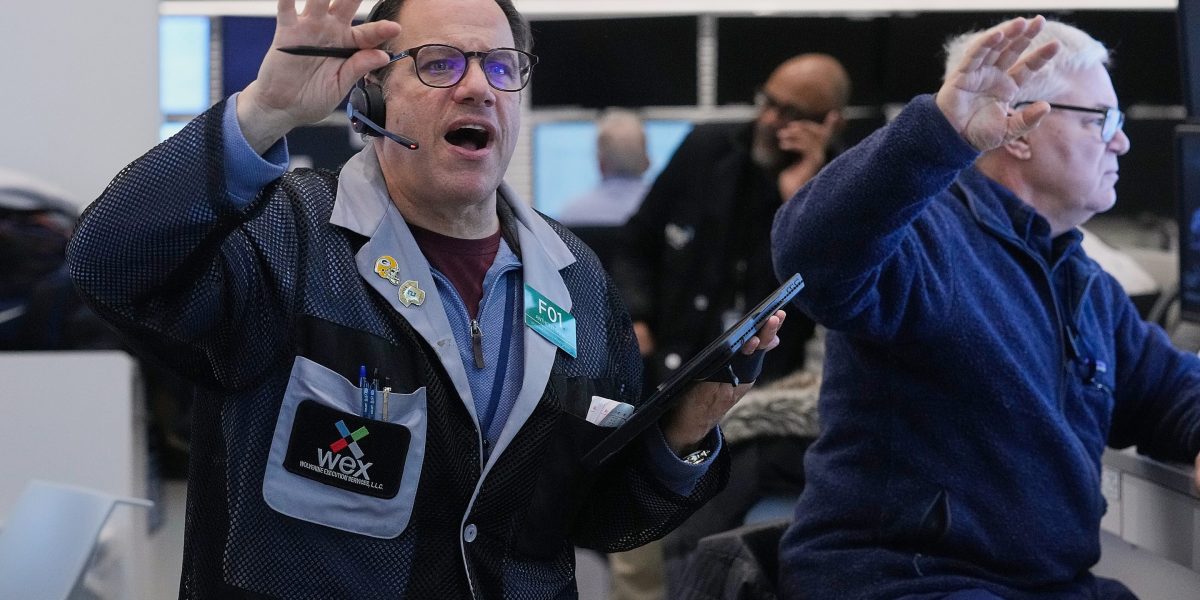
Kevin Warsh’s Fed nod sends gold plunging and chops 31.4% off silver as dollar strengthens in Friday trading
Fortune· 2026-01-31 15:35
Market Reactions - U.S. stocks experienced a decline, with the S&P 500 down 0.4%, the Dow Jones Industrial Average dropping 179 points (0.4%), and the Nasdaq composite losing 0.9% [1][12] - The value of the U.S. dollar initially rallied but fluctuated following Trump's nomination of Kevin Warsh [2] - Precious metals markets saw significant volatility, with gold prices plunging 11.4% to settle at $4,745.10 per ounce, and silver dropping 31.4% [9][10] Federal Reserve Influence - The nomination of Kevin Warsh to lead the Federal Reserve raises questions about the Fed's independence and its impact on interest rates [5][8] - Warsh's past as a Fed governor may suggest he is familiar with maintaining the Fed's independence, despite his criticisms of current policies [6][7] - There is a concern that Warsh, being aligned with Trump, may lead to quicker rate cuts when deemed necessary [8] Economic Indicators - The yield on the 10-year Treasury rose slightly to 4.25%, indicating potential pressure on bond prices [13] - A report showed U.S. wholesale inflation was higher than expected, which could influence the Fed's decision to maintain interest rates [14] Company Performance - Stocks of metals miners fell sharply due to the drop in gold prices, with Newmont down 11.5% and Freeport-McMoRan down 7.5% [11] - Tesla's stock rose 3.3% after reporting better-than-expected profits, helping to limit overall market losses [11]
Bitcoin vs Gold vs Stocks: The Chart Everyone Misses
Anthony Pompliano· 2026-01-31 14:00
If we need certain things in a certain amount of time, we can't get them if they're physical. We can certainly get them if they're based on software. And so, Bitcoin fits in this world where I think it is a scarce asset.Things that are scarce are getting more valuable. And I think people just need to be uh a little bit more focused on if it goes down to 70,000 before it goes to 200,000 and it takes only a month to get to 200,000, pay attention to silver. People that got frustrated ended up watching somethin ...

Tesla Bets Everything on Robotaxis, Kills Model S and Model X for Robot Factory Space
247Wallst· 2026-01-31 13:15
Core Viewpoint - Tesla Inc has introduced a new initiative allowing owners of Model 3 and Model Y vehicles to loan their cars to the company's robotaxi network, potentially transforming these vehicles into revenue-generating assets [1] Group 1 - The announcement was made during Tesla's Q4 2025 earnings call, highlighting the company's innovative approach to vehicle utilization [1] - CEO Elon Musk emphasized the potential for Tesla owners to benefit financially from their vehicles by participating in the robotaxi network [1]
US stocks fall, as investors fret over Trump's Fed nominee, earnings, inflation
The Economic Times· 2026-01-31 03:50
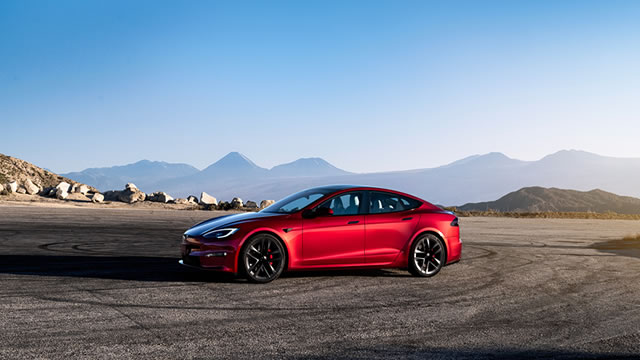
Market Overview - Wall Street's main indexes closed lower as investors reacted to President Trump's nomination of Kevin Warsh for Federal Reserve Chair, viewing it as a hawkish choice amid mixed earnings reports and inflation concerns [9][10] - The Dow Jones Industrial Average fell by 179.09 points (0.36%) to 48,892.47, the S&P 500 lost 29.98 points (0.43%) to 6,939.03, and the Nasdaq Composite decreased by 223.30 points (0.94%) to 23,461.82 [10] Federal Reserve and Monetary Policy - Kevin Warsh is expected to favor lower interest rates but will not pursue aggressive monetary easing, suggesting a potential shift in the Fed's approach to monetary policy [9][10] - Markets are adjusting to the implications of Warsh's nomination, with the U.S. dollar gaining and precious metals experiencing a sell-off [10] Earnings Reports - Apple shares closed up 0.4% after a forecast of higher-than-expected revenue growth of up to 16% for the March quarter, despite warnings about rising memory-chip prices affecting profitability [5][10] - Microsoft shares fell 0.7% after a significant 10% drop the previous day, attributed to disappointing cloud revenue [6][10] - Tesla shares rose 3.3% following reports of potential deals with SpaceX, contributing positively to the S&P 500 [7][10] - Verizon Communications saw an 11.8% increase in shares after forecasting annual profit and free cash flow above market expectations, driven by strong subscriber growth [7][10] Sector Performance - The S&P's Materials index led declines with a 1.9% loss, influenced by a sell-off in gold and silver prices [4][10] - Defensive consumer staples sector was the top performer, rising 1.4%, with Colgate-Palmolive gaining 5.9% after positive sales forecasts [4][10] Market Dynamics - The Russell 2000 index, which has been outperforming large-cap indexes, lagged with a 1.6% loss on the day but ended the month up more than 5% [2][10] - Overall, declining issues outnumbered advancers on both the NYSE and Nasdaq, indicating a bearish sentiment in the market [8][10]

Tesla persuades Delaware's top court to slash legal fees in director pay lawsuit
Reuters· 2026-01-30 23:46
The Delaware Supreme Court handed Tesla a victory on Friday, slashing by more than $100 million the legal fees owed to shareholder lawyers who successfully sued directors at Elon Musk's electric car... ...