Geely

Search documents
中国电动汽车_本土市场降温迹象明显
2025-11-16 15:36
Summary of China Auto/EV Global Markets Research Industry Overview - The report focuses on the **China auto market**, particularly the **electric vehicle (EV)** segment, highlighting recent trends in wholesales and retails, as well as market dynamics affecting demand and competition. Key Points Market Performance - **Wholesales**: The China auto market delivered **3.0 million** wholesales unit shipments in October 2025, representing a **7.5% year-on-year (y-y)** increase and a **3.6% month-on-month (m-m)** increase [1][6] - **Retails**: Retail unit shipments were **2.2 million units**, showing a **0.9% y-y** decline and a **0.1% m-m** decline [1][6] - **EV Sales**: Monthly retail sales for passenger vehicle (PV) EVs reached **1.28 million units**, marking a **7.0% y-y** increase but a **1.4% m-m** decrease [1][6] Demand Trends - The report indicates that local demand in the China auto market has started to cool down, attributed to the **National Holiday week** and tightening policy trends initiated from **late September 2025** [1][6] - The **EV penetration rate** remains stable at **56.5%**, consistent with the previous month [1][6] Future Outlook - The demand situation for **Q1 2026** is expected to be challenging, particularly due to the upcoming **50% cut to EV purchase tax exemption** and the effects of the national trading-in/scrapping policy [1][8] - OEMs are anticipated to push for sales targets in the last two months of 2025, leading to solid deliveries despite a potentially lackluster orders situation [1][2] Competitive Landscape - Market share winners identified include **Geely**, **Leapmotor**, and **Huawei-related brands** in the mass market, while **Xiaomi** is noted in the premium segment [2] - New entrants like **NIO** and **XPENG** are expected to continue gaining traction with upcoming model launches [2][19] Export Performance - The China auto industry exported **571,000 units** of PVs in October 2025, reflecting a **22.7% y-y** increase and a **2.0% m-m** increase [3][31] - Cumulative exports for the first ten months of 2025 reached **4.7 million units**, a **15.7% y-y** increase, with EV exports showing a significant **87% y-y** growth [3][31] Individual Company Performance - **BYD**: Retail sales dropped to **296,000 units** in October 2025, a **31.4% y-y** decline, with a market share decrease to **23.1%** [15] - **Geely**: Achieved **164,000 unit** EV retail sales (+54.7% y-y) with an improved market share of **12.8%** [16] - **NIO**: Recorded **40,000 unit** retail sales (+90.5% y-y), with expectations for improved quarterly financials [18] - **XPENG**: Delivered **37,000 unit** retail sales (+82.2% y-y), with a strong pipeline for future models [19] Risks and Challenges - The report highlights potential risks including intensified market competition, slower-than-expected overseas expansion, and the impact of geopolitical uncertainties on global expansion efforts for Chinese OEMs [4][8] Conclusion - The China auto market is experiencing a cooling demand phase, with significant competition among OEMs. While some companies are gaining market share, the overall outlook remains cautious due to policy changes and market dynamics. The export performance of EVs is a positive sign amidst local market challenges [1][4][8]


中国汽车零部件- 跨越边界增长:零部件供应商走向全球-China Auto Parts-Growing Beyond Borders – Parts Suppliers Going Global
2025-11-12 02:20
Summary of China Auto Parts Industry Conference Call Industry Overview - **Industry**: China Auto Parts - **Focus**: Global expansion of auto parts suppliers due to deteriorating domestic margins and improving product quality [1][2][3] Key Insights Global Expansion Trends - **Accelerating Global Expansion**: Chinese auto parts suppliers are shifting from exports to offshoring, aiming to capture a US$240 billion opportunity and increase overseas market share to 10% by 2030, with a projected 12% CAGR from 2025 to 2030 [2][57]. - **Push-Pull Dynamic**: Domestic price competition and margin pressure are pushing suppliers to limit domestic exposure, while advancements in product quality and technology are pulling them towards global markets [3][29]. Market Dynamics - **Domestic Margin Pressure**: Average net margins for auto parts suppliers fell from 11.6% in 2022 to 9.9% in 2024, with over 50% of companies experiencing gross margin declines in 1H25 [76][84]. - **Export Growth**: China's auto parts export value grew at a CAGR of 10% from 2019 to 2024, up from 1% CAGR in 2014-2019 [25][52]. Strategic Shifts - **From Exports to Offshoring**: Suppliers are expected to establish offshore plants, with net margins for these plants projected to be 10-15 percentage points lower than exports [4][34]. - **Popular Offshore Locations**: Key sites for offshore plants include Mexico, Eastern Europe, North Africa, and Southeast Asia, chosen for their competitive labor and energy costs [35][96]. Company-Specific Insights Preferred Suppliers - **Strong Candidates for Global Expansion**: - **Xingyu (601799.SS)**: Low but expanding overseas exposure, expected to accelerate revenue through project wins [5][41]. - **Desay (002920.SZ)**: Similar profile to Xingyu, with potential for overseas revenue growth [5][41]. - **Minth (0425.HK)** and **Keboda (603786.SS)**: Sizable and improving overseas exposure, expected to grow earnings amid tariff disruptions [5][41]. Downgrades - **Sanhua (002050.SZ)** and **Tuopu (601689.SS)**: Downgraded due to slowing EV parts outlook and market optimism already priced in [5][41]. Financial Projections - **Market Share Growth**: Expected to capture 10.1% of overseas market share by 2030, with production value increasing at a CAGR of 32% from 2025 to 2030 [57][58]. - **Investment Ratings**: - **Overweight (OW)**: Xingyu, Desay, Minth, Keboda - **Equal Weight (EW)**: Fuyao, Sanhua, Tuopu - **Underweight (UW)**: Recodeal, Hirain [9][42]. Additional Considerations - **Challenges in Domestic Market**: Suppliers face a dilemma with JV OEMs offering decent margins but declining volumes, while local OEMs provide volume but at lower margins [28][62]. - **Quality Improvements**: Chinese suppliers have made significant advancements in product quality, enabling them to compete for global OEM contracts [3][88]. Conclusion The China auto parts industry is undergoing a significant transformation as suppliers seek to expand globally in response to domestic margin pressures and competitive dynamics. Key players are positioned to benefit from this shift, while others face challenges that may impact their growth prospects.





宁德时代电池装机量监测 - 9 月_中国及全球市场份额保持稳定
2025-11-10 03:34
Summary of CATL Conference Call Company Overview - **Company**: Contemporary Amperex Technology Co. Limited (CATL) - **Sector**: Auto Parts - **Description**: CATL is China's largest lithium battery manufacturer, focusing on R&D, manufacturing, and sales of EV batteries and energy storage systems (ESS) [11][12] Key Industry Insights - **China EV Battery Market**: - Total installed capacity in September 2025 was 84.3 GWh, up 46% YoY and 18% MoM [3] - CATL's market share in China was 42.2% in September, maintaining its position as the leading supplier [14] - Major clients included Tesla (12%), Geely (11%), and Changan (10%) [1] - **Global Market Position**: - CATL held a global market share of 35% in September 2025, ranking No.1 globally [2] - In Europe, CATL's market share was 41% in September, with major clients including Volkswagen, Audi, and BMW [2][22] Financial Performance - **Revenue and Profit Estimates**: - Projected net income for 2025 is CNY 70,002 million, with an EPS of 15.34 [4][10] - Free cash flow per share is expected to increase to CNY 16.79 by 2025 [4] - P/E ratio is projected to decrease from 50.23x in 2023 to 33.15x in 2025, indicating improving valuation [4] Production and Capacity - **Production Plans**: - Planned production for November 2025 is estimated at 74.5 GWh, representing a 38% YoY increase and a 1% MoM increase [1][15] - The production capacity is aligned with the strong demand for EV and ESS batteries [1] Strategic Partnerships - **Recent Agreements**: - CATL signed a strategic MoU with A.P. Moller - Maersk to enhance global logistics and promote decarbonization [16] - Collaborated with Dongfeng Commercial Vehicle on electrification and technology development [16] - Established a direct-sales channel with JD for battery swap systems [16] Market Trends - **Battery Chemistry and Types**: - In September, the battery chemistry breakdown was 19% NCM and 81% LFP, with prismatic batteries comprising 97.1% of the total [3] - **EV Sales Growth**: - The growth in installed battery capacity aligns with the increasing sales of electric vehicles in China [3] Investment Rationale - **Buy Rating**: - CATL is rated as a "Buy" due to its leading battery technology, cost-saving potential, and strong demand from the ESS sector [12] Additional Insights - **Market Dynamics**: - CATL's domestic market share is expected to increase QoQ in Q4 2025, driven by higher shipments from clients like Xiaomi, NIO, and Li Auto [1] - **Financial Health**: - The company maintains a strong balance sheet with a projected net debt to equity ratio of -65.7% by the end of 2024 [10][4] This summary encapsulates the key points from the CATL conference call, highlighting the company's market position, financial outlook, production plans, strategic partnerships, and investment rationale.
Volvo Car (OTCPK:VLVC.Y) Earnings Call Presentation
2025-11-06 08:00
Strategy and Electrification - Volvo Cars aims to resolve three key challenges: unique opportunities, end of globalization, and hyper competition[9, 10] - Electrification is the future, with a focus on better cars and accelerating the transition[11, 13] - The company is targeting up to a 20% reduction in marketing spend per car through a new approach to marketing[45] - Volvo Cars is transitioning to electric faster than other premium legacy OEMs, showing significant growth in electrified share of volume[54, 55] - The company is building a longer bridge to electrification with compelling long-range hybrid products[51, 63] Synergies and Cost Efficiency - Increased collaboration with Geely will be key to further reduce costs and get products to market quicker[51, 73] - Volvo Cars aims for up to 8% savings from joint negotiations with common suppliers[98] - The company is executing on a near-term SEK 18 billion cost and cash action plan[160] - Geely ranks 3 globally in BEV market share, providing unique access to China's cost structure and ecosystem[178] - Volvo Cars is targeting a structural long-term profitability of >8% EBIT[169, 184]
Lotus Technology (NasdaqGS:LOT) 2025 Conference Transcript
2025-11-04 17:30
Summary of Lotus Technology Conference Call Company Overview - **Company Name**: Lotus Technology - **Industry**: Luxury Electric Vehicles (EVs) - **Founded**: 1948, British brand with a strong heritage in Formula One racing [2][4] Core Points and Arguments - **Market Position**: Lotus is positioned as an early mover in the luxury EV market, integrating its British brand heritage with modern EV technology [2][3] - **Integration Strategy**: The company plans to unify its operations under the "One Lotus" strategy by the end of 2025, merging its UK sports car heritage with its lifestyle EV focus [6][7] - **Technological Advancements**: Lotus has implemented an 800V electric performance architecture and is set to launch a 900V hybrid EV platform with a driving range exceeding 1,000 kilometers [9][10] - **Product Lineup**: The current product portfolio includes the Evija (all-electric hypercar), Emira (last internal combustion engine model), and lifestyle EVs produced in China [12][13] - **Global Distribution**: Lotus has over 200 stores globally, with a balanced market presence in China, Europe, and North America [3][15] Financial Performance - **Sales Distribution**: In the first half of the year, China accounted for nearly 50% of sales, influenced by tariffs affecting North America and the UK [21] - **Financial Strategy**: The company is focused on optimizing operations through partnerships with Geely, aiming for cost synergies and improved supply chain efficiency [19][20] Additional Important Content - **Heritage and Recognition**: Lotus has a rich history in motorsport, including seven Constructors' Championships and numerous Grand Prix wins [4][5] - **ESG Commitment**: The company emphasizes its commitment to environmental, social, and governance (ESG) principles, aiming to lower carbon emissions and contribute to community development [18][19] - **Partnership with Geely**: Lotus benefits from its relationship with Geely for procurement, manufacturing support, and global distribution, while maintaining independent management [17][18] Conclusion - Lotus Technology is strategically positioned to leverage its heritage and technological advancements in the luxury EV market, with a clear focus on integration, global distribution, and financial optimization through partnerships. The upcoming product launches and the "One Lotus" strategy are expected to enhance its market presence and operational efficiency [20][21]

Renault Group agrees sale of 26.4% stake in Brazil business to Geely
Yahoo Finance· 2025-11-04 12:11
Core Insights - Renault Group has finalized an agreement for Geely to acquire a 26.4% stake in Renault do Brasil, enhancing cooperation in the production and sale of zero- and low-emission vehicles in Brazil [1][2] - Renault will retain control of the Brazilian subsidiary and continue to consolidate it in its financial statements, while Geely will gain access to manufacturing and commercial infrastructure [2][3] - The partnership is seen as a strategic move to enhance competitiveness and innovation in a rapidly evolving automotive market [3] Group 1 - The financial terms of the transaction were not disclosed [1] - Geely Auto-branded models will be produced alongside Renault vehicles at the Ayrton Senna facility in São José dos Pinhais, Paraná, which is expected to increase overall output [2] - Renault do Brasil will manage sales and distribution of Geely Auto's electrified range, including financing and aftersales operations [4] Group 2 - The collaboration aims to strengthen both companies' positions in Brazil, a market that accounted for over 40% of Latin American vehicle registrations in the first half of 2025 [4] - Geely's chairman emphasized that the partnership will leverage technology scales globally to deliver superior products [5] - Renault is also exploring potential collaborations with Chinese automaker Chery for co-producing and selling cars [5]
Penske Automotive Group (NYSE:PAG) FY Conference Transcript
2025-11-04 01:02
Summary of Penske Automotive Group (NYSE:PAG) FY Conference Call Company Overview - **Company**: Penske Automotive Group - **Ticker**: NYSE:PAG - **Shares Outstanding**: 66 million - **Current Share Price**: Approximately $160 - **Market Capitalization**: About $10.7 billion - **Net Debt**: $1.5 billion - **Ownership**: 28.9% of Penske Transportation Solutions - **Total Enterprise Value**: Approximately $10 billion - **Business Segments**: Retail automotive, commercial vehicle dealerships, and energy solutions [1][2] Core Business Insights - **Retail Automotive**: Operates 356 franchises, primarily in premium luxury segments across the U.S., U.K., Germany, Italy, Japan, and Australia [2] - **Commercial Trucks**: Sells around 20,000 commercial trucks annually through 45 dealerships, exclusively Freightliner [2] - **Recent Expansion**: Entered the Australian market with three Porsche dealerships [2] Financial Performance and Projections - **Cash Flow from Tax Deductions**: Estimated additional cash flow of $120 million to $150 million annually from accelerated depreciation on truck purchases, based on $3 billion in annual purchases [3][4] - **Investment in Penske Transportation Solutions**: Total cash invested is $956 million, with $2 billion withdrawn, indicating strong cash flow management [4] - **Flat Performance**: Penske Truck Leasing has seen flat performance this year, with a reduction in the vehicle fleet from 445,000 to 405,000 [5] Market Conditions and Inventory - **Inventory Levels**: Current industry inventory is 2.6 million units, down 35% from pre-pandemic levels. Penske's inventory is well-managed with a 49-day supply in the U.S. [11] - **Luxury Vehicle Market**: Average transaction prices have increased, with new vehicles averaging $60,000 and used vehicles at $40,000, reflecting a shift in consumer financing behavior [13][16] Consumer Behavior and Financing - **Financing Trends**: Increasing number of customers financing vehicles for longer terms (beyond 6-8 years), raising concerns about negative equity situations [14] - **Leasing**: Leasing has decreased from 40% to 32%, but remains a more affordable option for consumers [14] Challenges in Used Vehicle Market - **Low Lease Returns**: The availability of quality used vehicles is a challenge, with a focus on zero to four-year-old cars [23][24] - **Sourcing Strategy**: 84% of vehicles sold are self-sourced, primarily through trade-ins [23] International Operations - **U.K. Market**: Contributes about $9 billion in revenue (35% of total business). Facing challenges due to government policies on EV sales and higher taxes impacting consumer behavior [28][30] - **Chinese Dealerships**: Recently added eight Chinese brands in the U.K. to explore market potential, with limited capital investment [36][37] Parts and Service Business - **Revenue Growth**: Parts and service revenue has increased by 35% compared to 2019, driven by warranty and customer pay services [38] - **Warranty Issues**: Recent recalls (e.g., Toyota and Lexus) are expected to boost service revenue, although they pose brand management challenges [39][41] Conclusion - **Future Outlook**: Anticipates improved performance in the truck leasing segment as market conditions stabilize. The company is well-positioned to capitalize on its diversified business model and strong cash flow management [43]

Competition is surging in China's EV market, and it's hurting Tesla's biggest rival
Business Insider· 2025-11-03 15:12
Core Insights - BYD's global sales in October decreased by 12% year-over-year, marking the second consecutive monthly decline, indicating challenges in the competitive Chinese EV market [1] - The company's profits fell by approximately one-third year-over-year, and its stock price has dropped around 36% since reaching a record high in May [2] - Despite facing intense competition from domestic rivals, BYD has become the largest seller of electrified vehicles globally, driven by its affordable and technologically advanced models [2] Competitive Landscape - BYD is under pressure from Chinese EV startups such as Xpeng, Nio, and Leapmotor, which reported record monthly sales in October, as well as from Geely, which achieved significant delivery records with its low-cost Galaxy brand [3] - Geely's Galaxy brand, including the Xingyuan compact EV priced at $9,250, directly competes with BYD's ultra-cheap Seagull [3] - Xiaomi, a competitor that transitioned from consumer electronics to EVs, is also gaining traction with strong sales of its second vehicle launched this year [4] International Expansion - BYD's overseas sales surged by 169% in October, with expectations to export nearly 1 million EVs this year, particularly succeeding in the European market where it outsold Tesla in August [10] - The company is investing in international growth, with factories under construction in Hungary and Turkey, and plans to establish 1,000 new stores in Europe next year [11] - BYD aims for around half of its sales to come from outside China in the future, as domestic competition intensifies and the market becomes less sustainable [12] Industry Outlook - Analysts predict a consolidation in the Chinese EV market, with fewer than 20 carmakers expected to survive due to intense competition and regulatory pressures [13]



中国消费脉搏 2025 年第三季度_体验式消费引领,高端需求反弹,消费市场格局分化-China Consumer Pulse 3Q25_ Experiential spending leads and Premium demand rebounds, amid mixed consumer landscape
2025-11-03 02:36
Summary of China Consumer Pulse Q3 2025 Industry Overview - **Industry**: Chinese Consumer Market - **Key Sectors Analyzed**: Alcohol, Apparel, Beauty, Travel, Luxury Goods, Autos Core Insights 1. **Mixed Consumer Sentiment**: Chinese consumer sentiment remains mixed, with a notable divergence in spending patterns across sectors [2][29][30] 2. **Experiential Spending Resilience**: Experiential categories such as restaurants (+24% YoY) and travel (+16% YoY) show resilience, indicating a shift towards experiences over goods [2][35] 3. **Premium Demand Recovery**: Onshore luxury spending has improved, with premium auto sales stabilizing and showing positive year-over-year growth in September, ending a 19-month decline [2][30] 4. **Digital Channels Outperform**: Digital retail channels continue to outperform traditional retail, although there are signs of weakness in specific segments like beauty e-commerce, which saw a -3% decline [2][29][30] 5. **GDP and Retail Growth Slowdown**: China's Q3 GDP growth slowed to 4.8% YoY, with retail growth easing to 2.1%, attributed to fading consumer incentives and macroeconomic uncertainties [3][29] 6. **Deflationary Trends**: Deflationary pressures persist across travel and hotel pricing, with moderate price declines observed [12][29] Sector-Specific Insights Premium Beverages - **Weak Demand**: Ultra-premium Baijiu prices continued to slide in Q3 due to weak demand, particularly around the Mid-Autumn Festival [4][30] Apparel and Sportswear - **Mixed Performance**: The apparel market is growing online but remains negative offline, with brands like Adidas showing over 20% growth while Nike faces challenges [5][22] Home Appliances - **Sector Contraction**: The home appliance sector contracted by 7% in Q3, with significant declines in both domestic and overseas exports [7][31] Luxury Goods - **Signs of Improvement**: Early signs of recovery in the luxury market, with brands like Hermès and Louis Vuitton performing well, while Kering struggles [8][9][30] Automotive - **Sales Growth Slowdown**: Auto sales growth slowed to +2.5% YoY in Q3, with EV sales decelerating to +12.5% YoY. However, EV penetration reached 55.1% [10][16][17] Hotels - **RevPAR Declines**: Domestic hotel RevPAR continues to decline, with luxury hotels being the only segment not experiencing persistent declines [10][23] Travel - **Resilient Growth**: The travel industry showed stable positive growth of 16% during the National Day Golden Week, reflecting ongoing domestic travel trends [11][12] Cosmetics - **Moderate Growth**: The cosmetics sector saw a +6.5% YoY increase in gross merchandise value, marking an improvement from previous quarters [13][29] Additional Considerations - **Cautious Consumer Behavior**: The macroeconomic environment is expected to lead to cautious, value-driven consumer behavior, highlighting the uneven recovery across sectors [3][32] - **Investment Implications**: The outlook for various sectors remains cautious, with potential growth in EVs and premium segments, while traditional sectors face challenges [16][17][22][23]





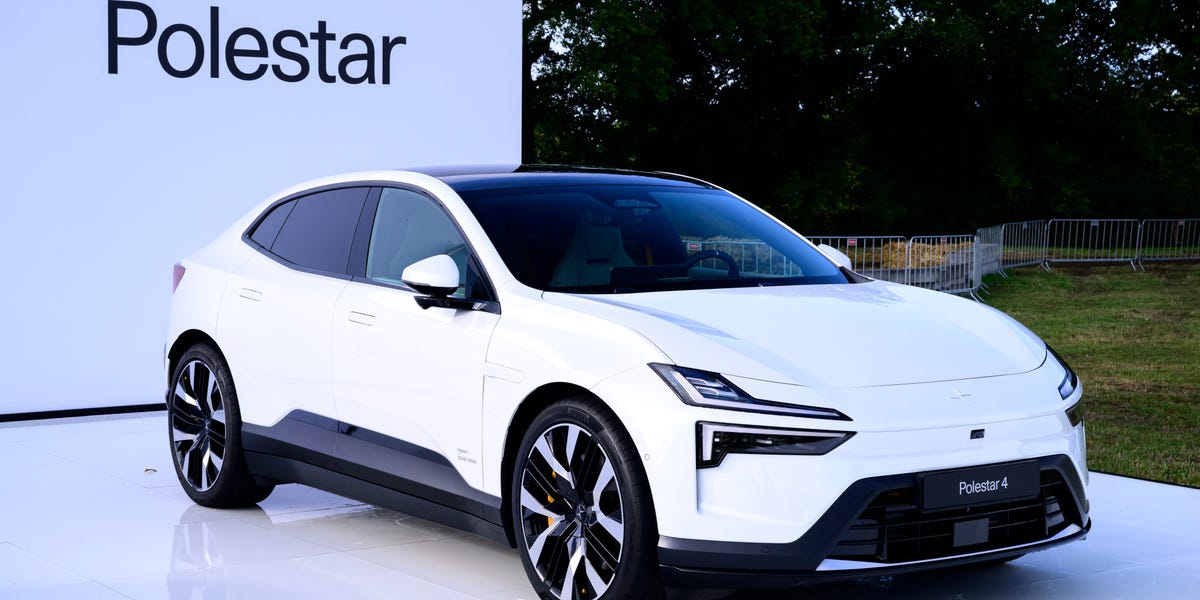
Tesla rival Polestar shuts UK R&D sites and lays off 130 staff
Business Insider· 2025-10-30 18:58
Core Insights - Polestar has shut down its two R&D sites in the UK and laid off 130 staff, shifting R&D efforts to its headquarters in Sweden [1][2] - The decision follows the completion of engineering work for the Polestar 5 model, indicating a strategic focus on centralizing operations [2] - Polestar is majority-owned by Chinese conglomerate Geely and has been focusing more on the European market due to challenges posed by US tariffs [3] Company Performance - Polestar sold a record 2,758 vehicles in the UK last month, but reported a significant net loss of $1.03 billion in Q2 2025 [3] - The company’s sales performance lags behind Tesla, which had nearly 8,000 new registrations in the UK during the same period [4] - In January 2024, Polestar announced plans to cut 450 jobs globally, representing about 15% of its workforce [4]