Chevron

Search documents
3 Top Oil Stocks That Can Still Thrive Even Though Oil Prices Have Dropped Into the $60s
The Motley Fool· 2025-05-18 09:40
Group 1: Oil Price Trends - Crude oil prices have fallen over 10% this year, with Brent crude now in the low $60s, impacting cash flows for oil companies [1] - The significant concern for oil companies arises when prices drop below $50 per barrel, as this is the break-even point for some firms [6] Group 2: Company Resilience - TotalEnergies is well-positioned to handle lower oil prices due to its diversified business model and strong cash reserves, with a net debt-to-equity ratio around 15% [4][5] - ExxonMobil's upstream segment, which accounts for nearly 70% of its earnings, is expected to maintain resilience, with a projected breakeven price dropping to $35 per barrel by 2027 and $30 by 2030 [9][10] - Chevron has the lowest upstream breakeven level in the industry at around $30 per barrel, supported by strategic acquisitions and a strong balance sheet with a net debt ratio of 14% [13][15] Group 3: Financial Strategies - TotalEnergies maintains a sustainable 6.7% dividend yield due to its diversified operations and efficient management [7] - ExxonMobil anticipates generating nearly $110 billion in incremental cash flow by 2030 at a Brent price of $55, with plans to invest nearly $140 billion in major projects [11][12] - Chevron's investments are expected to generate an additional $9 billion in annual free cash flow at $60 oil, alongside a potential $60 billion acquisition of Hess to enhance its resource portfolio [16][17]


Near a 52-Week Low, Here's Why This 4.8%-Yielding Dividend Stock Is a Top Buy for Passive Income
The Motley Fool· 2025-05-17 11:45
Core Viewpoint - Chevron is positioned as an excellent dividend stock for passive income investors, despite a recent decline in stock price and low oil prices [1][3][13] Financial Performance - Chevron's stock has fallen approximately 16% from its 52-week high, which occurred less than two months ago [1] - Brent crude oil prices are at multi-year lows, impacting Chevron's margins and leading to lower revenue and earnings growth [3] - The company has become more efficient, with expected incremental free cash flow (FCF) of $9 billion by 2026 at a Brent price of $60 per barrel [5] Operational Efficiency - Chevron has the lowest upstream breakeven in its peer group, around the low $30-per-barrel Brent range, outperforming competitors like ExxonMobil and Shell [6] - The company anticipates a 50% increase in Gulf Coast production by 2026, driven by the expansion of its deepwater Anchor project [7] Shareholder Returns - Chevron has consistently executed stock buybacks, with $11.26 billion in 2022, $14.94 billion in 2023, and $15.23 billion planned for 2024 [8] - The company plans to spend $2.5 billion to $3 billion on buybacks in the second quarter of 2024, while maintaining a strong cash return to shareholders [9] - Chevron's quarterly dividend expenditure is around $3 billion, with a 38-year history of increasing dividends, resulting in a yield of 4.8% [10][11] Financial Health - The company's debt ratio stands at 14.4%, which is below its target range of 20% to 25%, indicating a strong balance sheet [12] Investment Outlook - Chevron is viewed as a reliable dividend stock with a strong track record, capable of generating high FCF and supporting future buybacks and dividend increases [13][14]
Better Energy Stock: Chevron vs. ExxonMobil
The Motley Fool· 2025-05-15 09:05
Group 1: Company Overview - ExxonMobil and Chevron are direct competitors operating under the integrated energy model, which includes oil and natural gas production, transportation, and refining [2] - Both companies have extensive gas station networks and are exposed to the entire energy value chain, helping to mitigate the impact of price fluctuations in oil and natural gas [4] Group 2: Financial Strength - Both Exxon and Chevron have strong balance sheets, with Exxon’s debt-to-equity ratio at approximately 0.15 and Chevron’s at around 0.2, indicating ample room for leverage [5] - The companies have impressive dividend histories, with Exxon increasing its dividend for 43 consecutive years and Chevron for 38 years, showcasing their resilience in the volatile energy sector [6] Group 3: Investment Considerations - Exxon has a dividend yield of roughly 3.8%, while Chevron's yield is significantly higher at 5%, making Chevron more attractive for yield-focused investors [8] - Chevron faces notable challenges, including a proposed merger with Hess and political issues in Venezuela, which contribute to its higher yield as compensation for added risks [9][10][11] - The current weak energy prices suggest it may be a good time to consider investing in either company, with Exxon being more suitable for conservative investors and Chevron for those willing to accept higher risk for greater yield [12][13]
3 High-Yield Oil Stocks to Buy With $1,000 and Hold Forever
The Motley Fool· 2025-05-13 08:51
Core Viewpoint - Oil prices are currently under pressure, affecting oil-related stocks, but this presents a potential buying opportunity for long-term investors as oil prices have historically rebounded [1][2] Group 1: Chevron - Chevron is a major integrated energy company with operations across upstream, midstream, and downstream sectors, providing resilience against commodity price volatility [3] - The company maintains a strong balance sheet with a debt-to-equity ratio of approximately 0.2, allowing it to support its business and dividends during downturns [4] - Despite facing company-specific challenges, including a difficult merger and political issues in Venezuela, Chevron offers a 5% yield that is expected to remain stable [5] Group 2: TotalEnergies - TotalEnergies is a French integrated energy giant that has invested in clean energy while maintaining its dividend, unlike some competitors [8] - The company has accelerated its clean energy investments, with this segment growing by 17% in 2024, providing a hedge against the transition to cleaner energy [9] - The stock currently offers a dividend yield of 6.5%, making it an attractive option for investors seeking high yield with exposure to both oil and clean energy [10] Group 3: Enbridge - Enbridge operates as a midstream company, focusing on pipelines, storage, processing, and transportation of oil and natural gas, which provides a consistent income stream [11] - Approximately 50% of Enbridge's EBITDA comes from oil pipelines, while 25% comes from natural gas pipelines, ensuring reliable cash flows [12] - The company is also diversifying into natural gas utilities and clean energy investments, which are regulated and driven by long-term contracts, further minimizing commodity risk [13] Group 4: Industry Outlook - Oil remains a vital energy source despite the ongoing energy transition, and companies like Chevron, TotalEnergies, and Enbridge provide various investment opportunities in the energy sector [14] - Each of these companies offers unique advantages, such as diversified exposure, high yields, and reduced commodity risk, making them appealing options for investors looking to invest in the energy sector [15]

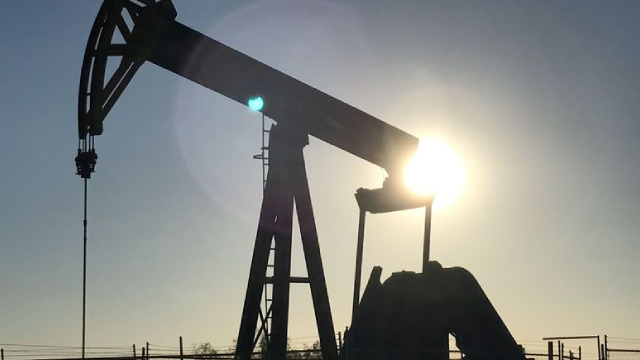
Chevron: Unique Buying Opportunity
Seeking Alpha· 2025-05-13 02:28
Core Insights - Chevron reported earnings per share (EPS) that exceeded analyst estimates for the first fiscal quarter, despite a decline in average petroleum prices compared to the same period last year [1] Financial Performance - The company achieved better-than-expected EPS results, indicating strong operational performance [1] - The decline in average petroleum prices suggests a challenging market environment, yet Chevron managed to outperform expectations [1]
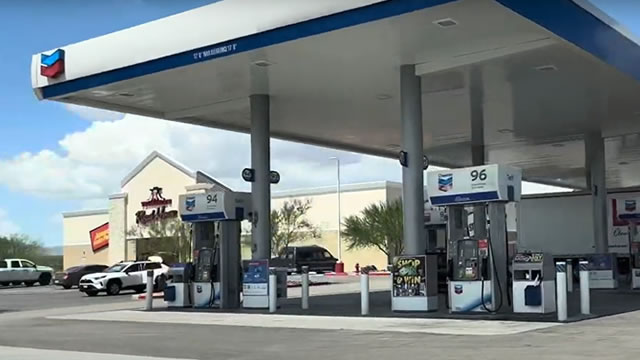
Is a Big Oil Megamerger Brewing? Exxon, Chevron, and Others Are Eyeing This Oil Stock.
The Motley Fool· 2025-05-11 19:22
Consolidation in the Oil Industry - A consolidation wave has occurred in the oil sector, with ExxonMobil initiating a $64.5 billion acquisition of Pioneer Natural Resources and Chevron planning to buy Hess for $60 billion [1][2] BP's Strategic Shifts - BP has faced challenges and undergone two significant strategy shifts, initially pledging to cut capital spending on oil and gas projects by 40% to focus on clean energy [4] - Due to a recovery in oil prices and underperformance, BP has revised its strategy, reducing renewable investment from $5 billion to $1.5 billion to $2 billion annually while increasing oil and gas capital investment to $10 billion per year [5][6] BP's Production Goals - BP aims to increase its overall oil and gas output to an average of 2.5 million barrels of oil equivalent (BOE) per day by 2030, up from less than 2.4 million BOE last year [6] Comparison with Competitors - BP's strategy contrasts with U.S. oil giants like Exxon and Chevron, which have clear multi-year strategies for shareholder value growth, including Exxon's $140 billion investment plan and Chevron's focus on advantaged assets [7][8] Potential Takeover Interest - BP's underperformance has made it a potential takeover target, with companies like Shell, Exxon, Chevron, TotalEnergies, and Adnoc Gas reportedly considering acquisitions [10][12] - Shell has expressed hesitance, preferring stock repurchases over acquiring BP, citing the need to stabilize its own operations first [11] Challenges to Acquisition - BP's significant debt of $77 billion, partly from the Deepwater Horizon disaster, poses a challenge for potential acquirers, as it could negatively impact their balance sheets [13] - Regulatory scrutiny in the U.K. may also hinder any acquisition attempts, as there may be resistance to foreign control of BP [13] Investment Appeal - Despite speculation around a potential acquisition, BP's shifting strategy and financial challenges make it a less appealing investment compared to Exxon and Chevron, which have more defined growth strategies [14]

Chevron(CVX) - 2025 Q1 - Quarterly Report
2025-05-08 14:49
Financial Performance - Net income attributable to Chevron Corporation for Q1 2025 was $3.5 billion ($2.00 per share — diluted), down from $5.5 billion ($2.97 per share — diluted) in Q1 2024, representing a 36.4% decrease [99]. - Upstream earnings in Q1 2025 were $3.8 billion, a decline of 27.7% from $5.2 billion in Q1 2024, primarily due to lower liftings and unfavorable foreign exchange effects [100]. - Downstream earnings in Q1 2025 were $325 million, down 58.6% from $783 million in Q1 2024, mainly due to lower margins on refined product sales [100]. - Sales and other operating revenues for Q1 2025 were $46.101 billion, a decrease from $46.580 billion in Q1 2024, attributed to lower refined product and crude oil prices [154]. - Income from equity affiliates fell to $820 million from $1.441 billion, primarily due to lower upstream-related earnings from TCO in Kazakhstan [155]. - Cash provided by operating activities in Q1 2025 was $5.2 billion, down from $6.8 billion in the year-ago period [171]. - Free cash flow for Q1 2025 was $1,262 million, down from $2,739 million in Q1 2024 [182]. - Net income for Q1 2025 was $6,435 million, while the net income for the year ended December 31, 2024 was $73,119 million [179]. Cost Management and Asset Sales - Chevron plans to achieve $2-3 billion in structural cost reductions by the end of 2026 through portfolio optimization and technology enhancements [119]. - The company is targeting $10-15 billion in asset sales over the five-year period ending in 2028 to augment financial performance [115]. Shareholder Returns - The company repurchased 25.0 million shares for $3.9 billion in Q1 2025, part of a $75 billion share repurchase program initiated in April 2023 [179]. - The company expects share repurchases in Q2 2025 to be between $2.5 billion and $3.0 billion [179]. Production and Operations - The company's worldwide net oil-equivalent production averaged 3.35 million barrels per day, relatively flat year-over-year, with a 4% increase in U.S. production [135][144]. - Chevron's U.S. upstream earnings decreased by $217 million to $1.858 billion, primarily due to higher operating expenses and lower liquids realizations [144]. - International upstream earnings fell by $1.3 billion to $1.9 billion, driven by lower liftings and unfavorable foreign currency effects [146]. - U.S. downstream earnings dropped by $350 million to $103 million, mainly due to lower margins on refined product sales [148]. - International downstream earnings decreased by $108 million to $222 million, impacted by lower margins and unfavorable foreign currency effects [150]. Tax and Expenses - The effective tax rate for the company can change significantly during periods of earnings volatility, influenced by the mix of earnings across different tax jurisdictions [110]. - Income tax expense decreased by $300 million to $2.07 billion in Q1 2025, attributed to a decrease in total income before tax of $2.3 billion [164]. - U.S. income before tax decreased from $2.6 billion in Q1 2024 to $1.9 billion in Q1 2025, a decline of $736 million [165]. - International income before tax decreased from $5.3 billion in Q1 2024 to $3.7 billion in Q1 2025, a decline of $1.6 billion [166]. - Operating, selling, general and administrative expenses rose to $7.63 billion in Q1 2025 from $7.54 billion in Q1 2024, mainly due to higher legal reserves [158]. - Exploration expenses increased to $187 million in Q1 2025 from $129 million in Q1 2024, primarily due to higher dry hole expenses [159]. - Depreciation, depletion and amortization expenses slightly increased to $4.12 billion in Q1 2025 from $4.09 billion in Q1 2024 [160]. Market Conditions - Crude oil prices averaged $76 per barrel in Q1 2025, down from $83 per barrel in Q1 2024, with a sensitivity of approximately $450 million for every dollar change in Brent prices [129]. - Purchased crude oil and products increased to $28.61 billion in Q1 2025 from $27.74 billion in Q1 2024, driven by higher natural gas and crude oil prices [157]. Strategic Initiatives - Chevron entered into a definitive merger agreement with Hess Corporation in October 2023, reflecting confidence in the acquisition [116]. - Between January and March 2025, Chevron purchased 15,380,000 shares of Hess common stock, representing approximately 4.99% of Hess's outstanding shares [117]. - Chevron continues to develop oil and gas resources while aiming to lower carbon intensity and grow new businesses in renewable fuels and carbon capture technologies [107]. - The Wellhead Pressure Management Project at Tengizchevroil LLP became fully operational at year-end 2024, with oil production from the Future Growth Project ramping up by the end of Q1 2025 [122]. Financial Position - Total debt and finance lease liabilities increased to $29.7 billion at March 31, 2025, up from $24.5 billion at December 31, 2024 [172]. - The debt ratio increased to 16.6% as of March 31, 2025, compared to 13.9% at December 31, 2024 [182]. - Current assets increased to $19,086 million as of March 31, 2025, up from $16,918 million at December 31, 2024 [179]. - Current liabilities decreased to $29,262 million as of March 31, 2025, from $30,563 million at December 31, 2024 [179]. - Noncontrolling interests were $836 million at March 31, 2025, slightly down from $839 million at December 31, 2024 [181].
After Q1 Results, What Comes Next for Chevron Shareholders?
ZACKS· 2025-05-08 13:20
Core Viewpoint - Chevron Corporation's Q1 2025 earnings report shows a mixed performance, with adjusted earnings beating expectations but revenues missing, reflecting ongoing challenges in the energy market and investor concerns about the company's positioning [1][4][16]. Financial Performance - Adjusted earnings were $2.18 per share, down 26% year-over-year, while revenues fell 2.3% to $47.6 billion, missing estimates [1][4]. - Upstream earnings decreased by 28.3% year-over-year due to weaker oil prices and flat production levels, while downstream profits slumped nearly 60% due to lower margins [4]. - Free cash flow was $1.3 billion, significantly below prior-year levels, but the company returned $6.9 billion to shareholders through dividends and buybacks [4]. Capital Management - Chevron has reduced its second-quarter buyback target to $2.5-$3 billion from $3.9 billion in Q1, indicating a cautious approach amid a shaky macro landscape [5]. - The company maintained capital discipline, spending $3.9 billion in Q1 and pursuing a $2–$3 billion cost reduction initiative through 2026 [7]. - Chevron's debt-to-capital ratio is around 16.6, indicating a strong balance sheet compared to global oil majors [7]. Asset Quality - Chevron benefits from a high-quality asset base, particularly in the Permian Basin, where 80% of its acreage has low or no royalty obligations, enhancing long-term returns [6]. - The company is also developing new projects like Ballymore in the Gulf of America and has strong operations in the Tengiz field in Kazakhstan [6]. Acquisition and Legal Issues - A significant concern is the pending $53 billion acquisition of Hess Corporation, which includes a 30% stake in the Stabroek block offshore Guyana [11]. - The arbitration case with ExxonMobil and CNOOC regarding the acquisition could impact Chevron's growth prospects, with hearings scheduled for late May [11][12]. Market Sentiment and Valuation - The broader market sentiment is challenging, with falling oil prices due to global trade tensions and OPEC+ developments affecting upstream earnings [13]. - Chevron trades at an EV/EBITDA multiple of 5.83, which is attractive compared to ExxonMobil and below its five-year historical average, suggesting potential value for long-term investors [14]. Conclusion - Chevron's Q1 performance highlights its strengths in cost control and operational efficiency, but macro headwinds and legal uncertainties cloud the near-term outlook [16]. - The company appears appropriately priced given its strong balance sheet and disciplined capital management, with a Zacks Rank of 3 (Hold) indicating a cautious stance for investors [17].

7%+ Yields With Stress-Free Dividend Growth For An Early Retirement
Seeking Alpha· 2025-05-07 15:30
Group 1 - Blue-chip stocks with yields over 7% and consistent dividend growth are essential for retirement portfolios focused on dividends [1] - The company has released its latest top investment picks for May 2025, indicating a timely opportunity for investors [1] Group 2 - The company invests significant resources, over $100,000 annually, into researching profitable investment opportunities [2] - The approach has garnered over 180 five-star reviews from members, highlighting the effectiveness of the strategies [2]
Chevron's Fundamentals Shine Through Market Turmoil
MarketBeat· 2025-05-06 11:16
Core Viewpoint - Chevron Corp. has experienced significant stock volatility following its earnings announcement, influenced by OPEC+ production increases and U.S. tariff policies impacting oil prices, presenting potential opportunities for long-term investors [1][4][6]. Financial Performance - For Q1 2025, Chevron reported earnings per share (EPS) of $2.18, which was 30% lower year-over-year, and revenue of $47.61 billion, falling short of the $49.05 billion expected by analysts [4]. - The stock initially dropped about 2% post-earnings but later rallied to end the day up 2.6% [4]. Market Dynamics - OPEC+ announced an increase in production, contributing to cyclical weaknesses in energy stocks, particularly affecting Chevron [5]. - The company's CEO highlighted that U.S. tariff policies have pressured oil prices, which fell from the mid-$80 range in early April to under $60 by May 5 [6]. Share Buybacks and Dividends - Chevron plans to reduce its share buybacks to between $2.5 billion and $3.0 billion in the upcoming quarter, approximately 30% less than the $3.9 billion in Q1 [7]. - Despite trimming buybacks, Chevron remains a Dividend Aristocrat, having increased its dividend for 38 consecutive years, with a current yield of 5.05% and an annual dividend of $6.84 [10][12]. Investment Outlook - The decision to invest in Chevron is influenced by broader economic trends, with potential downside for investors anticipating a recession, while those expecting economic recovery may find oil stocks attractive [13][14]. - Chevron shares are trading near a three-year low, suggesting that the recent sell-off may be overdone, presenting a potential entry point for long-term investors [13][14].