Merck

Search documents
5 stocks to consider right now amid volatility and uncertainty: Portfolio manager
Yahoo Finance· 2025-06-12 20:07
Market Volatility & Investment Strategy - The market has shown resilience with a V-shaped recovery, and investors should embrace volatility as it favors long-term value buyers [1] - Despite major market averages being in the black for the year, many individual stocks, especially in the Russell 2000, are still down significantly, presenting value opportunities [4] - Stock picking is expected to outperform buying indexes, offering better sleep-at-night valuations and generous dividend yields [11] Undervalued Sectors & Stocks - The energy sector, particularly Sevitas Resources, is attractive due to being hit hard, offering a big dividend yield and low PE ratio while remaining profitable [5][6] - Pharmaceutical companies like Merc are viewed as high quality, trading at a PE around 11 with a 4% dividend yield, lower than its historical valuation [6] - Whirlpool, the appliance maker, offers a yield over 7% with a PE in the 9-10 range, anticipating support from lower interest rates later in the year [8] - Target, the discount retailer, has a low valuation relative to its history and a dividend yield pushing 5% [8][9] - UPS, the package shipping company, aligns with the theme of low valuations and generous dividend yields [9] Economic Outlook & Fed Policy - Good news rate cuts are anticipated throughout the year, although immediate cuts are unlikely due to tariff uncertainties and high inflation expectations [12][13] - Historically, stocks have performed well regardless of Fed tightening or easing, rising or falling interest rates, or high or low inflation [14] - Value stocks have historically lost only a couple percent on average during recessions, with spectacular returns of 30-40% coming out of recessions [15][16] Portfolio Valuation - The portfolio's forward earnings trade at 14 times, compared to the S&P 500's 23 times forward earnings [10] - The portfolio's overall dividend yield is 250 basis points (25%) versus 130 basis points (13%) for the S&P 500 [10]


Why Summit Therapeutics Stock Tanked Today
The Motley Fool· 2025-06-11 21:28
Core Viewpoint - Summit Therapeutics' stock experienced a significant decline of over 11% following a negative assessment from analyst Daina Graybosch of Leerink Partners, who initiated coverage with an underperform rating and a price target of $12 per share, nearly 40% below the recent closing price [1][2]. Group 1: Analyst's Assessment - Daina Graybosch's report highlighted concerns regarding ivonescimab, a cancer drug licensed from Akeso, indicating that despite positive results in a clinical study against Merck's Keytruda, the drug may not capture sufficient market share to justify Summit's high stock valuations [4][5]. - The analyst noted that ivonescimab is not the first drug of its kind, which could lead to increased challenges in achieving clinical success, regulatory approval, and sales [5]. Group 2: Market Dynamics - Summit's stock price volatility is closely tied to developments surrounding ivonescimab, with the potential for large addressable markets in various cancer types, suggesting that the company's prospects should not be dismissed solely based on current valuations [6].


Merck: Best Case For Option Collars We'll Ever See
Seeking Alpha· 2025-06-10 21:04
Group 1 - The article discusses the author's ongoing investment strategy involving Merck & Co., Inc. (NYSE: MRK) through an option collar approach, indicating a nuanced engagement with the stock [1] - The author emphasizes the importance of understanding market narratives and teaches subscribers how to interpret these stories for investment decisions [1] Group 2 - The author has a background in investment advising and fund management, having spent decades in the industry before transitioning to focus on the Sungarden Investors Club [1] - The article does not disclose any current positions in the mentioned companies, indicating a neutral stance on potential conflicts of interest [2]

Merck & Co., Inc. (MRK) Presents at Goldman Sachs 46th Annual Global Healthcare Conference Transcript
Seeking Alpha· 2025-06-10 16:56
Core Insights - Merck is undergoing a significant transformation with promising developments in its pipeline, including two important Phase III study readouts for enlicitide and FDA approval for clesrovimab, an RSV vaccine [4] - The company has nearly 20 new assets in its pipeline, with ongoing launches of WINREVAIR and others showing strong initial performance [5] Company Developments - Merck announced two key Phase III study results for enlicitide, an oral PCSK9 inhibitor, which yielded positive outcomes [4] - The FDA approved clesrovimab, marking a significant milestone for Merck's RSV vaccine efforts [4] - The company is poised for a series of data readouts and product launches in the near future, indicating a robust growth trajectory [4] Future Outlook - Merck is preparing for nearly 20 additional product launches over the next few years, which is expected to enhance its market position [5] - The ongoing launches of existing products are off to strong starts, contributing to the company's optimistic outlook [5]

Merck Secures FDA Nod for New RSV Antibody Enflonsia in Infants
ZACKS· 2025-06-10 15:51
Group 1: FDA Approval and Product Launch - Merck announced FDA approval for its long-acting monoclonal antibody, clesrovimab, branded as Enflonsia, for the prevention of RSV in newborns and infants [1][7] - The approval was based on data from the pivotal phase IIb/III CLEVER study, which demonstrated a significant reduction in RSV disease and hospitalization in healthy infants [2][7] - Merck plans to launch Enflonsia in the U.S. ahead of the 2025-26 RSV season, with pricing set at $556 per dose and ordering expected to start next month [3][7] Group 2: Market Competition - Enflonsia will face competition from AstraZeneca/Sanofi's RSV antibody Beyfortus, which was also approved in 2023 and achieved blockbuster status in its first full-year sales [6][7] - Sanofi announced plans to increase the supply of Beyfortus, including shipping the antibody early in the third quarter of 2025 [7] - While multiple RSV vaccines are approved for use in the U.S., only Pfizer's Abrysvo is approved for immunizing infants, contrasting with Enflonsia and Beyfortus, which can be administered directly [8] Group 3: Stock Performance - Year to date, Merck's shares have declined by 20%, while the industry has seen a modest decline of 1% [4]
Merck(MRK) - 2025 FY - Earnings Call Transcript
2025-06-10 15:02
Financial Data and Key Metrics Changes - The company is anticipating over $50 billion in revenue by the early to mid-2030s, driven by a diversified set of therapeutic areas including cardiometabolic, immunology, ophthalmology, vaccines, and HIV [4][5] - The company has invested over $12 billion in manufacturing strategy from 2018 to 2024, with an additional $9 billion planned to bring more manufacturing back to the U.S. [16][18] Business Line Data and Key Metrics Changes - The company has nearly 20 new assets and product launches planned over the next few years, marking a significant period of transformation and growth [3][4] - The oral PCSK9, enlicitide, has shown promising results in Phase III studies, with ambitions to be the most potent LDL cholesterol-lowering pill [3][50] Market Data and Key Metrics Changes - The U.S. market for cholesterol management shows that 70% of individuals are not at their cholesterol goals, indicating a significant opportunity for the company's PCSK9 products [49] - The company continues to see elevated inventories in the Chinese market for Gardasil, with expectations for future growth once market conditions improve [36] Company Strategy and Development Direction - The company is focused on executing its pipeline and leveraging its R&D capabilities across both human and animal health sectors, with a strong emphasis on operational synergies [71][72] - The company is committed to addressing drug pricing issues and is engaged in constructive dialogue with the administration regarding the MFN executive order [9][12] Management's Comments on Operating Environment and Future Outlook - Management expressed confidence in the safety and efficacy of their vaccines, particularly klezrovimab, despite regulatory uncertainties [23][24] - The company is optimistic about its growth trajectory, with more product launches planned than ever before in a five-year window [47] Other Important Information - The company is actively pursuing business development opportunities, with a focus on identifying strategic assets that align with its scientific goals [40][41] - The company is expanding its immunology focus, particularly around the TL1A class, which is seen as a significant therapeutic target [42][43] Q&A Session Summary Question: What are the expectations regarding the political environment and MFN pricing? - Management indicated ongoing constructive dialogue with the administration and a willingness to collaborate on drug pricing solutions [7][9] Question: How is the company addressing the manufacturing shift for KEYTRUDA? - The company is bringing back KEYTRUDA manufacturing to the U.S. through a phased approach, with significant investments in infrastructure [18][19] Question: What is the outlook for Gardasil sales in the U.S.? - Management acknowledged potential headwinds from discussions around lower dosing recommendations but remains confident in the vaccine's value [26][34] Question: What is the company's strategy for business development? - Management emphasized that the recent slowdown in business development activity is due to timing rather than a change in strategy or urgency [40][41] Question: How does the company view the competitive landscape in oncology? - The company is focused on advancing its broad ADC program and is committed to moving quickly in the oncology space [62][64]
Will Merck's Keytruda Continue to Drive Growth Amid Looming LOE?
ZACKS· 2025-06-10 14:50
Core Insights - Merck (MRK) has over six blockbuster drugs, with Keytruda being the primary revenue driver, accounting for approximately 50% of pharmaceutical sales [1][9] - Keytruda's sales are increasing due to its rapid adoption in early-stage non-small cell lung cancer (NSCLC) and continued strong performance in metastatic indications [2] - There are concerns regarding Merck's heavy reliance on Keytruda, especially with the impending loss of exclusivity in 2028, prompting the need for diversification [3] Sales and Growth - Keytruda generated sales of $7.21 billion in Q1 2025, reflecting a 6% year-over-year growth, with an estimated compound annual growth rate (CAGR) of 5.4% over the next three years [7][9] - Merck is exploring innovative strategies to sustain Keytruda's growth, including combinations with LAG3 and CTLA-4 inhibitors, and a partnership with Moderna for a personalized mRNA therapeutic cancer vaccine [5][9] Competitive Landscape - Competitive pressure for Keytruda may increase, particularly with Summit Therapeutics' ivonescimab showing promising results in a phase III study, which could challenge Keytruda's market position [4] Future Strategies - Merck is developing a subcutaneous formulation of Keytruda to potentially extend its patent life, with an FDA decision expected in September [6] - The company is also banking on the recently launched pulmonary arterial hypertension (PAH) drug Winrevair to support revenue after Keytruda's exclusivity ends [7] Valuation and Market Performance - Merck's shares have decreased by 19.6% this year, contrasting with a 0.3% increase in the industry [8] - From a valuation perspective, Merck's price/earnings ratio stands at 8.55, which is lower than the industry average of 15.12 and its own 5-year mean of 12.89 [10]
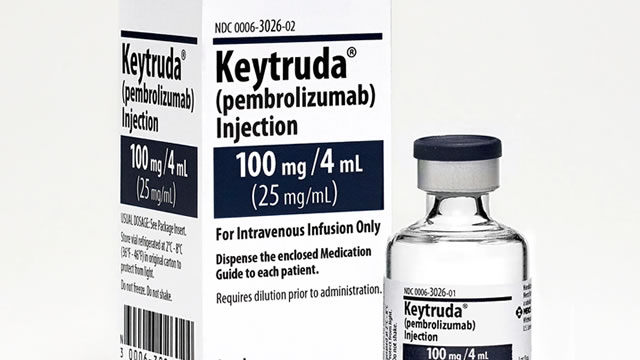
默克公司表示,为预防婴儿呼吸道合胞病毒的疫苗获得了批准。
news flash· 2025-06-09 18:44
Group 1 - The core point of the article is that Merck has received approval for a vaccine aimed at preventing respiratory syncytial virus (RSV) in infants [1]
Spyre Therapeutics Inc (SYRE) FY Conference Transcript
2025-06-09 14:20
Summary of Spyre Therapeutics Inc (SYRE) FY Conference Call Company Overview - **Company**: Spyre Therapeutics Inc (SYRE) - **Industry**: Biotechnology, specifically focusing on inflammatory bowel disease (IBD) treatments - **Market Size**: IBD affects approximately 2 million people in the US, with a global market size of $30 billion [3][2] Core Points and Arguments Unmet Needs in IBD - Current therapies have a therapeutic ceiling with a maximum clinical remission rate of about 25% [3] - Existing treatments require frequent dosing (every two weeks or intravenous) [3] - Spyre aims to address both efficacy and convenience by developing long-acting therapies that can be dosed twice a year [4] Product Development Strategy - Spyre's antibodies are engineered for extended half-lives, allowing for less frequent dosing [4] - The company focuses on combination therapies to enhance efficacy beyond what individual therapies can achieve [4][11] - Three primary targets identified for IBD therapies: alpha four beta seven, TL1A, and IL-23 [10][11] Competitive Landscape - Alpha four beta seven (Entyvio) is currently the leading product in IBD with projected peak sales of $8 billion [12] - Spyre's lead program (SPI-1 targeting alpha four beta seven) shows a half-life more than three times that of Entyvio, allowing for potential dosing twice a year [13][14] - TL1A is expected to show superior monotherapy efficacy compared to existing biologics [11][25] Clinical Development Plans - Spyre plans to conduct a multi-arm phase two study to test monotherapies and combinations efficiently [30][31] - The company has a robust pipeline with multiple candidates in development, including TL1A and IL-23 [42] Market Potential and Differentiation - The company believes that its long-acting injectable combinations will provide a better product profile compared to existing therapies [59] - The potential for quarterly or semiannual dosing is expected to be preferred over daily oral medications, especially in a young patient demographic [63][64] Financial Position - Spyre has $565 million in cash, providing a runway into the second half of 2028, with multiple phase two readouts expected before 2027 [69] Other Important Content - The company is leveraging the recent expiration of YTE intellectual property to develop its therapies without licensing issues [61] - There is a significant unmet need in rheumatoid arthritis (RA), with a $20 billion market size, where TL1A could provide a competitive edge [35] - The company is aware of the challenges posed by biosimilars in the RA market but believes its unique product profile will attract physicians and patients [36] This summary encapsulates the key points discussed during the conference call, highlighting Spyre Therapeutics' strategic focus, product development, market potential, and financial health.

PDS Biotech to Host Key Opinion Leader Event to Discuss Versamune® HPV for the Treatment of HPV16+ HNSCC
GlobeNewswire News Room· 2025-06-09 12:00
Core Viewpoint - PDS Biotechnology Corporation is hosting a virtual event to discuss the evolving treatment landscape for recurrent/metastatic HPV16-positive head and neck squamous cell carcinoma (HNSCC) in light of the Merck KEYNOTE-689 study and the rising incidence of HPV16-positive HNSCC in the US and Europe [1][2]. Company Overview - PDS Biotechnology is a late-stage immunotherapy company focused on innovative treatments that enhance the immune system's ability to target and eliminate cancers [7]. - The company's lead investigational therapy, Versamune® HPV, is currently in a Phase 3 clinical trial in combination with pembrolizumab for first-line treatment of recurrent/metastatic HPV16-positive HNSCC [2][7]. Event Details - The event will feature key opinion leaders, including Kevin Harrington and Katharine A. Price, who will discuss the unmet needs in treating HPV16-positive HNSCC and the distinct characteristics of HPV-positive versus HPV-negative HNSCC [1][2][3]. - A live Q&A session will follow the formal presentations, allowing for direct engagement with the experts [3]. Clinical Trials and Research - Versamune® HPV is being evaluated in multiple clinical trials, including a Phase 3 trial in combination with pembrolizumab and Phase 2 trials for various HPV16-positive cancers [2]. - The event will also address the emerging treatment landscape for first-line recurrent/metastatic HNSCC and the differentiation between HPV-positive and HPV-negative cases [2]. Speakers' Expertise - Kevin Harrington is a leading authority on metastatic head and neck cancer and has significant experience in clinical trials related to HNSCC treatments [4]. - Katharine A. Price specializes in head and neck cancers and is involved in research aimed at improving treatment access and awareness regarding HPV vaccination [5].