宝洁公司

Search documents
Kimberly-Clark CEO Mike Hsu goes one-on-one with Jim Cramer
Youtube· 2025-11-04 01:05
Core Viewpoint - The acquisition of Kenvue by Kimberly-Clark is valued at over $40 billion, creating the second largest consumer packaged goods company globally, but Wall Street is skeptical, leading to a 14% drop in stock price [1][2]. Group 1: Rationale for the Acquisition - The merger aims to create a leading global health and wellness company by combining two iconic American brands [3]. - The deal is expected to generate significant shareholder value through both cost and revenue synergies, with potential value creation in the tens of billions [4][5]. - The complementary nature of the product and geographic portfolios is highlighted, with both companies strong in different markets and product categories [7][9]. Group 2: Market Opportunities - Kimberly-Clark has a strong presence in markets like Indonesia, South Korea, and Mexico, while Kenvue excels in India and Western Europe, presenting growth opportunities [11]. - The companies plan to leverage their strengths in online sales, which accounted for 100% of Kimberly-Clark's growth in North America this year [13][14]. Group 3: Legal and Regulatory Considerations - Concerns regarding potential liabilities from lawsuits, particularly related to Tylenol and talc claims, have been acknowledged, but the company is confident in its due diligence and legal strategy [15][16][18][22]. - The acquisition is expected to face scrutiny from regulatory bodies, but the companies believe it will ultimately benefit consumers and shareholders [25][26]. Group 4: Brand Strategy and Consumer Trends - The companies aim to enhance their brand portfolios, with aspirations to grow existing brands and potentially add new ones [27]. - Despite economic challenges, there is evidence of strong demand for premium products, and the companies are adapting to consumer preferences by offering value-oriented options [30][32].



Jim Cramer talks his take on the current market concentration
Youtube· 2025-11-04 01:01
Core Viewpoint - The concentration of market capitalization in a few companies, referred to as the "Magnificent Seven," continues to attract investment despite concerns about their high valuations and potential market risks [2][10]. Group 1: Magnificent Seven Performance - The Magnificent Seven includes Alphabet, Amazon, Apple, Meta, Microsoft, Nvidia, and Tesla, which have shown significant stock performance, with the NASDAQ gaining 46% [2]. - Amazon's web services division has seen a growth rate increase from 17.5% to 20%, indicating strong performance despite previous concerns about losing market share to Microsoft [5][14]. - Following a strategic partnership with OpenAI, Amazon's stock surged from $222 to $254, marking a nearly 16% increase [8]. Group 2: Growth as a Key Factor - The primary driver for the Magnificent Seven's attractiveness is their growth rates, which are essential for stock investors [12][23]. - Growth stocks have proven to be resilient, bouncing back during market downturns, such as the mini banking crisis of 2023 [13]. - The growth of Amazon Web Services, with a revenue run rate of $132 billion and a 34% gross operating margin, exemplifies the profitable growth potential that investors seek [14][15]. Group 3: Comparison with Other Companies - Kimberly Clark, despite being a well-known company, reported a mere 2.5% organic growth rate, which is insufficient to attract investors interested in the Magnificent Seven [18][19]. - The acquisition of Kenview by Kimberly Clark, valued at nearly $50 billion, did not impress Wall Street, highlighting the challenges faced by traditional companies in maintaining growth [26]. Group 4: Market Sentiment and Investment Strategy - Institutional investors are likely to buy into the Magnificent Seven during market dips to avoid looking uninformed to their clients [4][3]. - The focus on growth rather than traditional safety stocks indicates a shift in investment strategy, with growth stocks being viewed as the new safe haven [12][20].




Tylenol trust crisis: Trump, RFK Jr. and Texas lawsuits slam Kenvue
Yahoo Finance· 2025-11-03 16:33
Kenvue, the company that makes Tylenol, is fighting on both the political and scientific fronts. The latest blow came from the U.S. Health Secretary, placing even more pressure on Kenvue stock, which has already lost 40% of its value in the last six months. Robert F. Kennedy Jr. recently made comments that although there is no proof that taking Tylenol while pregnant causes autism, the possibility can't be ignored. This has led to a growing disagreement and a possible big business opportunity for Haleon, ...
Kimberly-Clark Buying Tylenol Maker Kenvue in $40 Billion Deal
Youtube· 2025-11-03 16:18
Core Insights - The consumer health sector has seen significant activity, with major pharmaceutical companies like Johnson & Johnson, GSK, and Pfizer divesting their consumer health brands, leading to the emergence of new players like Kenvue [2][3] - Kimberly-Clark is positioned to become a major competitor in the consumer health space, potentially rivaling Procter & Gamble by gaining scale through strategic partnerships [3][4] - The relationship between Kimberly-Clark and political figures, particularly President Trump, raises questions about how the company will manage potential liabilities associated with products like Tylenol, which have faced scrutiny [4][6] Industry Trends - The trend of pharmaceutical companies spinning off or selling their consumer health divisions has created opportunities for new entrants in the market [2] - The consumer health sector operates on thinner margins compared to traditional pharmaceuticals, making scale and partnerships crucial for success [4] Company Dynamics - Kenvue has faced challenges, including declining sales linked to political attacks on its main product, Tylenol, which has been controversially associated with unproven claims of autism [6] - Kimberly-Clark's strategy moving forward will need to address these political and market pressures to avoid the pitfalls experienced by Kenvue [5][6]
Third-quarter earnings are indicating a divided economy
CNBC· 2025-11-03 16:17
Core Viewpoint - Wall Street is observing a bifurcated or "K-shaped" economy as consumer spending behaviors diverge, with wealthier Americans increasing their spending while lower-income consumers are cutting back significantly [1][2]. Consumer Spending Trends - Wealthier Americans are spending more, benefiting from stock market gains and rising home values, while lower-income consumers are facing challenges due to inflation, with the Consumer Price Index showing a 0.3% monthly increase and an annual inflation rate of 3% [2][4]. - Companies like Chipotle report that consumers earning less than $100,000, representing about 40% of their customer base, are spending less frequently due to economic concerns, leading to a 0.8% decline in traffic for the quarter [6]. Earnings Reports and Company Responses - Recent earnings reports indicate the emergence of the K-shaped trend, with companies such as Yum Brands, McDonald's, E.l.f. Beauty, Tapestry, and Under Armour expected to report similar trends in their upcoming quarterly earnings [5]. - Coca-Cola's growth is driven by higher-priced products, while Procter & Gamble noted that wealthier customers are purchasing more from club retailers, contrasting with lower-income shoppers who are significantly reducing their spending [7]. - McDonald's has acknowledged the "two-tier economy" by expanding its value menu in response to changing consumer behaviors [8].



Buffett's Berkshire Cash Pile Hits Record $382 Billion
Bloomberg Television· 2025-11-03 15:35
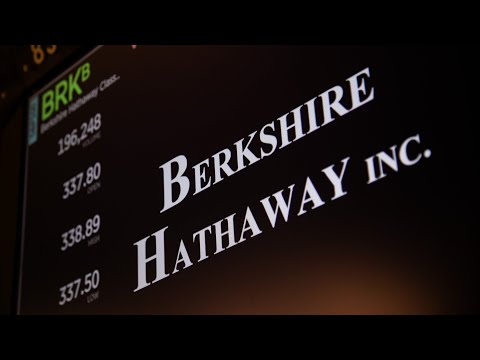
Berkshire Hathaway's cache hit a record $381.7% billion last quarter as Warren Buffett stayed on the sidelines in terms of M&A. Operating profit jumped 34%, led by booming insurance results and unusually low disaster activity. Investors are paying closer attention as the company nears a new era, with Buffett handing off the role of CEO to Greg Abel at year end.Danny. Let's discuss those results further. Joining us now is Alex Roger Bhandari.He covers Buffett and Berkshire for Bloomberg News. Alex It's the s ...
Buffett's Berkshire Cash Pile Hits Record $382 Billion
Youtube· 2025-11-03 15:35
Core Insights - Berkshire Hathaway's cash reserves reached a record $381.7 billion in the last quarter, with operating profit increasing by 34% due to strong insurance performance and low disaster activity [1] - The company is currently not engaging in mergers and acquisitions, raising questions about Warren Buffett's investment strategy as he prepares to hand over CEO responsibilities to Greg Abel at the end of the year [1][2] Financial Performance - The cash pile is comparable to major companies like Procter & Gamble and Home Depot, indicating significant liquidity [2] - Despite the large cash reserves, Buffett has been a net seller of equities, offloading $6 billion, which suggests a cautious approach to current market valuations [2][3] - The net investment income has decreased quarter over quarter due to falling short-term interest rates, impacting overall returns [3][4] Market Position and Strategy - The lack of share buybacks by Berkshire Hathaway implies that the company does not view its shares as undervalued, which could indicate a broader market perception of fair or high valuations [5][6] - Buffett's recent investments include a stake in UnitedHealth for $1.6 billion, but overall, he has expressed a lack of opportunities in the current market [6][7] - The ongoing M&A activity in the market, valued at approximately $4 trillion, contrasts with Berkshire's current strategy of remaining on the sidelines [5][7]
Kimberly-Clark agrees to buy Tylenol owner Kenvue, creating consumer staples giant
Youtube· 2025-11-03 14:57
Core Viewpoint - The article discusses a significant acquisition deal involving Kimberly Clark and Ken View, highlighting the initial valuation of the deal at $40 billion, which is expected to decrease due to a decline in Kimberly Clark's stock price [1][2]. Deal Structure - The acquisition terms include $3.50 in cash per share and the remainder in Kimberly stock, equating to approximately $21 per share [2]. - The deal is projected to generate $2.1 billion in synergies, primarily from cost reductions and some revenue synergies as the brands are combined [3][4]. Market Context - The deal comes amid challenges for Ken View, including shareholder dissatisfaction and calls for management changes due to perceived mismanagement [4]. - The acquisition is seen as a strategic move for Kimberly Clark to enhance its market position, particularly in Europe, where it has strengths compared to Ken View's performance in China [7]. Financial Metrics - The hope is that Kimberly Clark can achieve a PNG multiple of around 21 times earnings post-acquisition, compared to the current adjusted multiple of about 10 [6]. - The deal offers a 50% premium for Ken View shareholders, although the multiple remains below the median for consumer product deals, which often exceed 18 times EBITDA [11]. Legal Considerations - Concerns regarding litigation related to Tylenol and its alleged links to autism are noted, but the article suggests that these risks may be overstated [9][17]. - The material adverse change clause in the deal provides some protection for Kimberly Clark against unforeseen legal liabilities related to Tylenol, as long as they align with previously disclosed information [17]. Strategic Outlook - The acquisition is viewed positively as a means for Kimberly Clark to grow and improve its brand portfolio, despite current market challenges and stock performance [14][18]. - The company is expected to leverage its strong product lines, including essential consumer goods, to drive future growth [16].

Kimberly-Clark to buy Tylenol maker Kenvue in landmark $40bn merger
The Guardian· 2025-11-03 14:16
Core Viewpoint - Kimberly-Clark is set to acquire Kenvue for over $40 billion, marking a significant deal in the consumer sector amid challenges faced by Kenvue, including legal scrutiny and declining demand [1][2]. Group 1: Acquisition Details - The acquisition will provide Kimberly-Clark with Kenvue's extensive brand portfolio, including Listerine, Band-Aid, Aveeno, and Neutrogena, with combined annual revenues projected at approximately $32 billion [3]. - Kimberly-Clark anticipates around $2.1 billion in annual cost savings from the acquisition, which is expected to close in the second half of 2026 [3]. Group 2: Market Context - The deal comes at a time when Kenvue is facing negative litigation and regulatory challenges, including lawsuits related to Tylenol and baby powder products, which have affected investor sentiment [2][4]. - The consumer goods market is increasingly competitive, with companies like Kimberly-Clark and Procter & Gamble adapting to a more value-seeking consumer by adjusting product sizes and restructuring underperforming units [5]. Group 3: Strategic Moves - Kimberly-Clark's acquisition follows its sale of a majority stake in its international tissue business to Brazilian pulp maker Suzano, with proceeds expected to support the Kenvue buyout [5].
Kimberly-Clark to acquire Tylenol owner Kenvue in $48.7 billion deal
Youtube· 2025-11-03 13:40
Core Viewpoint - Kimberly Clark is set to acquire Ken View for over $40 billion, with a significant equity component in the deal, potentially lowering the cash value of the transaction [1][5]. Company Overview - Ken View has faced organizational challenges, including the removal of its CEO and ongoing struggles since its spin-off from Johnson & Johnson, despite having a strong brand portfolio that includes Tylenol and Listerine [2][4]. - Kimberly Clark has been interested in acquiring Ken View for an extended period, previously attempting a reverse Mars trust deal to separate it from J&J before the spin-off [8]. Financial Aspects - The proposed acquisition includes $2.1 billion in cost synergies, with $1.9 billion primarily from cost reductions, and additional revenue synergies anticipated [4][5]. - The deal structure involves a cash component of $3.50 per share and a stock component, with Ken View shareholders expected to own 46% of the combined entity [5][7]. - The acquisition is priced at a 50% premium, but the overall valuation is impacted by Kimberly Clark's declining share price, leading to a deal multiple of approximately 14.5 times, below the typical median of 18 times for similar transactions [6][10]. Market Implications - The merger aims to create a competitive portfolio that could rival Procter & Gamble, with hopes of achieving a market multiple closer to that of P&G or Colgate in the future [3][7]. - The acquisition is expected to be accretive over time, allowing for potential upside as synergies are realized and Ken View's business is reorganized [4][7].