Samsung Electronics

Search documents
Astera Labs Expands Interoperability Leadership to Propel Next-Gen PCIe 6.x Ecosystem
Globenewswire· 2025-03-13 20:05
Core Insights - Astera Labs expands its Cloud-Scale Interop Lab to enhance the development and market readiness of PCIe 6.x AI platforms using Scorpio Smart Fabric Switches [1][2] - The interoperability testing aims to minimize risks and reduce development time and costs for customers by ensuring compatibility across various PCIe generations and devices [1][2] Company Developments - The expansion of the interoperability lab is part of Astera Labs' strategy to lead in system interoperability and follows a successful demonstration of PCIe 6.x interoperability with Micron's SSD at DesignCon 2025 [3] - Astera Labs emphasizes its cloud-native philosophy, focusing on real-world applications and advanced diagnostics to optimize performance and reliability for next-generation systems [2] Industry Support - Key industry players, including AMD, Keysight Technologies, Micron, Samsung Electronics, and Teledyne Lecroy, express strong support for Astera Labs' initiatives, highlighting the importance of robust interoperability for next-generation cloud and AI infrastructure [4][5] - Collaborations with these companies aim to ensure seamless integration and performance optimization of PCIe 6.x technologies in hyperscale data centers [4][5] Technology Significance - PCIe 6.x technology is crucial for maximizing the performance of GPUs, CPUs, and AI accelerators in hyperscale systems, addressing new connectivity challenges introduced by higher speeds and mixed generation complexities [2] - Astera Labs' Scorpio P-Series Fabric Switches and Aries 6 PCIe/CXL Smart DSP Retimers undergo extensive testing to ensure compliance and interoperability in complex PCIe topologies [2]



Europe Microwave Oven Market Forecast Report and Company Analysis 2025-2033 Featuring Illinois Tool Works, Sharp, LG, Whirlpool, GE, Panasonic, Samsung, Midea
Globenewswire· 2025-03-11 09:04
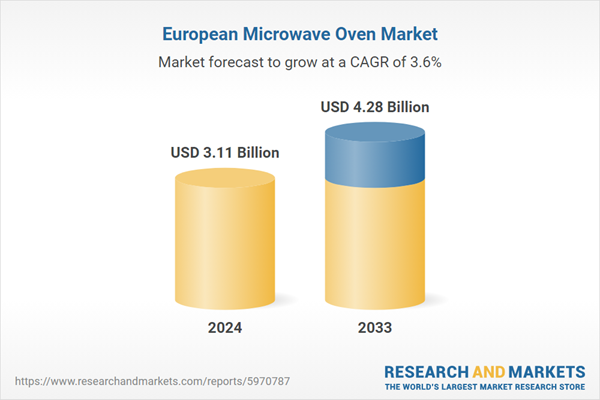
Market Overview - The Europe Microwave Oven market reached a value of US$ 3.11 Billion in 2024 and is projected to grow at a CAGR of 3.62% from 2025 to 2033, reaching US$ 4.28 Billion by 2033 [1][15]. Growth Drivers - Increasing demand for convenience appliances and rising disposable income are key factors driving market growth [1][6]. - The trend towards busy lifestyles and urbanization has led to a surge in demand for appliances that simplify cooking processes, such as microwave ovens [6][10]. - Technological advancements, including IoT-enabled and smart microwave ovens, are enhancing consumer appeal by offering features like remote control and energy efficiency [8][10]. Consumer Preferences - Consumers are increasingly looking for appliances that combine style, efficiency, and functionality, with a notable preference for premium kitchen appliances [10][11]. - The youth and working professionals are significant demographics driving the demand for microwave ovens due to their time-saving capabilities [5][6]. Market Challenges - The European microwave oven market is experiencing high saturation, particularly in developed regions, which limits opportunities for new entrants and necessitates innovation among existing players [12]. - Environmental concerns and strict regulations regarding energy consumption and waste management are posing challenges for manufacturers, requiring investments in sustainable technologies [14]. Competitive Landscape - Major players in the market include Illinois Tool Works Inc, Sharp, LG Electronics, Whirlpool Corporation, GE Appliances, Panasonic Corporation, Samsung Electronics, and Midea Group [20]. - Manufacturers are focusing on high-end products with added functionalities to stimulate demand and enhance market penetration [9].
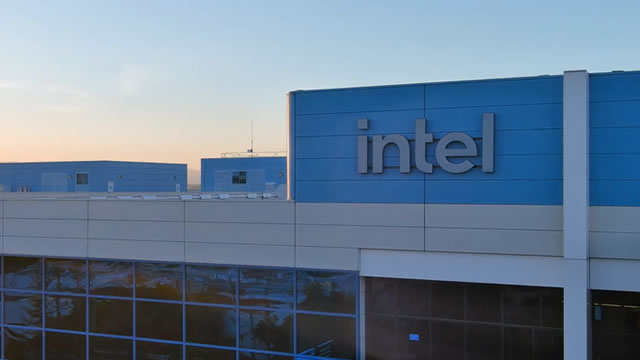
Intel Foundry's Moment of Truth: Will 18A Deliver?
MarketBeat· 2025-03-06 13:11
Core Insights - Intel is at a critical juncture with reports indicating that NVIDIA and Broadcom are evaluating its advanced 18A manufacturing process, which is pivotal for Intel Foundry Services and its IDM 2.0 strategy [1][2][3] - The market reacted negatively to Intel's foundry comeback bid, with stock prices dropping nearly 7%, reflecting the high stakes and uncertainty surrounding this endeavor [2][11] - The 18A process is Intel's most advanced technology, aimed at reclaiming technological leadership and potentially surpassing competitors like TSMC and Samsung [2][9] Group 1: Foundry Services and Market Position - Securing NVIDIA and Broadcom as clients would validate Intel's technology and significantly enhance its credibility in the foundry market [3][4] - These companies are considered "anchor clients" that could drive substantial revenue and attract additional customers, positioning Intel as a serious contender in the foundry space [4][6] - Current evaluations by NVIDIA and Broadcom are preliminary and do not guarantee long-term contracts, making the outcome uncertain [5][6] Group 2: Internal Innovations - Intel continues to innovate with the launch of Xeon 6 processors, which offer improved performance and efficiency, particularly for AI applications [7][8] - The Xeon 6 launch demonstrates Intel's commitment to maintaining a competitive edge while pursuing its foundry ambitions [8][10] Group 3: Challenges and Market Dynamics - The semiconductor foundry industry is highly competitive, with established players like TSMC and Samsung creating significant barriers for Intel [9][10] - Intel Foundry Services is still in its early stages, and achieving profitability and market share will be a long and challenging process [10][12] - Despite potential rewards, the path to success in the foundry market requires patience and exceptional execution amid intense competition [10][12] Group 4: Investor Sentiment and Stock Forecast - The stock market's response to Intel's news has been volatile, with lingering skepticism from analysts regarding Intel's turnaround and financial challenges [11][14] - Analysts have set a 12-month price target of $26.88 for Intel, indicating a potential upside of 29.17% from current levels [13][14] - A strategic approach is recommended for investors, focusing on tangible metrics such as customer wins and improvements in manufacturing processes [15][16]